Showing posts with label dictionary. Show all posts

Thursday, December 9, 2021

Lexicographer and Bible Translator Noah Webster on This Day in History

This day in history: Noah Webster established New York's first daily newspaper, American Minerva, on this day in 1793. Webster has been called the "Father of American Scholarship and Education". His "Blue-backed Speller" books taught five generations of American children how to spell and read. Webster's name has become synonymous with "dictionary" in the United States, especially the modern Merriam-Webster dictionary that was first published in 1828 as An American Dictionary of the English Language. 

When critics complained it had too many vulgar words, he replied he took out two-thirds of the vulgar words in Dr. Samuel Johnson's dictionary, leaving out the words: arse, bum, fart and turd. He did keep the words: piss, boghouse, buggery, sodomy and catamite.

Webster was also responsible for leaving out excess letters, like the "u" in words like COLOURS in order to Americanize the English Language. He changed words like plough to plow as well.

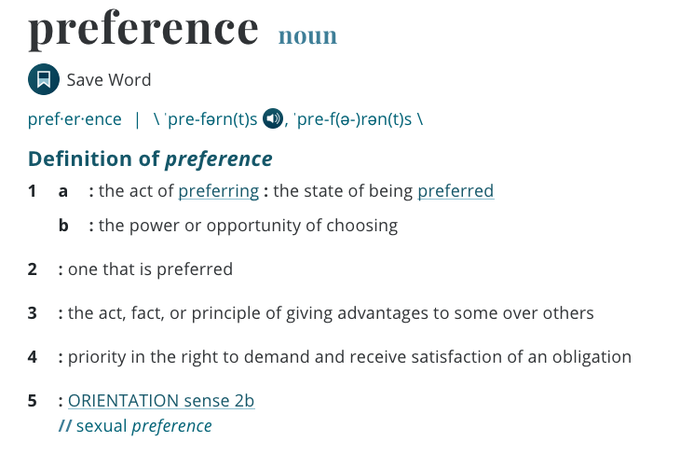
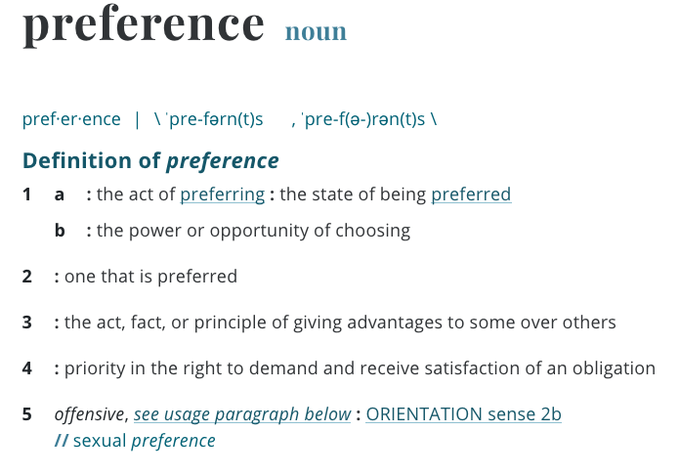
One wonders what Noah Webster would have thought about the recent change of the definition of “sexual preference”. During the hearings for Supreme Court Justice, Amy Coney Barrett was accused of being “anti-LGBTQ” for saying the words “sexual preference” instead of “sexual orientation”. "By that night, under its general listing for 'preference,' Merriam-Webster had added an 'offensive' warning before the part listing 'sexual preference.' 'The term preference as used to refer to sexual orientation is widely considered offensive in its implied suggestion that a person can choose who they are sexually or romantically attracted to,' the dictionary added in extra guidance on usage." Source
Noah Webster also despised Shakespeare because his language was full of errors, and he even set out to correct (and clean up) the King James Version. For instance, where the King James Bible has "any that pisseth against the wall" at 1 Samuel 25:22, Webster's Bible simply used the word "male".  
  
However, his revision of the King James Bible did not resonate with the public.

The reasons that led him to make "Amendments" to the Authorized Version are given in his own words in the preface, which reads:

The English version of the sacred Scriptures, now in general use, was first published in the year 1611, in the reign of James I. Although the translators made many alterations in the language of former versions, yet no small part of the language is the same as that of the versions made in the reign of Queen Elizabeth.

In the present version, the language is, in general, correct and perspicuous; the genuine popular English of Saxon origin; peculiarly adapted to the subjects, and in many passages, uniting simplicity with beautiful simplicity. In my view, the general style of the version ought not to be altered.

But in the lapse of two or three centuries, changes have taken place, which, in particular passages, impair the beauty, in others, obscure the sense, of the original languages. Some words have fallen into disuse; and the signification of others in current popular use, is not the same now as it was when they were introduced into the version. The effect of these changes is, that some words are not understood by common readers, who have no access to commentaries, and who will always compose a great proportion of readers; while other words, being now used in a sense different from that which they had when the translation was made, present a wrong signification, or false ideas. Whenever words are understood in a sense different from that which they had when introduced, and different from that of the original languages, they do not present to the reader the Word of God. This circumstance is very important, even in things not the most essential; and in essential points, mistakes may be very injurious.

In my own view of this subject, a version of the Scriptures for popular use should consist of words expressing the sense which is most common, in popular usage, so that the first ideas suggested to the reader should be the true meaning of such words, according to the original languages. That many words in the present version fail to do this, is certain. My principal aim is to remedy this evil.

The inaccuracies in grammar, such as which for who, his for its, shall for will, should for would, and others, are very numerous in the present version.

There are, also, some quaint and vulgar phrases which are not relished by those who love a pure style, and which are not in accordance with the general tenor of the language. To these may be added many words and phrases very offensive to delicacy, and even to decency. In the opinion of all persons with whom I have conversed on this subject such words and phrases should not be retained in the version. Language that cannot be uttered in company without a violation of decorum, or the rules of good breeding, exposes the Scriptures to the scoffs of unbelievers, impairs their authority, and multiplies or confirms the enemies of our holy religion.

These considerations, with the approbation of respectable men, the friends of religion and good judges of this subject, have induced me to undertake the task of revising the language of the common version of the Scriptures, and of presenting to the public an edition, with such amendments as will better express the true sense of the original languages, and remove objections to particular parts of the phraseology.

In performing this task, I have been careful to avoid unnecessary innovations, and to retain the general character of the style. The principal alterations are comprised in three classes:—

1. The substitution of words and phrases now in good use, for such as are wholly obsolete, or deemed below the dignity and solemnity of the subject.
2. The correction of errors in grammar.
3. The insertion of euphemisms, words and phrases which are not very offensive to delicacy, in the place of such as cannot, with propriety, be uttered before a promiscuous audience.

A few errors in the translation, which are admitted on all hands to be obvious, have been corrected, and some obscure passages illustrated. In making these amendments, I have consulted the original languages, and also several translations and commentaries. In the body of the work, my aim has been to preserve, but in certain passages, more clearly to express, the sense of the present version.

The language of the Bible has no inconsiderable influence in forming and preserving our national language. On this account, the language of the common version ought to be correct in grammatical construction, and in the use of appropriate words. This is the more important, as men who are accustomed to read the Bible with veneration, are apt to contract a predilection for its phraseology, and thus to become attached to phrases which are quaint or obsolete. This may be a real misfortune; for the use of words and phrases, when they have ceased to be a part of the living language, and appear odd and singular, impairs the purity of the language, and is apt to create a disrelish for it in those who have not, by long practice, contracted a like predilection. It may require some effort to subdue this predilection, but it may be done, and for the sake of the rising generation it is desirable. The language of the Scriptures ought to be pure, chaste, simple and perspicuous, free from any words or phrases which may excite observation by their singularity, and neither debased by vulgarisms, nor tricked out with the ornaments of affected elegance.

As there are diversities of taste among men, it is not to be expected that the alterations I have made in the language of the version will please all classes of readers. Some persons will think I have done too little, others too much. And probably the result would be the same, were a revision to be executed by any other hand, or even by the joint labors of many hands. All I can say is, that I have executed this work in the manner which, in my judgment, appeared to be the best.

To avoid giving offense to any denomination of Christians, I have not knowingly made any alteration in the passages of the present version on which the different denominations rely for the support of their peculiar tenets.

In this country there is no legislative power which claims to have the right to prescribe what version of the Scriptures shall be used in the churches or by the people. And as all human opinions are fallible, it is doubtless for the interest of religion that no authority should be exerted in this case, except by commendation.

At the same time, it is very important that all denominations of Christians should use the same version, that in all public discourses, treatises, and controversies, the passages cited as authorities should be uniform. Alterations in the popular version should not be frequent; but the changes incident to all living languages render it not merely expedient, but necessary, at times, to introduce such alterations as will express the true sense of the original languages in the current language of the age. A version thus amended may require no alteration for two or three centuries to come.

In this undertaking, I subject myself to the charge of arrogance; but I am not conscious of being actuated by any improper motive. I am aware of the sensitiveness of the religious public on this subject, and of the difficulties which attend the performance. But all men whom I have consulted if they have thought much on the subject, seem to be agreed in the opinion, that it is high time to have a revision of the common version of the Scriptures, although no person appears to know how, or by whom, such revision is to be executed. In my own view, such revision is not merely a matter of expedience, but of moral duty; and as I have been encouraged to undertake this work by respectable literary and religious characters, I have ventured to attempt a revision, on my own responsibility. If the work should fail to be well received, the loss will be my own, and I hope no injury will be done. I have been painfully solicitous that no error should escape me. The reasons for the principal alterations introduced will be found in the explanatory notes.

The Bible is the chief moral cause of all that is good and the best correcter of all that is evil in human society; the best book for regulating the temporal concerns of men, and the only book that can serve as an infallible guide to future felicity. With this estimate of its value, I have attempted to render the English version more useful, by correcting a few obvious errors, and removing some obscurities, with objectionable words and phrases; and my earnest prayer is, that my labors may not be wholly unsuccessful.
N. W. New Haven, September, 1833.


The extent and character of the "Amendments" may be judged somewhat from the verses that follow:

KJV: Gen. 14:63. And Isaac went out to meditate in the field at the eventide
NW: And Isaac went out to meditate in the field at evening

KJV: Exodus 7:7. And Moses was fourscore years old, and Aaron fourscore and three years old, when they spake unto Pharaoh.
NW: And Moses was eighty years old, and Aaron eighty and three years old, when they spoke to Pharaoh.

KJV: 1 Sam. 9:14. And they went up into the city: and when they were come into the city, behold, Samuel came out against them, for to go up to the high place.
NW: And they went up into the city: and when they had come into the city, behold, Samuel came out meeting them, to go up to the high place.

KJV: Job 1:1. There was a man in the land of Uz, whose name was Job; and that man was perfect and upright, and one that feared God, and eschewed evil.
NW: There was a man in the land of Uz, whose name was Job; and that man was perfect and upright, and one that feared God, and shunned evil.

KJV: Psalms 18:26. With the pure thou wilt shew thyself pure; and with the froward thou wilt shew thyself froward.
NW: With the pure thou wilt show thyself pure; and with the froward thou wilt contend.

KJV: Daniel 3:22. Therefore because the king's commandment was urgent, and the furnace exceeding hot, the flame of the fire slew those men that took up Shadrach, Meshach, and Abed-nego.
NW: Therefore because the king's commandment was urgent, and the furnace exceeding hot, the flame of the fire killed those men that took up Shadrach, Meshach, and Abed-nego.

KJV: Matt. 3:4. And the same John had his raiment of camel's hair, and a leathern girdle about his loins; and his meat was locusts and wild honey.
NW: And the same John had his raiment of camel's hair, and a leathern girdle about his loins; and his food was locusts and wild honey.

KJV Matt 5:41. And whosoever shall compel thee to go a mile, go with him twain.
NW: And whoever shall constrain thee to go one mile, go with him two.

KJV Luke 2:44. But they, supposing him to have been in the company, went a day's journey; and they sought him among their kinsfolk and acquaintance.
NW: But they, supposing him to be in the company, went a day's journey; and they sought him among their relations and acquaintance.

KJV Luke 15:27. And he said unto him, Thy brother is come; and thy father hath killed the fatted calf, because he hath received him safe and sound.
NW: And he said to him, Thy brother is come; and thy father hath killed the fatted calf, because he hath received him in health.

KJV Luke 17:9. Doth he thank that servant because he did the things that were commanded him? I trow not.
NW: Doth he thank that servant, because he did the things that were commanded him? I suppose not.

KJV Heb. 11:9. By faith he sojourned in the land of promise, as in a strange country, dwelling in tabernacles with Isaac and Jacob, the heirs with him of the same promise
NW By faith he sojourned in the land of promise, as in a foreign country, dwelling in tabernacles with Isaac and Jacob, the heirs with him of the same promise

KJV 2 John 5:11. For he that biddeth him God speed is partaker of his evil deeds.
NW For he that wisheth him happiness, is partaker of his evil deeds.

John Wright in his Early Bibles of America adds: It will be seen at once that the changes made were unimportant, that they had to do with minor things, and that they added nothing to a smoother or clearer rendering of Scripture. The whole work shows an inability to grasp the subject. Mr. Scudder says: "It was in general a picayune revision sufficient to annoy those who had an ear for the old version, and really offering only such positive helps in interpretation as were generally in the possession of fairly educated men. That he should have done the work at all, and have done it so faintly, is what surprises the reader." [Horace E. Scudder's "Biography of Noah Webster"] Further, Mr. Scudder says of Dr. Webster: "He had unlimited confidence in himself, an almost childish ignorance of obstacles, a persistence which was unembarrassed by the indifference of others, and from his long-continued occupation, a habit of magnifying the trivial. He had not in such a work as this the qualifications of a scholar; he had simply the training of a schoolmaster; he was ignorant of what he was undertaking, and his independent revision of the Bible failed to win attention, not because it was audacious, but because it was not bold enough; it offered no real contribution to biblical criticism."

This criticism may seem slightly severe, yet the fact stands out that the amended Bible was not a success, and its circulation was limited. It reached a second edition in 1841, but has not been repeated since. There were editions of the New Testament in 1839 and 1841.

Dr. Webster, though eminently fitted to make a lexicon, was equally unfitted to improve the Bible. He was greatly disappointed that his effort did not meet with favor, and even to the end of his life clung to the hope that his amended Bible would supersede the King James translation. Individual revisions of Holy Writ have been-—with a few exceptions—-failures, and he added one more to the number. The Bible includes such a wide range of subjects that no one mind is sufficiently equipped to deal with them. The translations that have received the widest circulation and acceptance have been those that were the result of combined scholarship.

On an interesting sidenote, his Bible did add many uses of the Divine Name Jehovah, whilst the King James version had only four such occurrences:

Occurrences of "Jehovah" in the Webster Bible

Gen 22:14  And Abraham called the name of that place Jehovah-jireh: as it is said to this day, In the mount of the LORD it will be seen.

Exo 6:3  And I appeared to Abraham, to Isaac, and to Jacob, by the name of God Almighty, but by my name JEHOVAH was I not known to them.

Exo 17:15  And Moses built an altar, and called the name of it JEHOVAH-nissi:

Jdg 6:24  Then Gideon built an altar there to the LORD, and called it Jehovah-shalom: to this day it is yet in Ophrah of the Abi-ezrites.

Psa 83:18  That men may know that thou, whose name alone is JEHOVAH, art the most high over all the earth.

Isa 12:2  Behold, God is my salvation; I will trust, and not be afraid: for the LORD JEHOVAH is my strength and my song; he also is become my salvation.

Isa 26:4  Trust ye in the LORD for ever: for in the LORD JEHOVAH is everlasting strength:

Isa 51:22  Thus saith thy Lord Jehovah, and thy God that pleadeth the cause of his people, Behold, I have taken out of thy hand the cup of trembling, even the dregs of the cup of my fury; thou shalt no more drink it again:

Jer 16:21  Therefore behold, I will this once cause them to know, I will cause them to know my hand and my might; and they shall know that my name is JEHOVAH.

Jer 23:6  In his days Judah shall be saved, and Israel shall dwell in safety: and this is his name by which he shall be called, JEHOVAH OUR RIGHTEOUSNESS.

Jer 32:18  Thou showest loving-kindness to thousands, and recompensest the iniquity of the fathers into the bosom of their children after them: the Great, the Mighty God, JEHOVAH of hosts, is his name,

Jer 33:16  In those days shall Judah be saved, and Jerusalem shall dwell in safety: and this is the name by which she shall be called, JEHOVAH our righteousness.

Amo 5:8  Seek him that maketh the seven stars and Orion, and turneth the shades of death into the morning, and maketh the day dark with night: that calleth for the waters of the sea, and poureth them out upon the face of the earth: JEHOVAH is his name:

Mic 4:13  Arise and thresh, O daughter of Zion: for I will make thy horn iron, and I will make thy hoofs brass: and thou shalt beat in pieces many people: and I will consecrate their gain to JEHOVAH, and their substance to the Lord of the whole earth.

-Heinz Schmitz


See also 100 Rare American Bible Versions & Translations on DVDrom

For a list of all of my books on disks and ebooks click here

Saturday, October 3, 2015

Learn the Spanish Language - 125 PDF Books to Download


Only $3.00 -  You can pay using the Cash App by sending money to $HeinzSchmitz and send me an email at theoldcdbookshop@gmail.com with your email for the download. You can also pay using Facebook Pay in Messenger


Books Scanned from the Originals into PDF format - For a list of all of my digital books click here


Books are in the public domain. I will take checks or money orders as well.

Contents of Disk (created on a Windows computer):

Beginners' Spanish by William Hannsler 1910

A Sketch of the Comparative Beauties of the French and Spanish Languages by Manuel Martinez de Morentin 1859

The Elementary Spanish Reader and Translator by Miguel Tolon 1882

A new guide to Spanish and English Conversation by Emanuel Del Mar 1844

Esperanto as an International Auxiliary Language 1922

Dictionary of Quotations (Spanish) by T.B. Harbottle 1907

Appleton's New Spanish-English and English-Spanish Dictionary by Arturo Cuyas 1922

A New Pronouncing Dictionary of the Spanish and English languages, Volume 1 by Mariano Velazquez de la Cadena 1900

A New Pronouncing Dictionary of the Spanish and English languages, Volume 2 by Mariano Velazquez de la Cadena 1900

Remains of Arabic in the Spanish and Portuguese Languages by Stephen Weston 1810

A Handy Bibliographical Guide to the Study of the Spanish Language and Literature by William Hanssler 1915

Synonyms of the Spanish Language by LJA McHenry 1826

Spanish Conversational Lessons 1906

Object-pronouns in Dependent Clauses. A Study in old Spanish Word-order by Winthrop Holt Chenery 1905

Examination Questions in English, German, French, Spanish 1920

Spanish grammar: being a new method of Learning to Read, Write and Speak the Spanish language 1848

A First Book in Spanish by Joseph Salkeld 1848

Short and Plain Grammar of the Spanish language by DE Lara 1836

A Pronouncing Dictionary of the Spanish and English by Mariano Velazquez de la Cadena 1881

A Practical Course in Spanish by HM Monsanto 1903

Essentials of Spanish Grammar by Samuel Garner 1911

Hugo's Spanish Simplified 1917 (A simple but complete gramar - Spanish reading made easy)

Business Spanish and Commercial Vocabulary by Alejandro D Ainslie 1917

Spanish in the High Schools by Lawrence Wilkins 1918

Easy Spanish for Beginners by MC Dowling 1909

The Pictorial Spanish Course with pictures, descriptions, conversations and grammar by R. torres 1911 (I love the pictures in this one - featured in image)

An Easy Introduction to Spanish Conversation by Velazquez de la Cadena 1898

Spoken Spanish, a Conversational reader and composition by E Broomhall 1918

Beginners Spanish Reader With Exercises by L. Wilkins 1921

Spanish Grammar by Charles Philip Wagner 1910

A Grammar of the Spanish Language by Alfred Elwes 1852

Spanish Grammar For the Use of Colleges and Schools by Samuel Garner 1901

A New Spanish grammar by Mariano Cubi y Soler 1826


Habla VM. EspaƱol? Or, Do You Speak Spanish? A Pocket Companion For Beginners Who Wish To Acquire the Facility to Express Themselves Fluently 1868

Easy Spanish Reader by Joel Hatheway 1919

A Practical Spanish Grammar with Exercises and Themes by E Manning 1891

A Grammar of the Modern Spanish language by William Knapp 1885

The Spanish Verb with an introduction on Spanish Pronunciation by Peter Straub 1900

Everybody's Spanish Dictionary -Spanish-English 1900

A Complete Theoretical and Practical grammar of the Spanish language by Emanuel del Mar

Spanish Simplified by Augustin Knoflach 1906

A New Practical and Easy Method of learning the Spanish language

Reading, Writing ans Speaking Spanish for Beginners with Word List by M Dowling 1921

Spanish Teacher and Colloquial Phrasebook by Francis Butler 1881

Spanish idioms with their English equivalents by Sarah Becker 1887

Spanish Taught In Spanish: A Textbook For Learning Spanish In The Easiest and Most Practical Manner 1919 by Charles Frederick McHale

Brief Spanish Grammar by August Hjalmar Edgren 1891

Exercise Book in Spanish; a Drill and exercise book on the Subjunctive, idioms, pronouns, and irregular verbs by Lawrence Wilkins 1921

Fundamentals of Spanish Grammar by Alice Huntington Bushee 1917

Elementary Grammar of the Spanish language by LMA Loiseaux 1900

The Combined Spanish Method: A Practical and Theoretical System for Learning the Spanish by alberto de Torno 1915

A Spanish Reader for Beginners in High Schools and Colleges by Charles Turrell 1908

Colloquial Spanish by William Patterson 1919

Beginning Spanish: Direct Method 1921

Studies in New Mexican Spanish Phonology by A Espinoza 1909

The Living Method for Learning how to Think in Spanish by Charles Frederick Kroeh 1892

Spanish Tales for Beginners by Elijah Hill 1909


Progressive Exercises in Spanish prose composition, with notes and a vocabulary by M Ramsey 1900

A Spanish Grammar, With Exercises by M Ramsey 1902 (one or two pages wrecked)

A Grammar of the Spanish Language with Practical Exercises 1827

A Practical Spanish Grammar 1917

Complete Spanish course in Accordance with the Robertsonian System 1861

Spanish Anecdotes arranged for translation and conversation by WF Giese 1909

A First Spanish Book and Reader by W Giese 1902

Spanish Influence on English Literature by Martin Andrew Sharp Hume 0905

A New Spanish Grammar 1814

Foundation Course In Spanish by Leon Sinagnan 1917 Volume 1

Foundation Course In Spanish by Leon Sinagnan 1917 Volume 2

A Practical Course with the Spanish Language by H Monsanto 1903

A Concise and Simplified Grammar of the Spanish Language by E De Mar 1840

A First Spanish Course by Hills/Ford 1917

Spanish grammar, with practical introductory lessons by A. Coester 1917

La Biblia (Bible) 1869

A Phonetic Spanish Reader (hard to read - light scan) by E Peers 1920

A Comparative View of the Spanish and Portuguese languages - An easy method of learning the Portuguese tongue for those who are already acquainted with the Spanish 1831 by Pietro Bachi

A Comparative View of the Italian and Spanish languages, or an easy method of learning the Spanish tongue. For those who are already acquainted with the Italian 1832 by Pietro Bachi

A Polyglot of Foreign Proverbs: Comprising French, Italian, German, Dutch, Spanish, Portuguese by HG Bohn 1857

PITMAN'S COMMERCIAL SPANISH GRAMMAR by CA Taledano 1917

Spanish Composition by Edith Broomhall 1921

A Dictionary of the Spanish and English Languages Wherein the Words are Correctly Explained by Henry Neuman 1854

New and improved Spanish Grammar by Luis Josef A. McHenry 1823

Elementary Spanish-American Reader by Frederick Bliss Luquiens 1917

The effect of syntax on readability for Spanish-speaking adult students of English as a second language

5000 Musical Terms; a Complete Dictionary of Latin, Greek, Hebrew, Italian, French, German, Spanish, English, and such other words, phrases, abbreviations, and signs as are to be found in the works of Auber, Beethoven, Bertini etc by John S Adams 1851

100 Most Common Spanish Words in Amazon Kindle format

Homophonic Vocabulary containing more than 2000 words having a like sound and like signification in 10 :anguages - English, French, Spanish, Portuguese, Italian, German, Dutch, Danish-Norwegian, Swedish, and Russian by Charles Waite 1904

Infinitive Constructions in Old Spanish by W Beardsley 1921

Exercises on the Etymology, Syntax, Idioms, and Synonyms of the Spanish Language 1852

Mitchell's Standard Guide to Buenos Aires with Spanish phrases for travellers, giving correct pronunciation of each word 1909

The Pronunciation of Spanish in Spain and America by C Kroeh 1893

New First Spanish Book, after the natural or direct method for schools and self-instruction by James Worman 1916


A Key to the Exercises contained in Ahn's method of learning the Spanish language by FF Foerster

Spanish Literature in Mexican Languages as a source for the study of Spanish pronunciation

A Grammar of the Spanish Language in which the peculiar qualities and accidental differences of the parts of speech are accurately analysed, and the syntax fully explained, exemplified, and compared with the English construction : with an appendix, containing the exceptions to the rules of genders, and tables of the Spanish adjectives and adverbs of a different etymology from the same in English 1838

A Trip To Latin America in Very Simple Spanish by Victor Emmanuel FranƧois 1917

Elementos de Espanol, an Elementary Spanish Grammar for schools and colleges by Moreno-Lacalle 1918

A Grammar of the Spanish, Portuguese, and Italian languages, intented to facilitate the acquiring of these sister tongues by exhibiting in a synoptical form the agreements and differences in their grammatical construction by Richard Woodhouse 1815

The Principles of Grammar being a Compendious Treatise on the Languages, English, Latin, Greek, German, Spanish, and French by Solomon Barrett 1851

An essay on the origin and formation of the Romance languages by George Lewis 1862

Dussault's conversational method of Spanish 1920

First Spanish book by Frank R Robert 1919

Elementary Spanish prose book by Lawrence A Wilkins 1917

Infinite constructions in Old Spanish by William A Beardsley 1921

An Elementary Spanish Reader by M Montrose Ramsey 1897

Spanish guide for conversation and commerce by Julio Soler 1843

An Elementary Spanish Reader by ES Harrison 1920

Modern Spanish Readings Embracing Text, notes, and an Etymological Vocabulary by William I Knapp 1887

A Key to the Exercises in the Combined Spanish method by Alberto de Tornos 1882

The Spanish word-book by G Galindo 1824

Exercises in Spanish composition for first and second year classes by JDM Ford 1899

The Spanish Expositor by Jose Q Warnes 1831

A Class Book of Modern Spanish by Paul Francis Walker 1897

A Vocabulary in the English, Latin, German, French, Italian, Spanish, and Portuguese Languages by James Boardman 1811

An elementary practical book for learning to speak and write the Spanish language by JF Girard 1848

First Spanish Reader and Writer by Henry Butler Clark 1891

Spanish-English and English-Spanish commercial dictionary by GR MacDonald 1918

Mercantile Dictionary - a Complete Vocabulary of the Technicalities of Commercial correspondence, names of articles of trade, and marine terms, in English, Spanish, and French by I de Veitelle 1864

A New, Easy, and Complete Grammar of the Spanish Language by John E Mordente 1810

Manual of comparative Grammar of the Spanish language by WL Montague 1873

An Elementary Spanish Grammar by B Sanin Cano 1918

Spanish in twenty Lessons, with a system of articulation based on English equivalents, for acquiring a correct pronunciation by R Diez de la Cortina 1910

Mexican Linguistics by Thomas S Denison 1913

Harmonic method for learning Spanish by Luis a Baralt 1902

A new English and Spanish vocabulary by Fernando de Arteaga 1902
 gdixierose

Sunday, June 7, 2015

Studies in the Biblical Greek, 230 Books to Download

Only $6.99 - You can pay using the Cash App by sending money to $HeinzSchmitz and send me an email at theoldcdbookshop@gmail.com with your information. You can also pay using Facebook Pay in Messenger

Books Scanned from the Originals into PDF format

Join my Facebook Group - Contact theoldcdbookshop@gmail.com for questions

Books are in the public domain. I will take checks or money orders as well.

Contents: 

An Advanced Greek course by Thomas Stewart 1882

A Concordance to the Greek Testament According to the Texts of Westcott and Hort, Tischendorf and the English Revisers by WF Moulton 1897

A Greek and English Dictionary by the Rev John Groves 1829

A Polyglot Grammar of the Hebrew Chaldee Syriac Greek Latin English French Italian Spanish and German by Samuel Barnard 1825

The Apocrypha Greek and English in Parallel Columns 1871

The Englishmans Greek New Testament, giving the Greek text of Stephens, 1550, with the various readings of the editions of Elzevir, 1624, Griesbach, Lachmann, Tischendorf, Tregelles, Alford and Wordsworth, together with an interlinear literal translation and the Authorised version of 1611 (1896)

The Parallel New Testament Greek and English - being the authorised version set forth in 1611, arranged in parallel columns with the revised version of 1881 and with the original Greek by FHA Scrivener 1882

The New Testament in the original Greek (Westcott and Hort) - Greek and English 1882

"For ever and ever" a Popular study in Hebrew, Greek, and English words (Aion and Olam) by Henry Vowles 1898

A Companion to the Greek Testament and the English version by Philip Schaff 1883

The Greek word aion-aionios, Translated Everlasting and Eternal, Shown to Denote Limited Duration by JW Hanson 1875

On the Reading "Only-Begotten God" in John 1:18 by Ezra Abbot 1861

The Revision Revised - The new Greek text, The new English version, Westcott and Hort's new textual theory and a vindication of 1 Timothy 3:15 by John W Burgon 1883

The Last Twelve Verses of the Gospel according to S. Mark Vindicated by John W Burgon 1871

The Causes of the Corruption of the Traditional Text of the Holy Gospels by John W Burgon 1896

The Traditional Text of the Holy Gospels vindicated and established by John W Burgon 1896

The Kyrios Title in the New Testament, article in Princeton Theological Review 1915

An Introductory New Testament Greek Method by William R Harper 1897

The Greek Testament with a critically Revised Text, a digest of various readings, marginal references to verbal and idiomatic usage, prolegomena, and a critical and exegetical commentary, Volume 1 by Henry Alford 1897

The Greek Testament with a critically Revised Text, a digest of various readings, marginal references to verbal and idiomatic usage, prolegomena, and a critical and exegetical commentary, Volume 2 by Henry Alford 1897

The Greek Testament with a critically Revised Text, a digest of various readings, marginal references to verbal and idiomatic usage, prolegomena, and a critical and exegetical commentary, Volume 3 by Henry Alford 1897

The Greek Testament with a critically Revised Text, a digest of various readings, marginal references to verbal and idiomatic usage, prolegomena, and a critical and exegetical commentary, Volume 4 by Henry Alford 1897

The Word Baptizo Defined - and the mode of baptism proved from the scriptures (1840) by John H. Hall

Classic Baptism, an inquiry into the meaning of the word BAPTIZO, as determined by the usage of classical Greek writers by James W Hall 1867

The Language of the New Testament, article in The Union Seminary Review 1914

A Grammar of the Idioms of the Greek Language of the New Testament by Georg Benedikt Winer 1840

The Philology of the Greek Bible by Adolf Deissmann 1908

Robert Countess and the Translation of QEOS (Theos) in the New World Translation by Heinz Schmitz

The Great Mystery of Godliness - Sir Isaac Newton and 1 Timothy 3:16 (1830)

Middleton on the Greek Article, article in The Annual review and history of literature 1809

The Scripture Doctrine of the LOGOS (Word), article in The Expositor and Universalist Review 1840

On the Greek article By John Nelson Darby 1875

The Aramaic Origin of the Fourth Gospel by CF Burney 1922

Johannine Grammar by Edwin Abbott 1906

The Sounds and Inflections of the Greek Dialects by HW Smyth 1894

Johannine Vocabulary - a Comparison of the words of the fourth gospel with those of the Three by Edwin Abbott 1905

On the Rendering Into English of the Greek Aorist and Perfect by Richard Weymouth (Bible Translator) 1894

Theory of advanced Greek prose composition, with Digest of Greek idioms by John Donovan 1921 Volume 1

Theory of advanced Greek prose composition, with Digest of Greek idioms by John Donovan 1922 Volume 2

Advanced Greek unseens, being a higher Greek reader 1904

The Article in the Revised Version, article in THE BIBLIOTHECA SACRA 1882

A Lexicon to Xenophon's Anabasis by A Crosby 1873

The Participle in the book of Acts by Charles B Williams 1909

The Use of the Infinitive in Biblical Greek by Clyde Votaw 1896

The Greek Aorist by AJ Bell

A Treatise on the Syntax of the New Testament Dialect, with an appendix, containing a Dissertation on the Greek Article by Moses Stuart 1835

PREDICATIVE PARTICIPLES WITH VERBS IN THE AORIST, article in The Bibliotheca sacra 1884

The Imperfect and the Aorist in Greek, article in American journal of philology 1895

Notes on Stahl's Syntax of the Greek Verb by Basil Gildersleeve 1909

The Greek Verb - its Structure and Development by George Curtius 1883

Syntax of the moods and tenses of the Greek Verb by William Goodwin

Catalogue of Irregular Greek verbs by Philipp Buttmann 1844

Exercises on the irregular and defective Greek verbs by FSJ Thackeray 1877

Syntax of the participle of the Apostolic Fathers by Henry Barton Robison 1913

Greek Syntax with a Rationale of the Constructions by James Clyde 1857

Notes on New Testament Grammar by by Ernest De Witt Burton 1904

The Philology of the Greek Bible by Adolf Deissmann 1908

A Concise view of the Doctrine of the Greek Article, according to the usage of classical authors and the general observances of its fixed principles by the writers of the new Testament by Bishop Thomas Middleton

Doctrine of the Greek Article by Bishop Thomas Middleton

Critical Greek and English concordance of the New Testament by Charles F Hudson, Ezra Abbot 1871

A Greek Grammar to the New Testament, and to the common or Hellenic diction of the later Greek writers; arranged as a supplement to Dr. Philip Buttmann's "Intermediate, or Larger Greek grammar." 1842

Syntax of the moods and tenses in New Testament Greek by Ernest De Witt Burton 1893

A Short Grammar of the Greek New Testament: for students familiar with the Elements of Greek by AT Robertson 1908

Qualitative nouns in the Pauline epistles by Arthur Slaten

Tracts on the Greek Language (the Greek Article) by Frederick Parker 1878

A Copious Greek Grammar, Volume 1 by AH Matthiae 1832

A Copious Greek Grammar, Volume 2 by AH Matthiae 1832

An Explanation of the Greek Article by John Jones 1827

The Use of the infinitive in Polybius compared with the use of the Infinitive in Biblical Greek by HF Allen 1907

Remarks on the uses of the Definitive Article in the Greek text of the New Testament, containing many new proofs of the divinity of Christ, from passages which are wrongly translated in the common English version by Granville Sharp 1803

A Vindication of Certain Passages in Response to Granville Sharp by Calvin Winstanley 1819

A Treatise on the Grammar of New Testament Greek - Regarded as a sure basis for New Testament Exegesis 1882 by Georg Benedikt Winer

A Grammar of the Idiom of the New Testament by Winer 1840

A Grammar of the Greek Language, With an additional index to the constructions of the Gospels, Acts and Epistles, Volume 1 by William Jeff 1861

A Grammar of the Greek Language, With an additional index to the constructions of the Gospels, Acts and Epistles, Volume 2 by William Jeff 1861

Commentaries Critical and Grammatical on the Epistles of Saint Paul Volume 1 by CJ Ellicott 1866

Commentaries Critical and Grammatical on the Epistles of Saint Paul Volume 2 by CJ Ellicott 1866

The Reviser (The Greek Article) by S. E. Shepard 1855

Gnomon of the New Testament Volume 1 by JA Bengel 1877

Gnomon of the New Testament Volume 2 by JA Bengel 1877

Gnomon of the New Testament Volume 3 by JA Bengel 1877

Gnomon of the New Testament Volume 4 by JA Bengel 1877

Essays in Biblical Greek by Edwin Hatch 1889

A Grammar of the New Testament Dialect by Moses Stuart 1834

A Grammar of the Greek New Testament in the Light of Historical Research by AT Robertson 1915

Biblico-theological Lexicon of New Testament Greek by Hermann Cremer 1886

Synonyms of the New Testament by Richard Trench 1880

The Language of the New Testament by William Henry Simcox 1889

The Gospel of John in Greek and English Interlined and Literally Translated with a transposition of the words into their due order of construction and a dictionary, defining and parsing them: principally designed for the use of schools by E Friederici 1830

The Principles of Sound and Inflexion as illustrated in the Greek and Latin languages by JE King 1888

Eberhard Nestle's Greek text with critical Apparatus 1904


Sources of New Testament Greek - The influence of the Septuagint on the vocabulary of the New Testament by HAA Kennedy 1895

The vocabulary of the Greek Testament by James Moulton 1914

Handbook to the Grammar of the Greek Testament together with Complete Vocabulary, and an examination of the chief New Testament synonyms by Samuel G Green 1907

A Commentary on the Greek text of the Epistle of Paul to the Philippians by John Eadie 1859

A Commentary on the Greek text of the Epistle of Paul to the Colossians by John Eadie 1856

A Commentary on the Greek text of the Epistle of Paul to the Ephesians by John Eadie 1861

A Commentary on the Greek text of the Epistle of Paul to the Thessalonians by John Eadie 1877

The Apocalypse of St. John - a Commentary on the Greek Version by James Ratton 1912

A Critical and Exegetical Commentary on the Epistle to the Galatians by Ernest De Witt Burton 1922

Etymology of Latin and Greek by Charles Halsey 1889

Demonstrations in Greek iambic verse by WHD Rouse 1899

The Limitations of the Predicative Position in Greek by AW Milden 1900

A Treatise on the Grammar of the New Testament Dialect by Thomas Green 1862

The Greek Testament Roots by George Knox Gillespie 1858

Second Greek Book consisting of extracts from Lucian, Xenophon's Anabasis, New Testament, and Homer with notes, a synopsis of syntax, a copious vocabulary, and imitative exercises by AH Bryce 1866

The Greek Testament, with English notes, Critical, Philological, and Exegetical, partly selected and arranged from the best commentators, ancient and modern, but chiefly original being especially adapted to the use of academical students, candidates for the sacred office, and ministers, Volume 1 by ST Bloomfield 1837

The Greek Testament, with English notes, Critical, Philological, and Exegetical, partly selected and arranged from the best commentators, ancient and modern, but chiefly original being especially adapted to the use of academical students, candidates for the sacred office, and ministers, Volume 2 by ST Bloomfield 1837

The New Testament of Our Lord and Saviour Jesus Christ, in the original Greek with Introduction and Notes by Christopher Wordsworth Volume 1 1872

The New Testament of Our Lord and Saviour Jesus Christ, in the original Greek with Introduction and Notes by Christopher Wordsworth Volume 2 1872

Critical Notes on the Authorised English Version of the New Testament by Samuel Sharpe 1867

Comparative Grammar of the Greek language by Joseph Wright 1912

Principles of Greek Etymology Volume 1, 1876 by George Curtius

Principles of Greek Etymology Volume 2, 1876 by George Curtius

The Elements of Greek grammar by Richard Valpy 1847

Essays Philological and Critical by James Hadley 1873

The Continuity of the Kyrios Title in the New Testament, article in the Princeton theological review 1915

The Science of Language and the study of the New Testament by James Moulton 1906

A Critical Greek and English Concordance of the New Testament by CF Hudson 1892

A Critical Examination of the meaning and etymology of numerous Greek words and passages by PK Buttman 1840

The Four Gospels Translated from the Greek, with Preliminary Dissertations, and notes Critical and Explanatory, Volume 1 by George Campbell 1837

The Four Gospels Translated from the Greek, with Preliminary Dissertations, and notes Critical and Explanatory, Volume 2 by George Campbell 1837

Here and there in the Greek New Testament by LS Potwin 1898

Hermeneutics of the New Testament by Albert Immer 1877

Studies in the Greek New Testament by Richard Smith 1895

New Testament studies by Adolf Harnack 2, 1908

On the Reading THE ONLY BEGOTTEN GOD John 1:18, article in The Theological review 1871

The Authorship of the Fourth Gospel and other critical essays by Ezra Abbot 1888 (discusses the Greek in Titus 2:13, john 1:18, Acts 20:28 and Romans 9:5 plus much more)

The Gospel According to St. John the Authorised Version with introduction and notes by Brooke Foss Westcott 1892

The Greek Tenses in the New Testament by P Thomson 1895

The Expositor's Greek Testament. Volume 1 by Sir William Robertson Nicoll 1903

The Expositor's Greek Testament. Volume 2 by Sir William Robertson Nicoll 1903

The Expositor's Greek Testament. Volume 3 by Sir William Robertson Nicoll 1903

The Expositor's Greek Testament. Volume 4 by Sir William Robertson Nicoll 1903

The Expositor's Greek Testament. Volume 5 by Sir William Robertson Nicoll 1903

Plus You Get:
A First Greek Reader by W.G. Rushbrooke M.L. (over 250 pages)

A First Greek Writer by with Exercises and Vocabularies by A.Sidgwick M.A. 1880 (over 250 pages)

The Greek Testament Roots in a Selection of Texts by GK Gillespie

A Greek Grammar by William W. Goodwin 1900 (over 500 pages)

Grammar of Septuagint Greek by FC Conybeare

A Grammar of the New Testament Diction by George Benedict Winer 1860

A Grammar of the New Testament Greek by Alexander Buttman 1878

A Grammar of the Idioms of the Greek Language by George Benedict Winer 1840

The Greek Tenses in the New Testament by P Thompson 1895

How to Learn to Read the Greek New Testament by William Penn 1874

Greek Lessons shewing how useful and how easy it is for every one to learn Greek by William Henry Morris 1874

Grammar of New Testament Greek Volume 1 by JH Moulton 1906

Grammar of New Testament Greek Volume 2 by JH Moulton 1906

Grammar of New Testament Greek by F. Blass 1898

The Use of the Infinitive in Biblical Greek by Clyde Votaw 1896

Handbook to the Grammar of the Greek Testament by Samuel G Green 1876

Notes on New Testament grammar by Ernest Be Witt Burton 1904

New Testmant Greek in a Nutshell by James Strong

A Treatise on the Syntax of the New Testament Dialect, with an appendix, containing a dissertation on the Greek article by Moses Stuart 1835

A Grammar of the New Testament Dialect by Moses Stuart 1841

Etymology of Latin and Greek by C Halsey 1887

An introduction to Greek and Latin Etymology by John Piele 1875

An introduction to the Greek of the New Testament by G Cary 1878

Key to the elements of New Testament Greek by HPV Nunn 1915

A Short Syntax of New Testament Greek by HPV Nunn 1912

The Elements of New Testament Greek by HPV Nunn 1914

Syntax of the moods and tenses of the Greek verb by WW Goodwin 1890

Syntax of the Moods and Tenses in New Testament Greek by Ernest De Witt Burton 1893

Historical and Linguistic Studies in Literature Related to the New Testament, Volume 1 1903

Essays in Biblical Greek by Edwin Hatch 1889


An Explanation of the Greek Article by John Jones 1827

Beginner's Greek book by HW Smyth 1906

A companion to the Greek Testament and the English version by P. Schaff

An introduction to the Old Testament in Greek by Swete/Thackeray 1914

Greek Syntax with a Rationale of the Constructions by James Clyde 1870

A Greek and English lexicon to the New Testament. To this is prefixed a Greek grammar - John Parkhurst 1809

A Greek Grammar to the New Testament, and to the Common Or Hellenic Diction by W Trollope 1842

A Brief Introduction to New Testament Greek Samuel G. Green, D.D 1913

The Interlinear Literal Translation of the New Testament by Newberry/George Berry

Biblico-theological lexicon of New Testament Greek by Hermann Cremer 1882

The Doctrine of the Greek Article by Thomas Middleton 1833

Clue: a guide through Greek to Hebrew Scripture by Edwin Abbott

Exercises on the Syntax of the Greek Language by W Neilson 1834

A brief Greek syntax and hints on Greek accidence by Frederic William Farrar 1867

Grammatical Analysis of the Hebrew, Chaldee, and Greek Scriptures by Robert Young 1885

What Do I learn from Scripture by John Nelson Darby

Introduction to the Study of the Gospels by BF Westcott 1882

The First Part of Xenophon's Memorabilia to Socrates 1831

Pronunciation of ancient Greek by F. Blass 1890

Scientific names of Latin and Greek derivation by Walter Miller 1897

Philological Introduction to Greek and Latin for students by F Baur 1879

Old Testament Septuagint Greek & English Interlinear with Strong's Numbering System

The Greek Aorist by Andrew Bell

Greek Testament lessons, consisting chiefly of the Sermon on the mount, and the Parables
by John Hunter Smith - 1884

Greek Testament studies: or, A contribution towards a revised translation of the New Testament
1870

A Practical Guide to the Greek Testament: Designed for Those who Have No Knowledge of Greek - 1900

A Greek Grammar for Schools and Colleges by Herbery W. Smyth Ph.D 1916 (over 500 pages)

A Greek Grammar for the Use of Schools and Colleges by W.D. Geddes M.A. (over 270 pages)

Greek Reader with Notes and Lexicon by John J. Owen D.D. 1868 (over 350 pages)

A Practical Introduction to Greek Prose Composition by Thomas Kervercher Arnold 1899 (over 150 pages)

A Key to the Exercises in Kuhner's Elementary Grammar of the Greek Language by Charles W Bateman 1864 (over 100 pages)

Aspects of Speech in the Later Greek Epics by George Wicker Elderkin 1906 (over 50 pages)

Exercises in the Composition of Greek Iambic Verse by Herbert Kynaston M.A. 1879 (over 200 pages)

Fifth Greek Reader - Part 1 Selection from Greek Epic and Dramatic Poetry by Evelyn Abbot M.A. 1875 (over 350 pages)

First Greek Grammar by W. Gunion Rutherford B.A. 1880 (over 150 pages)

First Greek Reader by John E.B. Mayor M.A. 1868 (over 400 pages)

First Steps to Greek Prose Composition by Blomfield Jackson M.A. 1875 (over 50 pages)

Greek Prose Composition fur Use in Colleges by Edward H. Spieker Ph.D 1904 (over 250 pages)

Hints and Cautions on Attic Greek Prose Composition by the Rev. Francis St John Thackeray M.A. 1876 (over 150 pages)

Introduction to Greek Prose Composition with Exercises by A. Sidgwick M.A. 1880 (over 250 pages)

New Greek Delectus by Henry Musgrave Wilkins M.A. 1880 (over 200 pages)

Old Greek Stories - 3rd Reader Grade by James Baldwin 1895 (over 200 pages)

Pronunciation of Ancient Greek W.J. Purton B.A. 1890 (over 150 pages)

Specimens of Greek Dialects being a Fourth Greek Reader by W. Walter Merry M.A. 1875 (over 400 pages)

Stories of Herodotus in Attic Greek 1882

Syntax and Synonyms of the Greek Testament by William Webster MA 1864

Stories in Attic Greek by the Rev. Francis David Morice M.A. 1883 (over 200 pages)

Tales from Herodotus with Attic Dialectical Forms by G.S. Farnell M.A. 1895 (over 150 pages)

The Old Testament in Greek By Alan England Brooke  (Numbers and Deuteronomy) 1911

Plus, you get the following works at AT Robertson:
A Grammar of the Greek New Testament in the Light of Historical Research 1914

Syllabus for New Testament Study - A Guide for Lessons in the Class-room 1915

A Short Grammar of the Greek New Testament for Students Familiar with the Elements of Greek 1909

Types of preachers in the New Testament 1922

Commentary on Matthew 1911

The Student's Chronological New Testament: Text of the American Standard Revision 1904 by A.T. Robertson

The Divinity of Christ in the Gospel of John 1916

Epochs in the life of Jesus 1907

Five times Five points of Church Finance 1885

The Glory of the Ministry - Paul's Exultation in Preaching 1911

Making Good in the Ministry; a sketch of John Mark 1918

Studies in the New Testament - a handbook for Bible classes in Sunday schools, for teacher training work, for use in secondary schools, high schools and colleges 1915

The new citizenship; the Christian facing a new world order 1919

The Pharisees and Jesus: the Stone lectures for 1915-16, delivered at the Princeton Theological Seminary 1920

Practical and Social Aspects of Christianity; the Wisdom of James 1915

Paul's joy in Christ - Studies in Philippians 1917

A Harmony of the Gospels for Students of the Life of Christ based on the Broadus Harmony in the Revised Version 1922

Keywords in the teaching of Jesus 1906

The Teaching of Jesus concerning God the Father  Volume 3 - 1904