Showing posts with label italy. Show all posts

Wednesday, January 10, 2024

Crossing the Rubicon on This Day in History


This day in history: Julius Caesar crossed the Rubicon on this day in 49 B.C.

"The Rubicon is a small stream in northern Italy just south of the city of Ravenna. During the prime of the Roman Republic, roughly the last two centuries B.C., it served as a northern boundary protecting the heartland of Italy and the city of Rome from its own imperial armies. An ancient Roman law made it treason for any general to cross the Rubicon and enter Italy proper with a standing army. In 49 B.C., Julius Caesar, Rome’s most brilliant and successful general, stopped with his army at the Rubicon, contemplated what he was about to do, and then plunged south. The Republic exploded in civil war, Caesar became dictator and then in 44 B.C. was assassinated in the Roman Senate by politicians who saw themselves as ridding the Republic of a tyrant. However, Caesar’s death generated even more civil war, which ended only in 27 B.C. when his grand nephew, Octavian, took the title Augustus Caesar, abolished the Republic and established a military dictatorship with himself as 'emperor' for life. Thus ended the great Roman experiment with democracy. Ever since, the phrase 'to cross the Rubicon' has been a metaphor for starting on a course of action from which there is no turning back. It refers to the taking of an irrevocable step." Source

Wednesday, November 29, 2023

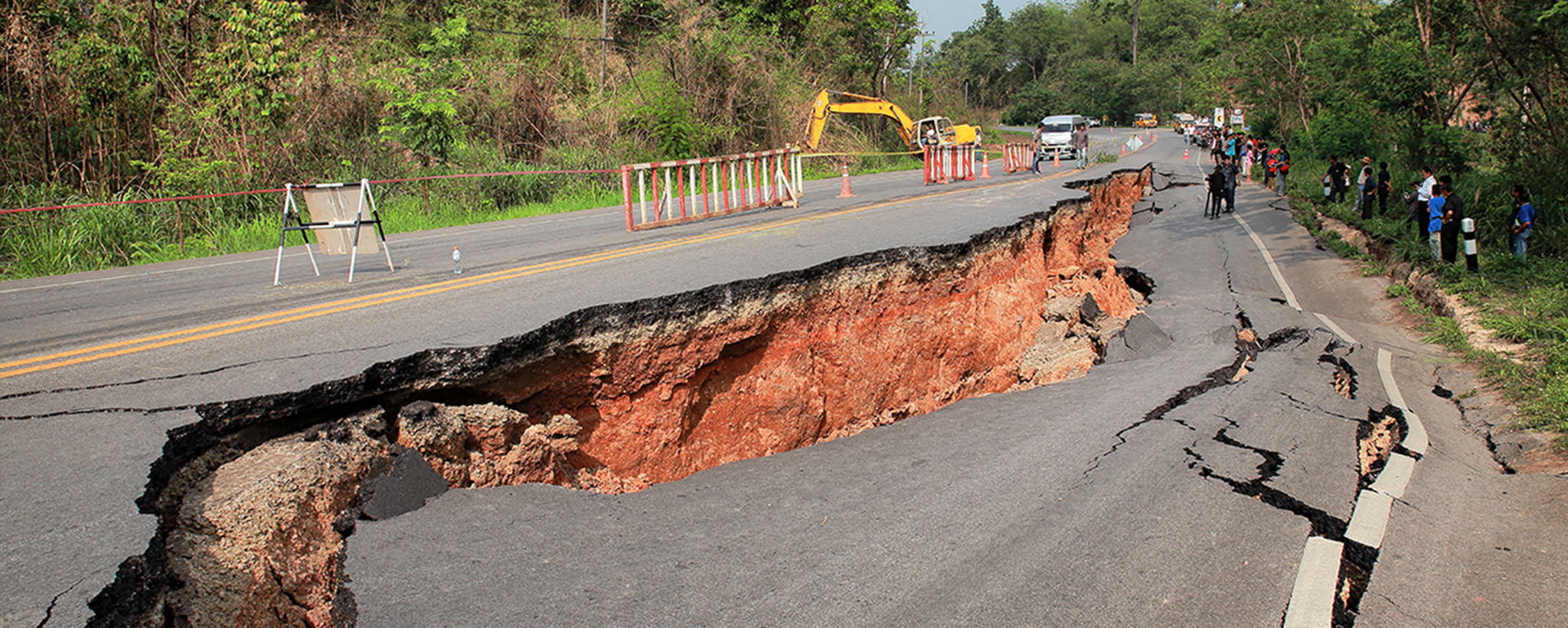
Three Large Earthquakes on This Day in History


This day in history: Three large earthquakes happened on this day in history.

In 1114, a large earthquake damaged the areas of the Crusaders in the Middle East. Antioch, Mamistra, Marash and Edessa are hit by the shocks. At least 40,000 people were killed in the earthquake; a number contested by historians due to the small population in the area at the time. These earthquakes were associated with seismic activity on the East Anatolian Fault.

In 1732, a magnitude 6.6 Irpinia earthquake caused 1,940 deaths in the former Kingdom of Naples, southern Italy.

In 1783, a 5.3 magnitude earthquake struck New Jersey. Shaking was felt from New Hampshire to Pennsylvania. A brief foreshock occurred at 9:00 PM on November 29 and an aftershock five hours later were reported only in New York City and in Philadelphia, Pennsylvania. The earthquake caused intensity VII damage on the Mercalli intensity scale. George Washington was sleeping at Fraunces Tavern when the earthquake struck, but he was not woken by the tremors.

It stands as the most powerful earthquake to occur in the state.


Tuesday, December 13, 2022

The Deadly "White Friday" on This Day in History


This Day in History: White Friday occurred on this day in 1916 during the Italian Front of World War I, when an avalanche struck Austro-Hungarian barracks on Mount Marmolada, killing 270 soldiers. Other avalanches the same day struck Italian and other Austro-Hungarian positions, killing hundreds. According to some reports both sides deliberately fired shells into the weakened snowpacks in an attempt to bury the other side, making this an early example of Mutually Assured Destruction.

An accurate estimation of the number of casualties from the White Friday avalanches is not available. Historical documents suggest at least 2,000 victims among the soldiers and a few dozens among civilians.

In the aftermath of White Friday, 10,000 soldiers on all sides were killed in December from avalanches. Altogether, it constituted the greatest number of deaths caused by snow/ice debris from avalanches in history. When including all avalanche-related deaths (this includes mud and rock slides triggered subsequently by an avalanche), White Friday is the second-worst avalanche-related disaster recorded, after the 1970 HuascarĂ¡n avalanche.

Friday, July 29, 2022

Today is National Lasagna Day


This day in history: Today is National Lasagna Day. Lasagna originated in Naples, Italy in the Middle Ages. The word “lasagna” referred to the pot in which the food was cooked. It is thought that the word “lasagna” is derived from the Greek word for "chamber pot." 

It is possible to make lasagna in the dish washer. All you have to do is put the ingredients together in a dish, cover the dish tightly with aluminum foil, then use the heated dry and sanitize cycle on your dishwasher to cook the lasagna. 

The most expensive lasagna is the $100 'Diamond and Gold' Lasagna at Portofino. This particular lasagna is stuffed with porcini mushrooms, Iberico ham and Prosciutto di Parma as well as 24-month-aged Parmigiano-Reggiano, buffalo mozzarella and Kobe Bolognese and is topped with Alfredo sauce infused with foie gras. However, the most famous lasagna in the world is John Chandler's Lasagna, a Texas lasagna described as "an artery-clogging tower of sweet Italian sausage, ground beef and ricotta cheese."

The earliest lasagna recipes known are dated from the thirteenth century. Tomatoes would not be introduced into the recipe for another 600 years.