Tuesday, April 6, 2021

The Reorganized Latter Day Saints on This Day in History


This Day in History: The Reorganized Church of Jesus Christ of Latter Day Saints, later renamed Community of Christ, was organized by Joseph Smith III on this day in 1860. Joseph Smith III was the eldest son of the LDS founder and "Prophet" Joseph Smith. The RLDS is the second largest Mormon movement. There are actually quite a few Mormon offshoot groups, in fact, there have been over 100 Mormon splinter groups, despite the LDS Church's claims of "unity." The smallest Mormon group I could find were the Cutlerites, with 12 members. I suspect that there are a large number of Adventist groups as well. The Catholic Church presently has splinter groups as well, many who reject the liberalism of the modern church. Of course, when you think about it, the Catholic Church was the one sect with the most offshoots, thanks to the Protestant Reformation 500 years ago. The Center for the Study of Global Christianity counts 45,000 denominations around the world, with an average of 2.4 new ones forming every day.


Monday, April 5, 2021

Tyrant-Maker Thomas Hobbes on This Day in History

This Day in History: English philosopher Thomas Hobbes was born on this day in 1588. Hobbes is best known for his 1651 book Leviathan, in which he expounds an influential formulation of social contract theory. In this book he postulated that a world without a strong government would be one of chaos and violence, so people need to give up many of their freedoms in order to prop up a powerful State that would protect them. 

"Hobbes labeled the State as Leviathan, 'our mortal God.' Leviathan signifies a government whose power is unbounded, with a right to dictate almost anything and everything to the people under its sway. Hobbes declared that it was forever prohibited for subjects in 'any way to speak evil of their sovereign' regardless of how badly power was abused. Hobbes proclaimed that 'there can happen no breach of Covenant on the part of the Sovereign; and consequently none of his subjects, by any pretense of forfeiture, can be freed from his subjection.' Hobbes championed absolute impunity for rulers: 'No man that hath sovereign power can justly be put to death, or otherwise in any manner by his subjects punished.' Hobbes offered what might be called suicide pact sovereignty: to recognize a government’s existence is to automatically concede the government’s right to destroy everything in its domain."~James Bovard

David Hume wrote that “Hobbes’s politics were fitted only to promote tyranny.” Voltaire condemned Hobbes for making “no distinction between kingship and tyranny … With him force is everything.” Jean Jacques Rousseau condemned Hobbes for viewing humans as “herds of cattle, each of which has a master, who looks after it in order to devour it.”

“The theory of Hobbes is a theory of unadulterated despotism, or it is nothing.”~Charles Tarlton. Tarlton also wrote: "Hobbes was fond of posing the stark alternatives of unlimited authority and the state of nature, to frighten us back into our chains. But if authority is necessarily as he described it, then maybe anarchy (and) disorganization ... are really no worse." ("The despotical doctrine of Hobbes", p. 89)

Leviathan, with its politics and its views on religion led to its being banned, and even burned at Oxford University.


Sunday, April 4, 2021

Lexicographer Isaac Funk on This Day in History


This Day in History: American Lutheran minister, editor, lexicographer, publisher, and spelling reformer Isaac K. Funk died on this day in 1912. We know him best for the Funk & Wagnalls Company which gave us the The Standard Dictionary of the English Language. Of course, this dictionary was not the first or the last to be published. The earliest dictionary in the English language was Robert Cawdrey's Table Alphabeticall, published in 1604. It lists approximately 3000 words, defining each one with a simple and brief description. It also described itself as being ‘for the benefit of Ladies … or other unskilfull persons’.The oldest known dictionaries were cuneiform tablets with bilingual Sumerian–Akkadian wordlists, discovered in Ebla (modern Syria) and dated to roughly 2300 BCE, the time of the Akkadian Empire. The word "dictionary" was invented by an Englishman called John of Garland in 1220 — he had written a book Dictionarius to help with Latin "diction". The first American dictionary was Noah Webster's, who also gave us a version of the Bible which corrected the King James Bible. He also learned 26 languages to help him write his dictionary. There are also niche dictionaries: "For example, you can find plenty of rhyming dictionaries and reverse dictionaries (that are organized by a theme rather than alphabetized). Scrolling through Wye's Dictionary Of Improbable Words: All-Vowel Words And All-Consonant Words might help you find some uncommon words to win your next Scrabble game. And Mrs. Byrne's Dictionary of Unusual, Obscure, and Preposterous Words contains weird English words that have appeared in at least one dictionary in the past. For example, you might learn that junkettaceous means worthless and cuggermugger means whispered gossiping."~Mental Floss

Oh, and the one word in the dictionary that has the most definitions is the word "set." In the Oxford English Dictionary, the word "set" has 430 separate definitions. 


Saturday, April 3, 2021

The Assassination of Jesse James by the Coward Robert Ford on This Day in History


This Day in History: Robert Ford shot wild west outlaw Jesse James in the back of the head while James was straightening a picture hanging on the wall of his Missouri home on this day in 1882. However, rumors spread for decades that the man shot by Ford was not the real Jesse James, but the victim of an elaborate plot to allow Jesse James to escape into hiding. These rumors were so persistent that James' body was exhumed in 1995 for DNA testing, but it turned out that the body was actually Jesse James. That was not enough however for some so two other bodies were dug up for DNA testing. One was the body of a Kansas farmer who'd died in 1935; the other was that of Frank Dalton of Granbury, Texas, who claimed to be the true Jesse James until his death in 1951—which would have made him 103 years old.

There have been numerous portrayals of Jesse James in film and television, starting with the 1921 movie Jesse James Under the Black Flag starring Jesse James' son, all the way to the 2007 movie, The Assassination of Jesse James by the Coward Robert Ford, played by Brad Pitt, with Casey Affleck as Bob Ford. The film is considered one of the most historically accurate portrayals of Jesse James and Robert Ford.

See also: Buffalo Bill & the American Wild West, 200 Books on DVDrom
https://thebookshelf2015.blogspot.com/2015/09/buffalo-bill-american-wild-west-200.html


Friday, April 2, 2021

The Titanic on This Day in History


Get this book at Mysteries of the Sea - 200 Books on DVDrom or The Titanic and other Naval Disasters - 50 Rare Books on CDrom

For a list of all of my digital books, click here

This Day in History: The ship that "God couldn't sink," the RMS Titanic began its sea trials on this day in 1912. We all know the fate of the Titanic, but did you know that a book was published 14 years prior that foreshadowed what happened to the Titanic. Morgan Robertson wrote "The Wreck of the Titan: Or, Futility" where his fictional ship (the Titan) sank in April in the North Atlantic, and there were not enough lifeboats for all the passengers. There are also similarities in size, speed, and life-saving equipment. After the Titanic's sinking, some people credited Robertson with precognition and clairvoyance, which he denied.

In 1917 a similar puzzling and mysterious incident occurred. Miriam French, an American woman, was on board The City of Athens, sailing from Cape Town, Africa to America. During her voyage Mrs. French amused herself by writing a story about the ship and imaginary passengers, and ended the tale by having the ship strike a mine and sink into the sea. Two months later The City of Athens met that exact fate. 


Thursday, April 1, 2021

Bloody William Harvey on This Day in History


Buy this Kindle book on Amazon on the Strange History of Medicine for only 99 cents
See a local listing for it here

This Day in History: English physician William Harvey was born on this day in 1578. He was the first known physician to describe completely, and in detail, the systemic circulation and properties of blood being pumped to the brain and the rest of the body by the heart, though earlier doctors such as Michael Servetus held similar theories. His discovery made him one of the most important people in history.

Harvey also opposed the witchcraft trials and he is one of the earliest critics of blood-letting. Blood-letting was a standard medical procedure for about 2,300 years. It was thought at the time that disease was caused by an excess of blood, so blood was removed by either slitting open the skin (venesection) or by applying leeches. In 1833, 41 million leeches were imported into France for that very purpose. Blood-letting stopped being used as medicine about 170 years ago, but not before killing countless thousands through the years, including George Washington. 

The look of the barber pole is linked to bloodletting, with red representing blood and white representing the bandages used to stem the bleeding.


Wednesday, March 31, 2021

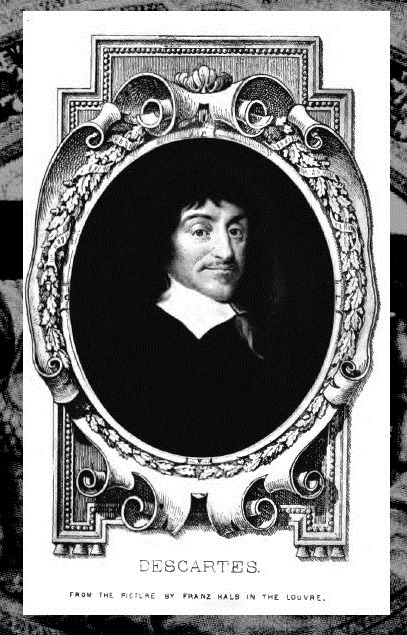
The Strange René Descartes on This Day in History


This Day in History: RenĂ© Descartes was born on this day in 1596. You may know him for his axiom "I think therefore I am" (Cogito Ergo Sum) and his mind-body dualism, but did you know that he had a fetish for cross-eyed women? He also slept in ovens. Many philosophers had strange peccadilloes. Kant was a hypochondriac and kept an intense and prolonged obsessive daily routine. Albert Camus feared that he would die young, and he died in a car crash at the relatively young age of 46. Soren Kierkegaard believed his family was under a curse from God that seemed prophetic as most of his family died young. Nietzsche was obsessed with eating fruit — sometimes as much as 6.5 pounds per day. Voltaire would drink upwards of 40 cups of coffee a day. Arthur Schopenhauer didn't much like people, but he loved his poodles and he kept a bunch of them...and they all shared the same name: BUTZ! Jean-Jacques Rousseau was an expert on children, but he selfishly abandoned all of his 5 kids. Karl Marx wrote of capitalists that exploited their workers, yet he never paid his maid.

See also Norman Smith's Studies in the Cartesian Philosophy 1903
https://thebookshelf2015.blogspot.com/2016/03/norman-smiths-studies-in-cartesian.html

Descartes, Spinoza & Philosophy - 230 Books on DVDrom (Rationalism, Hume, Kant)
https://thebookshelf2015.blogspot.com/2015/10/descartes-spinoza-philosophy-230-books.html

Rene Descartes and the Soul by John Pancoast Gordy 1890
https://thebookshelf2015.blogspot.com/2017/02/rene-descartes-and-soul-by-john.html

Descartes and the Pineal Gland By HP Blavatsky
https://thebookshelf2015.blogspot.com/2018/01/descartes-and-pineal-gland-by-hp.html