Saturday, May 16, 2026

A Paean, an 1831 Poem by Edgar Allan Poe


A Paean is an 1831 poem by Edgar Allan Poe, that would eventually become Lenore.

A Pæan by Edgar Allan Poe

I
How shall the burial rite be read?
The solemn song be sung?
The requiem for the loveliest dead,
That ever died so young? 

II
Her friends are gazing on her,
And on her gaudy bier,
And weep! — oh! to dishonor
Dead beauty with a tear! 

III
They loved her for her wealth —
And they hated her for her pride —
But she grew in feeble health,
And they love her — that she died. 

IV
They tell me (while they speak
Of her “costly broider’d pall”)
That my voice is growing weak —
That I should not sing at all — 

V
Or that my tone should be
Tun’d to such solemn song
So mournfully — so mournfully,
That the dead may feel no wrong. 

VI
But she is gone above,
With young Hope at her side,
And I am drunk with love
Of the dead, who is my bride. —  

VII
Of the dead — dead who lies
All perfum’d there,
With the death upon her eyes,
And the life upon her hair. 

VIII
Thus on the coffin loud and long
I strike — the murmur sent
Through the grey chambers to my song,
Shall be the accompaniment. 

IX
Thou died’st in thy life’s June —
But thou did’st not die too fair:
Thou did’st not die too soon,
Nor with too calm an air.

X
From more than fiends on earth,
Thy life and love are riven,
To join the untainted mirth
Of more than thrones in heaven —

XI
Therefore, to thee this night
I will no requiem raise,
But waft thee on thy flight,
With a Pæan of old days.


Sunday, November 9, 2025

Shakespeare and the King James Bible (Detroit Free Press 1920)


From the Detroit Free Press 1920:

The Harvard Faculty has done the cause of American culture solid service by demanding that all students who concentrate in English or in ancient or modern languages shall have a good working acquaintance with the English Bible and with twelve plays of Shakespeare when they appear for their final examination. Without this knowledge there is to be no graduation.

The announcement setting forth the requirements laid down is significant and fully interpretative of the action of the faculty. It says that the Bible and the plays of Shakespeare are works of literature without which an adequate appreciation of English letters is impossible, and it adds:

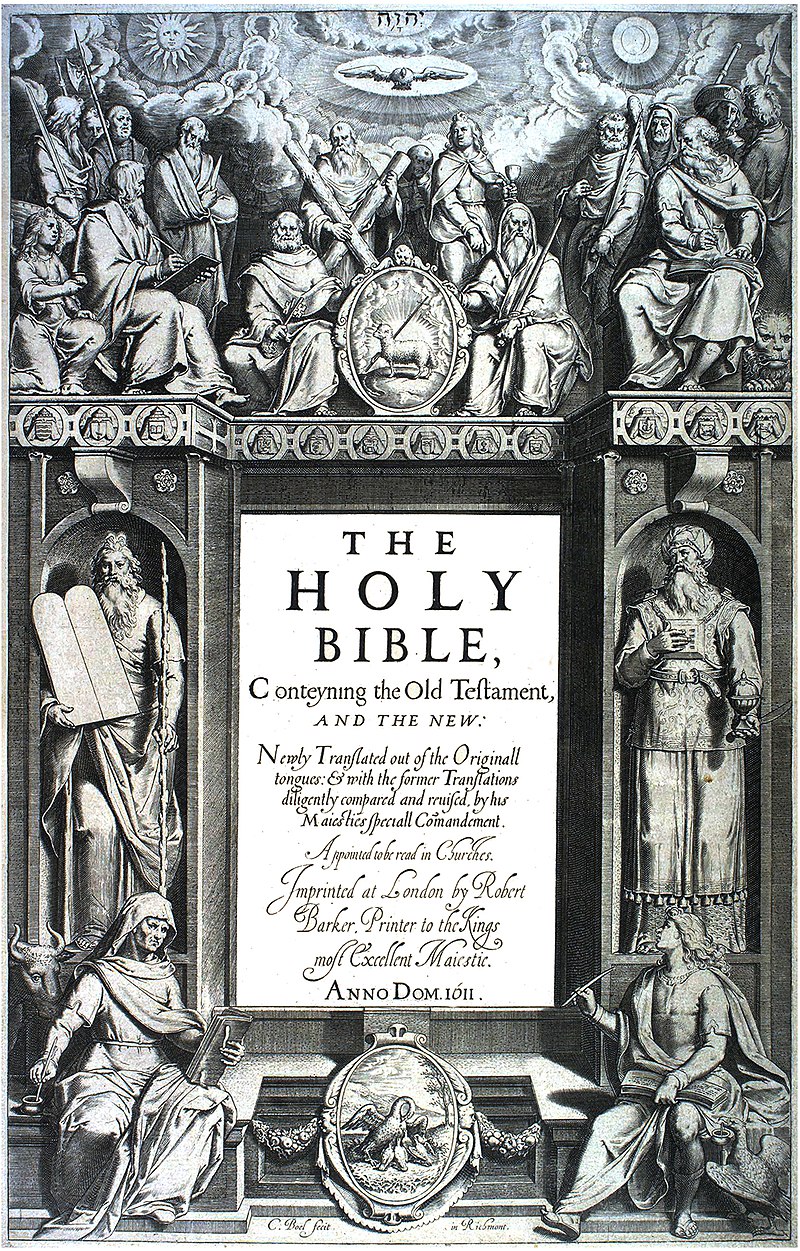
"The King James version of the Bible is one of the great monuments of English prose, but any standard version, ancient or modern, may be used. The plays of Shakespeare as foremost among the masterpieces of the English tongue are indispensable to all students of literature. Moreover, the language of Shakespeare, like that of the Bible, has become part and parcel of our familiar speech."

Considered purely from the educational standpoint, the fragmentary knowledge of the text of the English Bible possessed by tens of millions of Americans is a deplorable, almost appalling, thing. And the widespread lack of knowledge regarding even the relatively best known of the plays of William Shakespeare is absolutely pitiable. Altogether the prevalent and, we fear, growing ignorance of the contents of the Bible and the works of the bard of Stratford is responsible for a large amount of superficiality and flatness of outlook among present-day Americans, and it is refreshing to find the oldest institution of higher learning in this country taking so firm and thoroughgoing a stand in behalf of these fundamental masterpieces of the language. 


Friday, September 5, 2025

Altruist Philosopher Auguste Comte on This Day in History


This Day in History: Socialist philosopher Auguste Comte died on this day in 1857. He was the man who coined the term "altruism" and believed that man's highest ideal was to live for others. 

Julius Lloyd wrote in 1884:

"The reasonableness and consistency of M. Comte's doctrine suffer by his arbitrary choice of certain names as representative of Humanity in the past. The selection of 'those who have played their part worthily in life," assumes a power of deciding what is worthy or unworthy, which begs the whole question as to what is the governing principle of morals. The entire scheme depends on the manner in which this choice is exercised, for the ideal of Humanity is defined by means of the representative names which are taken. M. Comte's calendar of names exhibits his own ideal, but not that of any one who differs from him. Mankind are far from being agreed as to the chief characteristics of worth. If Dante, Milton, and Goethe, to take three of the most discerning intellects, were to nominate "those who have played their part worthily in life,' their choice would differ widely in the result. A system of morals, in which so much depends on individual judgment, has no right to profess universality. It is really eclectic, and its pretended comprehensiveness is an illusion.

There is an obvious resemblance between Comte's Altruism and Christian morality, which makes it important to note the particulars in which they are agreed, and those in which they are opposed. They have in common the inculcation of brotherly love as a supreme duty, the worship and imitation of an ideal Humanity, the separation of a select body from the world at large. But Comte's system is in other respects not only distinct, but antagonistic to Christianity. God and Christ are excluded with a jealous intolerance. What is retained is a Brotherhood without a Fatherhood, a Body without a Head. What Comte offers as an ideal of Humanity is a Torso of Christianity, which he has mutilated. It is a curious contradiction of the first principle of Altruism, that the modern gospel of unselfishness should be a selfish plagiarism, in which a large part of the Christian morality is republished with the Author's name expunged.

On one point, however, Comte's Altruism advances beyond the limits of Christian doctrine. He teaches that, instead of loving our neighbour as ourselves, we should endeavour not to love ourselves at all. And this, which is the most original feature in Comte's doctrine, is claimed by his followers as an improvement on Christianity.

A fair comparison of the two will show that this fancied superiority is a dream of the study, and betrays a want of acquaintance with human nature. To exclude self-love is to take away the natural provision for self-preservation and self-culture, which are necessary conditions of the welfare of society. On the other hand, to make self-love a standard of brotherly love, as in the precept, 'Thou shalt love thy neighbour as thyself,' is to supply the most effective means by which brotherly love can promote its own object. Altruism without Egoism would be a vague yearning for the happiness of others, without any clear idea of happiness, what it is, or how it is to be obtained. If we suppose a company of pedestrians, each troubled in mind to be sure that his companions' boots fit them comfortably, and indifferent to his own, we should have a picture of a state of society in which Egoism was extinguished and Altruism remained. It would be necessary to find some kind of substitute for Egoism, in order to keep alive the sensibility to pleasure and pain, which is as necessary for the happiness of others as for our own. A man who wishes to make others happy has more power to do so in proportion as he feels sympathy in their pleasure; and thus Egoism has a function preparatory to Altruism. On strictly Altruist principles arts and sciences would languish. That which impelled Columbus to the discovery of America, and led on the inventors of the printing press and the steam engine, was not a prevision of the social benefits to follow, but rather an unsatisfied desire of the mind to accomplish a noble object."

Many today still uphold altruism as the highest moral ideal. I don't. However, Altruism simply does not put food on the table. As Adam Smith remarked back in 1776, "It is not from the benevolence of the butcher, the brewer, or the baker that we expect our dinner, but from their regard to their own interest."

Saturday, June 7, 2025

The Importance of Reading is Incalculable, by Joseph Barker 1847


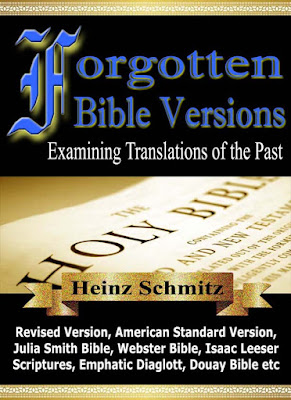
Buy this published Kindle book on Amazon on Forgotten Bible Versions for only 99 cents  and Buy Forgotten Tales of Dogs - 60 Chapters of Dogs in Legend, Lore, Love, Loyalty and Intelligence for only 99 cents

The importance of reading is incalculable, by Joseph Barker 1847

Who will question the usefulness of the art of reading? Where is the orthodox man himself who will say that inability to read is not a calamity, or that the ability to read is not a great blessing? The importance of reading is incalculable! If a man cannot read, he is shut out from one of the most important means of gaining knowledge. If a man cannot read, he is unable to peruse the sacred Scriptures themselves. Reading is one of the most important arts in existence. To be unable to read is one of the greatest calamities under which a man can labour. To be able to read is one of the greatest blessings that a man can enjoy. The art of reading has been to me both one of the greatest advantages and one of the greatest pleasures of my life. The eyes themselves are not of greater service to the body, than the power of reading to the mind. The first thing therefore which we propose to teach is a good thing. In enabling people to read the Scriptures, and to read such other books as are calculated to give them knowledge and to minister to their comfort and improvement, we must be doing good.

The second thing we propose to teach is writing. Writing is of as much importance as reading. In one sense it is more important. Reading is dependant upon writing. There can be no reading without writing. If no one writes books, no one can read books. It is as important therefore that people should be able to write, as it is that they should be able to read.

The ability to write is calculated to prove a blessing to people in various ways. It is calculated to prove a blessing and a benefit to them in temporal matters. The man that can write is both better able to help himself, and better able to help and serve others, than the man that cannot write. The man that cannot write finds himself labouring under disadvantages innumerable. He cannot keep an account of his own labour. He cannot write down the directions which he may receive with respect to his journey or his work. He cannot correspond with his absent friends. He cannot send a word of counsel or advice, of rebuke or consolation, to any one at a distance. He cannot keep a record of his thoughts. He cannot put down the instructions which he receives from books or lecturers, from private friends or from public teachers. The man that cannot write cannot read writing. If he receives a letter from a friend, it must be entrusted to another to be read. And if he wishes to send a letter to another, he must have the expense and inconvenience of employing another party.

The man who cannot write is shut out from one of the most important means of usefulness to his fellow-men. There is no way in which men have more effectually and extensively served the interests of truth and righteousness, and promoted the welfare of their fellow-men, than by writing. What a blessing has the Bible been to mankind! Yet we are indebted for the Bible to the art of writing. What infinite blessings have been conferred upon the world by other good books! Yet for all those books we have been indebted to the art of writing. What a vast and happy influence are books and tracts exerting upon the world at this moment! Yet for all those books and tracts we are indebted to the art of writing. How many dark minds are illumined, how many sad hearts are cheered, how many unbelievers are convinced, how many erring Christians are instructed, how many feeble and irresolute souls are strengthened by the instrumentality of books and tracts! Yet for all those books and tracts we are indebted to the art of writing. What wonders books are working both in this country and in Europe at large! What wonders they are working in America! What a mighty revolution they are effecting both in politics, in commerce, and in religion! Yet for all these wondrous effects we are indebted to the art of writing.

Writing enables a man to speak to the most distant inhabitants of the earth, and to the remotest ages of time. The art of writing enables a man to speak to millions at a time, and to speak to them unceasingly for hours and days and weeks, aye, even for months and years together. The arts of reading and writing together, enable us to converse with the distant and with the dead; with the highest and best of our race; with the greatest philanthropists and the brightest geniuses; with men of all ranks; with the skillful in every branch of knowledge, and in every useful art. The arts of writing and reading make man's social and domestic circle as wide as the world, and enable him to carry along with him on his journey without expense and without inconvenience, the best and the brightest companions which have ever adorned the earth, or glorified human nature. But if we were to speak for days we should not be able to unfold or to display at full the advantages which the art of writing confers upon men. worth is infinite. The blessings which it has conferred upon the human race can never be numbered. The blessing's which it is now conferring upon the human race can never be numbered. The good that it is doing at this moment is beyond all conception; and the good that it will continue to do will be the same: it will be both boundless and eternal.

In teaching people to write therefore we are conferring upon them one of the greatest blessings which man can enjoy. We are, in fact, raising man to a higher rank of being. We are making him almost as much superior to a man who cannot read and write, as a man is superior to a brute. We are giving him a power that knows no limits. We are imparting to him a blessing which is inestimable. We are fitting him for usefulness to his fellow-creatures without all bounds. Where would Bunyan have been, -Where would Milton, or Locke, or Newton have been, if it had not been for the ability to read and to write? Where would have been the bright names of Penn, of Howard, and of Fox, if it had not been for their ability to read and to write? Where would have been all those rich and boundless treasures which we find in our works of philosophy, our works of poetry, our books of history, our writings in theology, in morality, and in science,

I say, where would all these rich, these vast, these invaluable treasures have been, if it had not been for the art of writing? They would either never have been created, or would have been buried in darkness, and never seen the light. It is the art of writing that has created those treasures; it is the art of writing that has preserved those treasures. On the art of writing we are dependant for the spiritual wealth of the world. And not for the spiritual wealth of the world only, but for the wealth of the world in general. To the art of writing we are indebted for the blessings of freedom, of commerce, and of peace. To the art of writing we are indebted, though it may seem strange to some, for the cultivation of our fields, for our crops of corn, for the flowers and fruits in our gardens, for the roads on which we travel, for the quick dispatch of our letters, for the rapid railway train, and for the electric Telegraph. But on this subject I have published my sentiments at large in the pamphlet entitled Mercy Triumphant.' It is not therefore necessary to say more on this subject here. There are few, we imagine, who will call in question the great usefulness of the art of writing. There are few, we imagine, but what will acknowledge, that in teaching people to write we are imparting to them a most important power, and conferring upon them a great advantage, an invaluable blessing. ing. There are few, in short, but what will acknowledge, if they are candid, and will consider the subject, that in teaching people to write, we are engaged in doing good; great good.

200 Books on Fantasy and Science Fiction to Download...for only $3.00

The History & Mystery of Money & Economics-250 Books to Download

Wednesday, June 4, 2025

The Killdozer Destruction of a Small Town on This Day in History


Today is the 21st anniversary of the day when Marvin Heemeyer took his modified "Killdozer" and wreaked havoc on Granby, CO. Much of Heemeyer's anger was because of zoning laws which hampered his business. 

Few realize how evil zoning laws can be. Zoning arrests development forever, it encodes decay into law. Kallan Welsh posits that zoning laws are even more destructive than war.


"Housing has become unaffordable for too many Americans. Reforming zoning, particularly single-family zoning, will not only help address housing affordability; it will also restore Americans’ right to use their properties as they see fit."


Wednesday, March 26, 2025

The Book of Mormon on this Day in History


This day in history: The Book of Mormon was published on this day in 1830. In 1823 Joseph Smith claims to have found the golden plates after being directed by God through the Angel Moroni to the place where they were buried. This then led to the Book of Mormon and an overpriced musical on Broadway. 

The Church of Jesus Christ of Latter-day Saints has printed and distributed over 200 million copies of the Book of Mormon, with the first edition in 1830 including 5,000 copies. 

By the year 2000, the Church had distributed 100 million copies. The Church has doubled the number of copies distributed, reaching 200 million by the summer of 2023. The Book of Mormon has been published in 113 languages.

However, there were a few issues with the Book of Mormon:

The French word "Adieu" closes the book of Jacob (Jacob 7:27). The Book of Mormon dates Jacob between 544 and 421 BC. The French language didn't even exist until around 700 AD!

The Book of Ether speaks of steel (7:8,9) and breakable windows (2:23) back in Abraham's era. Neither had been invented at that time.

The Book of Mormon implies that the North American Indians are descended from the Jews. But we now know that American natives are descended from east Asia.

2 Nephi 22:2 quotes Isaiah 12:2 almost verbatim from the King James Bible:

"Behold, God is my salvation; I will trust, and not be afraid: for the Lord Jehovah is my strength and my song; he also is become my salvation."

However, this scripture in the Book of Mormon is dated at 559 and 545 BCE, the King James Bible was not released until 1611 AD.

However, one of my favorite quotes about the Mormons comes from a Jewish academic, Alan Goldberg:

"Mormonisn teaches the deity of Christ and the Trinity, and freely admits its followers recognize many gods. Trinitarian Christianity denies that it is in any way polytheistic, but is it not the same basic qualitative form of theology" It is not a perversion of Trinitarian theology to draw a parallel to Mormonisn, Yet, it would be impossible to draw this parallel from Judaism or Unitarian Christianity, neither of which ever recognized component parts of God, nor ever made God a man. It is clear that, except for differences in degree, the same basic principles for the foundation of Trinitarian Christianity and Mormonism. The qualitative similarity is that both teach multiple divine entities. The qualitative difference is that Mormonism admits it." Every Tree is Known by Its Fruit-A Journal of Radical Reformation Vol. 6, No. 1, Fall 1996

As of December 31, 2023, The Church of Jesus Christ of Latter-day Saints (LDS Church) reported a worldwide membership of 17,255,394.

Read the Unitarian Standard Version Bible at https://usvbible.blogspot.com/ 


Wednesday, February 19, 2025

Introducing the Unitarian Standard Version New Testament


This work is an update of the American Standard Version of 1901. Corrections were made to reflect the findings discovered in the newer editions of the Critical Greek Texts. This is a Unitarian version of the ASV. Most other Bibles reflect a Trinitarian theology, which is a belief that was alien to the early church. Read more at https://usvbible.blogspot.com


1 Now when Jesus was born in Bethlehem of Judaea in the days of Herod the king, behold, astrologers(a) from the east came to Jerusalem, saying, 2 "Where is he that is born King of the Jews? for we saw his star in the east, and are come to pay homage(b) to him." 


"The voice of one crying in the wilderness, 'Make ye ready the way of Jehovah(a), Make his paths straight(b).'"

"The Bible has now been pretty well rescued from the control of clerics and theologians and restored to the common people, where it belongs."~Edgar J. Goodspeed


"Ye shall not tempt Jehovah your God, as ye tempted him in Massah." (see Darby & Bullinger). "Thou shalt not tempt - To expose myself to any danger naturally destructive, with the vain presumption that God will protect and defend me from the ruinous consequences of my imprudent conduct, is to tempt God." Adam Clarke

Sunday, January 26, 2025

Banning "The Twist" on This day in History


This day in History: On this day in 1962, Bishop Burke of Buffalo Catholic dioceses declares Chubby Checker's "The Twist" to be impure and banned it from all Catholic schools.

"Calling the song and accompanying dance impure, and saying it lacked a proper sense of decorum and good taste, Bishop Burke prohibited all Catholics from performing the dance. This action earned Bishop Burke the dubious nickname 'Bishop Buzzkill' in 1962." Source

Also, in 1952, the Catholic Church denounced the holiday song “I Saw Mommy Kissing Santa Claus”. 

In 1957, Cardinal Stritch of the Catholic archdiocese in Chicago, prohibited all Rock 'n' Roll music from their schools, fearing that "Its rhythms encourage young people to behave in a hedonistic manner".

In 1978, "Billy Joel's 'Only the Good Die Young' was banned in Boston and New Jersey after several religious groups deemed the lyrics anti-Catholic." Source


Saturday, January 4, 2025

Absurdist Thinker Albert Camus on This Day in History


This Day in History: Author and philosopher Albert Camus died in a car crash on this day in 1960, on a straight country road with an unused train ticket in his pocket. How absurd. 

Camus wrote that there "is but one truly serious philosophical problem, and that is suicide. Judging whether life is or is not worth living amounts to answering the fundamental question of philosophy." He told a sad & poignant story of a building manager who had killed himself because he had lost his daughter five years before, which greatly changed him and that the experience had “undermined” him. According to Camus "A more exact word cannot be imagined. Beginning to think is beginning to be undermined."

Though he once was a Communist, he dropped that ideology in favor of freedom.

"Because he was not a partisan in the Cold War between the U.S./NATO and the U.S.S.R, Albert Camus was an oddball.  As a result, he was criticized by the right, left, and center.  His allegiance was to truth, not ideologies.  He opposed state murder, terrorism, and warfare from all quarters.  An artistic anarchist with a passionate spiritual hunger, an austere and moral Don Juan, this sensual man of conscience and honor earned his reputation by a lifelong literary meditation on death in all its guises: disease (he was constantly threatened by tuberculosis), murder, suicide, capital punishment, war, etc.; deaths both 'happy' and absurd, sudden and slow.  His enemy was always injustice and those powerful ones who thought they had the right to make others suffer and die for their perverted purposes.  An artist compelled by history to enter the political arena, he spoke out in defense of the poor, oppressed, and powerless.  Among his enemies were liberal imperialism and Soviet Marxism, abstract ideologies used to enslave and murder people around the world." Edward Curtin

Some quotes from Camus:

"The real passion of the twentieth century is servitude."

"It is a kind of spiritual snobbery that makes people think they can be happy without money." 

"The only way to deal with an unfree world is to become so absolutely free that your very existence is an act of rebellion."

"Political utopias justified in advance any enterprises whatever."

"The welfare of the people…has always been the alibi of tyrants…giving the servants of tyranny a good conscience."

"The tyrannies of today…no longer admit of silence or neutrality…I am against."

"The only conception of freedom I can have is that of the prisoner or the individual in the midst of the state. The only one I know is freedom of thought and action."

"Absolute domination by the law does not represent liberty, but without law there is no freedom."

"Freedom is not a gift received from the State."

"Freedom is not a reward or a decoration…It’s a long distance race, quite solitary and very exhausting."

"Freedom is nothing else but a chance to get better, whereas enslavement is a certainty of the worse."

"Liberty ultimately seems to me, for societies and for individuals…the supreme good that governs all others."

"Is it possible…to reject injustice without ceasing to acclaim the nature of man and the beauty of the world? Our answer is yes."

"We have to live and let live in order to create what we are."

"The aim of art, the aim of a life can only be to increase the sum of freedom and responsibility to be found in every man and in the world. It cannot, under any circumstances, be to reduce or suppress that freedom."

"Without giving up anything on the plane of justice, yield nothing on the plane of freedom."

"More and more, when faced with the world of men, the only reaction is one of individualism. Man alone is an end unto himself."

Friday, November 29, 2024

C.S. Lewis on This Day in History


Buy The Doctrine of the Two Natures in Christ EXPOSED! for only 99 cents on Amazon by clicking here. Click here for a local listing.

This day in history: British writer, literary scholar, and Anglican lay theologian, C.S. Lewis, was born on this day in 1898. 

In a much-cited passage from Mere Christianity, Lewis challenged the view that Jesus was a great moral teacher but not God. He argued that Jesus made several implicit claims to divinity, which would logically exclude that claim.

However, Jesus never claimed to be God. 

The argument relies on the assumption that Jesus claimed to be God, something that most biblical scholars and historians of the period do not believe to be true. A frequent criticism is that Lewis's trilemma depends on the veracity of the scriptural accounts of Jesus's statements and miracles. The trilemma rests on the interpretation of New Testament authors' depiction of the life of Jesus; a widespread objection is that the statements by Jesus recorded in the Gospels are being misinterpreted, and do not constitute claims to divinity. According to the biblical scholar Bart D. Ehrman, it is historically inaccurate that Jesus called himself God, so Lewis's premise of accepting that very claim is problematic. Ehrman stated that it is a mere legend that the historical Jesus called himself God, and that this was unknown to Lewis since he never was a professional Bible scholar.

In Honest to God, John A. T. Robinson, then Bishop of Woolwich, criticizes Lewis's approach, questioning the idea that Jesus intended to claim divinity: "It is, indeed, an open question whether Jesus claimed to be Son of God, let alone God". John Hick, writing in 1993, argued that this "once popular form of apologetic" was ruled out by changes in New Testament studies, citing "broad agreement" that scholars do not today support the view that Jesus claimed to be God, quoting as examples Michael Ramsey (1980), C. F. D. Moule (1977), James Dunn (1980), Brian Hebblethwaite (1985), and David Brown (1985). Larry Hurtado, who argues that the followers of Jesus within a very short period developed an exceedingly high level of devotional reverence to Jesus, at the same time says that there is no evidence that Jesus himself demanded or received such cultic reverence. According to Gerd Lüdemann, the broad consensus among modern New Testament scholars is that the proclamation of the divinity of Jesus was a development within the earliest Christian communities.

Sunday, November 17, 2024

The Birth of Jesus on This Day (November 17) in History


According to Clement of Alexandria, an early church father, Jesus was born on November 17, 3 B.C.

Theories concerning the exact month when Jesus was born have been and still are a topic of scholarly debate. 

Here are some theories:

Dr. Colin Nicholl believes that Jesus was born on October 20, 6 B.C.,, based on the idea that the star that led the magi to Bethlehem was a comet. 

Dr. Michael Heiser believes that Jesus was born on September 11, 3 B.C., based on astronomical software and his calculation of King Herod's death in 1 B.C.

"The month of Jesus' birth has...been a point of debate, with one theory suggesting that the Star of Bethlehem may have been Venus and Jupiter coming together to form a bright light in the sky, a rare event that occured in June of 2 B.C. Another possibility is a similar conjunction between Saturn and Jupiter, which occurred in October of 7 B.C." Live Science

"The Qur'an, which is the source of Islamic tradition tells the story of Mary and the birth of Jesus (known in Islam as Messenger of God) most prominently in Chapter 19. According to verse 19:25, during labor Mary was told to shake a palm tree so that ripe dates would fall off. This description, combined with the ripening period of dates places the birth of Jesus somewhere between June and October, with later times being more likely due to dates falling off easily. In the hadith compilation Tuhaf al-Uqul, the sixth imam, Jafar As Sadiq says the following when approached about the birth of Jesus during Christmas: "They have lied. Rather, it was in the middle of June. The day and night become even [equal] in the middle of March". This statement of his does not literally mean it was on 15 June but it is in reference to a day near the spring equinox." Wikipedia

Google's AI gives this response: "The exact month of Jesus' birth is unknown, but there are several theories: 
September
One calculation suggests that Jesus was born in Tishri, which is around mid to late September. This calculation is based on the conception of John the Baptist in Sivan (June), and then counting forward nine months for Mary's pregnancy. 
December 25
Some historians believe that Jesus was born on December 25 because they thought that righteous men died on their birthdates. However, the Bible does not mention December 25 as the date of Jesus' birth. 
Between 6 B.C. and 4 B.C.
Some scholars believe that Jesus was born between these years based on the biblical story of King Herod the Great. 
Other theories include:
November 18, based on the oldest written records 
Some other month, as no one knows for sure 
The celebration of Christmas on December 25 is not based on the historical date of Jesus' birth. 
Some say that Jesus' birth took place between June and October based on the description in the Bible of Mary shaking a palm tree to get ripe dates during labor. 
Some believe that Jesus was born during the Feast of Tabernacles, which took place from October 6–13 in 4 BC."

"Ian Paul is a writer who has discussed the possibility that Jesus was born in September: 
When was Jesus born?
According to one calculation, Jesus was born in September, around the middle of the month. This calculation is based on the idea that John was conceived around the beginning of June, and then adding the six months between John and Jesus, and the nine months of Mary's gestation. 
Why September?
If Jesus was born in September, it would have been close to the time of Succoth, a major pilgrim feast that commemorates the time Israel lived in tents in the wilderness. It would also have been plausible for shepherds to be outdoors in September, as the weather is usually mild at that time of year." Google's AI

The Church of Jesus Christ of Latter-day Saints (LDS) does not have an official position on the exact date of Jesus' birth. However, many Mormons have long believed that Jesus was born on April 6, 1 BC, based on a 1915 book by Elder James E. Talmage. Talmage's book, Jesus the Christ, interpreted a verse in the Doctrine and Covenants as a revelation of Jesus' birth date. 


Saturday, November 9, 2024

Jack the Ripper on This Day in History


This Day In History: Jack the Ripper murdered Mary Jane Kelly on this day in 1888, becoming his final victim in the Whitechapel murders.

At the time of Kelly's death, she was approximately 25 years old, working as a prostitute and living in relative poverty.

The canonical five Ripper victims are Mary Ann Nichols, Annie Chapman, Elizabeth Stride, Catherine Eddowes, and Mary Jane Kelly.

There have been many theories as to who the Jack the Ripper might have been, including Alice in Wonderland author Lewis Carroll, Prince Albert Victor, son of Edward VII and grandson of Queen Victoria, British artist Walter Sickert, a German sailor named Carl Feigenbaum who was executed for murdering a New York woman in 1894, and Whitechapel mortuary attendant Robert Mann. 

Some believe that Jack the Ripper was an American. Richard Mansfield, an American actor working on the London stage was one such suspect. Mansfield was performing in the London production of the Strange Case of Dr Jekyll and Mr Hyde in 1888 during the time that Jack the Ripper was murdering women in London. One frightened theatre-goer wrote to the police accusing Mansfield of the murders because he could not believe that any actor could make so convincing a stage transformation from a gentleman into a mad killer without being homicidal. 

American serial killer H.H. Holmes has also been accused to being Jack the Ripper, and the timeline of his killings certainly makes that seem possible, and Holmes' great-great-grandson, Jeff Mudgett, certainly believes so, and he wrote the book Bloodstains to prove it.

Others actually believe that Theosophist Madame Helena Blavatsky may have been the killer. Even Sherlock Holmes author Arthur Conan Doyle faced scrutiny as the possible JTR.

Others, like Sherlock Holmes author Sir Arthur Conan Doyle believed it might have been a woman, a Jill the Ripper, possibly a midwife. "The idea was that a midwife would be the only type of woman capable of killing in such a gory way. Rumors that Mary Kelly was pregnant at the time of her death fed into the theory, due to a midwife’s easy access to other women’s homes. No one would look twice at a midwife with blood on her clothing, and moreover she could slip away from her crime scenes unnoticed the way the Ripper was notorious for doing."~Emily Rose

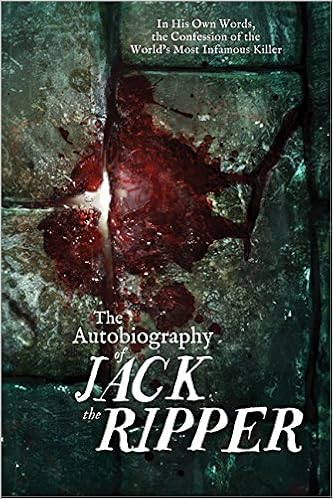
Jack the Ripper is featured in hundreds of works of fiction and works which straddle the boundaries between fact and fiction, including the Ripper letters and a hoax diary: The Diary of Jack the Ripper. The Ripper appears in novels, short stories, poems, comic books, games, songs, plays, operas, television programmes, and films. More than 100 non-fiction works deal exclusively with the Jack the Ripper murders, making it one of the most written-about true-crime subjects. The term "Ripperology" was coined by Colin Wilson in the 1970s to describe the study of the case by professionals and amateurs.

See also: On Jack the Ripper by John E. Watkins 1919
https://thebookshelf2015.blogspot.com/2017/12/on-jack-ripper-by-john-e-watkins-1919.html

Jack the Ripper Identified
Unmasking Jack the Ripper more than 130 years after he vanished.
https://www.psychologytoday.com/us/blog/wicked-deeds/201401/jack-the-ripper-identified

Your's Truly, Jack the Ripper by Robert Bloch
http://www.unz.org/Pub/WeirdTales-1943jul-00083


Sunday, October 27, 2024

Constantine's Vision of the Cross on This Day in History


Today in history: On this day (October 27) in 312, Emperor Constantine claimed to have had a vision of a cross in the sky and heard the words "in this sign, you will conquer". This vision is said to have led to Constantine's conversion to Christianity and his victory at the Battle of the Milvian Bridge on October 28, 312.

Just how Christian was Constantine?

History is full of myths, tales in where we make mere men as gods and heroes. Molehills of moments blown into mountains of false memories. How many of us truly know that George Washington did not really cut down the cherry tree, or that Helen Keller was a communist, that the first Thanksgiving with the pilgrims didn't happen as told, that Martin Luther was an anti-Semite and John Calvin a murderer? We paint our heroes with the broad stroke of perfection, and the same goes for Constantine the Great, the first "Christian" Emperor. Some books will have you believe that Constantine was used by God, and that he was a "Saint."

Constantine, after his conversion to Christianity, was still a Sun Worshipper who killed his Son and had his wife drowned.

"To pass for a Christian would, indeed, have been a great presumption on his part. Not long after the Council of Nicaea he suddenly had Crispus, his excellent Son by his first marriage and a pupil of Lactantius, put to death at Pola in Istria (326), and soon thereafter he had his wife Fausta, daughter of Maximian, drowned in her bath." [The Age of Constantine the Great,  pp.283,284, Burckhardt]

"In modern-day terms, Constantine could hardly be considered much of a Christian. As an example, he never relinquished his title Pontifex Maximus. This was the title given to him as the head of the state pagan cult, which was either Mithraism or Sol Invictus, two distinct but similar religions. In addition, the coinage of his reign continued to depict the Sun God [Sol Invictus]. Finally, it is reported that he personally murdered one of his own sons, had his second wife drowned, had his nephew and brother-in-law killed after he had guaranteed safe passage, etc. However, during all of this he sponsored Christianity because it had been useful to him in winning a decisive battle."

"Some things have been established with reasonable certainty: Constantine was no intellectual giant; he took himself very seriously with regard to what he considered his mission to promote Christianity; and lacking more than one of the Christian virtues, he was on occasion cruel, ruthless, and even inhumane."  Encyclopedia Americana 2000

"Constantine was a hot-blooded man. He was wise to avoid being baptized while there were still so many sins of passion that he might yet commit." [Rubenstein, p. 49]

"Although Constantine attributed his success to the divine message that he believed he had read in the skies before the battle at the Milvian Bridge in 312, he could not officially--and privately, it seems, did not-abandon paganism at once." Encyclopedia Americana 2000

"However, until his preparations for his final campaign by 323, he did not abandon his allegiance to the Sun god, even though he regarded himself as a servant of the Christian God... Constantine's public image remained - the Sun god was the emperor's 'companion.' The liberation of Rome was attributed to the Sun on a medallion struck at the time." The Rise of Christianity, W.H.C. Frend, p.484

It is evident from the above that Constantine was no godly man in a Christian sense. This has been borne out by the violence that erupted at the time during the Nicene Controversy. The pro-Trinitarian side of the issue was led by Athanasius, "a future saint and uninhibited faction fighter, had his opponents excommunicated and anathematized, beaten and intimidated, kidnapped, imprisoned, and exiled to distant provinces." He "possessed a power independent of the emperor which he built up and perpetuated by violence. That was both the strength and the weakness of his position. Like a modern gangster, he evoked widespread mistrust, proclaimed total innocence -  and especially succeeded in evading conviction on specific charges." [When Jesus Became God, Rubenstein, pp. 6, 107]

"Constantine was a Christian of a very peculiar type, a type that would hardly be recognized as Christian at all today." Constantine the Great by Michael Grant

Saturday, October 12, 2024

Steven T. Byington (and his Bible) on This Day in History


This day in history: Steven T. Byington died on this day in 1957. Byington was a Christian Anarchist and a Bible translator. The Watchtower society bought the rights to his Bible in 1972. The book "So Many Versions" remarks on the association below: 

"While this translation is completely independent from the NWT, we made a comparison of the two. Since it is published by the Jehovah's Witnesses, we were especially interested in those passages where the characteristic biases of the NWT [New World Translation] were evident. In the BLE [Bible in Living English], "Jehovah" is used in the OT but is not found in the NT. The word "God" is capitalized when referring to Jesus Christ, e.g., in John 1:1; 1:18; 6:45; 10:33. Where the NWT added the article "the" in brackets in Titus 2:13 and 2 Peter 1:1 and "other" in Colossians 1:16, 17, this translation does not, so that Jesus Christ can be identified with God in these passages. Furthermore, by its punctuation in Romans 9:5 it has clearly identified Christ as God: "Whose are the fathers, and from whom in the way of flesh comes the Christ, he who is over everything, God blessed forever-Amen!"
The designation "Holy Spirit" is capitalized, contrary to the NWT, and the words "cross" and "crucify" are used instead of "torture stake" and "impale." The only apparent reason for the Witnesses' publishing this translation is the translator's use of "Jehovah" for God's name in the OT, unless they also want to tone down the idiosyncrasies of their own translation." So Many Versions by Sakae Kubo and Walter F. Specht

Reply: Much of the above is over-stated. I fail to see where Christ is identified as God at Romans 9:5, and a clear understanding of the other Scriptures listed and its context removes any divinity from Christ, specifically at John 1:18: "Nobody ever has seen God; an Only Born God, he who is in the Father's bosom, he gave the account of him." A God that is "born" is definitely held as separate from that God that cannot be seen.

Consider also other Scriptures that waters down the deity of Christ:

"I will be what I will be" Ex 3:14
"God is your throne forever" Psalm 45:6
"Jehovah framed me first in line" Prov 8:22
"his origin being from of old, from ancient days." Micah 5:2
"they will look at the one they stabbed to death" Zech 12:10
Acts 20:28 footnote points to "the Lord's church"
"let all God's angels do him reverence" Heb 1:6
"God is your throne forever and ever." Heb 1:8
"firstborn of all creation" Col 1:15
"did not regard equality with God a prize" Php 2:6
"the beginning of God's creation" Rev 3:14

Byington had high sights set for his Bible in his Translator's Preface:

"It is customary for the preface of a new translation of the Bible to say that this translation is to be used only for certain limited purposes, and for most purposes the old version, or a conservative revision of it, should still be preferred. I say the contrary: I sincerely recommend that my translation be used in preference to the old for all purposes, under all circumstances where mine is available. I do not say, observe, that mine is better than any other that can or will be made; neither do I say that it is probable that mine will become everybody's Bible. What I have more right to expect, and what I am bound to be content with, is that when a Bible is made which shall be everybody's Bible, my work will have contributed part of the material which will go into it; what I am here recommending is that when a choice is to be made between mine and the old version, and a version better than either is not available, mine be chosen rather than the old."

It also ranked more accurate than the New American Standard Bible according to Colwell's apparatus:
See http://newworldtranslation.blogspot.com/2017/10/the-new-world-translation-is-best-new.html

Byington's Bible also has some very interesting renderings and makes for a pleasant read:

"The Scriptures say that God 'has put eternity into our minds.'
(Ecclesiastes 3:11)

"wild parties," Galatians 5:19-21

"Foolishness is bliss to a brainless man, but an intelligent man will
go straight." Proverbs 15:21

"A man's ignorance muddles his affairs and he flies out against
Jehovah." (Proverbs 19:3)

"I did not flinch from . . . teaching you publicly and from house to
house."-ACTS 20:20

"So I would have younger ones marry, bear children, keep house, not
give the opponent any opening toward abusive talk."-1 Timothy 5:11-
14, Byington.

"Then I will turn the lips of all the peoples clean, that they may
all call on Jehovah's name and cooperate in his service." Zeph 3:9

"There is no thumbing your nose at God." Gal 6:7, 8

"Jehovah will exterminate slippery lips, tongues that make great propositions" Psalm 12:3

Sunday, September 29, 2024

The Disappearance of Rudolf Diesel on This Day in History


Buy on Barnes & Noble - Buy on Amazon

This day in history: Rudolf Diesel mysteriously disappeared on this day in 1913.

Rudolf Diesel was the Elon Musk of his time, a popular person who invented an efficient new engine that revolutionized transportation and industry. He was also a distinguished connoisseur of the arts and a social theorist.

From wikipedia: On the evening of 29 September 1913, Diesel boarded the Great Eastern Railway steamer SS Dresden in Antwerp on his way to a meeting of the Consolidated Diesel Manufacturing company in London. He took dinner on board the ship and then retired to his cabin at about 10 p.m., leaving word to be called the next morning at 6:15 a.m., but he was never seen alive again. In the morning his cabin was empty and his bed had not been slept in, although his nightshirt was neatly laid out and his watch had been left where it could be seen from the bed. His hat and neatly folded overcoat were discovered beneath the afterdeck railing.

Shortly after Diesel's disappearance, his wife Martha opened a bag that her husband had given to her just before his ill-fated voyage, with directions that it should not be opened until the following week. She discovered 20,000 German marks in cash (US$120,000 today) and financial statements indicating that their bank accounts were virtually empty. In a diary Diesel brought with him on the ship, for the date 29 September 1913, a cross was drawn, possibly indicating death.

Ten days after he was last seen, the crew of the Dutch pilot boat Coertsen came upon the corpse of a man floating in the Eastern Scheldt. The body was in such an advanced state of decomposition that it was unrecognizable, and they did not retain it aboard because of heavy weather. Instead, the crew retrieved personal items (pill case, wallet, I.D. card, pocketknife, eyeglass case) from the clothing of the dead man, and returned the body to the sea. On 13 October, these items were identified by Rudolf's son, Eugen Diesel, as belonging to his father.

There are various theories to explain Diesel's death. Some, such as Diesel's biographers Grosser (1978) and Sittauer (1978) have argued that he died by suicide. Another line of thought suggests that he was murdered, given his refusal to grant the German forces the exclusive rights to using his invention; indeed, Diesel had boarded Dresden with the intent of meeting with representatives of the Royal Navy to discuss the possibility of powering British submarines by diesel engine. Another theory is that his apparent death was a ruse staged by the British government to cover his defection to the British cause, and that he then went to Canada, worked for the Vickers shipyard in Montreal and was responsible for a sudden acceleration in its ability to produce a successful Diesel engine for submarines. Given the limited evidence at hand, his disappearance and death remain unsolved.


For a list of all of my books to download, click here