Showing posts with label gothic. Show all posts

Tuesday, February 7, 2023

Gothic Fiction Writer Ann Radcliffe on This Day in History


Read online

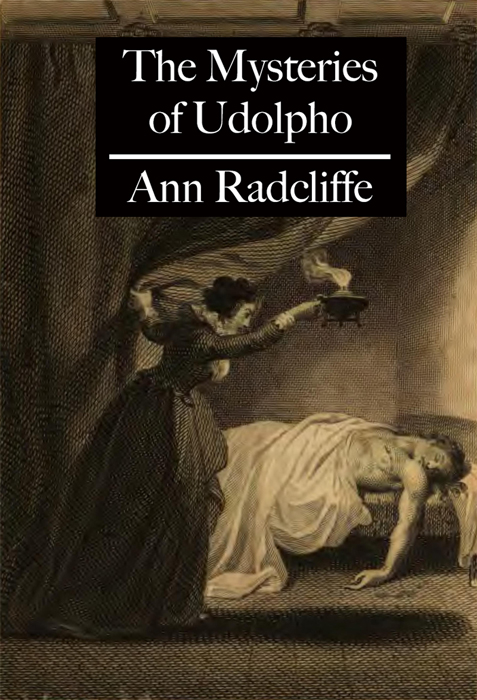
This Day in History: Writer Ann Radcliffe died on this day in 1823. Little known today, she was the highest paid author in the 1790's. She was one of the first of the Gothic writers, writing novels like The Mysteries of Udolpho and The Italian which inserted supernatural elements, though many complained that she failed to incorporate "real ghosts" into her stories. She influenced writers like Edgar Allan Poe and Sir Walter Scott and was admired by Honoré de Balzac, Victor Hugo, Alexandre Dumas, Charles Baudelaire and Fyodor Dostoyevsky.

H.P. Lovecraft gave her high praise in his book, Supernatural Horror in Literature:

"Five years later, and all existing lamps are paled by the rising of a fresh luminary of wholly superior order—Mrs. Ann Radcliffe (1764–1823), whose famous novels made terror and suspense a fashion, and who set new and higher standards in the domain of macabre and fear-inspiring atmosphere despite a provoking custom of destroying her own phantoms at the last through laboured mechanical explanations. To the familiar Gothic trappings of her predecessors Mrs. Radcliffe added a genuine sense of the unearthly in scene and incident which closely approached genius; every touch of setting and action contributing artistically to the impression of illimitable frightfulness which she wished to convey. A few sinister details like a track of blood on castle stairs, a groan from a distant vault, or a weird song in a nocturnal forest can with her conjure up the most powerful images of imminent horror; surpassing by far the extravagant and toilsome elaborations of others. Nor are these images in themselves any the less potent because they are explained away before the end of the novel. Mrs. Radcliffe’s visual imagination was very strong, and appears as much in her delightful landscape touches—always in broad, glamorously pictorial outline, and never in close detail—as in her weird phantasies. Her prime weaknesses, aside from the habit of prosaic disillusionment, are a tendency toward erroneous geography and history and a fatal predilection for bestrewing her novels with insipid little poems, attributed to one or another of the characters.

     Mrs. Radcliffe wrote six novels; The Castles of Athlin and Dunbayne (1789), A Sicilian Romance (1790), The Romance of the Forest (1791), The Mysteries of Udolpho (1794), The Italian (1797), and Gaston de Blondeville, composed in 1802 but first published posthumously in 1826. Of these Udolpho is by far the most famous, and may be taken as a type of the early Gothic tale at its best. It is the chronicle of Emily, a young Frenchwoman transplanted to an ancient and portentous castle in the Apennines through the death of her parents and the marriage of her aunt to the lord of the castle—the scheming nobleman Montoni. Mysterious sounds, opened doors, frightful legends, and a nameless horror in a niche behind a black veil all operate in quick succession to unnerve the heroine and her faithful attendant Annette; but finally, after the death of her aunt, she escapes with the aid of a fellow-prisoner whom she has discovered. On the way home she stops at a chateau filled with fresh horrors—the abandoned wing where the departed chatelaine dwelt, and the bed of death with the black pall—but is finally restored to security and happiness with her lover Valancourt, after the clearing-up of a secret which seemed for a time to involve her birth in mystery. Clearly, this is only the familiar material re-worked; but it is so well re-worked that Udolpho will always be a classic. Mrs. Radcliffe’s characters are puppets, but they are less markedly so than those of her forerunners. And in atmospheric creation she stands preëminent among those of her time."

Listen to Lovecraft's Supernatural Horror in Literature

Wednesday, December 14, 2022

Gothic Horror Writer Shirley Jackson on This Day in History

Ruth Franklin on Shirley Jackson

This Day In History: Author Shirley Jackson was born on this day in 1916. Jackson gained significant public attention for her short story The Lottery, which presents the sinister underside of a bucolic American village. She actually wrote The Lottery in a single morning, and many people wrote to her believing that the story was true.

In 1959, she published The Haunting of Hill House, a supernatural horror novel widely considered to be one of the best ghost stories ever written. Jackson's 1962 novel We Have Always Lived in the Castle is a Gothic mystery which has been described as Jackson's masterpiece.

She was raised in a family of Christian Scientists, and she would angrily recall her mother and grandmother praying over her little brother’s broken arm rather than taking him to a hospital. Her parents never attended her wedding because she married a Jew.

She had a huge library of witchcraft books, and she was fascinated by a book called "An Adventure" which details a "true" ghost story involving Marie Antoinette written by two academics. She was the inspiration for other writers, including Stephen King, Neil Gaiman and Joyce Carol Oates.

Jackson was of English ancestry, and her family heritage can be traced to the Revolutionary War hero General Nathanael Greene.

By the 1960s, Jackson's health began to deteriorate significantly, ultimately leading to her death due to a heart condition in 1965 at the age of 48.


Tuesday, August 30, 2022

Frankenstein on This Day in History


This Day in History: Mary Shelley was born on this day in 1797. Mary Wollstonecraft Shelley was an English novelist who wrote the Gothic novel Frankenstein; or, The Modern Prometheus (1818), which is considered an early example of science fiction. 

She wrote Frankenstein while still a teenager.

National Frankenstein Day is celebrated on this day every year. 

Helen Moore wrote the following in 1886:

Mrs. Shelley herself, in the preface of the last London edition of “Frankenstein," published during her life, has told how she tried day after day to think of a plot; to invent something uncanny or horribly fantastic, and how each morning, to the question, “Have you thought of a story?" she was obliged to answer "No," until a train of thought supplied by conversation of a metaphysical tone which she had listened to between Shelley and Byron, entered into her state of reverie in semi-sleep, and suggested the essential outlines of the plot of "Frankenstein."

What was thus suggested was probably nothing more than the central figures of the weird conception. Nothing could be simpler than the plot, nothing more horrible than the situations and the details. Frankenstein is a student who, by the study of occult sciences, acquires the power of imparting life to a figure which he had made. Graves and charnel-house had furnished the needed material from which he had constructed this colossal human form. To the thing thus prepared he is able to impart life. It lives and possesses human attributes. The rest of the tale is occupied in depicting the nameless horrors which visited Frankenstein as the result of his creation. The thing becomes the bane of his life. He tries to fly from it, but there is no final escape. One by one, the monster that he had created slays the brother, friend, sister, and bride of the luckless student, who himself finally falls a victim to his own wretched and unto-ward creation. The monster, upon its part, strives to adapt itself to life, but fails; finds no possibility of companionship, no admission into any human fellowship.

Such in brief outline is the plot, if it can be so called, of the tale which, with eager hands, the youthful romancer penned before the first horror of the idea had faded from her brain. At Shelley's suggestion the story was amplified. The introductory letters were inserted and the pastoral episode and other incidents were added to the later part of the narrative. As originally written the story began with the words, "It was on a dreary night of November that I beheld the accomplishment of my toils." In the work as published these words introduce Chapter IV.

Regarded as a mere tale, it is difficult to account for the hold this story has always had upon the minds of the reading world. As a story it does not justify its own success. To say that it is remarkable as a work of imagination does not meet the difficulty. By a work of the imagination, as used in the current criticism of "Frankenstein," is simply meant that it is a fantastic romance, such as we find in the "Arabian Nights," or in the prose tales of Poe. But a position utterly different from these is accorded to "Frankenstein."

We have intimated that there was a dual quality in it, to which it owed its singular power and place in literature. One element is doubtless the horror of the tale and the weird fancy of the author's imagination in the ordinary acceptation of the word. But it is to an entirely different department of mental conception that we must look for the secret of its peculiar influence. The faculty of imagination is something more than the recalling and rearrangements of past impressions. Profoundly considered, it is that function of the mind which formulates, as though real, a state of things which if present would so appear. It is the power of projecting the mind into unhappened realities. It is the faculty of picturing unseen verities. There is thus in it a prophetic element, not at all miraculous, but dependent upon subtile laws of association and suggestion. It is to this element that "Frankenstein" owes its power over thoughtful minds. It is by virtue of the allegorical element in it that it holds its high position as a work of the imagination. Yet so unobtrusively is the allegory woven through the thread of the romance, that, while always felt, it can scarcely be said to have been detected. Certain it is that no one has directed attention to this phase, or carefully attempted an analysis of the work, with the view of deducing the meaning thus legible between the lines.

That Mrs. Shelley herself was conscious of this element is certain, by the double title she gave it,— "Frankenstein, or the Modern Prometheus." Furthermore, that she should thus embody, under the apparent guise of a weird story, suggestions of moral truths, developments of mental traits,—normal and abnormal,—and hints at, and solutions of, social questions, was in strict accord both with her own intellectual state and with the circumstances under which "Frankenstein" was produced. And yet nothing is more improbable than that it was written with such design, or that the youthful author was fully aware or even conscious of the extent to which the allegorical overlies largely the narrative in her work. This very unconsciousness of result, this obliviousness to hidden truths, is a distinguishing mark of genius. To take daily account of stock proclaims the small trader, not the merchant prince. Placed in a congenial atmosphere, genius in breathing the breath of life will exhale truths. The very gist of genius is embodied in this hidden relation to truth. That mind has genius which, detecting germs of truth under forms where the common eye sees them not, affords in itself the place and pabulum for their growth.


We know the circumstance under which the book was written; the stories which suggested it were all weird in form and allegorical in type; the minds of those by whom Mrs. Shelley was at that time surrounded were minds to whom the mystical was the natural mode of thought and speech. Her own inherited and acquired mental traits were markedly of this same character. Furthermore, at this time the influence of Shelley was strongest upon her. Not that of one nature mastering and overpowering a weaker, but that yet stronger bond of one mind fitted by nature and oneness of motive to gain insight into, and be in unison with, the other.

Such, in a remarkable degree, was her relation at this time to Shelley; to her his nature was revealed. They had spoken and dwelt upon his past until it was an open book to her. His aims and his failures, his aspirations and fears, his nature and philosophy were familiar and ever present to her mind. Moreover, from him she had learned much about the great world of men and things, broadening her nature and conceptions beyond the ordinary limit of feminine knowledge; indeed, with the result of attaching her own peculiar insight to the facts and ideas thus included within her extending horizon. In both of their minds the tendency to dwell on social and ethical problems was strong, and to such natures union means cubic strength. What wonder that, if, underlying her story thus produced, should lie partly concealed or vaguely hinted, social and moral ideas, awaiting but recognition, to become in turn the suggestors of their own redevelopment in the minds of us who read.

That some, nay, many, of these have an almost direct bearing upon Shelley himself, either as proceeding from him or pointing to him, is to be expected; to say that they all thus have would be perhaps straining a theory otherwise tenable. What we can safely affirm is that he who, with this idea of the allegorical substratum, will reread the story, will be richly repaid in the suggestions the mind cannot fail to receive, and which, according to the mind of each, will attach to the nature of Shelley himself, or, more widely taken, will stand as general truths, applicable alike to all.

Such a general truth is that pictured in the character and pursuit of the student Frankenstein himself. He exhibits to us the man of one idea, absorbed in but one department of science, not only abandoning other studies, but rejecting the ordinary avocations of life. Family, frie nd, even the voice of her who loved fails to recall him to action or to a sense of the proper proportion of things. We see the result not only in the loss of symmetry and balance in his character, but find it having its legitimate effect in making him the slave of his own too concentrated studies. So that finally he becomes possessed by the ruling idea he had so dearly cherished, and the reward of his infatuation is the delusion that he can accomplish that which a healthful mind would have avoided,—a delusion which had grown up in the very seclusion and isolation of life that the unhappy student had adopted; to which the fitting antidote would have been the diversion of the commonplace interests which he had carefully excluded. The power to produce the horrible creature, as the fruit of this delusion, is but the poetic justice of his sentence. The terrible result of his creation furnishes the morale and teaching of the allegory. Into this part of the story is interposed the train of thought which is suggested by the construction of the human form by Frankenstein. In its preparation the student selects the most beautiful models for each limb and feature. He spares no pains, and each separate anatomical part is, taken by itself, perfect in symmetry and adaptation. But when once the breath of life is breathed into the creation, and life quickens its being and gleams from its eyes, and function succeeds in the hitherto inanimate parts, all beauty disappears; the separate excellence of each several part is lost in the general incongruity and lack of harmony of the whole.

Can art see no suggestiveness in this? Can society, in its attempt to manufacture conglomerate masses out of dissimilar elements, learn nothing from the teaching here inculcated?

Once become a living being, Frankenstein and this monster that he had made bear to one another the sustained relation of creator and creature. Throughout the entire narrative this relationship is one long allegory with phases as diverse as a prism. Most prominent is the total failure to create that which should find place in life only by growth. In the sad, lone, utter incompatibility which environed the creature,—in the inability of others to accept or tolerate it,—in its own desperate, heart-sickening attempts to educate and train itself into harmony and communion with those who should have been its fellow-beings, and in its final despair and terrible outlawry and revenge, is shown the futility of the attempt to regulate human beings or their concerns, except under the laws of growth and development. And "Frankenstein" contains no deeper teaching than that we cannot legislate happiness into this world; that such attempt at last, after affording a maximum of
misery, returns to plague the inventor.

Another phase of this relationship between the creator and his creature is so strongly suggestive of a certain period of Shelley’s religious life that the mind hesitates before denying the likeness. The creature of Frankenstein, finding itself in a world in which all happiness is denied it; to which its powers of strengthfulness, however exercised, bring it no good, but serve only to increase its misery and sense of loneliness, turns to its creator and, with alternate curses and prayers, beseeches him to either slay it or fit the world for its companionship. In this dilemma the creator does neither. He merely admits either his unwillingness or his inability to do that which simple justice to his creature, to say nothing of his love and duty, would prompt. Thus the creator is made to figure as lacking either justice or omnipotence.

How Shelleyan this idea, the closest student of him will best judge.

But the chief allegorical interest in the narrative concerns itself about that tendency in the human being to discard the established order of things and to create for itself a new and independent existence. In the simple story, Frankenstein made a being responsible to him alone for its creation,—-a being not produced by the ordinary course of life, not amenable or even adaptable to the existing world of men. Right or wrong, better or worse, the creature may be, but different certainly, and this irreconcilable disparity points back ever to its origin, which had been anomalous and strange.

The whole story is but the elaboration of the embarrassment and dangers which flow from departure from the ordinary course of nature; this forced attempt to invade society from within. What strong existence in real life of this same tendency Mary Shelley had seen in those nearest and dearest to her! She has not failed to learn the lesson of her mother's history; time analyzes rather than destroys. And the life of Mary Wollstonecraft was doubtless seen by the clear-minded daughter in stronger contrast of light and shade than it had been by its contemporaries. Who knew so well the glories of that life? Its successes as well as its miseries had sprung from the self-same causes as those of Frankenstein,—from the breach of the conventional; from overstepping the limits ; from creating an individuality and a sphere of existence denied it by Nomos, and consequently sure of the hostility of society.

To this same cause Shelley himself attributed justly the events and moral struggle of his own life. From earliest childhood revolt against convention, and rebellion against authority, had characterized him. His perpetual tendency, like that of Mary Wollstonecraft, like that typified in "Frankenstein," was ever to create for himself an existence not conforming to the ways of the world.

As we read the story of the modern Prometheus, and page by page trace the evolution of this idea, the ethical aspect is oppressive in its prophetic truth. Each must do this for himself. One thing, however, we may note. The visitation of judgment, the terrible results of the exercise of the power of creation, do not begin, do not recoil upon Frankenstein, until he has actually launched his creature into the world of so long as he kept the scheme within himself so long as the influence of the thought and work was confined to him alone, no evil came; on the contrary, after a certain point the struggle after this ideal was a stimulation and an incentive of the highest order. It was only when the overt act of introducing his new existence into the world was accomplished, that misery began to flow from it to all concerned, and even to those apparently not concerned in it. This is the saving clause in the prophetic allegory. Without this it would fail to square with the truth.

See how far-reaching are the ideas which this allegory evokes, how subtile its suggestions are. Mind after mind has felt the power of this story, so simple in its apparent construction, and has again and again returned to it, not asking itself why; feeling a power it did not recognize, much less analyze; hovering, in fact, around it as birds do when charmed, because of an attraction which was persistent and real, although unknown, even unsuspected. All attraction implies some sort of a magnet. Nothing attracts so powerfully as the true.

The world, by its acknowledgment of the coercive quality of “Frankenstein," has given silent acceptance of its genius. The other works, novels, critiques, biographies, while they have had literary merit, feeling, even power, have not shown genius. "Frankenstein" alone was personal, it alone reflected Mrs. Shelley's true self. Her other books contain simply what she wrote in them: this alone contains what was written in her. Being, as she was, stronger in her personality than as a literary artist, the book that alone partook of that personality would alone partake of her peculiar genius. This, considered in its fullest light, "Frankenstein" does.

Sunday, March 6, 2022

Gothic Horror Novelist George du Maurier on This Day in History


This day in history: George du Maurier was born on this day in 1834. Du Maurier was a cartoonist and writer best known for writing the novel Trilby. You may not have heard of Trilby and it was a huge success in the 1890's when it was released. Trilby tells of a poor artist's model, Trilby O'Ferrall, who was transformed into a diva under the spell of an evil musical genius, Svengali. Soap, songs, dances, toothpaste, and even the city of Trilby, Florida, were named after her, as was the variety of soft felt hat with an indented crown worn in the London stage dramatization of the novel. The plot inspired Gaston Leroux's 1910 novel Phantom of the Opera and innumerable other works derived from it. Du Maurier eventually came to dislike the persistent attention the novel was given. 

The dark figure of Svengali resonated with the public and the word “svengali” has come to refer to a person who, with evil intent, dominates, manipulates and controls another.

In court, the Svengali Defense is a legal tactic that portrays the defendant as a pawn in the scheme of a greater, and more influential, criminal mastermind.

Read Trilby online here.

Saturday, January 29, 2022

Edgar Allan Poe's THE RAVEN on This Day in History


This Day in History: Edgar Allan's Poe's poem "The Raven" was published on this day in 1845, and it quickly became one the most famous poems of all time.

"The Raven" is a narrative poem by American gothic writer Edgar Allan Poe. The poem is often noted for its musicality, stylized language, and supernatural atmosphere. It tells of a talking raven's mysterious visit to a distraught lover, tracing the man's slow descent into madness. The lover, often identified as a student, is lamenting the loss of his love, Lenore. Sitting on a bust of Pallas, the raven seems to further distress the protagonist with its constant repetition of the word "Nevermore". The poem makes use of folk, mythological, religious, and classical references.

Poe claimed to have written the poem logically and methodically, with the intention to create a poem that would appeal to both critical and popular tastes, as he explained in his 1846 follow-up essay, "The Philosophy of Composition". The poem was inspired in part by a talking raven in the novel Barnaby Rudge: A Tale of the Riots of Eighty by Charles Dickens. Poe borrows the complex rhythm and meter of Elizabeth Barrett's poem "Lady Geraldine's Courtship", and makes use of internal rhyme as well as alliteration throughout.

"The Raven" was first attributed to Poe in print in the New York Evening Mirror on January 29, 1845. Its publication made Poe popular in his lifetime, although it did not bring him much financial success. The poem was soon reprinted, parodied, and illustrated. Critical opinion is divided as to the poem's literary status, but it nevertheless remains one of the most famous poems ever written.

The poem has inspired numerous parodies in the 19th century, and since then we have seen tributes to the poem in the Bugs Bunny cartoon, Tim Burton's Vincent, The Dead Zone, Short Circuit, 1989's Batman, The Crow, The Pagemaster, Dr Dolittle 2, The Simpsons, Night Gallery, The Addams Family, Gilmore Girls, Beetlejuice (cartoon), Duck Tales, Muppet Babies, Star Trek, Mama's Family, Teen Wolf, The 100...even The Expendables. It even made it to song. Queen recorded "Nevermore" on their second album Queen II, The Alan Parsons Project devoted an entire album to Poe, The Grateful Dead performed their own version of the Raven, and Lou Reed and Blues Travelers each paid respect to the poem as well. There is an annual science fiction convention called RavenCon and also a Raven Society. The Baltimore Raven's football team is named after the poem, as Poe lived and died in Baltimore.

The Raven, by E.A. Poe

Once upon a midnight dreary, while I pondered, weak and weary,
Over many a quaint and curious volume of forgotten lore—
    While I nodded, nearly napping, suddenly there came a tapping,
As of some one gently rapping, rapping at my chamber door.
“’Tis some visitor,” I muttered, “tapping at my chamber door—
            Only this and nothing more.”

    Ah, distinctly I remember it was in the bleak December;
And each separate dying ember wrought its ghost upon the floor.
    Eagerly I wished the morrow;—vainly I had sought to borrow
    From my books surcease of sorrow—sorrow for the lost Lenore—
For the rare and radiant maiden whom the angels name Lenore—
            Nameless here for evermore.

    And the silken, sad, uncertain rustling of each purple curtain
Thrilled me—filled me with fantastic terrors never felt before;
    So that now, to still the beating of my heart, I stood repeating
    “’Tis some visitor entreating entrance at my chamber door—
Some late visitor entreating entrance at my chamber door;—
            This it is and nothing more.”

    Presently my soul grew stronger; hesitating then no longer,
“Sir,” said I, “or Madam, truly your forgiveness I implore;
    But the fact is I was napping, and so gently you came rapping,
    And so faintly you came tapping, tapping at my chamber door,
That I scarce was sure I heard you”—here I opened wide the door;—
            Darkness there and nothing more.

    Deep into that darkness peering, long I stood there wondering, fearing,
Doubting, dreaming dreams no mortal ever dared to dream before;
    But the silence was unbroken, and the stillness gave no token,
    And the only word there spoken was the whispered word, “Lenore?”
This I whispered, and an echo murmured back the word, “Lenore!”—
            Merely this and nothing more.

    Back into the chamber turning, all my soul within me burning,
Soon again I heard a tapping somewhat louder than before.
    “Surely,” said I, “surely that is something at my window lattice;
      Let me see, then, what thereat is, and this mystery explore—
Let my heart be still a moment and this mystery explore;—
            ’Tis the wind and nothing more!”

    Open here I flung the shutter, when, with many a flirt and flutter,
In there stepped a stately Raven of the saintly days of yore;
    Not the least obeisance made he; not a minute stopped or stayed he;
    But, with mien of lord or lady, perched above my chamber door—
Perched upon a bust of Pallas just above my chamber door—
            Perched, and sat, and nothing more.

Then this ebony bird beguiling my sad fancy into smiling,
By the grave and stern decorum of the countenance it wore,
“Though thy crest be shorn and shaven, thou,” I said, “art sure no craven,
Ghastly grim and ancient Raven wandering from the Nightly shore—
Tell me what thy lordly name is on the Night’s Plutonian shore!”
            Quoth the Raven “Nevermore.”

 Much I marvelled this ungainly fowl to hear discourse so plainly,
Though its answer little meaning—little relevancy bore;
    For we cannot help agreeing that no living human being
    Ever yet was blessed with seeing bird above his chamber door—
Bird or beast upon the sculptured bust above his chamber door,
            With such name as “Nevermore.”

    But the Raven, sitting lonely on the placid bust, spoke only
That one word, as if his soul in that one word he did outpour.
    Nothing farther then he uttered—not a feather then he fluttered—
    Till I scarcely more than muttered “Other friends have flown before—
On the morrow he will leave me, as my Hopes have flown before.”
            Then the bird said “Nevermore.”

    Startled at the stillness broken by reply so aptly spoken,
“Doubtless,” said I, “what it utters is its only stock and store
    Caught from some unhappy master whom unmerciful Disaster
    Followed fast and followed faster till his songs one burden bore—
Till the dirges of his Hope that melancholy burden bore
            Of ‘Never—nevermore’.”

But the Raven still beguiling all my fancy into smiling,
Straight I wheeled a cushioned seat in front of bird, and bust and door;
    Then, upon the velvet sinking, I betook myself to linking
    Fancy unto fancy, thinking what this ominous bird of yore—
What this grim, ungainly, ghastly, gaunt, and ominous bird of yore
            Meant in croaking “Nevermore.”

    This I sat engaged in guessing, but no syllable expressing
To the fowl whose fiery eyes now burned into my bosom’s core;
    This and more I sat divining, with my head at ease reclining
    On the cushion’s velvet lining that the lamp-light gloated o’er,
But whose velvet-violet lining with the lamp-light gloating o’er,
            She shall press, ah, nevermore!

    Then, methought, the air grew denser, perfumed from an unseen censer
Swung by Seraphim whose foot-falls tinkled on the tufted floor.
    “Wretch,” I cried, “thy God hath lent thee—by these angels he hath sent thee
    Respite—respite and nepenthe from thy memories of Lenore;
Quaff, oh quaff this kind nepenthe and forget this lost Lenore!”
            Quoth the Raven “Nevermore.”

    “Prophet!” said I, “thing of evil!—prophet still, if bird or devil!—
Whether Tempter sent, or whether tempest tossed thee here ashore,
    Desolate yet all undaunted, on this desert land enchanted—
    On this home by Horror haunted—tell me truly, I implore—
Is there—is there balm in Gilead?—tell me—tell me, I implore!”
            Quoth the Raven “Nevermore.”

“Prophet!” said I, “thing of evil!—prophet still, if bird or devil!
By that Heaven that bends above us—by that God we both adore—
    Tell this soul with sorrow laden if, within the distant Aidenn,
    It shall clasp a sainted maiden whom the angels name Lenore—
Clasp a rare and radiant maiden whom the angels name Lenore.”
            Quoth the Raven “Nevermore.”

    “Be that word our sign of parting, bird or fiend!” I shrieked, upstarting—
“Get thee back into the tempest and the Night’s Plutonian shore!
    Leave no black plume as a token of that lie thy soul hath spoken!
    Leave my loneliness unbroken!—quit the bust above my door!
Take thy beak from out my heart, and take thy form from off my door!”
            Quoth the Raven “Nevermore.”

    And the Raven, never flitting, still is sitting, still is sitting
On the pallid bust of Pallas just above my chamber door;
    And his eyes have all the seeming of a demon’s that is dreaming,
    And the lamp-light o’er him streaming throws his shadow on the floor;
And my soul from out that shadow that lies floating on the floor
            Shall be lifted—nevermore!

Glenn Beck reads The Raven

Thursday, June 18, 2015

70 Penny Dreadfuls & Dime Novels to Download (+ Gothic Novels)


Only $3.00 -  You can pay using the Cash App by sending money to $HeinzSchmitz and send me an email at theoldcdbookshop@gmail.com with your email for the download. You can also pay using Facebook Pay in Messenger


Books Scanned from the Originals into PDF format


Books are in the public domain. I will take checks or money orders as well. 

A penny dreadful was a type of British fiction publication in the 19th century that usually featured lurid serial stories.
A "dime novel" was a cheap and generally sensational tale of adventure sold as popular entertainment in the 1800s. 
Gothic fiction, sometimes referred to as Gothic horror, is a genre or mode of literature that combines fiction, horror and Romanticism.

Contents of upload:

Black Bess, or, the Knight of the Road by Edward Viles, Volume 1 1866

Black Bess, or, the Knight of the Road by Edward Viles, Volume 2 1866

Black Bess, or, the Knight of the Road by Edward Viles, Volume 3 1866

Blueskin - a Romance of the Last Century by Edward Viles, Volume 1 1866

Blueskin - a Romance of the Last Century by Edward Viles, Volume 2 1866

Gentleman Jack - Life on the Road by Elizabeth Caroline Grey, Volume 1 1852

Gentleman Jack - Life on the Road by Elizabeth Caroline Grey, Volume 2 1852

Gentleman Jack - Life on the Road by Elizabeth Caroline Grey, Volume 3 1852

Barney Blake the Boy Privateer 1897

The Yankee Rajah - the Fate of Black Shereef 1881

Adventures of Dick Onslow among the Red Indians by William Kingston 1899

Dashing Diamond Dick - The Tigers of Tombstone 1898 by WB Lawson

Wild Bill's Last Trail 1886 (Diamond Dick)

Frank James on the Trail 1882


The Old English Baron, a Gothic Story and The Castle of Otranto, a Gothic story (1883)

Wagner the WehrWolf by George Reynold 1846

Varney the Vampire 1847

The life of Richard Palmer better known as Dick Turpin the Notorious Highwayman and Robber by Henry Downs Miles 1839

A Defence of Nonsense (A Defence of Penny Dreadfuls) by Gilbert Keith Chesterton 1911

Rosario The Female Monk by Monk Lewis 1891

The Monk by Matthew Gregory Lewis 1907

Rookwood by William Harrison Ainsworth 1834

Life and Adventures of Richard Turpin, a most notorious highwayman by WS Fortey 1860

Tales of Wonder by MG Lewis 1801

The Mysteries of Udolpho by Ann Radcliffe 1836

The Romance of the Forest by Ann Radcliffe 1847

The Boys of England - a Young Man's Journal 1870 (over 800 pages of tales)

Deadwood Dick as Detective 1885

Scalping Jack the Scout: A Terrible Twenty-five Cent Dime Novel By Bricktop 1872

The Dime Novel Detective by Wm Organ 1910

Blood and Thunders or, Dime novels of the 80's and 90's by Floyd Beagle 1920

Wild Bill's Sable Pard by Burt Standish

Lois the Witch by Elizabeth Gaskell (also included: "The Doom of the Griffiths") 1861

Uncle Silas by Joseph Sheridan Le Fanu 1899

In a Glass Darkly, Volume 1 by Joseph Sheridan Le Fanu 1872

In a Glass Darkly, Volume 2 by Joseph Sheridan Le Fanu 1872

In a Glass Darkly, Volume 3 by Joseph Sheridan Le Fanu 1872

Dracula by Bram Stoker 1897

Melmoth the Wanderer by Charles Maturin, Volume 1, 1820

Melmoth the Wanderer by Charles Maturin, Volume 2, 1820

Melmoth the Wanderer by Charles Maturin, Volume 3, 1820

Melmoth the Wanderer by Charles Maturin, Volume 4, 1820

Trilby by George du Maurier 1894

Marvels and Mysteries by Richard Marsh 1900

The Collected Works of Ambrose Bierce, Volume 1 1909

The Collected Works of Ambrose Bierce, Volume 2 1909

The Collected Works of Ambrose Bierce, Volume 3 1909 (Can Such Things Be?)

The Collected Works of Ambrose Bierce, Volume 4 1909 (Shapes of Clay)

The Collected Works of Ambrose Bierce, Volume 5 1909 (Black Beetles in Amber)

The Collected Works of Ambrose Bierce, Volume 6 1909 (The Monk and the Hangmans Daughter)

The Collected Works of Ambrose Bierce, Volume 7 1909 (The Devil's Dictionary)

The Collected Works of Ambrose Bierce, Volume 8 1909 (Negligible Tales)

The Collected Works of Ambrose Bierce, Volume 9 1909 (Tangential Views)

The Collected Works of Ambrose Bierce, Volume 10 1909

The Collected Works of Ambrose Bierce, Volume 11 1909

The Collected Works of Ambrose Bierce, Volume 12 1909 (Kings of Beasts)

The Tale of Terror - A Study of the Gothic Romance by Edith Birkhead 1921

The Ghost-Seer by Frederick Schiller 1872

The Devil's Elixir by E.T.A. Hoffman, Volume 1 1829

The Devil's Elixir by E.T.A. Hoffman, Volume 2 1829

The Phantom of the Opera by Gaston Leroux 1911

The Picture of Dorian Gray by Oscar Wilde 1891


The Turn of the Screw by Henry James 1898

Frankenstein by Mary Shelley 1869

Jane Eyre by Charlotte Bronte 1847

Wuthering Heights by Emily Bronte 1911

The Beetle by Richard Marsh 1917

Diamond Dick Jr's call down - King of the Silver Box 1896

Buffalo Bill the Buckskin king 1880

Strange case of Dr. Jekyll and Mr. Hyde 1886