Showing posts with label supernatural. Show all posts

Wednesday, December 20, 2023

Killed by the Supernatural on This Day in History


This day in history: John Bell became the first person in history to pass away of supernatural causes on this day in 1820.

John Bell Sr was an American farmer who is a central figure in the Bell Witch ghost story of southern American folklore. In 1817, Bell contracted a mysterious affliction that worsened over the next three years, ultimately leading to his death. According to the story, the Bell Witch took pleasure in tormenting him during his affliction, finally poisoning him one December morning as he lay unconscious after suffering a number of violent seizures.

Bell became a successful farmer and gained prominence in his area of East Tennessee. It is said that sometime late in 1816, John and his daughter Betsy Bell began to be plagued by a goblin-like entity that came to be known as either the Bell Witch or Kate Batts Witch (after Kate Batts, a neighbour of the Bell family). The Bell Witch apparently appeared to John one day when he was inspecting his fields. It took the form of an animal, but ran off before he could shoot it. The entity then began attacking family members and even visitors to the house, and began haunting the community. The witch became known far and wide, and even Andrew Jackson visited the Bell household in 1819 to experience the Witch at first hand.

Bell's subsequent affliction was most likely a neurological disorder. Very little was known about such disorders in the early nineteenth century, and few treatment options were available, although the Scottish anatomist Sir Charles Bell discovered a neurological disorder that yielded symptoms almost identical to those displayed by John Bell at the onset of his affliction.

John Bell died on December 19, 1820, at the age of 70. After his death, the witch was no longer reported as attacking Bell's family. The Bell Witch is said to have disrupted the funeral service, singing bawdy drinking songs. The Bell Witch was said to have said she "fixed him," and "i did it," and "he will not get up," after the murder occurred.


Monday, August 28, 2023

Horror Writer Sheridan Le Fanu on This Day in History


This Day in History: Sheridan Le Fanu was born on this day in 1814. Joseph Thomas Sheridan Le Fanu was an Irish writer of Gothic tales, mystery novels, and horror fiction. He was a leading ghost story writer of his time, central to the development of the genre in the Victorian era. M. R. James described Le Fanu as "absolutely in the first rank as a writer of ghost stories". Three of his best-known works are the locked-room mystery Uncle Silas, the lesbian vampire novella Carmilla, and the historical novel The House by the Churchyard.

Le Fanu worked in many genres but remains best known for his horror fiction. He was a meticulous craftsman and frequently reworked plots and ideas from his earlier writing in subsequent pieces. Many of his novels, for example, are expansions and refinements of earlier short stories. He specialised in tone and effect rather than "shock horror" and liked to leave important details unexplained and mysterious. He avoided overt supernatural effects: in most of his major works, the supernatural is strongly implied but a "natural" explanation is also possible. The demonic monkey in "Green Tea" could be a delusion of the story's protagonist, who is the only person to see it; in "The Familiar", Captain Barton's death seems to be supernatural but is not actually witnessed, and the ghostly owl may be a real bird. This technique influenced later horror artists, both in print and on film (see, for example, the film producer Val Lewton's principle of "indirect horror"). Though other writers have since chosen less subtle techniques, Le Fanu's finest tales, such as the vampire novella Carmilla and the short story "Schalken the Painter", remain some of the most powerful in the genre. He had an enormous influence on one of the 20th century's most important ghost story writers, M. R. James, and although his work fell out of favour in the early part of the 20th century, towards the end of the century interest in his work increased and remains comparatively strong.


Tuesday, June 27, 2023

Horror Writer Lafcadio Hearn on This Day in History


This day in history: Lafcadio Hearn was born on this day in 1850. Hearn was a Greek-Japanese writer, translator, and teacher who introduced the culture and literature of Japan to the West. His writings offered unprecedented insight into Japanese culture, especially his collections of legends and ghost stories, such as Kwaidan: Stories and Studies of Strange Things. 

H.P. Lovecraft wrote this of Lafcadio Hearn: "Lafcadio Hearn, strange, wandering, and exotic, departs still farther from the realm of the real; and with the supreme artistry of a sensitive poet weaves phantasies impossible to an author of the solid roast beef type. His Fantastics, written in America, contains some of the most impressive ghoulishness in all literature; whilst his Kwaidan, written in Japan, crystallises with matchless skill and delicacy the eerie lore and whispered legends of that richly colourful nation. Still more of Helm's wizardry of language is shown in some of his translations from the French, especially from Gautier and Flaubert. His version of the latter's Temptation of St. Anthony is a classic of fevered and riotous imagery clad in the magic of singing words."

See also: Forgotten Tales of Ghosts and Hauntings - 100 Books to Download


Tuesday, February 7, 2023

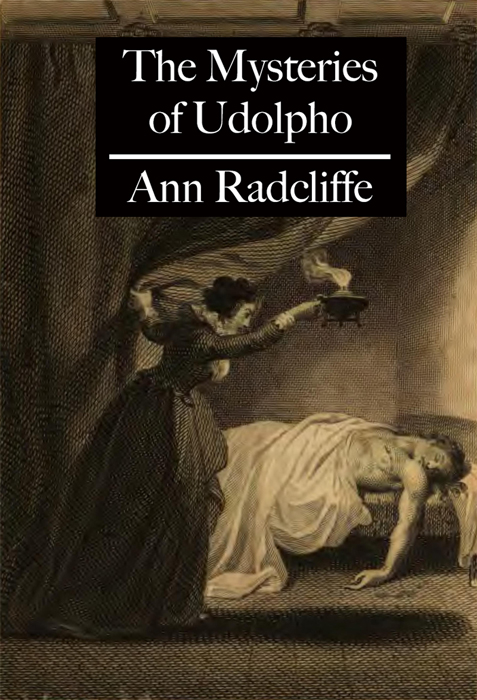
Gothic Fiction Writer Ann Radcliffe on This Day in History


Read online

This Day in History: Writer Ann Radcliffe died on this day in 1823. Little known today, she was the highest paid author in the 1790's. She was one of the first of the Gothic writers, writing novels like The Mysteries of Udolpho and The Italian which inserted supernatural elements, though many complained that she failed to incorporate "real ghosts" into her stories. She influenced writers like Edgar Allan Poe and Sir Walter Scott and was admired by Honoré de Balzac, Victor Hugo, Alexandre Dumas, Charles Baudelaire and Fyodor Dostoyevsky.

H.P. Lovecraft gave her high praise in his book, Supernatural Horror in Literature:

"Five years later, and all existing lamps are paled by the rising of a fresh luminary of wholly superior order—Mrs. Ann Radcliffe (1764–1823), whose famous novels made terror and suspense a fashion, and who set new and higher standards in the domain of macabre and fear-inspiring atmosphere despite a provoking custom of destroying her own phantoms at the last through laboured mechanical explanations. To the familiar Gothic trappings of her predecessors Mrs. Radcliffe added a genuine sense of the unearthly in scene and incident which closely approached genius; every touch of setting and action contributing artistically to the impression of illimitable frightfulness which she wished to convey. A few sinister details like a track of blood on castle stairs, a groan from a distant vault, or a weird song in a nocturnal forest can with her conjure up the most powerful images of imminent horror; surpassing by far the extravagant and toilsome elaborations of others. Nor are these images in themselves any the less potent because they are explained away before the end of the novel. Mrs. Radcliffe’s visual imagination was very strong, and appears as much in her delightful landscape touches—always in broad, glamorously pictorial outline, and never in close detail—as in her weird phantasies. Her prime weaknesses, aside from the habit of prosaic disillusionment, are a tendency toward erroneous geography and history and a fatal predilection for bestrewing her novels with insipid little poems, attributed to one or another of the characters.

     Mrs. Radcliffe wrote six novels; The Castles of Athlin and Dunbayne (1789), A Sicilian Romance (1790), The Romance of the Forest (1791), The Mysteries of Udolpho (1794), The Italian (1797), and Gaston de Blondeville, composed in 1802 but first published posthumously in 1826. Of these Udolpho is by far the most famous, and may be taken as a type of the early Gothic tale at its best. It is the chronicle of Emily, a young Frenchwoman transplanted to an ancient and portentous castle in the Apennines through the death of her parents and the marriage of her aunt to the lord of the castle—the scheming nobleman Montoni. Mysterious sounds, opened doors, frightful legends, and a nameless horror in a niche behind a black veil all operate in quick succession to unnerve the heroine and her faithful attendant Annette; but finally, after the death of her aunt, she escapes with the aid of a fellow-prisoner whom she has discovered. On the way home she stops at a chateau filled with fresh horrors—the abandoned wing where the departed chatelaine dwelt, and the bed of death with the black pall—but is finally restored to security and happiness with her lover Valancourt, after the clearing-up of a secret which seemed for a time to involve her birth in mystery. Clearly, this is only the familiar material re-worked; but it is so well re-worked that Udolpho will always be a classic. Mrs. Radcliffe’s characters are puppets, but they are less markedly so than those of her forerunners. And in atmospheric creation she stands preëminent among those of her time."

Listen to Lovecraft's Supernatural Horror in Literature

Sunday, November 6, 2022

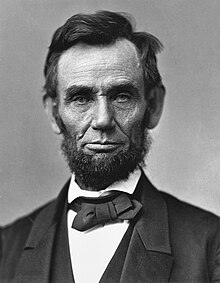
The Superstitious Abraham Lincoln on This Day in History


This Day in History: Abraham Lincoln was elected the 16th president of the United States on this day in 1860.

Did you know that both President and Mrs. Lincoln were superstitious.

From William Eleazar Barton 1920:

They believed in dreams and signs, he more in dreams and she more in signs. When Mrs. Lincoln was away from him for a little time, visiting in Philadelphia in 1863, and Tad with her, Lincoln thought it sufficiently important to telegraph, lest the mail should be too slow, and sent her this message:

"Executive Mansion,
"Washington, June 9, 1863.
"Mrs. Lincoln,
   "Philadelphia, Pa.
"Think you better put Tad's pistol away. I had an ugly dream about him. "A. Lincoln"
—Quoted in facsimile in Harper's Magazine for February, 1897; Lincoln's Home Life in the White House, by Leslie J. Perry.

In Lamon's book of Recollections, published in 1895, a very different book from his Life of Lincoln, he devotes an entire chapter to Lincoln's dreams and presentiments. He relates the story of the dream which Lincoln had not long before his assassination wherein he saw the East Room of the White House containing a catafalque with the body of an assassinated man lying upon it. Lincoln tried to remove himself from the shadow of this dream by recalling a story of life in Indiana, but could not shake off the gloom of it. Lamon says:

"He was no dabbler in divination, astrology, horoscopy, prophecy, ghostly lore, or witcheries of any sort. . . . The moving power of dreams and visions of an extraordinary character he ascribed, as did the Patriarchs of old, to the Almighty Intelligence that governs the universe, their processes conforming strictly to natural laws."—Recollections, p. 120.

In his Life of Lincoln, Lamon tells the story of the dream which Lincoln had late in the year 1860, when resting upon a lounge in his chamber he saw his figure reflected in a mirror opposite with two images, one of them a little paler than the other. It worried Lincoln, and he told his wife about it. She thought it was "a sign that Lincoln was to be elected for a second term and that the paleness of one of the faces indicated that he would not see life through the last term" (p. 477).

As this optical illusion has been so often printed, and has seemed so weirdly prophetic of the event which followed, it may be well to quote an explanation of the incident from an address by Dr. Erastus Eugene Holt, of Portland, Maine:

"As he lay there upon the couch, every muscle became relaxed as never before. ... In this relaxed condition, in a pensive mood and in an effort to recuperate the energies of a wearied mind, his eyes fell upon the mirror in which he could see himself at full length, reclining upon the couch. All the muscles that direct, control, and keep the two eyes together were relaxed; the eyes were allowed to separate, and each eye saw a separate and distinct image by itself. The relaxation was so complete, for the time being, that the two eyes were not brought together, as is usual by the action of converging muscles, hence the counterfeit presentiment of himself. He would have seen two images of anything else had he looked for them, but he was so startled by the ghostly appearance that he felt 'a little pang as though something uncomfortable had happened,' and obtained but little rest. What a solace to his wearied mind it would have been if someone could have explained this illusion upon rational grounds!" —Address at Portland, Maine, February 12, 1901, reprinted by William Abbatt, Tarrytown, N. Y., 1916.

Other incidents which relate to Mr. Lincoln's faith in dreams, including one that is said to have occurred on the night preceding his assassination, are well known, and need not be repeated here in detail.

It is not worth while to seek to evade or minimize the element of superstition in Lincoln's life, nor to ask to explain away any part of it. Dr. Johnson admits it in general terms, but makes little of concrete instances:

"The claim that there was more or less of superstition in his nature, and that he was greatly affected by his dreams, is not to be disputed. Many devout Christians today are equally superstitious, and, also, are greatly affected by their dreams. Lincoln grew in an atmosphere saturated with all kinds of superstitious beliefs. It is not strange that some of it should cling to him all his life, just as it was with Garfield, Blaine, and others.

"In 1831, then a young man of twenty-two, Lincoln made his second trip to New Orleans. It was then that he visited a Voodoo fortune teller, that is so important in the eyes of certain people. This, doubtless, was out of mere curiosity, for it was his second visit to a city. This no more indicates a belief in 'spiritualism' than does the fact that a few days before he started on this trip he attended an exhibition given by a traveling juggler, and allowed the magician to cook eggs in his low-crowned, broad-rimmed hat."—Lincoln the Christian, p. 29.

I do not agree with this. Superstition was inherent in the life of the backwoods, and Lincoln had his full share of it. Superstition is very tenacious, and people who think that they have outgrown it nearly all possess it. "I was always superstitious," wrote Lincoln to Joshua F. Speed on July 4, 1842. He never ceased to be superstitious.

While superstition had its part in the life and thought of Lincoln, it was not the most outstanding fact in his thinking or his character. For the most part his thinking was rational and well ordered, but it had in it many elements and some strange survivals—strange until we recognize the many moods of the man and the various conditions of his life and thought in which from time to time he lived.


Saturday, January 29, 2022

Edgar Allan Poe's THE RAVEN on This Day in History


This Day in History: Edgar Allan's Poe's poem "The Raven" was published on this day in 1845, and it quickly became one the most famous poems of all time.

"The Raven" is a narrative poem by American gothic writer Edgar Allan Poe. The poem is often noted for its musicality, stylized language, and supernatural atmosphere. It tells of a talking raven's mysterious visit to a distraught lover, tracing the man's slow descent into madness. The lover, often identified as a student, is lamenting the loss of his love, Lenore. Sitting on a bust of Pallas, the raven seems to further distress the protagonist with its constant repetition of the word "Nevermore". The poem makes use of folk, mythological, religious, and classical references.

Poe claimed to have written the poem logically and methodically, with the intention to create a poem that would appeal to both critical and popular tastes, as he explained in his 1846 follow-up essay, "The Philosophy of Composition". The poem was inspired in part by a talking raven in the novel Barnaby Rudge: A Tale of the Riots of Eighty by Charles Dickens. Poe borrows the complex rhythm and meter of Elizabeth Barrett's poem "Lady Geraldine's Courtship", and makes use of internal rhyme as well as alliteration throughout.

"The Raven" was first attributed to Poe in print in the New York Evening Mirror on January 29, 1845. Its publication made Poe popular in his lifetime, although it did not bring him much financial success. The poem was soon reprinted, parodied, and illustrated. Critical opinion is divided as to the poem's literary status, but it nevertheless remains one of the most famous poems ever written.

The poem has inspired numerous parodies in the 19th century, and since then we have seen tributes to the poem in the Bugs Bunny cartoon, Tim Burton's Vincent, The Dead Zone, Short Circuit, 1989's Batman, The Crow, The Pagemaster, Dr Dolittle 2, The Simpsons, Night Gallery, The Addams Family, Gilmore Girls, Beetlejuice (cartoon), Duck Tales, Muppet Babies, Star Trek, Mama's Family, Teen Wolf, The 100...even The Expendables. It even made it to song. Queen recorded "Nevermore" on their second album Queen II, The Alan Parsons Project devoted an entire album to Poe, The Grateful Dead performed their own version of the Raven, and Lou Reed and Blues Travelers each paid respect to the poem as well. There is an annual science fiction convention called RavenCon and also a Raven Society. The Baltimore Raven's football team is named after the poem, as Poe lived and died in Baltimore.

The Raven, by E.A. Poe

Once upon a midnight dreary, while I pondered, weak and weary,
Over many a quaint and curious volume of forgotten lore—
    While I nodded, nearly napping, suddenly there came a tapping,
As of some one gently rapping, rapping at my chamber door.
“’Tis some visitor,” I muttered, “tapping at my chamber door—
            Only this and nothing more.”

    Ah, distinctly I remember it was in the bleak December;
And each separate dying ember wrought its ghost upon the floor.
    Eagerly I wished the morrow;—vainly I had sought to borrow
    From my books surcease of sorrow—sorrow for the lost Lenore—
For the rare and radiant maiden whom the angels name Lenore—
            Nameless here for evermore.

    And the silken, sad, uncertain rustling of each purple curtain
Thrilled me—filled me with fantastic terrors never felt before;
    So that now, to still the beating of my heart, I stood repeating
    “’Tis some visitor entreating entrance at my chamber door—
Some late visitor entreating entrance at my chamber door;—
            This it is and nothing more.”

    Presently my soul grew stronger; hesitating then no longer,
“Sir,” said I, “or Madam, truly your forgiveness I implore;
    But the fact is I was napping, and so gently you came rapping,
    And so faintly you came tapping, tapping at my chamber door,
That I scarce was sure I heard you”—here I opened wide the door;—
            Darkness there and nothing more.

    Deep into that darkness peering, long I stood there wondering, fearing,
Doubting, dreaming dreams no mortal ever dared to dream before;
    But the silence was unbroken, and the stillness gave no token,
    And the only word there spoken was the whispered word, “Lenore?”
This I whispered, and an echo murmured back the word, “Lenore!”—
            Merely this and nothing more.

    Back into the chamber turning, all my soul within me burning,
Soon again I heard a tapping somewhat louder than before.
    “Surely,” said I, “surely that is something at my window lattice;
      Let me see, then, what thereat is, and this mystery explore—
Let my heart be still a moment and this mystery explore;—
            ’Tis the wind and nothing more!”

    Open here I flung the shutter, when, with many a flirt and flutter,
In there stepped a stately Raven of the saintly days of yore;
    Not the least obeisance made he; not a minute stopped or stayed he;
    But, with mien of lord or lady, perched above my chamber door—
Perched upon a bust of Pallas just above my chamber door—
            Perched, and sat, and nothing more.

Then this ebony bird beguiling my sad fancy into smiling,
By the grave and stern decorum of the countenance it wore,
“Though thy crest be shorn and shaven, thou,” I said, “art sure no craven,
Ghastly grim and ancient Raven wandering from the Nightly shore—
Tell me what thy lordly name is on the Night’s Plutonian shore!”
            Quoth the Raven “Nevermore.”

 Much I marvelled this ungainly fowl to hear discourse so plainly,
Though its answer little meaning—little relevancy bore;
    For we cannot help agreeing that no living human being
    Ever yet was blessed with seeing bird above his chamber door—
Bird or beast upon the sculptured bust above his chamber door,
            With such name as “Nevermore.”

    But the Raven, sitting lonely on the placid bust, spoke only
That one word, as if his soul in that one word he did outpour.
    Nothing farther then he uttered—not a feather then he fluttered—
    Till I scarcely more than muttered “Other friends have flown before—
On the morrow he will leave me, as my Hopes have flown before.”
            Then the bird said “Nevermore.”

    Startled at the stillness broken by reply so aptly spoken,
“Doubtless,” said I, “what it utters is its only stock and store
    Caught from some unhappy master whom unmerciful Disaster
    Followed fast and followed faster till his songs one burden bore—
Till the dirges of his Hope that melancholy burden bore
            Of ‘Never—nevermore’.”

But the Raven still beguiling all my fancy into smiling,
Straight I wheeled a cushioned seat in front of bird, and bust and door;
    Then, upon the velvet sinking, I betook myself to linking
    Fancy unto fancy, thinking what this ominous bird of yore—
What this grim, ungainly, ghastly, gaunt, and ominous bird of yore
            Meant in croaking “Nevermore.”

    This I sat engaged in guessing, but no syllable expressing
To the fowl whose fiery eyes now burned into my bosom’s core;
    This and more I sat divining, with my head at ease reclining
    On the cushion’s velvet lining that the lamp-light gloated o’er,
But whose velvet-violet lining with the lamp-light gloating o’er,
            She shall press, ah, nevermore!

    Then, methought, the air grew denser, perfumed from an unseen censer
Swung by Seraphim whose foot-falls tinkled on the tufted floor.
    “Wretch,” I cried, “thy God hath lent thee—by these angels he hath sent thee
    Respite—respite and nepenthe from thy memories of Lenore;
Quaff, oh quaff this kind nepenthe and forget this lost Lenore!”
            Quoth the Raven “Nevermore.”

    “Prophet!” said I, “thing of evil!—prophet still, if bird or devil!—
Whether Tempter sent, or whether tempest tossed thee here ashore,
    Desolate yet all undaunted, on this desert land enchanted—
    On this home by Horror haunted—tell me truly, I implore—
Is there—is there balm in Gilead?—tell me—tell me, I implore!”
            Quoth the Raven “Nevermore.”

“Prophet!” said I, “thing of evil!—prophet still, if bird or devil!
By that Heaven that bends above us—by that God we both adore—
    Tell this soul with sorrow laden if, within the distant Aidenn,
    It shall clasp a sainted maiden whom the angels name Lenore—
Clasp a rare and radiant maiden whom the angels name Lenore.”
            Quoth the Raven “Nevermore.”

    “Be that word our sign of parting, bird or fiend!” I shrieked, upstarting—
“Get thee back into the tempest and the Night’s Plutonian shore!
    Leave no black plume as a token of that lie thy soul hath spoken!
    Leave my loneliness unbroken!—quit the bust above my door!
Take thy beak from out my heart, and take thy form from off my door!”
            Quoth the Raven “Nevermore.”

    And the Raven, never flitting, still is sitting, still is sitting
On the pallid bust of Pallas just above my chamber door;
    And his eyes have all the seeming of a demon’s that is dreaming,
    And the lamp-light o’er him streaming throws his shadow on the floor;
And my soul from out that shadow that lies floating on the floor
            Shall be lifted—nevermore!

Glenn Beck reads The Raven

Thursday, January 27, 2022

Curator of the Supernatural, Dorothy Scarborough, on This Day in History


This Day in History: Dorothy Scarborough was born on this day in 1878. She is best known for her 1917 dissertation "The Supernatural in Modern English Fiction" which "was so widely acclaimed by her professors and colleagues that it was published and it has become a basic reference work." ~Sylvia Ann Grider

This work is certainly valuable in finding old ghost stories that many may have forgotten about. This, alongside HP Lovecraft's "Supernatural Horror in Literature" are some of the best early works dealing with this topic.


Read The Supernatural in Modern English Fiction

As stated in the Introduction: THE supernatural is an ever-present force in literature. It colors our poetry, shapes our epics and dramas, and fashions our prose till we are so wonted to it that we lose sense of its wonder and magic. If all the elements of the unearthly were removed from our books, how shrunken in value would seem the residue, how forlorn our feelings! Lafcadio Hearn in the recently published volume, Interpretations of Literature, says:

'There is scarcely any great author in European literature, old or new, who has not distinguished himself in his treatment of the supernatural. In English literature I believe there is no exception from the time of the Anglo-Saxon poets to Shakespeare, and from Shakespeare to our own day. And this introduces us to the consideration of a general and remarkable fact, a fact that I do not remember to have seen in any books, but which is of very great philosophical importance: there is something ghostly in all great art, whether of literature, music, sculpture, or architecture. It touches something within us that relates to infinity.'

This continuing presence of the weird in literature shows the popular demand for it and must have some basis in human psychosis. The night side of the soul attracts us all. The spirit feeds on mystery. It lives not by fact alone but by the unknowable, and there is no highest mystery without the supernatural. Man loves the frozen touch of fear, and realizes pure terror only when touched by the unmortal. The hint of spectral sounds or presences quickens the imagination as no other suggestion can do, and no human shapes of fear can awe the soul as those from beyond the grave. Man’s varying moods create heaven, hell, and faery wonder-lands for him, and people them with strange beings.

Man loves the supernatural elements in literature perhaps because they dignify him by giving his existence a feeling of infinity otherwise denied. They grant him a sense of being the center of powers more than earthly, of conflicts supermortal. His own material life may be however circumscribed and trivial yet he can loose his fancy and escape the petty tragedies of his days by flight beyond the stars. He can widen the tents of his mortal life, create a universe for his companionship, and marshal the forces of demons and unknown gods for his commands. To his narrow rut he can join the unspaced firmament; to his trivial hours add eternity; to his finite, infinity. He is so greedy of power, and has so piteously little that he must look for his larger life in dreams and in the literature of the supernatural.

But, whatever be the reasons, there has been a continuity of the ghostly in literature, with certain rise and fall of interest. There is in modern English fiction, as likewise in poetry and the drama, a great extent of the supernatural, with wide diversity of elements. Beginning with the Gothic romance, that curious architectural excrescence that yet has had enormous influence on our novel, the supernatural is found in every period and in every form of fiction. The unearthly beings meet us in all guises, and answer our every mood, whether it be serious or awed, satiric or humoresque.

Literature, always a little ahead of life, has formed our beliefs for us, made us free with spirits, and given us entrance to immortal countries. The sense of the unearthly is ever with us, even in the most commonplace situations,—and there is nothing so natural to us as the supernatural. Our imagination, colored by our reading, reveals and transforms the world we live in. We are aware of unbodied emotions about us, of discarnate moods that mock or invite us. We go a-ghosting now in public places, and a specter may glide up to give us an apologia pro vita sua any day in Grand Central or on Main Street of Our-Town. We chat with fetches across the garden fence and pass the time of day with demons by way of the dumb-waiter. That gray-furred creature that glooms suddenly before us in the winter street is not a chauffeur, but a were-wolf questing for his prey. Yon whirring thing in the far blue is not an aeroplane but a hippogriff that will presently alight on the pavement beside us with thundering golden hoofs to bear us away to distant lovely lands where we shall be untroubled by the price of butter or the articles lost in last week’s wash. That sedate middle-aged ferry that transports us from Staten Island is a magic Sending Boat if only we knew its potent runes! The old woman with the too-pink cheeks and glittering eye, that presses August bargains upon us with the argument that they will be in style for early fall wear, is a witch wishful to lure away our souls. We may pass at will by the guardian of the narrow gate and traverse the regions of the Under-world. True, the materialist may argue that the actual is more marvelous than the imagined, that the aeroplane is more a thing of wonder than was the hippogriff, that the ferry is really the enchanted boat, after all, and that Dante would write a new Inferno if he could see the subway at the rush hour, but that is another issue.

We might have more psychal experiences than we do if we would only keep our eyes open, but most of us do have more than we admit to the neighbors. We have an early-Victorian reticence concerning ghostly things as if it were scandalous to be associated with them. But that is all wrong. We should be proud of being singled out for spectral confidences and should report our ghost-guests to the society columns of the newspaper. It is hoped that this discussion of comparative ghost-lore may help to establish a better sense of values.

In this book I deal with ghosts and devils by and large, in an impressionistic way. I don’t know much about them; I have no learned theories of causation. I only love them. I only marvel at their infinite variety and am touched by their humanity, their likeness to mortals. I am fond of them all, even the dejected, dog-eared ghosts that look as if they were wraiths of poor relations left out in the rain all night, or devils whose own mothers wouldn’t care for them. It gives me no holier-than-thou feeling of horror to sit beside a vampire in the subway, no panic to hear a banshee shut up in a hurdy-gurdy box. I give a cordial how-do-you-do when a dragon glides up and puts his paw in mine, and in every stray dog I recognize a Gladsome Beast. Like us mortals, they all need sympathy, none more so than the poor wizards and bogles that are on their own, as the Scotch say.

While discussing the nineteenth century as a whole, I have devoted more attention to the fiction of the supernatural in the last thirty years or so, because there has been much more of it in that time than before. There is now more interest in the occult, more literature produced dealing with psychal powers than ever before in our history. It is apparent in poetry, in the drama, the novel, and the short story. I have not attempted, even in my bibliography, to include all the fiction of the type, since that would be manifestly impossible. I have, however, mentioned specimens of the various forms, and have listed the more important examples. The treatment here is meant to be suggestive rather than exhaustive and seeks to show that there is a genuine revival of wonder in our time, with certain changes in the characterization of supernatural beings. It includes not only the themes that are strictly supernatural, but also those which, formerly considered unearthly, carry on the traditions of the magical. Much of our material of the weird has been rationalized, yet without losing its effect of wonder for us in fact or in fiction. If now we study a science where once men believed blindly in a Black Art, is the result really less mysterious?


See also The Paranormal and Supernatural - 400 Books on DVDrom

Monday, January 27, 2020

Horror Writer Dorothy Scarborough on This Day in History


This Day in History: Dorothy Scarborough was born on this day in 1878. She is best known for her 1917 dissertation "The Supernatural in Modern English Fiction" which "was so widely acclaimed by her professors and colleagues that it was published and it has become a basic reference work." ~Sylvia Ann Grider
This work is certainly valuable in finding old ghost stories that many may have forgotten about. This, alongside HP Lovecraft's "Supernatural Horror in Literature" are some of the best early works dealing with this topic.


Read The Supernatural in Modern English Fiction

As stated in the Introduction: "There is scarcely any great author in European literature, old or new, who has not distinguished himself in his treatment of the supernatural. In English literature I believe there is no exception from the time of the Anglo-Saxon poets to Shakespeare, and from Shakespeare to our own day. And this introduces us to the consideration of a general and remarkable fact, a fact that I do not remember to have seen in any books, but which is of very great philosophical importance: there is something ghostly in all great art, whether of literature, music, sculpture, or architecture. It touches something within us that relates to infinity."


Sunday, November 22, 2015

The Devil in English Fiction by Dorothy Scarborough 1917


The Devil in English Fiction by Dorothy Scarborough 1917

See also 200 Books to download about Satan the Devil & Witchcraft

For a list of all of my digital books click here

"GHOSTS are few but devils are plenty," said Cotton Mather, but his saying would need to be inverted to fit present-day English fiction. Now we have ghosts in abundance but devils are scarce. In fact, they bid fair to become extinct in our romances, at least in the form that is easily recognizable. Satan will probably soon be in solution, identified merely as a state of mind. He has been so Burbanked of late, with his daemonic characteristics removed and humanities added that, save for sporadic reversion to type, the old familiar demon is almost a vanished form. The modern mind seems to cling with a new fondness to the ghost but has turned the cold shoulder to the devil, perhaps because many modernists believe more in the human and less in the supernatural —and after all, ghosts are human and devils are not. The demon has disported himself in various forms in literature, from the scarlet fiend of monkish legend, the nimble imp and titanic nature-devil of folk-lore to Milton's epic, majestic Satan, and Goethe's mocking Mephistopheles, passing into allegoric, symbolic, and satiric figures in later fiction. He has been an impressive character in the drama, the epic, the novel, in poetry, and the short story. We have seen him as a loathly, brutish demon in Dante, as a superman, as an intellectual satirist, and as a human being appealing to our sympathy. He has gradually lost his epic qualities and become human. He is not present in literature now to the extent to which he was known in the past, is not so impressive a figure as heretofore, and at times when he does appear his personality is so ambiguously set forth that it requires close literary analysis to prove his presence.

Here the devil will be discussed with reference to his appearances on earth, while in a later division he will be seen in his own home. It would be hard to say with certainty when and where the devil originated, yet he undoubtedly belongs to one of our first families and is said to have been born theologically in Persia about the year 900 B.C. He has appeared under various aliases, as Ahriman of the Zoroastrian system, Pluto in classical mythology, Satan, Beelzebub, Prince of Darkness, and by many other titles. In his Address to the De'il Burns invokes him thus:

"Oh, Thou! whatever title suit thee,—
 Auld Hornie, Satan, Nick or Cloutie!"

He has manifested himself in fiction under diverse names, as Demon, Lucifer, Satan, Mephistopheles, Prince Lucio, The Man in Black, and so forth, but whatever the name he answers to, he is known in every land and has with astonishing adaptability made himself at home in every literature.

The devil has so changed his form and his manner of appearance in later literature that it is hard to identify him as his ancient self. In early stories he was heralded by supernatural thunder and lightning and accompanied by a strong smell of sulphur. He dressed in character costume, sometimes in red, sometimes in black, but always indubitably diabolic. He wore horns, a forked tail, and cloven hoofs and was a generally unprepossessing creature whom anyone could know for a devil. Now his ro1e is not so typical and his garb not so declarative. He wears an evening suit, a scholar's gown, a parson's robe, a hunting coat, with equal ease, and it is sometimes difficult to tell the devil from the hero of a modern story. He has been deodorized and no longer reeks warningly of the Pit.

The mediaeval mind conceived of the devil as a sort of combination of mythologic satyr and religious dragon. It is interesting to note how the pagan devil-myths have been engrafted upon the ideas of Christianity, to fade out very slowly and by degrees. In monkish legends the devil was an energetic person who would hang round a likely soul for years, if need be, on the chance of nabbing him. Many monkish legends have come down to us.

The diabolic element in English folk-lore shows a rich field for study. The devil here as in the monkish legendry appears as an enemy of souls, a tireless tempter. He lies in wait for any unwary utterance, and the least mention of his name, any thoughtless expletive, such as "The devil take me if—" brings instant response from him to clinch the bargain. Yet the devil of rustic folk-lore is of a bucolic dullness, less clever than in any phase of literature, more gullible, more easily imposed on. English folk-lore, especially the Celtic branches, shows the devil as very closely related to nature. He was wont to work off his surplus energy or his wrath by disturbing the landscape, and many stories of his prankish pique have come down to us. If anything vexed him he might stamp so hard upon a plain that the print of his cloven hoof would be imprinted permanently. He was fond of drinking out of pure springs and leaving them cursed with sulphur, and he sometimes showed annoyance by biting a section out of a mountain, Devil's Bit Mountain in Ireland being one of the instances. In general, any peculiarity of nature might be attributed to the activities of Auld Hornie.

The devil has always been a pushing, forward sort of person, so he was not content with being handed round by word of mouth in monkish legend or rustic folk-lore, but must worm his way into literature in general. Since then many ink-pots have been emptied upon him besides the one that Luther hurled against his cloister wall. The devil is seen frequently in the miracle plays, showing grotesquerie, the beginnings of that sardonic humor he is to display in more important works later. In his appearance in literature the devil is largely anthropomorphic. Man creates the devil in his own image, one who is not merely personal but racial as well, reflecting his creator. In monkish tradition an adversary in wait for souls, in rustic folk-lore a rollicking buffoon with waggish pranks, in miracle plays reflecting the mingled seriousness and comic elements of popular beliefs, he mirrors his maker. But it is in the great poems and dramas and stories that we find the more personal aspects of devil-production, and it is these epic and dramatic concepts of the devil that have greatly influenced modern fiction. While the Gothic romance was but lightly touched by the epic supernaturalism, the literature since that time has reflected it more, and the Satanic characters of Dante, Milton, Calderon, Marlowe, and Goethe have cast long shadows over modern fiction. The recent revival of interest in Dante has doubtless had its effect here.

Burns in his _Address to the De'il_ shows his own kindly heart and honest though ofttimes misdirected impulses by suggesting that there is still hope for the devil to repent and trusting that he may do so yet. Mrs. Browning, in her _Drama of Exile_, likewise shows in Lucifer some appeal to our sympathies, reflecting the pitying heart of the writer,—showing a certain kinship to Milton's Satan yet with weakened intellectual power. She makes Gabriel say to him:

                             "Angel of the sin,
Such as thou standest,—pale in the drear light
Which rounds the rebel's work with Maker's wrath—
Thou shalt be an Idea to all souls,
A monumental, melancholy gloom,
Seen down all ages whence to mark despair
And measure out the distances from good."

Byron's devil in _A Vision of Judgment_ is, like Caliban's ideas of Setebos, "altogether such an one" as Byron conceived himself to be. He is a terrible figure, whose

"Fierce and unfathomable thoughts engraved
 Eternal wrath on his immortal face."

He shows diabolical sarcasm when he says, "I've kings enough below, God knows!" And how like Oscar Wilde is the devil he pictures to us in his symbolic story, _The Fisherman and his Soul_. The prince of darkness who appears to the young fisherman that wishes to sell his soul to the devil is "a man dressed in a suit of black velvet cut in Spanish fashion. His proud face was strangely pale, but his lips were like a proud red flower. He seemed weary and was leaning back toying in a listless manner with the pommel of his saddle." When the fisherman unthoughtedly utters a prayer that baffles the fiend for the time, the demon mounts his jennet with the silver harness and rides away, still with the proud, disdainful face, sad with a blase weariness unlike the usual alertness of the devil. He has a sort of Blessed Damozel droop to his figure, and the bored patience of a lone man at an afternoon tea. Wilde shows us some little mocking red devils in another of his stories, and _The Picture of Dorian Grey_ is a concept of diabolism.

Scott in _The Talisman_ puts a story of descent from the Evil One in the mouth of the Saracen, the legend of the spirits of evil who formed a league with the cruel Zohauk, by which he gained a daily sacrifice of blood to feed two hideous serpents that had become a part of himself. One day seven sisters of wonderful beauty are brought, whose loveliness appeals to the immortals. In the midst of supernatural manifestations the earth is rent and seven young men appear. The leader says to the eldest sister:

"I am Cothreb, king of the subterranean world. I and my brethren are of those who, created out of elementary fire, disdained even at the command of Omnipotence, to do homage to a clod of earth because it is called man. Thou mayest have heard of us as cruel, unrelenting, and persecuting. It is false. We are by nature kind and generous, vengeful only when insulted, cruel only when affronted. We are true to those that trust us; and we have heard the invocations of thy father the sage Mithrasp, who wisely worships not only the Origin of Good, but that which is called the Source of Evil. You and your sisters are on the eve of death; but let each give to us one hair from your fair tresses in token of fealty, and we will carry you many miles to a place of safety where you may bid defiance to Zohauk and his ministers."

The maidens accept the offer and become the brides of the spirits of evil.

The devil in Scott's _Wandering Willie's Tale_, also speaks a good word for himself. When the gudesire meets in the woods the stranger who sympathizes with his obvious distress, the unknown offers to help him, saying, "If you will tell me your grief, I am one that, though I have been sair miscaa'd in the world, am the only hand for helping my freends." The gudesire tells his woes and says that he would go to the gates of hell, and farther, to get the receipt due him, upon which the hospitable stranger conducts him to the place mentioned. The canny Scot obtains the document, outwits the devil, and wins his way back to earth unscathed.

One marked aspect of recent devil-fiction is the tendency to gloze over his sins and to humanize him. This is shown to a marked degree in Marie Corelli's sentimental novel, _The Sorrows of Satan_, where she expends much anxious sympathy over the fiend. To Miss Corelli's agitated mind Satan is a much maligned martyr who regretfully tempts mortals and is grieved when they yield to his beguilements. Her perfervid rhetoric pictures him as a charming prince, handsome, wealthy, yet very lonesome, who warns persons in advance that he is not what he seems and that they would do well to avoid him. But the fools rush in crowds to be damned. According to her theory, the devil is attempting to work out his own salvation and could do so save for the weakness of man. He is able to get a notch nearer heaven for every soul that resists his wiles, though in London circles his progress is backward rather than forward. How is Lucifer fallen! To be made a hero of by Marie Corelli must seem to Mephisto life's final indignity! Her characterization of the fiend shows some reminiscence of a hasty reading of Milton, Goethe, and the Byronic Cain.


The devil has a human as well as daemonic spirit in Israel Zangwill's _They that Walk in Darkness_, where he appears as Satan Maketrig, a red-haired hunchback, with "gigantic marble brow, cold, keen, steely eyes, and handsome, clean-shaven lips." He seems a normal human being in this realistic Ghetto setting, though he bears a nameless sense of evil about with him. In his presence, or as he passes by, all the latent evil in men's souls comes to the surface. He lures the rabbi away from his wife, from God, and from all virtue, yet to see him at the end turn away again in spirit to the good, spurning the tempter whom he recognizes at last as daemonic. There is a human anguish in the eyes of Satan Maketrig, that shows him to be not altogether diabolic, and he seems mournful and appealing in his wild loneliness. His nature is in contrast to that of the fiend in Stanley J. Weyman's _The Man in Black_. Here his cold, sardonic jesting that causes him to play with life and death, so lightly, his diabolic cunning, his knowledge of the human heart and how to torture it, remind us of Iago. The dark shade extends to the skin as well as to the heart in the man in black in Stevenson's _Thrawn Janet_, for he exercises a weird power over his vassal, the old servant, and terrifies even the minister. And _War Letters from a Living Dead Man_, written by Elsa Parker but said to be dictated by a correspondent presumably from somewhere in hell, shows us His Satanic Majesty with grim realism up to date.

The devil appears with mournful, human dignity, yet with superhuman gigantism in Algernon Blackwood's _Secret Worship_, where the lost souls enter into a riot of devil-worship, into which they seek to draw living victims, to damn them body and soul. One victim sees the devil thus:

"At the end of the room where the windows seemed to have disappeared so that he could see the stars, there rose up into view, far against the sky, grand and terrible, the outline of a man. A kind of gray glory enveloped him so that it resembled a steel-cased statue, immense, imposing, horrific in its distant splendor. The gray radiance from its mightily broken visage, august and mournful, beat down upon his soul, pulsing like some dark star with the powers of spiritual evil."

Here, as in many instances elsewhere, the sadness of the diabolic character is emphasized, a definite human element. The Miltonic influence seems evident in such cases.

Kipling has a curious daemonic study in _Bubble Well Road_, a story of a patch of ground filled with devils and ghosts controlled by an evil-minded native priest, while in _Haunted Subalterns_ the imps terrorize young army officers by their malicious mischief.

The allegorical and symbolic studies of diabolism are among the more impressive creations in later fiction, as in Tolstoi's _Ivan, the Fool_, where the demons are responsible for the marshaling of armies, the tyranny of money, and the inverted ideas of the value of service. The appearance of the devil in later stories is more terrible and effective in its variance of type and its secret symbolism than the crude enginery of diabolism in Gothic fiction, as the muscular fiend1 that athletically hurls the man and woman from the mountain top, or the invisible physical strength manifested in _Melmoth, the Wanderer_. The crude violence of these novels is in keeping with the fiction of the time, yet modern stories show a distinct advance, as such instances as J. H. Shorthouse's _Countess Eve_, where the devil appears differently to each tempted soul, embodying with hideous wisdom the form of the sin that that particular soul is most liable to commit. He bears the shape of committed sin, suggesting that evil is so powerful as to have an independent existence of its own, apart from the mind that gave it birth, as the devil appears as evil thought materialized in Fernac Molnar's drama, _The Devil_. Fiona McLeod's strange Gaelic tale, _The Sin-Eater_ introduces demons symbolically. The sin-eater is a person that by an ancient formula can remove the sins from an unburied corpse and let them in turn be swept away from him by the action of the pure air. But if the sin-eater hates the dead man, he has the power to fling the transgressions into the sea, to turn them into demons that pursue and torment the flying soul till Judgment Day.

One aspect of the recent stories of diabolism is the subtleness by which the evil is suggested. The reader feels a miasmatic atmosphere of evil, a smear on the soul, and knows that certain incidents in the action can be accounted for on no other basis than that of daemonic presence, as in Barry Pain's _Moon Madness_, where the princess is moved by a strange irresistible lure to dance alone night after night in the heart of the secret labyrinth to mystic music that the white moon makes. But one night, after she is dizzy and exhausted but impelled to keep on, she feels a hot hand grasp hers; someone whirls her madly round and she knows that she is not dancing alone! She is seen no more of men, and searchers find only the prints of her little dancing slippers in the sand, with the mark of a cloven hoof beside them. The most revolting instances of suggestive diabolism are found in Arthur Machen's stories, where supernatural science opens the way for the devil to enter the human soul, since the biologist by a cunning operation on the brain removes the moral sense, takes away the soul, and leaves a being absolutely diabolized. Worse still is the hideousness of _Seeing the Great God Pan_, where the daemonic character is a composite of the loathsome aspects of Pan and the devil, from which horrible paternity is born a child that embodies all the unspeakable evil in the world.

In pleasant contrast to dreadful stories are the tales of the amusing devils that we find frequently. The comic devil is much older than the comic ghost, as authors showed a levity toward demons long before they treated the specter with disrespect,—one rather wonders why. Clownish devils that appeared in the miracle plays prepared the way for the humorous and satiric treatment of the Elizabethan drama and late fiction. The liturgical imps were usually funny' whether their authors intended them as such or not, but the devils in fiction are quite conscious of their own wit, in fact, are rather conceited about it. Poe shows us several amusing demons who display his curious satiric humor,—for instance, the old gentleman in _Never Bet the Devil your Head_. When Toby Dammit makes his rash assertion, he beholds

"the figure of a little lame old gentleman of venerable aspect. Nothing could be more reverend than his whole appearance; for he not only had on a full suit of black, but his shirt was perfectly clean and the collar turned down very neatly over a white cravat, while his hair was parted in front like a girl's. His hands were clasped pensively over his stomach, and his two eyes were carefully rolled up into the top of his head."

This clerical personage who reminds us of the devil in _Peer Gynt_, who also appears as a parson, claims the better's head and neatly carries it off. This is a modern version of an incident similar to Chaucer's _Friar's Tale_, where the devil claimed whatever was offered him in sincerity. The combination of humor and mystery in Washington living's _The Devil and Tom Walker_ shows the black woodsman in an amusing though terrifying aspect, as he claims the keeping of the contracts made with him by Tom and his miserly wife. When Tom goes to search for his spouse in the woods, he fails to find her.

"She had probably attempted to deal with the black man as she had been accustomed to deal with her husband; but though the female scold is generally considered a match for the devil, yet in this instance she appears to have had the worst of it. She must have died game, however, for it is said Tom noticed many prints of cloven feet deeply stamped about the tree, and found handsful of hair that looked as if they had been plucked from the coarse shock of the black woodsman. Tom knew his wife's prowess by experience. He shrugged his shoulders as he looked at the fierce signs of clapper-clawing. 'Egad!' he said to himself, 'Old Scratch must have had a tough time of it!'"

The devil amuses himself in various ways, as is seen by the antics of the mysterious stranger in Poe's _The Devil in the Belfry_, who comes curvetting into the old Dutch village with his audacious and sinister face and curious costume, to upset the sacred time of the place. The visitant in _Bon Bon_ is likewise queer as to dress and habits. He wears garments in the style of a century before, having a queue but no shirt, a cravat with an ecclesiastic suggestion, also a stylus and black book. His facial expression is such as would have struck Uriah Heap dumb with envy, and the hint of hoofs and a forked tail is cleverly given though not obtruded. The most remarkable feature of his appearance, however, is that he has no eyes, simply a dead level of flesh. He declares that he eats souls and prefers to buy them alive to insure freshness. He has a taste for philosophers, when they are not too tough.

The satiric devil, like the satiric ghost, is seen in modern fiction. Eugene Field has a story of a demon who seems sympathetic, weeping large, gummy tears at hearing a mortal's woes, and signing the conventional contract on a piece of asbestos paper. He agrees to do everything the man wishes, for a certain term of years, in return for which he is to get the soul. If the devil forfeits the contract, he loses not only that victim but the souls of two thousand already in his clutches. The man shrewdly demands trying things of him, but the demon is game, building and endowing churches, carrying-on philanthropic and reform work without complaint, but balking when the man asks him to close the saloons on Sunday. Rather than do that, he releases the two thousand and one souls and flies away twitching his tail in wrath.

The most recent, as perhaps the most striking, instance of the satiric devil is in Mark Twain's posthumous novel, _The Mysterious Stranger_. A youth, charming, courtly, and handsome appears in a medieval village, confessing to two boys that he is Satan, though not the original of that name, but his nephew and namesake. He insists that he is an unfallen angel, since his uncle is the only member of his family that has sinned. Satan reads the thoughts of mortals, kindles fire in his pipe by breathing on it, supplies money and other desirable things by mere suggestion, is invisible when he wills it so, and is generally a gifted being. This perennial boy—only sixteen thousand years old—makes a charming companion. He says to Marget that his papa is in shattered health and has no property to speak of,—in fact, none of any earthly value,— but he has an uncle in business down in the tropics, who is very well off, and has a monopoly, and it is from this uncle that he drew his support. Marget expresses the hope that her uncle and his would meet some day, and Satan says he hoped so, too. "May be they will," says Marget. "Does your uncle travel much?"

"Oh, yes, he goes all about,—he has business everywhere."

The book is full of this oblique humor, satirizing earth, heaven, and hell. The stranger by his comments on theological creeds satirizes religion, and Satan is an intended parody of God. He sneers at man's "mongrel moral sense," which tells him the distinction between good and evil, insisting that he should have no choice, that the right to choose makes him inevitably choose the wrong. He makes little figures out of clay and gives them life, only to destroy them with casual ruthlessness a little later and send them to hell. In answer to the old servant's faith in God, when she says that He will care for her and her mistress, since "not a sparrow falleth to the ground without His Knowledge," he sneers, "But it falls, just the same! What's the good of seeing it fall?" He is a new diabolic figure, yet showing the composite traits of the old, the daemonic wisdom and sarcasm, the superhuman magnetism to draw men to him, and the human qualities of geniality, sympathy, and boyish charm.

One of the most significant and frequent motifs of the diabolic in literature is that of the barter of the human soul for the devil's gift of some earthly boon, long life or wealth or power, or wisdom, or gratification of the senses. It is a theme of unusual power,—what could be greater than the struggle over one's own immortal soul?—and well might the great minds of the world engage themselves with it. Yet that theme is but little apparent in later stories. We have no such character in recent literature that can compare with Marlowe's Dr. Faustus or Goethe's Mephistopheles or Calderon's wonder-working magician. Hawthorne's Septimius Felton makes a bargain with the devil to secure the elixir of life, there is a legend in Hardy's _Tess of the D' Urbervilles_ of a man that sold himself to the minister of evil, and the incident occurs in various stories of witchcraft, yet with waning power and less frequence. The most significant recent use of it is in W. B. Yeats's drama. This is a drama of Ireland, where the peasants have been driven by famine to barter their souls to the devil to buy their children food, but their Countess sells her own soul to the demon that they may save theirs. This vicarious sacrifice adds a new poignancy to the situation and Yeats has treated it with power. This is the only recent appearance of the devil on the stage for he has practically disappeared from English drama, where he was once so prominent. The demon was a familiar and leading figure on the miracle and Elizabethan stage, but, like the ghost, he shows more vitality now in fiction. The devil is an older figure in English drama than is the ghost, but he seems to have played out.

The analysis and representation of the devil as a character in literature have covered a great range, from the bestiality of Dante's Demon in the _Inferno_ to Milton's mighty angel in ruins, with all sorts of variations between, from the sneering cynicism of Goethe's Mephisto to the pinchbeck diabolism of Marie Corelli's sorrowful Satan, and the merry humor and blasphemous satire of Mark Twain's mysterious stranger. We note an especial influence of Goethe's Mephistopheles in the satiric studies of the demon, an echo of his diabolic climax when in answer to Faust's outcry over Margaret's downfall and death, he says, "She is not the first!" One hears echoing through all literature Man Friday's unanswerable question, "Why not God kill debbil?" The uses of evil in God's eternal scheme, the soul's free choice yet pitiful weakness, are sounded again and again. The great diabolic figures, in their essential humanity, their intellectual dignity, their sad introspection, their pitiless testing of the human soul to its predestined fall, are terrible allegorical images of the evil in man himself, or concepts of social sins, as in _Ivan, the Fool_. The devils of the great writers, reflecting the time, the racial characteristics, the personal natures of their creators, are deeply symbolic. Each man creates the devil that he can understand, that represents him, for, as Amiel says, we can comprehend nothing of which we have not the beginnings in ourselves. As each man sees a different Hamlet, so each one has his own devil, or is his own devil. This is illustrated by the figure in Julian Hawthorne's _Lovers in Heaven_, where the dead man's spirit meets the devil in the after life,—who is his own image, his daemonic double. Some have one great fiend, while others keep packs of little, snarling imps of darkness. A study of comparative diabolics is illuminating and might be useful to us all.