Showing posts with label horror. Show all posts

Wednesday, August 30, 2023

Mary Shelley on This Day in History


This Day in History: Mary Shelley was born on this day in 1797. Mary Wollstonecraft Shelley was an English novelist who wrote the Gothic novel Frankenstein; or, The Modern Prometheus (1818), which is considered an early example of science fiction. 

She wrote Frankenstein while still a teenager.

National Frankenstein Day is celebrated on this day every year. 

Helen Moore wrote the following in 1886:

Mrs. Shelley herself, in the preface of the last London edition of “Frankenstein," published during her life, has told how she tried day after day to think of a plot; to invent something uncanny or horribly fantastic, and how each morning, to the question, “Have you thought of a story?" she was obliged to answer "No," until a train of thought supplied by conversation of a metaphysical tone which she had listened to between Shelley and Byron, entered into her state of reverie in semi-sleep, and suggested the essential outlines of the plot of "Frankenstein."

What was thus suggested was probably nothing more than the central figures of the weird conception. Nothing could be simpler than the plot, nothing more horrible than the situations and the details. Frankenstein is a student who, by the study of occult sciences, acquires the power of imparting life to a figure which he had made. Graves and charnel-house had furnished the needed material from which he had constructed this colossal human form. To the thing thus prepared he is able to impart life. It lives and possesses human attributes. The rest of the tale is occupied in depicting the nameless horrors which visited Frankenstein as the result of his creation. The thing becomes the bane of his life. He tries to fly from it, but there is no final escape. One by one, the monster that he had created slays the brother, friend, sister, and bride of the luckless student, who himself finally falls a victim to his own wretched and unto-ward creation. The monster, upon its part, strives to adapt itself to life, but fails; finds no possibility of companionship, no admission into any human fellowship.

Such in brief outline is the plot, if it can be so called, of the tale which, with eager hands, the youthful romancer penned before the first horror of the idea had faded from her brain. At Shelley's suggestion the story was amplified. The introductory letters were inserted and the pastoral episode and other incidents were added to the later part of the narrative. As originally written the story began with the words, "It was on a dreary night of November that I beheld the accomplishment of my toils." In the work as published these words introduce Chapter IV.

Regarded as a mere tale, it is difficult to account for the hold this story has always had upon the minds of the reading world. As a story it does not justify its own success. To say that it is remarkable as a work of imagination does not meet the difficulty. By a work of the imagination, as used in the current criticism of "Frankenstein," is simply meant that it is a fantastic romance, such as we find in the "Arabian Nights," or in the prose tales of Poe. But a position utterly different from these is accorded to "Frankenstein."

We have intimated that there was a dual quality in it, to which it owed its singular power and place in literature. One element is doubtless the horror of the tale and the weird fancy of the author's imagination in the ordinary acceptation of the word. But it is to an entirely different department of mental conception that we must look for the secret of its peculiar influence. The faculty of imagination is something more than the recalling and rearrangements of past impressions. Profoundly considered, it is that function of the mind which formulates, as though real, a state of things which if present would so appear. It is the power of projecting the mind into unhappened realities. It is the faculty of picturing unseen verities. There is thus in it a prophetic element, not at all miraculous, but dependent upon subtile laws of association and suggestion. It is to this element that "Frankenstein" owes its power over thoughtful minds. It is by virtue of the allegorical element in it that it holds its high position as a work of the imagination. Yet so unobtrusively is the allegory woven through the thread of the romance, that, while always felt, it can scarcely be said to have been detected. Certain it is that no one has directed attention to this phase, or carefully attempted an analysis of the work, with the view of deducing the meaning thus legible between the lines.

That Mrs. Shelley herself was conscious of this element is certain, by the double title she gave it,— "Frankenstein, or the Modern Prometheus." Furthermore, that she should thus embody, under the apparent guise of a weird story, suggestions of moral truths, developments of mental traits,—normal and abnormal,—and hints at, and solutions of, social questions, was in strict accord both with her own intellectual state and with the circumstances under which "Frankenstein" was produced. And yet nothing is more improbable than that it was written with such design, or that the youthful author was fully aware or even conscious of the extent to which the allegorical overlies largely the narrative in her work. This very unconsciousness of result, this obliviousness to hidden truths, is a distinguishing mark of genius. To take daily account of stock proclaims the small trader, not the merchant prince. Placed in a congenial atmosphere, genius in breathing the breath of life will exhale truths. The very gist of genius is embodied in this hidden relation to truth. That mind has genius which, detecting germs of truth under forms where the common eye sees them not, affords in itself the place and pabulum for their growth.


We know the circumstance under which the book was written; the stories which suggested it were all weird in form and allegorical in type; the minds of those by whom Mrs. Shelley was at that time surrounded were minds to whom the mystical was the natural mode of thought and speech. Her own inherited and acquired mental traits were markedly of this same character. Furthermore, at this time the influence of Shelley was strongest upon her. Not that of one nature mastering and overpowering a weaker, but that yet stronger bond of one mind fitted by nature and oneness of motive to gain insight into, and be in unison with, the other.

Such, in a remarkable degree, was her relation at this time to Shelley; to her his nature was revealed. They had spoken and dwelt upon his past until it was an open book to her. His aims and his failures, his aspirations and fears, his nature and philosophy were familiar and ever present to her mind. Moreover, from him she had learned much about the great world of men and things, broadening her nature and conceptions beyond the ordinary limit of feminine knowledge; indeed, with the result of attaching her own peculiar insight to the facts and ideas thus included within her extending horizon. In both of their minds the tendency to dwell on social and ethical problems was strong, and to such natures union means cubic strength. What wonder that, if, underlying her story thus produced, should lie partly concealed or vaguely hinted, social and moral ideas, awaiting but recognition, to become in turn the suggestors of their own redevelopment in the minds of us who read.

That some, nay, many, of these have an almost direct bearing upon Shelley himself, either as proceeding from him or pointing to him, is to be expected; to say that they all thus have would be perhaps straining a theory otherwise tenable. What we can safely affirm is that he who, with this idea of the allegorical substratum, will reread the story, will be richly repaid in the suggestions the mind cannot fail to receive, and which, according to the mind of each, will attach to the nature of Shelley himself, or, more widely taken, will stand as general truths, applicable alike to all.

Such a general truth is that pictured in the character and pursuit of the student Frankenstein himself. He exhibits to us the man of one idea, absorbed in but one department of science, not only abandoning other studies, but rejecting the ordinary avocations of life. Family, frie nd, even the voice of her who loved fails to recall him to action or to a sense of the proper proportion of things. We see the result not only in the loss of symmetry and balance in his character, but find it having its legitimate effect in making him the slave of his own too concentrated studies. So that finally he becomes possessed by the ruling idea he had so dearly cherished, and the reward of his infatuation is the delusion that he can accomplish that which a healthful mind would have avoided,—a delusion which had grown up in the very seclusion and isolation of life that the unhappy student had adopted; to which the fitting antidote would have been the diversion of the commonplace interests which he had carefully excluded. The power to produce the horrible creature, as the fruit of this delusion, is but the poetic justice of his sentence. The terrible result of his creation furnishes the morale and teaching of the allegory. Into this part of the story is interposed the train of thought which is suggested by the construction of the human form by Frankenstein. In its preparation the student selects the most beautiful models for each limb and feature. He spares no pains, and each separate anatomical part is, taken by itself, perfect in symmetry and adaptation. But when once the breath of life is breathed into the creation, and life quickens its being and gleams from its eyes, and function succeeds in the hitherto inanimate parts, all beauty disappears; the separate excellence of each several part is lost in the general incongruity and lack of harmony of the whole.


Can art see no suggestiveness in this? Can society, in its attempt to manufacture conglomerate masses out of dissimilar elements, learn nothing from the teaching here inculcated?

Once become a living being, Frankenstein and this monster that he had made bear to one another the sustained relation of creator and creature. Throughout the entire narrative this relationship is one long allegory with phases as diverse as a prism. Most prominent is the total failure to create that which should find place in life only by growth. In the sad, lone, utter incompatibility which environed the creature,—in the inability of others to accept or tolerate it,—in its own desperate, heart-sickening attempts to educate and train itself into harmony and communion with those who should have been its fellow-beings, and in its final despair and terrible outlawry and revenge, is shown the futility of the attempt to regulate human beings or their concerns, except under the laws of growth and development. And "Frankenstein" contains no deeper teaching than that we cannot legislate happiness into this world; that such attempt at last, after affording a maximum of
misery, returns to plague the inventor.

Another phase of this relationship between the creator and his creature is so strongly suggestive of a certain period of Shelley’s religious life that the mind hesitates before denying the likeness. The creature of Frankenstein, finding itself in a world in which all happiness is denied it; to which its powers of strengthfulness, however exercised, bring it no good, but serve only to increase its misery and sense of loneliness, turns to its creator and, with alternate curses and prayers, beseeches him to either slay it or fit the world for its companionship. In this dilemma the creator does neither. He merely admits either his unwillingness or his inability to do that which simple justice to his creature, to say nothing of his love and duty, would prompt. Thus the creator is made to figure as lacking either justice or omnipotence.

How Shelleyan this idea, the closest student of him will best judge.

But the chief allegorical interest in the narrative concerns itself about that tendency in the human being to discard the established order of things and to create for itself a new and independent existence. In the simple story, Frankenstein made a being responsible to him alone for its creation,—-a being not produced by the ordinary course of life, not amenable or even adaptable to the existing world of men. Right or wrong, better or worse, the creature may be, but different certainly, and this irreconcilable disparity points back ever to its origin, which had been anomalous and strange.

The whole story is but the elaboration of the embarrassment and dangers which flow from departure from the ordinary course of nature; this forced attempt to invade society from within. What strong existence in real life of this same tendency Mary Shelley had seen in those nearest and dearest to her! She has not failed to learn the lesson of her mother's history; time analyzes rather than destroys. And the life of Mary Wollstonecraft was doubtless seen by the clear-minded daughter in stronger contrast of light and shade than it had been by its contemporaries. Who knew so well the glories of that life? Its successes as well as its miseries had sprung from the self-same causes as those of Frankenstein,—from the breach of the conventional; from overstepping the limits ; from creating an individuality and a sphere of existence denied it by Nomos, and consequently sure of the hostility of society.

To this same cause Shelley himself attributed justly the events and moral struggle of his own life. From earliest childhood revolt against convention, and rebellion against authority, had characterized him. His perpetual tendency, like that of Mary Wollstonecraft, like that typified in "Frankenstein," was ever to create for himself an existence not conforming to the ways of the world.

As we read the story of the modern Prometheus, and page by page trace the evolution of this idea, the ethical aspect is oppressive in its prophetic truth. Each must do this for himself. One thing, however, we may note. The visitation of judgment, the terrible results of the exercise of the power of creation, do not begin, do not recoil upon Frankenstein, until he has actually launched his creature into the world of so long as he kept the scheme within himself so long as the influence of the thought and work was confined to him alone, no evil came; on the contrary, after a certain point the struggle after this ideal was a stimulation and an incentive of the highest order. It was only when the overt act of introducing his new existence into the world was accomplished, that misery began to flow from it to all concerned, and even to those apparently not concerned in it. This is the saving clause in the prophetic allegory. Without this it would fail to square with the truth.

See how far-reaching are the ideas which this allegory evokes, how subtile its suggestions are. Mind after mind has felt the power of this story, so simple in its apparent construction, and has again and again returned to it, not asking itself why; feeling a power it did not recognize, much less analyze; hovering, in fact, around it as birds do when charmed, because of an attraction which was persistent and real, although unknown, even unsuspected. All attraction implies some sort of a magnet. Nothing attracts so powerfully as the true.

The world, by its acknowledgment of the coercive quality of “Frankenstein," has given silent acceptance of its genius. The other works, novels, critiques, biographies, while they have had literary merit, feeling, even power, have not shown genius. "Frankenstein" alone was personal, it alone reflected Mrs. Shelley's true self. Her other books contain simply what she wrote in them: this alone contains what was written in her. Being, as she was, stronger in her personality than as a literary artist, the book that alone partook of that personality would alone partake of her peculiar genius. This, considered in its fullest light, "Frankenstein" does.

Monday, August 28, 2023

Horror Writer Sheridan Le Fanu on This Day in History


This Day in History: Sheridan Le Fanu was born on this day in 1814. Joseph Thomas Sheridan Le Fanu was an Irish writer of Gothic tales, mystery novels, and horror fiction. He was a leading ghost story writer of his time, central to the development of the genre in the Victorian era. M. R. James described Le Fanu as "absolutely in the first rank as a writer of ghost stories". Three of his best-known works are the locked-room mystery Uncle Silas, the lesbian vampire novella Carmilla, and the historical novel The House by the Churchyard.

Le Fanu worked in many genres but remains best known for his horror fiction. He was a meticulous craftsman and frequently reworked plots and ideas from his earlier writing in subsequent pieces. Many of his novels, for example, are expansions and refinements of earlier short stories. He specialised in tone and effect rather than "shock horror" and liked to leave important details unexplained and mysterious. He avoided overt supernatural effects: in most of his major works, the supernatural is strongly implied but a "natural" explanation is also possible. The demonic monkey in "Green Tea" could be a delusion of the story's protagonist, who is the only person to see it; in "The Familiar", Captain Barton's death seems to be supernatural but is not actually witnessed, and the ghostly owl may be a real bird. This technique influenced later horror artists, both in print and on film (see, for example, the film producer Val Lewton's principle of "indirect horror"). Though other writers have since chosen less subtle techniques, Le Fanu's finest tales, such as the vampire novella Carmilla and the short story "Schalken the Painter", remain some of the most powerful in the genre. He had an enormous influence on one of the 20th century's most important ghost story writers, M. R. James, and although his work fell out of favour in the early part of the 20th century, towards the end of the century interest in his work increased and remains comparatively strong.


Wednesday, August 2, 2023

Horror Master Wes Craven on This Day in History

This day in history: American film director, screenwriter and producer Wes Craven was born on this day in 1939. Craven has commonly been recognized as one of the greatest masters of the horror genre, particularly slasher films, where he mixed horror cliches with humor and satire.

Craven created the A Nightmare on Elm Street franchise (1984–2010), specifically writing and directing the first film, co-writing and producing the third, A Nightmare on Elm Street 3: Dream Warriors (1987), and writing and directing the seventh, Wes Craven's New Nightmare (1994). He additionally directed the first four films in the Scream franchise (1996–2011). He also directed cult classics The Last House on the Left (1972) and The Hills Have Eyes (1977), Deadly Friend (1986), The People Under the Stairs (1991), and psychological thriller Red Eye (2005). His other notable films include Swamp Thing (1982), The Serpent and the Rainbow (1988), Shocker (1989), Vampire in Brooklyn (1995) and My Soul to Take (2010).

Throughout his career, Craven was nominated for and won numerous awards, including multiple Saturn Awards and several film festival honors.

In 1977, Craven won the critics award at the Sitges Film Festival for his horror film The Hills Have Eyes. In 1997, the Gérardmer Film Festival granted him the Grand Prize for the slasher film Scream. In 2012, the New York City Horror Film Festival awarded Craven the Lifetime Achievement Award.

Craven died of a brain tumor at his home in Los Angeles on August 30, 2015, aged 76. Many actors and fellow directors paid tribute to him, including David Arquette, Adrienne Barbeau, Angela Bassett, Bruce Campbell, Heather Langenkamp, Neve Campbell, John Carpenter, Courteney Cox, Joe Dante, Johnny Depp, Robert Englund, Sarah Michelle Gellar, Lloyd Kaufman, Jamie Kennedy, Rose McGowan, Kristy Swanson, Edgar Wright, and Amanda Wyss. The tenth episode of the horror television series Scream and the fifth film in the franchise (2022) were dedicated in his memory.

"Some people ask why people would go into a dark room to be scared. I say they are already scared, and they need to have that fear manipulated and massaged. I think of horror movies as the disturbed dreams of a society." Wes Craven


Tuesday, June 27, 2023

Horror Writer Lafcadio Hearn on This Day in History


This day in history: Lafcadio Hearn was born on this day in 1850. Hearn was a Greek-Japanese writer, translator, and teacher who introduced the culture and literature of Japan to the West. His writings offered unprecedented insight into Japanese culture, especially his collections of legends and ghost stories, such as Kwaidan: Stories and Studies of Strange Things. 

H.P. Lovecraft wrote this of Lafcadio Hearn: "Lafcadio Hearn, strange, wandering, and exotic, departs still farther from the realm of the real; and with the supreme artistry of a sensitive poet weaves phantasies impossible to an author of the solid roast beef type. His Fantastics, written in America, contains some of the most impressive ghoulishness in all literature; whilst his Kwaidan, written in Japan, crystallises with matchless skill and delicacy the eerie lore and whispered legends of that richly colourful nation. Still more of Helm's wizardry of language is shown in some of his translations from the French, especially from Gautier and Flaubert. His version of the latter's Temptation of St. Anthony is a classic of fevered and riotous imagery clad in the magic of singing words."

See also: Forgotten Tales of Ghosts and Hauntings - 100 Books to Download


Saturday, June 24, 2023

Ambrose Bierce on This Day in History


This Day in History: Ambrose Bierce was born on this day in 1842. Ambrose Gwinnett Bierce was an American short story writer, journalist, poet, and American Civil War veteran. His book The Devil's Dictionary was named as one of "The 100 Greatest Masterpieces of American Literature" by the American Revolution Bicentennial Administration. His story "An Occurrence at Owl Creek Bridge" has been described as "one of the most famous and frequently anthologized stories in American literature", and his book Tales of Soldiers and Civilians (also published as In the Midst of Life) was named by the Grolier Club as one of the 100 most influential American books printed before 1900.

A prolific and versatile writer, Bierce was regarded as one of the most influential journalists in the United States, and as a pioneering writer of realist fiction. For his horror writing, Michael Dirda ranked him alongside Edgar Allan Poe and H. P. Lovecraft. S. T. Joshi speculates that he may well be the greatest satirist America has ever produced, and in this regard can take his place with such figures as Juvenal, Swift, and Voltaire. His war stories influenced Stephen Crane, Ernest Hemingway, and others, and he was considered an influential and feared literary critic. In recent decades Bierce has gained wider respect as a fabulist and for his poetry.

In 1913, Bierce told reporters that he was travelling to Mexico to gain first-hand experience of the Mexican Revolution. He disappeared and was never seen again.

Here are excerpts from his Devil's Dictionary relating to politics:

Adherent: A follower who has not yet obtained all that he expects to get.

Amnesty: The state’s magnanimity to those offenders whom it would be too expensive to punish.

Arena: In politics, an imaginary rat-pit in which the statesman wrestles with his record.

Capitol: The seat of misgovernment.

Conservative: A statesman who is enamored of existing evils, as distinguished from a Liberal who wishes to replace them with others.

Consul: ...a person who, having failed to secure an office from the people, is given one by the Administration on condition that he leave the country.

Corsair: A politician of the seas.

Elector: One who enjoys the sacred privilege of voting for the man of another man’s choice.

Executive: An officer of the Government, whose duty it is to enforce the wishes of the legislative power until such time as the judicial department shall be pleased to pronounce them invalid and of no effect.

Incumbent: A person of the liveliest interest to the outcumbents.

Influence: In politics, a visionary quo given in exchange for a substantial quid.

Justice: A commodity which is a more or less adulterated condition the State sells to the citizen as a reward for his allegiance, taxes and personal service.

Lawful: Compatible with the will of a judge having jurisdiction.

Minister: ...an officer sent into a foreign country as the visible embodiment of his sovereign’s hostility.

Opposition: ...the party that prevents the Government from running amok by hamstringing it.

Out-of-doors: That part of one’s environment upon which no government has been able to collect taxes.

Plebiscite: A popular vote to ascertain the will of the sovereign.

Politician: An eel in the fundamental mud upon which the superstructure of organized society is reared.

Politics: A strife of interests masquerading as a contest of principles. The conduct of public affairs for private advantage.

Precedent: In law, a previous decision, rule or practice which, with the absence of a definitive statute, has whatever authority a Judge may choose to give it, thereby greatly simplifying his task of doing as he pleases.

President: The leading figure in a small group of men of whom—and of whom only—it is positively known that immense numbers of their countrymen did not want any of them for President.

Quorum: A sufficient number of members of a deliberative body to have their own way.

Referendum: A law for submission of proposed legislation to a popular vote to learn the nonsensus of public opinion.

Reform: A thing that mostly satisfies reformers opposed to reformation.

Representative: In national politics, a member of the Lower House in this world, and without discernible hope of promotion in the next.

Revolution: In politics, an abrupt change in the form of misgovernment... whereby the welfare and happiness of the people were advanced a full half-inch.

Senate: A body of elderly gentlemen charged with high duties and misdemeanors.

Vote: The instrument and symbol of a freeman’s power to make a fool of himself and a wreck of his country.

See also: The Best Victorian Literature, Over 100 Books to Download 

Tuesday, February 7, 2023

Gothic Fiction Writer Ann Radcliffe on This Day in History


Read online

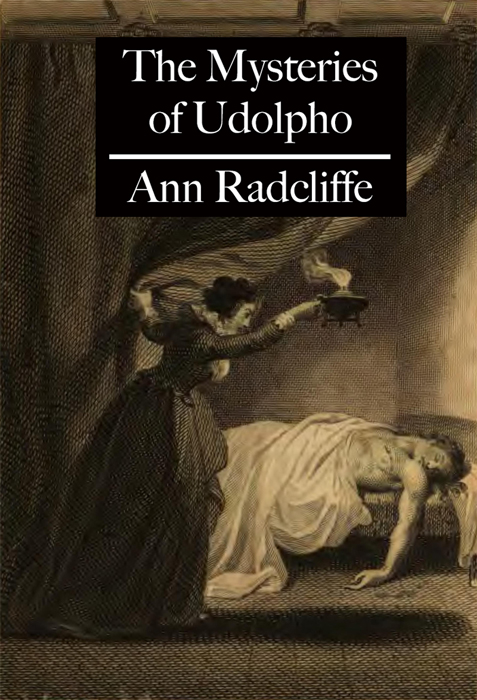
This Day in History: Writer Ann Radcliffe died on this day in 1823. Little known today, she was the highest paid author in the 1790's. She was one of the first of the Gothic writers, writing novels like The Mysteries of Udolpho and The Italian which inserted supernatural elements, though many complained that she failed to incorporate "real ghosts" into her stories. She influenced writers like Edgar Allan Poe and Sir Walter Scott and was admired by Honoré de Balzac, Victor Hugo, Alexandre Dumas, Charles Baudelaire and Fyodor Dostoyevsky.

H.P. Lovecraft gave her high praise in his book, Supernatural Horror in Literature:

"Five years later, and all existing lamps are paled by the rising of a fresh luminary of wholly superior order—Mrs. Ann Radcliffe (1764–1823), whose famous novels made terror and suspense a fashion, and who set new and higher standards in the domain of macabre and fear-inspiring atmosphere despite a provoking custom of destroying her own phantoms at the last through laboured mechanical explanations. To the familiar Gothic trappings of her predecessors Mrs. Radcliffe added a genuine sense of the unearthly in scene and incident which closely approached genius; every touch of setting and action contributing artistically to the impression of illimitable frightfulness which she wished to convey. A few sinister details like a track of blood on castle stairs, a groan from a distant vault, or a weird song in a nocturnal forest can with her conjure up the most powerful images of imminent horror; surpassing by far the extravagant and toilsome elaborations of others. Nor are these images in themselves any the less potent because they are explained away before the end of the novel. Mrs. Radcliffe’s visual imagination was very strong, and appears as much in her delightful landscape touches—always in broad, glamorously pictorial outline, and never in close detail—as in her weird phantasies. Her prime weaknesses, aside from the habit of prosaic disillusionment, are a tendency toward erroneous geography and history and a fatal predilection for bestrewing her novels with insipid little poems, attributed to one or another of the characters.

     Mrs. Radcliffe wrote six novels; The Castles of Athlin and Dunbayne (1789), A Sicilian Romance (1790), The Romance of the Forest (1791), The Mysteries of Udolpho (1794), The Italian (1797), and Gaston de Blondeville, composed in 1802 but first published posthumously in 1826. Of these Udolpho is by far the most famous, and may be taken as a type of the early Gothic tale at its best. It is the chronicle of Emily, a young Frenchwoman transplanted to an ancient and portentous castle in the Apennines through the death of her parents and the marriage of her aunt to the lord of the castle—the scheming nobleman Montoni. Mysterious sounds, opened doors, frightful legends, and a nameless horror in a niche behind a black veil all operate in quick succession to unnerve the heroine and her faithful attendant Annette; but finally, after the death of her aunt, she escapes with the aid of a fellow-prisoner whom she has discovered. On the way home she stops at a chateau filled with fresh horrors—the abandoned wing where the departed chatelaine dwelt, and the bed of death with the black pall—but is finally restored to security and happiness with her lover Valancourt, after the clearing-up of a secret which seemed for a time to involve her birth in mystery. Clearly, this is only the familiar material re-worked; but it is so well re-worked that Udolpho will always be a classic. Mrs. Radcliffe’s characters are puppets, but they are less markedly so than those of her forerunners. And in atmospheric creation she stands preĂ«minent among those of her time."

Listen to Lovecraft's Supernatural Horror in Literature

Wednesday, December 28, 2022

Exorcist Author William Peter Blatty on this Day in History


This Day in History: American writer, director and producer William Peter Blatty was born on this day (January 7) in 1928.  He is best known for his 1971 novel, The Exorcist, and for his 1974 screenplay for the film adaptation of the same name. Blatty won an Academy Award for Best Adapted Screenplay for The Exorcist, and was nominated for Best Picture as its producer. 

The Exorcist is the story of a twelve-year-old girl possessed by a powerful demon, that topped The New York Times Best Seller list for 17 weeks and remained on the list for 57 consecutive weeks. The book sold more than 13 million copies in the United States alone and was translated into over a dozen languages. He later adapted it with director William Friedkin into the film version. Blatty went on to win an Academy Award for his Exorcist screenplay, as well as Golden Globes for Best Picture and Best Writing. 

It also became the first horror film ever to be nominated for the best picture Oscar.

"The movie was marketed as 'based on a true story', but many just believed it to be a marketing gimmick, which in fact, was not true. William Blatty, the writer of the book was actually inspired by exorcisms that happened in real life.
William Blatty came to know about a secret journal kept by the assistant to a Priest who performed exorcisms. He set out to track it down and obtain it.
He had a hard time obtaining it as the Priest who held the journal denied accessing it from anyone else. Eventually, he was able to obtain and read it. It wowed him when he went through the journal, as it told about the real story of a young boy from Maryland and his battle with what his parents believed to be demonic possession. Although Blatty changed several aspects in his novel, such as the age and gender of the child who was possessed." Source


Wednesday, December 14, 2022

Gothic Horror Writer Shirley Jackson on This Day in History

Ruth Franklin on Shirley Jackson

This Day In History: Author Shirley Jackson was born on this day in 1916. Jackson gained significant public attention for her short story The Lottery, which presents the sinister underside of a bucolic American village. She actually wrote The Lottery in a single morning, and many people wrote to her believing that the story was true.

In 1959, she published The Haunting of Hill House, a supernatural horror novel widely considered to be one of the best ghost stories ever written. Jackson's 1962 novel We Have Always Lived in the Castle is a Gothic mystery which has been described as Jackson's masterpiece.

She was raised in a family of Christian Scientists, and she would angrily recall her mother and grandmother praying over her little brother’s broken arm rather than taking him to a hospital. Her parents never attended her wedding because she married a Jew.

She had a huge library of witchcraft books, and she was fascinated by a book called "An Adventure" which details a "true" ghost story involving Marie Antoinette written by two academics. She was the inspiration for other writers, including Stephen King, Neil Gaiman and Joyce Carol Oates.

Jackson was of English ancestry, and her family heritage can be traced to the Revolutionary War hero General Nathanael Greene.

By the 1960s, Jackson's health began to deteriorate significantly, ultimately leading to her death due to a heart condition in 1965 at the age of 48.


Tuesday, October 25, 2022

Horror Actor Vincent Price on This Day in History


Vincent Price reading the Raven 

This Day In History: Horror actor Vincent Price died on this day in 1993, fittingly in the Halloween season. His biggest movie was perhaps "House of Wax" in 1953, but I was first introduced to him in the Canadian children's television program The Hilarious House of Frightenstein (1971). He was also on Alice Cooper's "Welcome to my Nightmare" though most now know him for Thriller. He made less that $1000 for his work on Michael Jackson's Thriller, and when the album became huge he expressed frustration over his meager paycheck.

The ten most iconic horror films starring Vincent Price are:

On a lighter side, "There are a number of cooking books published by Price, who was said to be an excellent gourmet chef. The majority of these books were written with his wife, and their success lead to Price’s own cooking show, Cooking Price-Wise with Vincent Price. It ran for six weeks." Source

Monday, October 3, 2022

Scream Queen Janet Leigh on This Day in History


This day in history: Actress Janet Leigh died on this day in 2004. She is best known for her role in Psycho making her one of the earliest Scream Queens. Her daughter, Jamie Lee Curtis became the Scream Queen for a later generation, and they both appeared in 2 horror movies together: The Fog and Halloween H20.

According to ETOnline the top 10 Scream Queens are:

Jamie Lee Curtis (several Halloween movies, The Fog, Prom Night, Terror Train)

Neve Campbell (the Scream series)

Sarah Michelle Gellar (Buffy the Vampire Slayer, I Know What You Did Last Summer, the Grudge)

Vera Farmiga (The Conjuring, Bates Motel)

Danielle Harris (Halloween 4 and 5, Hatchet, etc)

Sarah Paulson (American Horror Story, Bird Box, Glass)

Chloe Grace Moretz (The Amityville Horror, Wicked Little Things, Let Me In, Carrie)

Taissa Farmiga (American Horror Story, The Nun)

Anya Taylor-Joy (The Witch, Split, Glass)

Heather Langkenkamp (A Nightmare on Elm Street series)


Tuesday, August 30, 2022

Frankenstein on This Day in History


This Day in History: Mary Shelley was born on this day in 1797. Mary Wollstonecraft Shelley was an English novelist who wrote the Gothic novel Frankenstein; or, The Modern Prometheus (1818), which is considered an early example of science fiction. 

She wrote Frankenstein while still a teenager.

National Frankenstein Day is celebrated on this day every year. 

Helen Moore wrote the following in 1886:

Mrs. Shelley herself, in the preface of the last London edition of “Frankenstein," published during her life, has told how she tried day after day to think of a plot; to invent something uncanny or horribly fantastic, and how each morning, to the question, “Have you thought of a story?" she was obliged to answer "No," until a train of thought supplied by conversation of a metaphysical tone which she had listened to between Shelley and Byron, entered into her state of reverie in semi-sleep, and suggested the essential outlines of the plot of "Frankenstein."

What was thus suggested was probably nothing more than the central figures of the weird conception. Nothing could be simpler than the plot, nothing more horrible than the situations and the details. Frankenstein is a student who, by the study of occult sciences, acquires the power of imparting life to a figure which he had made. Graves and charnel-house had furnished the needed material from which he had constructed this colossal human form. To the thing thus prepared he is able to impart life. It lives and possesses human attributes. The rest of the tale is occupied in depicting the nameless horrors which visited Frankenstein as the result of his creation. The thing becomes the bane of his life. He tries to fly from it, but there is no final escape. One by one, the monster that he had created slays the brother, friend, sister, and bride of the luckless student, who himself finally falls a victim to his own wretched and unto-ward creation. The monster, upon its part, strives to adapt itself to life, but fails; finds no possibility of companionship, no admission into any human fellowship.

Such in brief outline is the plot, if it can be so called, of the tale which, with eager hands, the youthful romancer penned before the first horror of the idea had faded from her brain. At Shelley's suggestion the story was amplified. The introductory letters were inserted and the pastoral episode and other incidents were added to the later part of the narrative. As originally written the story began with the words, "It was on a dreary night of November that I beheld the accomplishment of my toils." In the work as published these words introduce Chapter IV.

Regarded as a mere tale, it is difficult to account for the hold this story has always had upon the minds of the reading world. As a story it does not justify its own success. To say that it is remarkable as a work of imagination does not meet the difficulty. By a work of the imagination, as used in the current criticism of "Frankenstein," is simply meant that it is a fantastic romance, such as we find in the "Arabian Nights," or in the prose tales of Poe. But a position utterly different from these is accorded to "Frankenstein."

We have intimated that there was a dual quality in it, to which it owed its singular power and place in literature. One element is doubtless the horror of the tale and the weird fancy of the author's imagination in the ordinary acceptation of the word. But it is to an entirely different department of mental conception that we must look for the secret of its peculiar influence. The faculty of imagination is something more than the recalling and rearrangements of past impressions. Profoundly considered, it is that function of the mind which formulates, as though real, a state of things which if present would so appear. It is the power of projecting the mind into unhappened realities. It is the faculty of picturing unseen verities. There is thus in it a prophetic element, not at all miraculous, but dependent upon subtile laws of association and suggestion. It is to this element that "Frankenstein" owes its power over thoughtful minds. It is by virtue of the allegorical element in it that it holds its high position as a work of the imagination. Yet so unobtrusively is the allegory woven through the thread of the romance, that, while always felt, it can scarcely be said to have been detected. Certain it is that no one has directed attention to this phase, or carefully attempted an analysis of the work, with the view of deducing the meaning thus legible between the lines.

That Mrs. Shelley herself was conscious of this element is certain, by the double title she gave it,— "Frankenstein, or the Modern Prometheus." Furthermore, that she should thus embody, under the apparent guise of a weird story, suggestions of moral truths, developments of mental traits,—normal and abnormal,—and hints at, and solutions of, social questions, was in strict accord both with her own intellectual state and with the circumstances under which "Frankenstein" was produced. And yet nothing is more improbable than that it was written with such design, or that the youthful author was fully aware or even conscious of the extent to which the allegorical overlies largely the narrative in her work. This very unconsciousness of result, this obliviousness to hidden truths, is a distinguishing mark of genius. To take daily account of stock proclaims the small trader, not the merchant prince. Placed in a congenial atmosphere, genius in breathing the breath of life will exhale truths. The very gist of genius is embodied in this hidden relation to truth. That mind has genius which, detecting germs of truth under forms where the common eye sees them not, affords in itself the place and pabulum for their growth.


We know the circumstance under which the book was written; the stories which suggested it were all weird in form and allegorical in type; the minds of those by whom Mrs. Shelley was at that time surrounded were minds to whom the mystical was the natural mode of thought and speech. Her own inherited and acquired mental traits were markedly of this same character. Furthermore, at this time the influence of Shelley was strongest upon her. Not that of one nature mastering and overpowering a weaker, but that yet stronger bond of one mind fitted by nature and oneness of motive to gain insight into, and be in unison with, the other.

Such, in a remarkable degree, was her relation at this time to Shelley; to her his nature was revealed. They had spoken and dwelt upon his past until it was an open book to her. His aims and his failures, his aspirations and fears, his nature and philosophy were familiar and ever present to her mind. Moreover, from him she had learned much about the great world of men and things, broadening her nature and conceptions beyond the ordinary limit of feminine knowledge; indeed, with the result of attaching her own peculiar insight to the facts and ideas thus included within her extending horizon. In both of their minds the tendency to dwell on social and ethical problems was strong, and to such natures union means cubic strength. What wonder that, if, underlying her story thus produced, should lie partly concealed or vaguely hinted, social and moral ideas, awaiting but recognition, to become in turn the suggestors of their own redevelopment in the minds of us who read.

That some, nay, many, of these have an almost direct bearing upon Shelley himself, either as proceeding from him or pointing to him, is to be expected; to say that they all thus have would be perhaps straining a theory otherwise tenable. What we can safely affirm is that he who, with this idea of the allegorical substratum, will reread the story, will be richly repaid in the suggestions the mind cannot fail to receive, and which, according to the mind of each, will attach to the nature of Shelley himself, or, more widely taken, will stand as general truths, applicable alike to all.

Such a general truth is that pictured in the character and pursuit of the student Frankenstein himself. He exhibits to us the man of one idea, absorbed in but one department of science, not only abandoning other studies, but rejecting the ordinary avocations of life. Family, frie nd, even the voice of her who loved fails to recall him to action or to a sense of the proper proportion of things. We see the result not only in the loss of symmetry and balance in his character, but find it having its legitimate effect in making him the slave of his own too concentrated studies. So that finally he becomes possessed by the ruling idea he had so dearly cherished, and the reward of his infatuation is the delusion that he can accomplish that which a healthful mind would have avoided,—a delusion which had grown up in the very seclusion and isolation of life that the unhappy student had adopted; to which the fitting antidote would have been the diversion of the commonplace interests which he had carefully excluded. The power to produce the horrible creature, as the fruit of this delusion, is but the poetic justice of his sentence. The terrible result of his creation furnishes the morale and teaching of the allegory. Into this part of the story is interposed the train of thought which is suggested by the construction of the human form by Frankenstein. In its preparation the student selects the most beautiful models for each limb and feature. He spares no pains, and each separate anatomical part is, taken by itself, perfect in symmetry and adaptation. But when once the breath of life is breathed into the creation, and life quickens its being and gleams from its eyes, and function succeeds in the hitherto inanimate parts, all beauty disappears; the separate excellence of each several part is lost in the general incongruity and lack of harmony of the whole.

Can art see no suggestiveness in this? Can society, in its attempt to manufacture conglomerate masses out of dissimilar elements, learn nothing from the teaching here inculcated?

Once become a living being, Frankenstein and this monster that he had made bear to one another the sustained relation of creator and creature. Throughout the entire narrative this relationship is one long allegory with phases as diverse as a prism. Most prominent is the total failure to create that which should find place in life only by growth. In the sad, lone, utter incompatibility which environed the creature,—in the inability of others to accept or tolerate it,—in its own desperate, heart-sickening attempts to educate and train itself into harmony and communion with those who should have been its fellow-beings, and in its final despair and terrible outlawry and revenge, is shown the futility of the attempt to regulate human beings or their concerns, except under the laws of growth and development. And "Frankenstein" contains no deeper teaching than that we cannot legislate happiness into this world; that such attempt at last, after affording a maximum of
misery, returns to plague the inventor.

Another phase of this relationship between the creator and his creature is so strongly suggestive of a certain period of Shelley’s religious life that the mind hesitates before denying the likeness. The creature of Frankenstein, finding itself in a world in which all happiness is denied it; to which its powers of strengthfulness, however exercised, bring it no good, but serve only to increase its misery and sense of loneliness, turns to its creator and, with alternate curses and prayers, beseeches him to either slay it or fit the world for its companionship. In this dilemma the creator does neither. He merely admits either his unwillingness or his inability to do that which simple justice to his creature, to say nothing of his love and duty, would prompt. Thus the creator is made to figure as lacking either justice or omnipotence.

How Shelleyan this idea, the closest student of him will best judge.

But the chief allegorical interest in the narrative concerns itself about that tendency in the human being to discard the established order of things and to create for itself a new and independent existence. In the simple story, Frankenstein made a being responsible to him alone for its creation,—-a being not produced by the ordinary course of life, not amenable or even adaptable to the existing world of men. Right or wrong, better or worse, the creature may be, but different certainly, and this irreconcilable disparity points back ever to its origin, which had been anomalous and strange.

The whole story is but the elaboration of the embarrassment and dangers which flow from departure from the ordinary course of nature; this forced attempt to invade society from within. What strong existence in real life of this same tendency Mary Shelley had seen in those nearest and dearest to her! She has not failed to learn the lesson of her mother's history; time analyzes rather than destroys. And the life of Mary Wollstonecraft was doubtless seen by the clear-minded daughter in stronger contrast of light and shade than it had been by its contemporaries. Who knew so well the glories of that life? Its successes as well as its miseries had sprung from the self-same causes as those of Frankenstein,—from the breach of the conventional; from overstepping the limits ; from creating an individuality and a sphere of existence denied it by Nomos, and consequently sure of the hostility of society.

To this same cause Shelley himself attributed justly the events and moral struggle of his own life. From earliest childhood revolt against convention, and rebellion against authority, had characterized him. His perpetual tendency, like that of Mary Wollstonecraft, like that typified in "Frankenstein," was ever to create for himself an existence not conforming to the ways of the world.

As we read the story of the modern Prometheus, and page by page trace the evolution of this idea, the ethical aspect is oppressive in its prophetic truth. Each must do this for himself. One thing, however, we may note. The visitation of judgment, the terrible results of the exercise of the power of creation, do not begin, do not recoil upon Frankenstein, until he has actually launched his creature into the world of so long as he kept the scheme within himself so long as the influence of the thought and work was confined to him alone, no evil came; on the contrary, after a certain point the struggle after this ideal was a stimulation and an incentive of the highest order. It was only when the overt act of introducing his new existence into the world was accomplished, that misery began to flow from it to all concerned, and even to those apparently not concerned in it. This is the saving clause in the prophetic allegory. Without this it would fail to square with the truth.

See how far-reaching are the ideas which this allegory evokes, how subtile its suggestions are. Mind after mind has felt the power of this story, so simple in its apparent construction, and has again and again returned to it, not asking itself why; feeling a power it did not recognize, much less analyze; hovering, in fact, around it as birds do when charmed, because of an attraction which was persistent and real, although unknown, even unsuspected. All attraction implies some sort of a magnet. Nothing attracts so powerfully as the true.

The world, by its acknowledgment of the coercive quality of “Frankenstein," has given silent acceptance of its genius. The other works, novels, critiques, biographies, while they have had literary merit, feeling, even power, have not shown genius. "Frankenstein" alone was personal, it alone reflected Mrs. Shelley's true self. Her other books contain simply what she wrote in them: this alone contains what was written in her. Being, as she was, stronger in her personality than as a literary artist, the book that alone partook of that personality would alone partake of her peculiar genius. This, considered in its fullest light, "Frankenstein" does.

Monday, June 13, 2022

Friday the 13th's Jason Voorhees on This Day in History


This Day In History: Jason Voorhees from the Friday the 13th movies was apparently born on this day in 1946, although he never actually existed. 

"Born to Elias and Pamela Voorhees on June 13, 1946, Jason was an unfortunate child from the get-go. He suffered with ailments that caused major facial and physical deformities, including hydrocephalus and mental disabilities. Raised in Crystal Lake, Jason spent his time as a boy at Camp Crystal Lake, where his mother worked as a cook. Jason's mother kept him tucked away from the world, isolated and homeschooled because she feared how he'd be treated; she always was marked with a very protective nature. The one time she let him out of her sight, he was placed in the care of camp counselors, who left him unattended and vulnerable when they were off fraternizing and not paying attention to the campers. Bullies at the camp ended up throwing Jason from the docks, resulting in his death by drowning." Source

Jason is not unique in having a birthday though being fictional. Sherlock Holmes, another fictional character. was born January 6 1854; Superman was born April 18, 1938; Michael Myers (Halloween) was born on October 19, 1957 and Harry Potter was born July 31, 1980.

Captain Jean-Luc Picard and the man who played him, Patrick Stewart, were both born on July 13. Stewart in 1940 and Picard in 2305.

Other notable birthdays:

Bugs Bunny: July 27, 1940
Daffy Duck: April 17, 1937
Porky Pig: March 2, 1935
Scooby-Doo: September 13, 1969
Mickey Mouse: Nov 18, 1928
Minnie Mouse: Nov 18, 1928
Daisy Duck: January 9, 1937
Donald Duck: June 9, 1934
Goofy: May 25, 1932
Homer Simpson: May 10, 1955
Sponge Bob Square Pants: May 1, 1999
Winnie the Pooh: October 14, 1926
Pebbles Flintstone: February 22, 1963


Sunday, March 6, 2022

Gothic Horror Novelist George du Maurier on This Day in History


This day in history: George du Maurier was born on this day in 1834. Du Maurier was a cartoonist and writer best known for writing the novel Trilby. You may not have heard of Trilby and it was a huge success in the 1890's when it was released. Trilby tells of a poor artist's model, Trilby O'Ferrall, who was transformed into a diva under the spell of an evil musical genius, Svengali. Soap, songs, dances, toothpaste, and even the city of Trilby, Florida, were named after her, as was the variety of soft felt hat with an indented crown worn in the London stage dramatization of the novel. The plot inspired Gaston Leroux's 1910 novel Phantom of the Opera and innumerable other works derived from it. Du Maurier eventually came to dislike the persistent attention the novel was given. 

The dark figure of Svengali resonated with the public and the word “svengali” has come to refer to a person who, with evil intent, dominates, manipulates and controls another.

In court, the Svengali Defense is a legal tactic that portrays the defendant as a pawn in the scheme of a greater, and more influential, criminal mastermind.

Read Trilby online here.