Showing posts with label medicine. Show all posts

Saturday, April 8, 2023

The First Person Diagnosed with Alzheimer's Disease on This Day in History


This Day in History: Auguste Deter died on this day in 1906. Deter was a German woman notable for being the first person to be diagnosed with Alzheimer's disease. She was only 55.

During the late 1890s, Auguste exhibited a rapid escalation in memory loss and started showing symptoms of dementia, such as loss of memory, delusions, and even temporary vegetative states. In March 1901, Auguste's behavior started to become out of control. She began to accuse Carl of being adulterous and soon became jealous. Auguste started to become inattentive with housework, purposely hid objects and lost her capacity to cook. She also developed insomnia, which caused her to drag sheets outside the house and scream for hours in the middle of the night. She became paranoid over neighbors and strangers as she believed someone was out to kill her.

As a railway worker, Carl was unable to provide adequate care for his wife and was given recommendations by a local doctor to admit her into a mental hospital. She later was admitted to a mental institution, the Institution for the Mentally Ill and for Epileptics [de] (Irrenschloss) in Frankfurt on 25 November 1901. There, she was examined by Dr. Alois Alzheimer.

Alzheimer concluded that she had no sense of time or place. She could barely remember details of her life and frequently gave answers that had nothing to do with the question and were incoherent. Her moods changed rapidly between anxiety, mistrust, withdrawal and 'whininess.' They could not let her wander around the wards because she would accost other patients who would then assault her. It was not the first time that Dr. Alzheimer had seen a complete degeneration of the psyche in patients, but previously the patients had been in their seventies. Ms. Deter piqued his curiosity because she was much younger. In the weeks following, he continued to question her and record her responses. She frequently responded, "Oh, God!" and, "I have lost myself, so to say." She seemed to be consciously aware of her helplessness. Alzheimer called it the "Disease of Forgetfulness".


Monday, March 6, 2023

Bayer Aspirin on This Day in History


This day in history: Bayer registered "Aspirin" as a trademark on this day in 1899. Aspirin, however, has been around for thousands of years. The Sumerians knew that if they ingested the scraped bark of certain trees, their pain would go away. The basically discovered aspirin. 

Low dose aspirin is used to reduce the risk of heart attacks, and studies have found a link between taking regular aspirin and a reduced risk of cancer, particularly colon cancer, however taking aspirin may increase the risk of tinnitus, or ringing in the ears. However, there are other uses for aspirin: It helps cut flowers last longer...it can help exfoliate your skin...it can control inflammation caused by mosquito bites or bee stings by applying it wet to your skin...and it is used as a garden aid and it can restore hair color.

There is also a debate as to whether aspirin can revive a dead car
battery. https://skeptics.stackexchange.com/questions/35438/can-aspirin-revive-a-flat-car-battery

Tuesday, June 7, 2022

Pharmaceutical Giant Merck on This Day in History

This day in history: The German company Merck was founded on this day in 1668 making it the world's oldest operating chemical and pharmaceutical company, as well as one of the largest pharmaceutical companies in the world. In 1827, Merck Group evolved from a pharmacy to a drug manufacturer company with the commercial manufacture of morphine. Merck perfected the chemical process of deriving morphine from opium and later introduced cocaine, used to treat sinus problems and to add to beverages to boost energy levels.

Did you know: Merck used to sell Ecstasy in the 1920's as an appetite suppressant.

The Merck Manual of Diagnosis and Therapy published in 1899 promoted Arsenic as a remedy for Anemia, Laxatives for chickenpox, Strychnine for constipation, Chloroform for hiccups, inhaling smoke for asthmatics, Bloodletting for nausea, poisonous Belladonna for colic, Leeches for earaches and Cocaine for alcoholism.

Merck is one of the 30 companies that make up the Dow Jones Industrial Average.

See also: Folk Medicine, Alternative Remedies & Herbal Cures - 100 Books to Download

Wednesday, March 30, 2022

Anesthesia On This Day in History


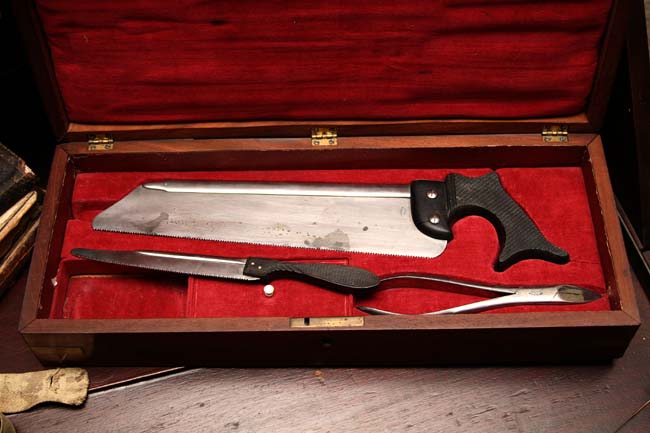
This Day In History: Ether anesthesia is used for the first time on this day in 1842, in an operation by the American surgeon Dr. Crawford Long. The following year, 1846, marked the first successful surgical procedure using anesthesia. 

Also..."in 1846 a dentist named William T.G. Morton used ether to allow Dr. Henry J. Bigelow to partially remove a tumor from the neck of a 24-year-old patient safely with no outward signs of pain. The surgery took place at Massachusetts General Hospital in front of dozens of physicians. When the patient regained consciousness with no recollection of the event it is said that many of the surgeons in attendance, their careers spent hardening themselves to the agonizing screams of their patients while operating without modern anesthesia, wept openly after witnessing this feat. At the time, no one knew how ether worked. We still don’t. Over the last 173 years, dozens of different anesthetic gases have been developed and they all have three basic things in common: they are inhaled, they are all very, very tiny molecules by biological standards, and we don’t know how any of them work." Source

Prior to this surgery was absolutely hellish. In 1750, anatomist John Hunter described surgery as ‘a humiliating spectacle of the futility of science’ and the surgeon as ‘a savage armed with a knife’. The death rate after surgery was exceedingly high: 1 in 4 deaths in some of the better hospitals. If you could afford it, opium was often used to dull pain, as was rum, or mulberry and lettuce. Some people opted for a more direct approach and were knocked unconscious with a hit to the head.

Even in more modern times, anesthesia at times would “not be available” in the Soviet Union for abortions or minor ear, nose, throat, and skin surgeries, and was used as a means of extortion by unscrupulous medical bureaucrats. 

Friday, December 3, 2021

Christian Science Founder Mary Baker Eddy on This Day in History


Today in History: American religious leader, Mary Baker Eddy, who founded the The Church of Christ, Scientist (Christian Science) died on this day in 1910. In her time, Christian Science was quite popular. The central tenet of this faith was the view that disease is a mental error rather than physical disorder, and that the sick should be treated not by medicine but by a form of prayer. This was a view she modifed from Phineas Quimby, a 19th century mesmerist, who believed that there was nothing human beings couldn’t do so long as they believed fully in themselves. Physical illness, personal misfortune — these were results of an improperly aligned mental system. This view made it to Norman Vincent Peale who adopted it for his "The Power of Positive Thinking" which had an impact on Donald Trump. 

The classic children's book, The Secret Garden, was influenced by Christian Science.  "Burnett [the author] admired Mary Baker Eddy's Christian Science teachings, which include the rejection of medicine in favor of prayer and positive thinking. These beliefs make their way into The Secret Garden through the character Colin, a sickly boy locked away in the mansion. It's even been proposed that the novel can be read 'as a feminist, Christian Science revision of ... rest cure,' which was a popular treatment involving 'bed rest, social isolation, and force-feeding.' The doctors in the book do Colin more harm than good with this method, and it’s Mary’s influence, as well as the influence of nature and good thoughts, that make Colin walk again." Source

While there are less than 50,000 members in the US today, at one time it had popular followers, such as Carol Channing, Ginger Rogers, Doris Day, Mickey Rooney, Milton Berle, Robert Duvall, Joan Crawford, Val Kilmer. Others such as Henry Fonda, Robin Williams, Elizabeth Taylor, Marilyn Monroe, Audrey Hepburn, Carol Burnett, and Ellen Degeneres, were raised by family members in the faith but didn’t continue.

Walt Disney and George Lucas were also acquainted with Christian Science, and some believe that the "Force" in Star Wars has Christian Science roots. 

Christian Science is considered one of the "15 Bizarre Religions Around The World That Will Leave You Intrigued" alongside the Church of Euthanasia and Raelism.


Tuesday, June 15, 2021

"Witches" and their Medicine on This Day in History


This Day in History: Margaret Jones became the first person to be executed for witchcraft in Massachusetts Bay Colony on this day in 1648, decades before the Salem Witch Trials. Jones, who resided in Charlestown, now a section of Boston, was a midwife who practiced medicine. "Witches," much like the Alchemists of old, made useful contributions to medicine. The foxglove plant used by Witches contains digoxin and is still used as the active ingredient in some heart and blood pressure medications. Witches used willow bark, and aspirin today contains a chemical found in the willow tree. Witches promoted garlic which is now widely known for its medicinal value. Henbane contains hyoscine, which is now used to treat motion sickness and stomach cramps (Native Americans used a hyoscine-rich plant called thorn apple as a local anesthetic). Nightshade contains atropine, a muscle relaxant that is sometimes used to calm patients going into surgery. While Hemlock is a very poisonous plant, hemlock leaves, root, and seeds are used to make medicine. It is used for breathing problems including bronchitis, whooping cough, and asthma; and for painful conditions including teething in children, swollen and painful joints, and cramps.


After Jones was put to death, her husband, Thomas, tried to leave the colony on a ship. However the ship, which had a heavy load of cargo, had trouble keeping its balance in fair weather. When it was found out that the husband of a condemned witch was on board, he was promptly arrested and put back in prison. Upon his arrest, it was claimed, the ship immediately righted itself.