Showing posts with label president. Show all posts

Wednesday, October 4, 2023

President Rutherford B. Hayes on This Day in History


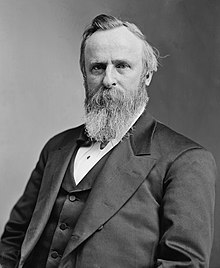
This day in history: The 19th president of the United States, Rutherford B. Hayes, was born on this day in 1822. In the book, Recarving Rushmore: Ranking the Presidents on Peace, Prosperity, And Liberty, Hayes is ranked as the 4th greatest US president of all time, behind John Tyler, Grover Cleveland, and Martin Van Buren. 

Hayes only served one term, because he "believed that presidents performed better if they term-limited themselves, and so he pledged, in his campaign for president, not to seek reelection. He kept his promise. Very few presidents have self-limited their duration in office and therefore their power. Hayes’s action is important and should be commended..... In general, however, he was a very good president because he ended useless inflammatory military occupation of the South, pursued good economic policies, and generally used restraint in foreign policy and in dealing with labor unrest." Ivan Eland


Monday, February 27, 2023

The Twenty-Second Amendment to the United States Constitution on This Day in History


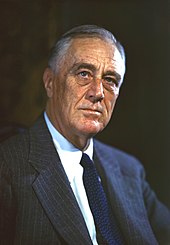
This day in history: The Twenty-second Amendment to the United States Constitution was ratified on this day in 1951, limiting Presidents to two terms. The Twenty-second Amendment was a reaction to Franklin D. Roosevelt's election to an unprecedented four terms as president, but presidential term limits had long been debated in American politics. Delegates to the Constitutional Convention of 1787 considered the issue extensively (alongside broader questions, such as who would elect the president, and the president's role). Many, including Alexander Hamilton and James Madison, supported lifetime tenure for presidents, while others favored fixed terms. Virginia's George Mason denounced the life-tenure proposal as tantamount to elective monarchy. An early draft of the U.S. Constitution provided that the president was restricted to one seven-year term. Ultimately, the Framers approved four-year terms with no restriction on how many times a person could be elected president.

Early presidents, like Washington, resigned after 2 terms. Numerous academics and public figures have looked at his decision to retire after two terms, and have, according to political scientist Bruce Peabody, "argued he had established a two-term tradition that served as a vital check against any one person, or the presidency as a whole, accumulating too much power".

"It was Benjamin Franklin who summed up the best case for term limits more than two centuries ago: 'In free governments, the rulers are the servants, and the people their superiors . . . . For the former to return among the latter does not degrade, but promote them.' In other words, when politicians know they must return to ordinary society and live under the laws passed while they were in government, at least some of them will think more carefully about the long-term effects of the programs they support. Their end-all will not be re-election, because that option will not be available." Source

Sunday, January 22, 2023

President Lyndon Johnson on This Day in History

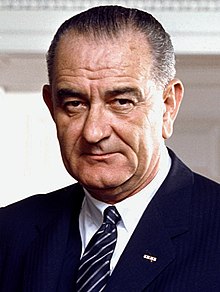
This Day in History: The 36th president of the United States, Lyndon B. Johnson, died on this day in 1973.

From Richard Ebeling:

Fifty years separate us today from 1968 and the two momentous legacies of the then failed presidency of Lyndon Johnson: The declaring of war on America's supposed domestic ills in the form of the "Great Society" programs, and the aggressive military intervention in a real war in Vietnam. Both of these "wars" reflected the arrogance and hubris of the social engineer who believes that he has the power and ability to remake and direct society in his own preferred image.

The Vietnam War still leaves a searing memory of a military conflict ten thousand miles away from the United States, which went on for more than a decade, at the cost of 55,000 American lives and at least one million casualties among the Vietnamese people. It was a war that tore the United States apart unlike any other armed conflict in American history other than the Civil War of the 1860s.

Hundreds of thousands of young men, not fortunate enough to have a college deferment, were conscripted into the U.S. Armed Forces and sent off to fight a war that at least half of the American people either did not support or did not understand, and which finally ended with one of the most humiliating defeats in American military history.

A part of the Vietnam War tragedy was due to the fact that it was managed by "the best and the brightest," as David Halberstam called them in his well-known book of the same title. These were the people within the Kennedy and Johnson administrations who orchestrated and escalated the war as the conflict progressed through the 1960s.

Halberstam referred to these war managers as the "whiz kids." They believed that they had the theoretical and quantitative knowledge and ability to fine-tune a military conflict. By incremental "escalation," they could bring to bear just enough pressure at vital points considered crucial to the enemy in North Vietnam. This would compel the appropriate response from the communist regime in Hanoi to assure that the conflict ended in an "acceptable" outcome. It was a costly lesson in the need for humility and caution in believing that it is in our power to socially engineer global affairs to our own liking.

The disaster and destruction that befell both the American and the Vietnamese people resulted from their arrogant pretense of possessing all the necessary and relevant knowledge for them to design and direct a war on the other side of the world, seemingly all according to a central plan constructed in Washington, D.C.

What they learned (or should have learned) were the inescapable limits to man's ability to consciously direct the future course of human events, and the ever-present occurrence of "unintended consequences." It was a costly lesson in the need for humility and caution in believing that it is in our power to socially engineer global affairs to our own liking.

The same was thing happened in the domestic policies of the Lyndon Johnson administration, which became known as the Great Society agenda. While the Vietnam War became inseparably intertwined with Johnson's name and was a defining mark of his presidency, he really viewed his Great Society agenda as the legacy he wanted to be remembered for. In his mind, he was attempting to fulfill and complete the New Deal programs initiated by his mentor, FDR, in the 1930s.

What guided the Great Society agenda was an arrogant pretense of knowledge. There was a general attitude among many economists and a large number of self-proclaimed social critics that most of the "evils" of the world—poverty, illiteracy, lack of decent housing or medical care, and environmental degradation—were all due to a lack of willpower and well-intentioned and implemented policy. The guiding premise was that the private sector had failed in meeting these problems and, indeed, may have contributed to them due to a disregard for "national needs," while pursuing private purposes.What guided the Great Society agenda was an arrogant pretense of knowledge.

In a speech in May of 1964, President Johnson proposed a series of "activist" government policies that would create a "Great Society" for America. He told his audience that he was determined "to assemble the best thought and broadest knowledge from all over the world to find [the] answers" to these social ills. In 1965, following Johnson's reelection to the presidency, he initiated a wide variety of pieces of legislation to fight his declared "wars" on these social ills. Government programs and spending were either introduced or expanded in almost every domestic direction.

Among the leading Great Society programs were:

  • Medicare and Medicaid (as amendments to the Social Security Act)
  • Economic Opportunity Act
  • Office of Economic Opportunity
  • Community Action Agencies
  • Elementary and Secondary Education Act
  • Higher Education Act
  • Model Cities Program
  • Housing and Urban Development Act
  • Urban Mass Transit Act
  • Supplemental Nutrition Assistance Program (Food Stamps)
  • National Endowments for the Arts
  • National Endowments for the Humanities
  • Wilderness, Endangered Species, and Federal Water Pollution Control Acts

The fundamental premise the Great Society vision for America was based on was the idea of political paternalism. Good men, with enough political power, authority, and financial resources can successfully solve the problems of society. The dilemma, however, is that for government to do anything for us, it must at the same time have the police power do things to us.

If government is to plan our retirement, provide our education, oversee and guarantee our health care, supply our housing, and give us various amounts of cash and other in-kind benefits, then that same government must, invariably, determine and dictate the form, quality, quantity, and conditions under which we can be and will remain eligible for such welfare redistributive benefits.

Thus, many of the welfare programs specified, for example, the makeup and membership of a household to receive government housing, child allowances, and cash payments. Federal money to education invariably ended up coming with standards, requirements, and restrictions on the content of what was taught and the benchmarks for measuring student success for continued funding. Government financing of health care necessarily incorporated regulations, controls, and rules about the pricing of health care services, the types of treatments and coverage permitted or restricted, and access to what care in terms of age and gender.

Increasingly, the individual's options and choices narrowed and were confined to what the government directly supplied or mandated through its rules and regulations. This, obviously, hit those in the lower income categories the most. An underclass of more or less permanent wards of the state was created with intergenerational dependency on government transfers growing in frequency.

Once such individuals and groups were completely or heavily dependent upon these government programs, escape from them was difficult due to the significant loss of benefits if such a recipient wished to find private-sector employment at a wage that would greatly reduce or terminate their eligibility. Thus, an underclass of more or less permanent wards of the state was created with intergenerational dependency on government transfers growing in frequency.

This political paternalism also implied that those in the government establishing these standards and rules for welfare eligibility all presumed to know what all those receiving such benefits and services "really" needed. That is, what kind of housing, what type of medical care, what content of education, what kind of nutritional requirements, etc. the recipients of these programs should receive.

This was no less an arrogance or hubris on the part of the government welfare providers that the poor and unfortunate recipients of this government largess clearly did not have the knowledge, experience, or forethought to make such decisions for themselves. Since the State was providing these benefits, the State clearly knew best what "these" people really needed for them to have some minimum form of a "decent life." The "poor" were classified and homogenized into one size—or a small handful of sizes—that "fit all," with little regard or sensitivity to the diversity between individuals and their personal and family needs and values.

Here, in essence, was the same fundamental flaw in the Great Society agenda as was to be found in the executing of the Vietnam War: the confidence and belief on the part of the implementers of these programs that they could redesign the social order at home just like the foreign policy makers believed they could remake entire societies abroad."Government was the problem, not the solution."

And here, too, were a series of unintended consequences. These included the weakening and break-up of groups and families due to intergenerational dependency on government programs; the emergence of an "entitlement mentality" that taxpayer funded transfers from the government were as legitimate a source of income as earning a living from a private-sector job; the entrapment of those on welfare in isolated, poorly-managed, and increasingly crime-infested public housing projects; and the deterioration of educational standards in public schools, especially in inner city areas of the country.

For the free market critic, the entire direction of the Great Society agenda was wrong-headed. Precisely because it was desirable to see an improvement in the condition of those least and less well off in society, the government's role had to be less rather than more. As a later president was to say, "Government was the problem, not the solution."

The free-market agenda for a truly great society was for people to have the liberty to make their own decisions, find and take advantage of their opportunities, and have the latitude and incentive to design their own lives, according to their own conception of the good, desirable, and worthwhile. Government controls, regulations, redistributions, and handouts were the opposite of the direction needed for America.

  • Government regulations and licensing requirements had to be abolished to make it easier for the less well-off to start their own businesses, or expand their existing businesses to improve their own lives and create employment opportunities for others.
  • Taxes had to be dramatically lowered in all personal income and corporate brackets to leave the income, wealth, and savings in the hands of the people themselves to generate the investment and capital that would create jobs, raise the productivity and value of those in the workforce, and increase standards of living for all over time through more goods and services of all kinds offered on the market.
  • Union power had to be reduced since it had historically been used to limit entry into the labor market in many "closed-shop" sectors of the economy in order to artificially keep up the wages and benefits of those fortunate enough to belong to a particular labor union monopoly, at the expense of others locked out of employment opportunities.

Individual freedom, personal choice and responsibility, and open, competitive markets in a setting of limited government taxing, limited government spending, and limited or no government regulation was the social and institutional circumstance most conducive to really fight a war on poverty and illiteracy and a lack of economic opportunity.

Eliminating the disincentives for private sector construction of less expensive housing would better provide more housing for lower income groups. This would include ending or reducing zoning and various building codes that limited the locations for low-income housing and raised the costs of construction; it also required reducing property and other related taxes on the residential housing market.

Shifting to market-based education in place of the government monopoly school system would introduce needed competition in the educational market to improve the quality, variety, and availability of education for all, including—and especially—for those in the lower income categories.

And moving to a truly free-market-based health and medical care system would provide the required market competition to keep costs down while providing the incentives to improve hospital services and treatments.

Free market economists, like Friedrich A. Hayek, explained that there is more knowledge and wisdom dispersed and decentralized in all the minds of all the members of society than can ever be known, integrated, or mastered by even the "best and brightest" who assert their ability to manage, direct and redesign the complex society in which we live. There is more knowledge and wisdom dispersed and decentralized in all the minds of all the members of society than can ever be known, integrated, or mastered by even the "best and brightest."

That is the advantage and the benefit of the competitive market order: It brings to bear all that there is to know and can be used to improve the condition of society through the informational mechanism of the price system, and the unhindered interactions of supply and demand. Shall we rely upon (and be limited to) what government regulators, planners, and redistributors are able to know and understand; or shall we be free to utilize and benefit from what all of us can contribute through the institutions and workings of the free-market economy?

And that gets us to an extremely important question: What is a just and great society? The Great Society advocates of the 1960s argued that theirs was a liberal vision for a better America. But was it?

I suggest that theirs was a false conception of liberalism, and therefore a misguided idea of a free and great society. The real, or true, liberalism, per its nineteenth-century definition, emphasized the freedom and rights of the individual to his life, liberty, and honestly acquired property. The individual human being was an end in himself, not the tool or means to coercing the will of others possessing political power. The Great Society advocates of the 1960s argued that theirs was a liberal vision for a better America. But was it?

These earlier (or, classical) liberals opposed and helped to do away with absolute monarchy and replace it with representative government. They led the cause for, and finally triumphed in bringing about, the end to human slavery. They insisted upon civil liberties and equal justice before the law for those whom the older political order had discriminated against, including Jews, religious dissenters, various ethnic and national groups, and women.

They also considered economic liberty—the freedom to own and use private property for consumption and production purposes, to peacefully compete in any trade, profession, or occupation the individual found attractive and advantageous, and to freely enter into any voluntary association and market exchange found to be mutually agreeable. This included the terms of trade found acceptable by the traders—to be inseparable from any understanding of and practical existence to human freedom.

The classical liberals considered this also to be a "morally" better society. Why? Because it is based on the idea of respecting the dignity of the individual not to be viewed and treated as a "pawn" (a coerced means) to be manipulated, controlled, or restricted by police power to serve someone else's preferred ends—even if that "someone else" is a large majority of his fellows in society.

For these liberals, "self-government" did not only mean the right of the citizenry to participate in the political process to select those who will hold political office and enforce the laws of the land. It also crucially meant the "self-governing" individual. The individual was "sovereign" to freely live his life in peace, deciding what values and goals will give meaning and purpose to his own sojourn on Earth. The individual had the unmolested right to the private property he had honestly produced or acquired in trade, as the means for pursuing and possibly fulfilling his dreams and conceptions of a good and happy life for himself and those he may care about. Such a free society is more conducive not only to raising people out of poverty and making it possible for more people to be self-supporting, but also to foster a proper sense of benevolence and compassion towards others.

They considered such a truly liberal society also to be the one that provided the free-market incentives and opportunity structures that would have the good effect of directing men (without force, and through the motive of self-interested improvement) to apply their knowledge, ability and experience in ways—as if by an "invisible hand"—to reciprocally help improve the conditions of others as they advanced their own desired ends in the interplay of market competition.

They also argued that such a free society is more conducive not only to raising people out of poverty and making it possible for more people to be self-supporting, but also to foster a proper sense of benevolence and compassion towards others who may have fallen upon misfortune or "hard times" not of their own making. The history of voluntary charity and benevolence in the era of nineteenth century classical liberalism—before the advent of the modern welfare state and its undermining of some of this philanthropic spirit—attests to the magnitude of this private generosity and its success.

What I have called the false liberalism of the Great Society turned its back on this earlier liberal tradition. Indeed, it turned liberalism on its head. Liberalism now meant bigger government, more intrusive government, more regulating and controlling government, with government's very visible hand increasingly in every corner and aspect of American life.

Rather than self-governing, the individual in this new Great Society was to be governed. Governed by whom? By those who arrogated to themselves the idea that they were "the best and brightest," the social engineering "whiz kids," who claimed to know how various segments and groups in the society should and would be made to live. Rather than self-governing, the individual in this new Great Society was to be governed.

This paternalistic legacy of the Great Society era remains with us today. Indeed, it is at the center of the political and social controversies enveloping American debate and conflict about the future direction of the country. Many, if not most, of the supposedly "untouchable" entitlement programs that are at the heart of the current budgetary and debt crisis facing both the federal government and state governments are the outgrowths of the redistributive programs either introduced by or greatly expanded during the Great Society presidency of Lyndon Johnson.

LBJ wanted to be remembered for his Great Society legacy. And he has had his wish. His paternalistic and welfare state agenda is the albatross that has a stranglehold over the fiscal neck of the American people, and continues to threaten the freedom of every individual in the country to this day.

Richard M. Ebeling
Richard M. Ebeling

Richard M. Ebeling is BB&T Distinguished Professor of Ethics and Free Enterprise Leadership at The Citadel in Charleston, South Carolina. He was president of the Foundation for Economic Education (FEE) from 2003 to 2008.

This article was originally published on FEE.org. Read the original article.

Thursday, January 12, 2023

The Under-Appreciated Jimmy Carter on This Day in History


This Day in History: Jimmy Carter was inaugurated as the 76th Governor of Georgia at the age of 46 on this day in 1971. A relatively obscure Georgia state senator and operator of a peanut-growing business, Carter failed in a 1966 bid for the Democratic party nomination for Governor, but succeeded in 1970. Slightly more than six years later, the obscure Governor Carter would become the 39th President of the United States.

"Carter gets a very bad rap, particularly from libertarians and conservatives, but it's not entirely clear why. It has something to do with 'malaise' and lack of 'leadership.' And the Carter administration surely had its blunders, particularly on foreign policy. But Carter also oversaw major (and under-appreciated) foreign policy successes, such as the SALT II nuclear weapons reductions, the Camp David Accords ending the Egypt-Israel conflict, and the removal of US nuclear weapons from Korea...To fight stagflation, Carter appointed tight-money advocate Paul Volker to head the Federal Reserve Board, and Volker pulled the brakes on inflationary monetary policy — hard. It solved inflation but sent the economy into a painful correction that probably cost Carter reelection. And despite his personal big government sympathies, Carter's most lasting legacy is as the Great Deregulator. Carter deregulated oil, trucking, railroads, airlines, and beer." fee.org

So why do people hate Carter so much? Gene Healy suggests that it’s a case of perception over reality: "Carter-bashers seem obsessed with style over substance: that Mr. Rogers sweater, the 'malaise' speech, Carter’s sanctimonious, unlovable public persona — the way he seemed to personify national decline.
People want the illusion of control: a comforting, competent father-protector at the helm of our national destiny — and Carter couldn’t fake that role as well as most presidents before or since. Liberals downgrade the Carter presidency as one short on transformative visions: It brought no New Deals, no New Frontiers.
Instead, at its best, the Carter legacy was one of workaday reforms that made significant improvements in American life: cheaper travel and cheaper goods for the middle class. Ironically enough, the president you’d never want to have a beer with brought you better beer — and much else besides."

"Jimmy Carter may have been the last Jeffersonian to be president. A recent article in the Washington Post labeled him the “Un-Celebrity President.” In either case, Carter is a reflection of a people and a place. He is the most authentic man elected president since Calvin Coolidge, and like Coolidge a true Christian gentleman.
At the very minimum, Carter represented the Founders’ vision for a republican executive. He walked to his inaugural, refused to have 'Hail to the Chief' played while he boarded Air Force One or Marine One, carried his own luggage, and when soundly defeated by Ronald Reagan went home to Plains, Georgia to the same two bedroom rancher he built in 1961. He’s never left...Carter was never a political thug who would sink to purchasing votes for power. He was probably too nice for Washington. That should be a badge of honor." lewrockwell.com

Tuesday, August 2, 2022

The Great Calvin Coolidge on This Day in History

This Day in History: Vice President Calvin Coolidge becomes U.S. President upon the death of President Warren G. Harding on this day in 1923.

Meet the Only US President Born on the 4th of July

Those who underestimate him usually do not understand him.

Of America’s 46 presidents, only one shares a birthday with the country itself—and he was a mighty fine one at that. Calvin Coolidge, our 30th, was born on July 4, 1872. In the summer of 2023, we will note the centennial of his assuming the presidency but it’s never too soon or too late to celebrate this remarkable man.

Earlier this year, the Intercollegiate Studies Institute published a beautiful new edition of The Autobiography of Calvin Coolidge, providing present-day readers an opportunity to get reacquainted with him. The book is accompanied with a timeline of Coolidge’s life and accomplishments, commentaries by two relatives of the president and a former Vermont governor, several of Coolidge’s speeches, and an Introduction by editors Amity Shlaes and Matthew Denhart. All these components blend to reveal a man of more sophistication in his thinking than he is usually credited with.

Today’s advocates of the spendthrift nanny state dismiss this practitioner of small government as a simple man of even simpler times. His wisdom, however, demonstrates the crucial difference between simple and simplistic.

In their Introduction, Shlaes and Denhart suggest that those who underestimate Coolidge usually do not understand him, nor do they appreciate the depth and breadth of what he had to say:

Coolidge’s restraint did not come out of weakness. The restraint reflected discipline, which is why those who like Coolidge call him the Great Refrainer. Today Americans expect presidents to charge ahead, waving multipoint plans to address the issues confronting their people. Coolidge knew what the Framers knew: that there exist many problems the government cannot solve, and there is much an executive should not attempt. The principles Coolidge recognized as key—civility, bipartisanship, federalism, government thrift, and respect for enterprise and religious faith—are ones many Americans long to see revived. These principles come straight from the Founders and served as the basis for our civilization long before that.

Do not count me among those who “expect presidents to charge ahead” as if they possess the knowledge to plan an economy or as if the rest of us could afford it anyway. Presidents put their pants on one leg at a time. As a rule, if they think of themselves as “great,” they are far from it. Coolidge was smart and humble enough to never fall for such delusions. In his words,

It is a great advantage to a President, and a major source of safety to the country, for him to know that he is not a great man. When a man begins to feel that he is the only one who can lead in this republic, he is guilty of treason to the spirit of our institutions.

It is simple to appreciate one’s limitations and the limitations of government. It is simplistic to think they can be tossed to the wind if you are in charge because you’re somehow special.

Coolidge was not dumb enough to believe that passing laws, and piling them sky-high on top of previous ones, was a magic formula for national success. “It is much more important to kill bad bills than to pass good ones,” he once wrote.

Scrutinizing proposed laws for their flaws and stopping stupid or destructive ones is simple if your principles are solid. Repealing nothing, and passing almost anything that expands government, is simplistic; in fact, it is what political simpletons do.

Going a step further, Coolidge demonstrated that he understood what good law really is. It is not a purely man-made concoction to keep one group happy at the expense of others. Good law, he believed, should follow from timeless truths of justice, sound economics, and honest dealing.

As he put it himself in a message to the Massachusetts senate,

Men do not make laws. They do but discover them. Laws must be justified by something more than the will of the majority. They must rest on the eternal foundation of righteousness.

The notion that law should be more than whim or deceit is a simple but profound concept when you are grounded, as Coolidge was, in a commitment to truth. But if you think the good of the country is synonymous with partisan advantage, lying to get your way, or bankrupting future generations, you are simplistic at best.

On fiscal matters, Coolidge embraced a simple truth: It’s not the government’s money, it’s the people’s, and the government should treat the people’s money with utmost respect. “I am for economy,” he once said, and then added for reinforcement, “After that I am for more economy.” In his March 1925 Inaugural Address, he elaborated:

I favor the policy of economy, not because I wish to save money, but because I wish to save people. The men and women of this country who toil are the ones who bear the cost of the Government. Every dollar that we carelessly waste means that their life will be so much the more meager. Every dollar that we prudently save means that their life will be so much the more abundant. Economy is idealism in its most practical form.

During his tenure in the White House (1923-1929), Coolidge’s policies cut tax rates by two-thirds and reduced the national debt by one-third. The budget was balanced every year. Federal spending was lower when he left office than when he entered it. That is the last time that has ever happened. If you are tempted to dismiss him as simple, I’d like to see you try to accomplish that same feat today.

In 1920, the year he was elected Vice-President on the Republican ticket with Warren Harding, Coolidge expressed a view that would characterize his policies later as President:

Our government belongs to the people. Our property belongs to the people…They own it. The taxes are paid by the people. They bear the burden. The benefits of government must accrue to the people. Not to one class, but to all classes, to all the people. The functions, the power, the sovereignty of the government, must be kept where they have been placed by the Constitution and laws of the people.

The most simplistic policies are those that treat other people’s money as if it were trash, throwing it thoughtlessly by the trillions at problems (as well as non-problems) that look more like pet partisan projects than money well-spent.

Years before economist F. A. Hayek would famously write, “The curious task of economics is to demonstrate to men how little they know about what they imagine they can design,” Coolidge already knew it. He did not rise to office with grandiose plans to “fundamentally transform” other people’s lives. His plan was simple—to do his job as prescribed by the Constitution. He made no simplistic pretense to anything more.

Some might charge, “But didn’t the Great Depression start soon after Coolidge left office?” as if association is causation. To blame Coolidge for the Depression is worse than simplistic (see recommended readings below); it’s precisely wrong. The calamity of the 1930s was prompted by the “wise” and “sophisticated” money managers at the Federal Reserve, and then worsened by the interventions of the Hoover and Roosevelt administrations. It was a calamity of simplistic elitists.

When faced with a choice between simple and simplistic, you will usually benefit from the former and regret the latter. Give me a simple Coolidge over a pretentious, free-spending, snake-oil salesman any day of the week.

Happy birthday, Calvin Coolidge (and America too)! As icing on the birthday cake, I close with a few additional remarks from our 30th President:

Self-government means self-support. Man is born into the universe with a personality that is his own. He has a right that is founded upon the constitution of the universe to have property that is his own. Ultimately, property rights and personal rights are the same thing. The one cannot be preserved if the other be violated. Each man is entitled to his rights and the rewards of his service be they never so large or never so small.

_____

The attempt to regulate, control and prescribe all manner of conduct and social relations is very old. It was always the practice of primitive peoples. Such governments assumed jurisdiction over the action, property, life, and even religious convictions of their citizens down to the minutest detail. A large part of the history of free institutions is the history of the people struggling to emancipate themselves from all this bondage.

_____

There is no magic in government not possessed by the public at large by which these things can be done. The people cannot divest themselves of their really great burdens by undertaking to provide that they shall hereafter be borne by the government.

_____

It is characteristic of the unlearned that they are forever proposing something which is old, and because it has recently come to their own attention, supposing it to be new.

_____

About the Declaration there is a finality that is exceedingly restful. It is often asserted that the world has made a great deal of progress since 1776, that we have had new thoughts and new experiences which have given us a great advance over the people of that day, and that we may therefore very well discard their conclusions for something more modern. But that reasoning cannot be applied to this great charter. If all men are created equal, that is final. If they are endowed with inalienable rights, that is final. If governments derive their just powers from the consent of the governed, that is final.  No advance, no progress can be made beyond these propositions. If anyone wishes to deny their truth or their soundness, the only direction in which he can proceed historically is not forward, but backward toward a time when there was no equality, no rights of the individual, no rule of the people. Those who wish to proceed in that direction cannot lay claim to progress. They are reactionary. Their ideas are not more "modern," but more ancient than those of our Revolutionary ancestors.

Calvin Coolidge’s Inaugural Address Warned of the Dangers of Legalized Larceny by Lawrence W. Reed

Cal and the Big Cal-Amity  by Lawrence W. Reed

Sometimes, Contested Conventions Get It Right by Lawrence W. Reed

Clinton Vs. Cleveland and Coolidge on Taxes by Lawrence W. Reed

He Was a President Who Understood Principle by Jake Yonally.

Two Presidents, Two Philosophies, and Two Different Outcomes by Burton W. Folsom

Great Myths of the Great Depression by Lawrence W. Reed

Media are Still Peddling One of the Great Myths of the Great Depression by Lawrence W. Reed

Foundations of the Republic—a Speech by Calvin Coolidge

Lawrence W. Reed
Lawrence W. Reed

Lawrence W. Reed is FEE's President Emeritus, Humphreys Family Senior Fellow, and Ron Manners Global Ambassador for Liberty, having served for nearly 11 years as FEE’s president (2008-2019). He is author of the 2020 book, Was Jesus a Socialist? as well as Real Heroes: Incredible True Stories of Courage, Character, and Conviction and Excuse Me, Professor: Challenging the Myths of ProgressivismFollow on LinkedIn and Like his public figure page on Facebook. His website is www.lawrencewreed.com.

This article was originally published on FEE.org. Read the original article.
Sunday, July 24, 2022

Martin Van Buren on This Day in History


This day in history: President Martin Van Buren died on this day in 1862. According to the book "Recarving Rushmore: Ranking the Presidents on Peace, Prosperity and Liberty" Martin Van Buren ranks as the third best president (the top 5 presidents according to this book are John Tyler, Grover Cleveland, Martin Van Buren, Rutherford B. Hayes and Chester A. Arthur). The reason these presidents you never heard of were better is that they mainly left people alone. 

"Martin Van Buren was the least bad president in American history. Although other chief executives had some libertarian accomplishments, he was by far the most consistent. Domestically, Van Buren kept government spending and taxes low, and also brought to culmination the Jacksonian program for the 'divorce of bank and state,' despite the country being engulfed in a severe depression. But Van Buren’s most stunning achievements were in foreign policy. Mainstream historians usually rate presidents according to their forceful leadership, which biases them toward presidents who drag the country into wars, permitting displays of decisiveness and energy. But if we instead applaud maintaining peace, Van Buren has the unique distinction of keeping the country out of two possible wars. By blocking annexation of Texas, he forestalled a war with Mexico that unfortunately came about a decade later. He also calmed two major disputes with Canada, either of which could have instigated full-fledged conflict with Britain. One involved border incidents resulting from a revolt in Canada, and the other a clash over the Maine boundary. The unpopularity of these libertarian and diplomatic measures, even within Van Buren’s own party, contributed to his failure to win reelection in 1840 and renomination in 1844." ~Jeffrey Rogers Hummel

Van Buren became the first President who was born after the American Revolution, making him, in a newer sense, the first "American" born president.

See also American History & Mysteries, Over 200 PDF Books on DVDrom
https://thebookshelf2015.blogspot.com/2015/09/american-history-mysteries-over-200-pdf.html

Monday, April 4, 2022

William Henry Harrison on This Day in History


This Day in History: William Henry Harrison died of pneumonia on this day in 1841, becoming the first President of the United States to die in office, and setting the record for the briefest administration. This of course followed the longest ever US presidential inauguration speech. The day of the inauguration was overcast with cold wind and a noon temperature estimated to be 48.5 °F (9.2 °C), but the President-elect chose not to wear an overcoat, hat, or gloves for the ceremony. Harrison's speech consisted of 8,445 words.

The benefit of a short term is that it does leave little time for damage.

Harrison's tenure as leader was short, but it was not the shortest. 

Urban VII was Pope for 12 days before he succumbed to malaria. However, in his short term, he managed to enact the very first public smoking ban.

Lady Jane Grey of England was Queen for 9 days.

Frank Forde of Australia was Prime Minister for 5 days.

John I of France (1316) became King before he was even born, but 5 days after his birth he was dead. Some claim poisoning took his life.

After Hitler, Joseph Goebbels was pronounced Chancellor of Germany, but this lasted one day before he committed suicide, alongside his 6 children and wife.

Mo of the Jin Dynasty (China) was Emperor for 1 day before he was killed.

Louis XIX of France was king for about 14-20 minutes.

Sunday, January 30, 2022

The First Assassination Attempt Against a US President on This Day in History

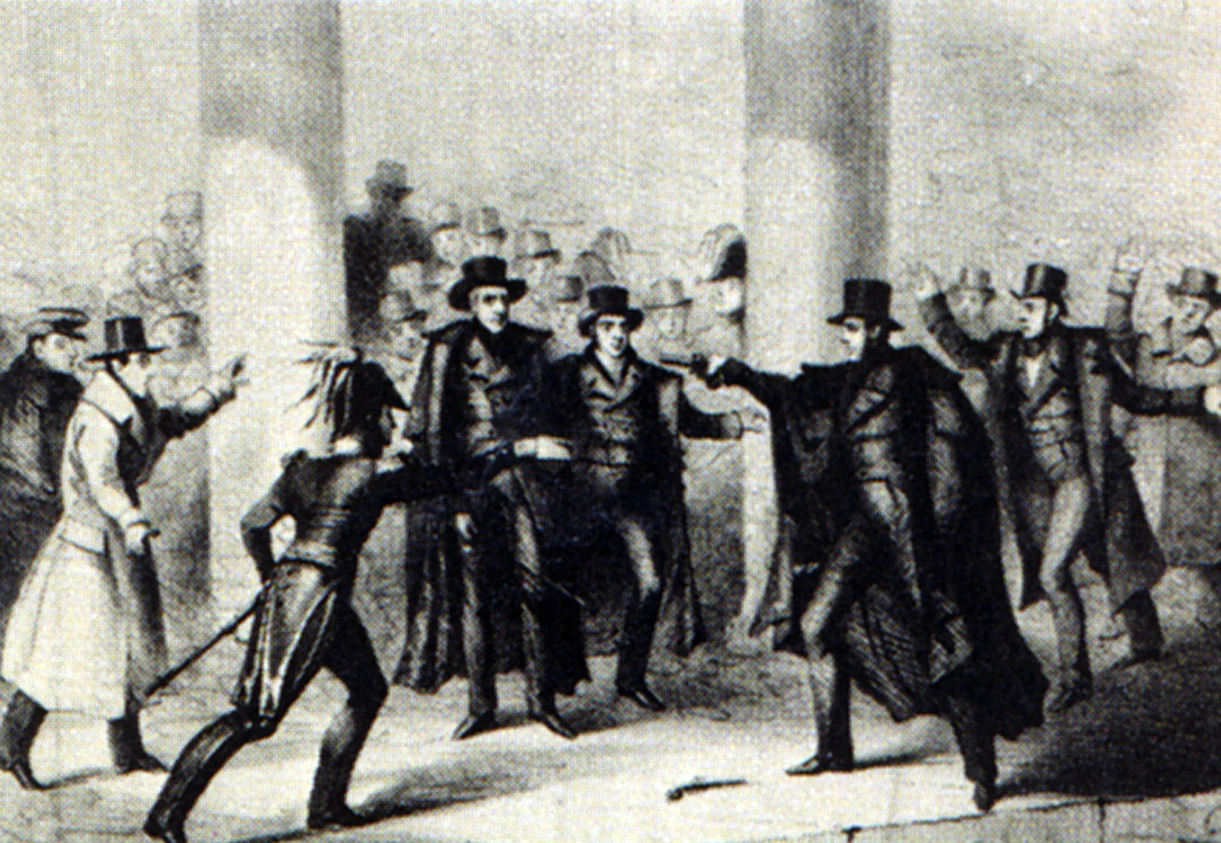
This Day in History: In the first assassination attempt against a President of the United States happened on this day in 1835. Richard Lawrence attempted to shoot president Andrew Jackson on this day, but failed and was subdued by a crowd, including several congressmen as well as Jackson himself.

Richard Lawrence was an English-American house painter, and historians have speculated that exposure to the toxic chemicals in the paints that he used may have contributed to his mental illness, which manifested itself in his thirties, and he later became violent to his siblings. At trial, Lawrence was found not guilty by reason of insanity and spent the remainder of his life in insane asylums.

Lawrence was not the only painter known for his violence. "The Baroque artist Caravaggio is famous for gruesome paintings like 'Judith Beheading Holofernes.' Yet it wasn’t only his paintings that were brutal and violent. In the early 17th century, Caravaggio went to trial at least 11 times for things like writing libelous poems, throwing a plate of artichokes at a waiter and assaulting people with swords. He eventually fled Rome to escape punishment for killing a man and died in exile under mysterious circumstances." Source

16th century painter Benvenuto Cellini "killed repeatedly without remorse and without being punished. He stabbed his brother's murderer to death with a long twisted dagger that he drove downward through the man's shoulder. He also killed a rival goldsmith and shot an innkeeper dead – and recounts all these crimes in his autobiography. He escaped being executed because he was so admired as an artist. In those days, geniuses really could get away with murder." Source

Victorian era painter Richard Dadd stabbed his father to death because he thought he was the devil. He spent the rest of his life in prisons and mental institutions where he painted fantastic fairy scenes of bizarre detail and intensity.