Showing posts with label america. Show all posts

Thursday, July 4, 2024

Two Poems Celebrating America's Independence Day (1876 and 1909)


Poem for Independence Day by Marcia Jane Eaton 1876

HOW shall we celebrate the day
To which our freedom owes its birth; 
When firm, yet seeking no display, 
The patriots stood in proud array,
Before the mighty ones of earth?

Trusting in God, they stood alone, 
With dauntless front and unquelled eye, 
No servile fear, no sorrowing moan, 
As thus they braved high England's throne, 
And Liberty or Death," their cry. 

Heaven smiled propitious on the hour,
And nerved with hope the little band
They bade farewell to beauty's bower, 
And armed with justice, clothed in power, 
Fought boldly for their native land.

They fought against the tyrant king, 
Led on by freedom's chosen son- 
With clash of arms the valleys ring, 
Till loud their triumph-song they sing, 
Of victory and Washington. 

Not all in vain their blood so free
Was spilled like rain-drops o'er the earth, 
But gathering in one mighty sea
Waters the tree of liberty,
Which in each freeman's heart finds birth.

How shall we celebrate the hour,
Which set our own loved country free? 
With joyous shout in peaceful bower, 
With cannon's roar, and music's power, 
We'll hail the Nation's jubilee. 

Our banner, with its stripe and star, 
We'll keep unstained from sire to son- 
Each breeze shall waft its folds afar, 
Unsullied, as when first in war 
It waved o'er fields of vict'ry won.

We'll teach our children freedom's song, 
To lisp in artless joyous glee, 
And ever, as the strains prolong,
We'll shout the echo loud and long,
Our own America is free!

********************

INDEPENDENCE DAY

WE celebrate "a day of days,"
Which saw a nation rise
Through din of battle, clash of arms,
And severed kindred ties.
This day we draw aside the veil,
And backward take a look
On stirring scenes, brought to our view, 
 As in an open book. 

We see the lights in "old North Church" 
Those beacons burning bright 
And gallop on with Paul Revere, 
Throughout that fateful night. 
We fight with men at Bunker Hill, 
Whose aim was good and true 
Nerved to the task by loyal hearts, 
'Neath coats of buff and blue. 

With praying Washington we wait 
At Valley Forge, in snow and sleet, 
And see the blood-prints on the ground 
From shoeless soldiers' feet. 
With thin-clad, shiv'ring, dauntless men 
We cross the Delaware 
To meet the foe and capture them, 
And untold perils dare. 

We rise with those patriots brave, 
When they their names affix 
To the "Declaration" broad and grand, 
Of Seventeen Seventy-six. 
As liberty loud it proclaims,
We hear the tones of the bell, 
While echoing valley, hill and glen 
The message to nations tell.

And so each year we celebrate
This day, so dear to all,
When a Nation to new life awoke,
At Freedom's earnest call.
-Mary M. North. 1909

The Greatness of the American Republic by Archbishop Ireland 1897

What is a main and most important difference between a Republic and a Democracy?

In a republic, a constitution or charter of rights protects certain inalienable rights that cannot be taken away by the government, even if it has been elected by a majority of voters. In a "pure democracy," the majority is not restrained in this way and can impose its will on the minority.

Monday, October 2, 2023

The Bill of Rights on This Day in History


This day in history: The United States Bill of Rights was sent to the various States for ratification on this day in 1789. James Madison drafted the Bill of Rights, which is, the first ten amendments to the Constitution—as a means of protecting the people against government tyranny.

Has it worked?

"In America today, the government does whatever it wants, freedom be damned.
We can pretend that the Constitution, which was written to hold the government accountable, is still our governing document, but the reality of life in the American police state tells a different story.
'We the people' have been terrorized, traumatized, and tricked into a semi-permanent state of compliance by a government that cares nothing for our lives or our liberties...A recitation of the Bill of Rights—set against a backdrop of government surveillance, militarized police, SWAT team raids, asset forfeiture, eminent domain, overcriminalization, armed surveillance drones, whole body scanners, stop and frisk searches (all sanctioned by Congress, the White House, the courts and the like)—would understandably sound more like a eulogy to freedoms lost than an affirmation of rights we truly possess." Source

"But whether the Constitution really be one thing, or another, this much is certain - that it has either authorized such a government as we have had, or has been powerless to prevent it." Lysander Spooner


Wednesday, April 12, 2023

The Civil War on This Day in History


This day in history: The American Civil War began on this day (April 12) in 1961 when Confederate troops fired on Fort Sumter in South Carolina's Charleston Harbor.

There is a debate as to whether the Civil War was about slavery, or the rights of the states to secede. I lean toward the latter because of the attitudes of the soldiers in the North. You see, the average white Northerner had about the same attitude toward blacks as did the average white Southerner. Alexis de Tocqueville actually believed that racism was actually worse in the Northern states than it was in the South.  

When Lincoln introduced the Emancipation Proclamation in 1863, soldiers in the North felt that they were duped. Civil War author James McPherson wrote that “They professed to feel betrayed. They were willing to risk their lives for the Union, they said, but not for black freedom.”

McPherson writes of a “backlash of anti-emancipation sentiment” in the Federal army and quotes various officers as saying things like, “If emancipation is to be the policy of this war...I do not care how quick the country goes to pot.” A Massachusetts sergeant wrote in a letter that “if anyone thinks that this army is fighting to free the [black man]...they are terribly mistaken.” Another officer declared that “I don't want to fire another shot for the [black man] and I wish that all the abolitionists were in hell...I do not fight or want to fight for Lincoln's...proclamation one day longer.”

With these negative feelings towards blacks at the time in the Northern states, I find it hard to believe that the people there were willing to give up their lives to emancipate them.

220 Books on the American Civil War to Download

The Dark Side of Abraham Lincoln - Over 50 Books to Download


Thursday, January 12, 2023

The Under-Appreciated Jimmy Carter on This Day in History


This Day in History: Jimmy Carter was inaugurated as the 76th Governor of Georgia at the age of 46 on this day in 1971. A relatively obscure Georgia state senator and operator of a peanut-growing business, Carter failed in a 1966 bid for the Democratic party nomination for Governor, but succeeded in 1970. Slightly more than six years later, the obscure Governor Carter would become the 39th President of the United States.

"Carter gets a very bad rap, particularly from libertarians and conservatives, but it's not entirely clear why. It has something to do with 'malaise' and lack of 'leadership.' And the Carter administration surely had its blunders, particularly on foreign policy. But Carter also oversaw major (and under-appreciated) foreign policy successes, such as the SALT II nuclear weapons reductions, the Camp David Accords ending the Egypt-Israel conflict, and the removal of US nuclear weapons from Korea...To fight stagflation, Carter appointed tight-money advocate Paul Volker to head the Federal Reserve Board, and Volker pulled the brakes on inflationary monetary policy — hard. It solved inflation but sent the economy into a painful correction that probably cost Carter reelection. And despite his personal big government sympathies, Carter's most lasting legacy is as the Great Deregulator. Carter deregulated oil, trucking, railroads, airlines, and beer." fee.org

So why do people hate Carter so much? Gene Healy suggests that it’s a case of perception over reality: "Carter-bashers seem obsessed with style over substance: that Mr. Rogers sweater, the 'malaise' speech, Carter’s sanctimonious, unlovable public persona — the way he seemed to personify national decline.
People want the illusion of control: a comforting, competent father-protector at the helm of our national destiny — and Carter couldn’t fake that role as well as most presidents before or since. Liberals downgrade the Carter presidency as one short on transformative visions: It brought no New Deals, no New Frontiers.
Instead, at its best, the Carter legacy was one of workaday reforms that made significant improvements in American life: cheaper travel and cheaper goods for the middle class. Ironically enough, the president you’d never want to have a beer with brought you better beer — and much else besides."

"Jimmy Carter may have been the last Jeffersonian to be president. A recent article in the Washington Post labeled him the “Un-Celebrity President.” In either case, Carter is a reflection of a people and a place. He is the most authentic man elected president since Calvin Coolidge, and like Coolidge a true Christian gentleman.
At the very minimum, Carter represented the Founders’ vision for a republican executive. He walked to his inaugural, refused to have 'Hail to the Chief' played while he boarded Air Force One or Marine One, carried his own luggage, and when soundly defeated by Ronald Reagan went home to Plains, Georgia to the same two bedroom rancher he built in 1961. He’s never left...Carter was never a political thug who would sink to purchasing votes for power. He was probably too nice for Washington. That should be a badge of honor." lewrockwell.com

Wednesday, November 30, 2022

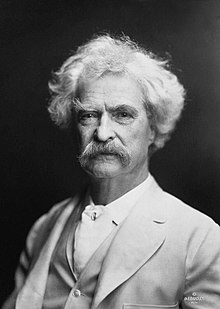
Individualist Mark Twain on This Day in History

This Day in History: Samuel Langhorne Clemens, known by his pen name Mark Twain was born on this day in 1835.

Nobody expressed rugged American individualism better than Samuel Langhorne Clemens—Mark Twain.

This might seem surprising to those who think of him only as the author of children’s classics like The Adventures of Tom Sawyer, The Adventures of Huckleberry Finn, The Prince and the Pauper, and A Connecticut Yankee in King Arthur’s Court. But adults going back to the books are soon reminded how they passionately affirm the moral worth of individual human beings.

A mere author of children’s books? Throughout much of Mark Twain’s life, his opinions made news because he was the most famous living American. He was a friend of steel entrepreneur Andrew Carnegie. Helen Keller, amazingly cultured despite being blind and deaf, relished his company. Mark Twain introduced future English statesman Winston S. Churchill to an American audience. He published the hugely popular autobiography of General Ulysses S. Grant. English novelist Rudyard Kipling came calling at his upstate New York home. Mark Twain met illustrious people like oil entrepreneur John D. Rockefeller, Sr., biologist Charles Darwin, painter James McNeill Whistler, psychiatrist Dr. Sigmund Freud, Waltz King Johann Strauss, violinist Fritz Kreisler, pianist Artur Schnabel, sculptor Auguste Rodin, philosophers Ralph Waldo Emerson and Herbert Spencer, playwright George Bernard Shaw, poets Alfred Lord Tennyson and Henry Wadsworth Longfellow, novelists Henry James and Ivan Turgenev, inventors Nikola Tesla and Thomas Edison (who recorded the author’s voice).

Although Mark Twain wasn’t a systematic thinker, he was steadfast in his defense of liberty. He attacked slavery, supported black self-help. He spoke out for immigrant Chinese laborers who were exploited by police and judges. He acknowledged the miserable treatment of American Indians. He denounced anti-Semitism. He was for women’s suffrage. Defying powerful politicians like Theodore Roosevelt, Mark Twain spearheaded the opposition to militarism. During his last decade, he served as vice president of the Anti-Imperialist League. “I am a moralist in disguise,” he wrote, “it gets me into heaps of trouble when I go thrashing around in political questions.”

He shared the capitalist dream. He speculated in mining stocks. He started a publishing company. He functioned as a venture capitalist providing about $50,000 a year to inventors—he thought invention was perhaps the highest calling. He failed at all these and achieved financial success only as a writer and lecturer.

Mark Twain set a personal example for self-reliance. From the time he quit school at age 12, he was on his own, working as a printer’s assistant, typesetter, steamboat pilot, miner, editor, and publisher. He spent four years paying off 100 percent of his business debts rather than take advantage of limited liability laws. As a writer, he succeeded entirely on his wits, without the security of academic tenure or a government grant. He financed his extensive overseas travels by freelance writing and lecturing. During his lifetime, people bought more than a million copies of his books.

Mark Twain liked what he called “reasoned selfishness.” As he put it, “A man’s first duty is to his own conscience and honor—the party of the country come second to that, and never first. . . . It is not parties that make or save countries or that build them to greatness—it is clean men, clean ordinary citizens . . . .”

Mark Twain displayed a devilish wit. Among his most memorable lines: “What is the difference between a taxidermist and a tax collector? The taxidermist takes only your skin . . . Public servant: Persons chosen by the people to distribute the graft . . . . There is no distinctly native American criminal class except Congress . . . . In the first place, God made idiots. This was for practice. Then He made School Boards . . . In statesmanship, get the formalities right, never mind about the moralities.”

Mark Twain, Popular Hero

Mark Twain was instantly recognizable. One scholar noted that “The young man from Missouri, with drooping moustache and flaming red hair, was unusually garbed in a starched, brown linen duster reaching to his ankles, and he talked and gesticulated so much that people who did not know him thought he was always drunk.”

Mark Twain was a popular hero because people didn’t just read his works. They saw him on lecture platforms in Europe, Asia, Africa and Australia. “Mark Twain steals unobtrusively on to the platform,” wrote one reporter in April 1896, “dressed in the regulation evening clothes, with the trouser-pockets cut high up, into which he occasionally dives both hands. He bows with a quiet dignity to the roaring cheers. . . . He speaks slowly, lazily, and wearily, as a man dropping off to sleep, rarely raising his voice above a conversational tone; but it has that characteristic nasal sound which penetrates to the back of the largest building. . . . To have read Mark Twain is a delight, but to have seen and heard him is a joy not readily to be forgotten.”

Samuel Langhorne Clemens was born November 30, 1835 in Florida, Missouri. He was the fifth child of Jane Lampton, a plainspoken Kentucky woman from whom Sam reportedly acquired his compassion and sense of humor. His father John was a lanky, somber Tennessee lawyer-turned-grocer. He got wiped out speculating in land and other ventures. When Sam was four, the hapless family moved about 30 miles away to Hannibal, Missouri, a Mississippi River town. They had to sell their spoons and rent rooms above a drug store. Yet during the 14 years Sam lived in Hannibal, he gained experiences which inspired his greatest classics.

Clemens attended several schools until he was about 13, but his education really came from his mother. She taught him to learn on his own and respect the humanity of other people, including slaves.

Soon after John Clemens died in 1847, Sam went to work as a printer’s assistant. During the next decade, he worked for printers in St. Louis, New York, Philadelphia, Keokuk (Iowa), and Cincinnati. Clemens, like Benjamin Franklin, educated himself by reading through printers’ libraries. He especially loved history. The more he read, the more he reacted against intolerance and tyranny.

Back in Hannibal, he decided to master the mysteries of the Mississippi. He got a job assisting steamboat pilot Horace Bixby who, for $500 mostly deducted from wages, taught him how to navigate the roughly 1,200 miles of the Mississippi River between New Orleans and St. Louis. During the next 17 months, Clemens learned the shape of the river, the way it looked at night and in fog.

The Civil War disrupted commerce on the Mississippi, dashing his ambitions as a steamboat pilot. Eager to help the South, in 1861, he joined a company of Missouri volunteers known as the Marion Rangers. One night they shot an unarmed, innocent horseman, and the disgusted Clemens quit.

He headed for the Nevada Territory, hoping to strike it rich by finding silver. Since that didn’t happen, he wrote amusing articles about silver mining camps for Nevada’s major newspaper, the Territorial Enterprise, which was published in Virginia City. He landed a full-time job. Initially, his articles were unsigned. Then he decided that to become a literary success, he must begin signing his articles. Pseudonyms were in vogue, so he reached back to his days as a Mississippi River pilot and thought of “Mark Twain,” a term meaning two fathoms, or 12 feet—navigable water for a steamboat. His first signed article appeared February 2, 1863.

It was in Virginia City that Mark Twain met the popular humorist Artemus Ward who was on a lecture tour. His commercial success inspired Mark Twain to think about how he might make a career with his wit. Ward urged him to break into the big New York market.

He wrote his brother and sister, October 1865: “I never had but two powerful ambitions in my life. One was to be a pilot, & the other a preacher of the gospel. I accomplished the one & failed in the other, because I could not supply myself with the necessary stock in trade—i.e., religion . . . I have had a `call’ to literature, of a low order—i.e., humorous. It is nothing to be proud of, but it is my strongest suit.”

After silver mining stocks he had acquired became worthless, he resolved to make the best of humorous writing. The following year, his story, “The Celebrated Jumping Frog of Calaveras County,” was published in The New York Saturday Press, and many other publications reprinted it. Suddenly, he had a national reputation as “the wild humorist of the Pacific Slope.” The Sacramento Union asked him to report on news in Hawaii, and he was off again. He got the idea of giving public lectures about his experiences there. He rented a San Francisco hall starting October 2, 1866, and over the next three weeks earned $1,500 which was far more than he had earned from writing.

“The Fortune of My Life”

Aboard the Quaker City, he met fellow passenger Charles Langdon, 18-year-old son of an Elmira, New York coal industry financier. Langdon showed Clemens a little picture of his sister Olivia—friends called her Livy. Clemens was taken by her, and soon after the ship returned to New York, Langdon introduced the two. On New Year’s Eve 1867, Clemens joined Livy and the family to see Charles Dickens read selections from his novels. That evening, Clemens remarked later, referring to Livy, he had discovered “the fortune of my life.”

Then Mark Twain worked on Innocents Abroad, a book full of wry observations about the people he had met and the things he had seen. For example, writing about Morocco: “There is no regular system of taxation, but when the Emperor or the Bashaw want money, they levy on some rich man, and he has to furnish the cash or go to prison. Therefore, few men in Morocco dare to be rich.”

Sam and Livy got married at Quarry Farm, her parents’ Elmira, New York estate, February 2, 1870. She was the only woman he ever loved.

They were an unlikely pair, because she was a strict Victorian. She disapproved of alcohol, tobacco, and vulgar language, vices he was well-known for. He promised only that he wouldn’t smoke more than one cigar at a time. But she loved his tremendous enthusiasm and his refreshingly candid manner. She called him “Youth.”

She became his most trusted editor. She offered her judgment on what kinds of topics readers would be interested in. She read nearly every one of his drafts and suggested changes. She provided advice about his lecture material. “Mrs. Clemens,” he remarked, “has kept a lot of things from getting into print that might have given me a reputation I wouldn’t care to have, and that I wouldn’t have known any better than to have published.”

Roughing It, a witty account of Mark Twain’s travels throughout Nevada and Northern California, buoyed his reputation. In it, among other things, he lavished praise on much-abused Chinese immigrants: they “are quiet, peaceable, tractable, free from drunkedness, and they are as industrious as the day is long . . . . So long as a Chinaman has strength to use his hands he needs no support from anybody . . . . All Chinamen can read, write and cipher with easy facility—pity but all our petted voters could.”

In 1871, the family moved to Hartford, a New England commercial and cultural center about halfway between New York and Boston. They were in Hartford more than 17 years, the period when Mark Twain wrote his most famous books. He collaborated with a neighbor, Charles Dudley Warner, to produce his first fictional work, The Gilded Age. Among his contributions was this shrewd passage about how political power corrupts, which applies as much to the modern welfare state as to government in his own day: “If you are a member of Congress, (no offense,) and one of your constituents who doesn’t know anything, and does not want to go into the bother of learning something, and has no money, and no employment, and can’t earn a living, comes besieging you for help. . . . You throw him on his country. He is his country’s child, let his country support him. There is something good and motherly about Washington, the grand old benevolent Asylum for the Helpless.”

By 1874, Clemens had built an eclectic three-story, 19-room red brick Hartford house which reflected his success and individuality. Part of it looked like the pilot house of a Mississippi steamboat. Clemens spent most of his time there playing billiards and entertaining his daughters Susy, Clara, and Jean (son Langdon had died as an infant). “Father would start a story about the pictures on the wall,” Clara recalled. “Passing from picture to picture, his power of invention led us into countries and among human figures that held us spellbound.”

The family summered at Quarry Farm, and he focused on his books. Apparently, the success of Roughing It suggested that he might do well drawing on other personal experiences, and he pondered his childhood days in Hannibal. His practice was to begin writing after breakfast and continue until dinner—he seldom ate lunch. Evenings, back in the main house, his family gathered around him, and he read aloud what he had written.

In 1875, when he was 40, he started his second novel: The Adventures of Tom Sawyer, the poor orphan boy who gets in trouble and redeems himself by being resourceful, honest, and sometimes courageous. There’s a murder, another death, and Tom and his friend Huckleberry Finn fear for their lives, but the book is best-remembered as a charming story of youthful good summer times.

Soon Mark Twain began writing his masterwork, The Adventures of Huckleberry Finn. He found it hard going, and the book wasn’t published until 1885. Unlike Tom Sawyer, this had the immediacy of a first-person story. In his distinctive colloquial manner, a poor and nearly illiterate 14-year-old son of a town drunkard told how he ran away, and encountered the escaped black slave Jim. Together they floated down the Mississippi River on a raft and got into scrapes. Like many other Southerners, Huck had considered black slaves as sub-human, and he wrote Jim’s owner a letter exposing the runaway. Then he thought about Jim’s humanity. He finally decided he would rather go to hell than betray Jim. He tore up the letter.

Many people considered the book trashy, and it was banned in Concord, Massachusetts. Today, many libraries ban it as racist—the word “nigger” occurs 189 times. But it became a classic for showing real people grappling with the vital issues of humanity and liberty. Huckleberry Finn went on to sell some 20 million copies.

Mark Twain tried public readings of his work, but initial results were a disappointment. “I supposed it would be only necessary to do like Dickens,” he recalled, “get out on the platform and read from the book. I did that and made a botch of it. Written things are not for speech; their form is literary; they are stiff, inflexible and will not lend themselves to happy and effective delivery with the tongue—where their purpose is merely to entertain, not instruct; they have to be limbered up, broken up, colloquialized and turned into the common forms of unpremeditated talk—otherwise they will bore the house, not entertain it. After a week’s experience with the book I laid it aside and never carried it to the platform again; but meantime I had memorized those pieces, and in delivering them from the platform they soon transformed themselves into flexible talk, with all their obstructing preciseness and formalities gone out of them for good.” As a lecturer, he became an international sensation.

Financial Failure

Clemens should have enjoyed financial peace of mind, but he invested his earnings as well as his wife’s inheritance on inventions and other business ventures which never panned out. His investment in a new kind of typesetter turned into a $190,000 loss. Incredibly, he failed as the publisher of his own immensely popular books. In 1894, his publishing firm went bankrupt with $94,000 of debts owed to 96 creditors. Clemens was 59, and few people bounced back at that age.

He assumed personal responsibility for the mess instead of ducking behind limited liability laws. He got invaluable help from a fan, John D. Rockefeller partner Henry Rogers, who managed the author’s financial affairs. Clemens resolved to repay his creditors by generating more lecture income. He, his wife, Livy, and daughter Clara boarded a train and began a grueling cross-country tour. Lecture halls were packed. Then the family traveled to Australia, Tasmania, New Zealand, India, South Africa, and England, and everywhere he played to cheering crowds. “We lectured and robbed and raided for thirteen months,” he recalled. By January 1898, he was debt-free.

Mark Twain hailed individual enterprise and spoke out against injustice wherever he found it. He persuaded Rogers to help provide money so that Helen Keller could get an education commensurate with her extraordinary ability. At Carnegie Hall, Mark Twain presided at a large gathering to support Booker T. Washington and self-help among blacks. While Mark Twain was living in Vienna (1897-1900), he defied the virulent anti-Semitic press and defended French Captain Alfred Dreyfus whom French military courts had convicted of treason because he was Jewish.

Meanwhile, Clemens suffered family tragedies. While he was lecturing in England, on August 18, 1894, his daughter Susy died of meningitis. His wife Livy, partner for 34 years, succumbed to a heart condition June 5, 1904. “During those years after my wife’s death,” he recalled, “I was washing about on a forlorn sea of banquets and speech-making in high and holy causes, and these things furnished me intellectual cheer and entertainment; but they got at my heart for an evening only, then left it dry and dusty.”

Many critics have dismissed Mark Twain’s writings from the last decade of his life as the work of a man embittered by too many tragedies. In this period, he significantly increased his output of political commentary. He attacked fashionable collectivist doctrines of “progressive” thinkers who called for more laws, bureaucrats and military adventures.

Like Lord Acton, Mark Twain demanded that the government class be held to the same moral standard as private individuals. “Our Congresses consist of Christians,” he wrote in his little-known work Christian Science (1907). “In their private life they are true to every obligation of honor; yet in every session they violate them all, and do it without shame; because honor to party is above honor to themselves. In private life those men would bitterly resent—and justly—any insinuation that it would not be safe to leave unwatched money within their reach; yet you could not wound their feelings by reminding them that every time they vote ten dollars to the pension appropriation nine of it is stolen money and they the marauders.”

Mark Twain made his anti-imperialist views clear at Manhattan’s Waldorf-Astoria Hotel when he introduced Winston S. Churchill, the future English statesman who was about to regale Americans with his Boer War exploits. “I think that England sinned in getting into a war in South Africa which she could have avoided without loss of credit or dignity,” Mark Twain declared, “just as I think we have sinned in crowding ourselves into a war in the Philippines on the same terms.” Mark Twain’s satirical “War Prayer” became an anthem for those who wanted to keep America out of foreign wars.

After the death of his daughter Jean in December 1909, the result of an epileptic seizure, Clemens tried to revive his spirits in Bermuda. But angina attacks, which had occurred during the previous year, intensified and became more frequent. Doctors administered morphine to relieve the pain. He boarded a ship for his final trip home. Clemens died at Stormfield, his Redding, Connecticut, house, on Thursday morning, April 21, 1910. Thousands of mourners took a last look at him, decked out in his white suit, at Brick Presbyterian Church, New York City. He was buried beside his wife in Elmira, New York.

By then, he was quite out of tune with his times. “Progressives” and Marxists certainly didn’t like his brand of individualism. The public lost interest. Mark Twain’s daughter Clara and his authorized biographer Albert Bigelow Paine blocked access to the author’s papers. Beside Mark Twain’s intimates, about the only defense came from individualist literary critic H.L. Mencken: “I believe that he was the true father of our national literature, the first genuinely American artist of the blood royal.”

The situation gradually began to change. In 1962 respected University of Chicago English professor Walter Blair wrote Mark Twain and Huck Finn, which treated the author’s Mississippi River epic as major-league literature. Before Blair’s book, The Adventures of Huckleberry Finn rarely appeared in a college curriculum—American literature got little respect. Now Huck Finn is taught almost everywhere.

Also in 1962, Clara Clemens Samossaud died. Her Mark Twain papers—letters, speeches, original manuscripts, and unpublished works—became the property of the University of California (Berkeley). It encouraged writers to work with the material, and since then dozens of new books about Mark Twain have appeared. Moreover, Berkeley Mark Twain editors launched an ambitious scholarly project to publish everything he wrote, including papers held by other institutions and private individuals. Mark Twain Project head Robert Hirst estimates the papers could eventually fill 75 robust volumes.

Mark Twain has been raked over by the politically correct crowd, but he endures as the most beloved champion of American individualism. Unlike so many of his contemporaries, he didn’t believe America was a European outpost. He cherished America as a distinct civilization. He defended liberty and justice indivisible. He promoted peace. He portrayed rugged, resourceful free spirits who overcome daunting obstacles to fulfill their destiny. His personal charm and wicked wit still make people smile.

Jim Powell
Jim Powell

Jim Powell, senior fellow at the Cato Institute, is an expert in the history of liberty. He has lectured in England, Germany, Japan, Argentina and Brazil as well as at Harvard, Stanford and other universities across the United States. He has written for the New York Times, Wall Street Journal, Esquire, Audacity/American Heritage and other publications, and is author of six books. 


This article was originally published on FEE.org. Read the original article.


Thursday, September 22, 2022

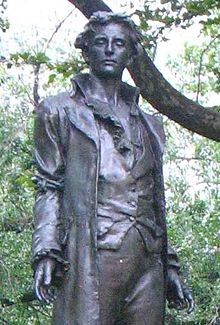
Revolutionary Hero Nathan Hale on This Day in History


This Day in History: American Patriot, soldier and spy for the Continental Army during the American Revolutionary War, Nathan Hale, was executed on this day in 1776. He was only 21 years old. 

Many patriots at the time, including some of the Founding Fathers, were quite young.

The Marquis de Lafayette was commissioned an officer at age 13. He went to the New World seeking to fight in the American Revolution. He was made a major general at age 19.

All Things Liberty compiled a list of the ages of key people during the American Revolution (a period spanning from 1765–1783) when the Declaration of Independence was signed. I have included all the names of those 39 and younger:

Andrew Jackson, 9 (this is correct)

(Major) Thomas Young, 12

Deborah Sampson, 15

James Armistead, 15

Joseph Plumb Martin, 15

Peter Salem, 16

Peggy Shippen, 16 (Benedict Arnold wife) 

Marquis de Lafayette, 18

James Monroe, 18

Henry Lee III, 20

Gilbert Stuart, 20

John Trumbull, 20

Aaron Burr, 20

John Marshall, 20

Nathan Hale, 21

Banastre Tarleton, 21

Alexander Hamilton, 21

Benjamin Tallmadge, 22

Robert Townsend, 22

George Rodgers Clark, 23

David Humphreys, 23

Gouveneur Morris, 24

Betsy Ross, 24

William Washington, 24

James Madison, 25

Henry Knox, 25

John Andre, 26

Thomas Lynch, Jr., 26

Edward Rutledge, 26

Abraham Woodhull, 26

Isaiah Thomas, 27

George Walton, 27

John Paul Jones, 28

Bernardo de Galvez, 29

Thomas Heyward, Jr., 29

Robert R. Livingston, 29

John Jay, 30

Tadeusz Kosciuszko, 30

Benjamin Rush, 30

Abigail Adams, 31

John Barry, 31

Elbridge Gerry, 31

Casimir Pulaski, 31

Anthony Wayne, 31

Joseph Brant, 33

Nathanael Greene, 33

Thomas Jefferson, 33

Thomas Stone, 33

William Hooper, 34

Arthur Middleton, 34

James Wilson, 34

Benedict Arnold, 35

Samuel Chase, 35

Thomas Knowlton, 35

William Paca, 35

John Penn, 35

Hercules Mulligan, 36

Andrew Pickens, 36

Haym Solomon, 36

John Sullivan, 36

George Clymer, 37

Charles Cornwallis, 37

Thomas Nelson, Jr., 37

Ethan Allen, 38

Charles Carroll, 38

King George III, 38

Francis Hopkinson, 38

Carter Braxton, 39

George Clinton, 39

John Hancock, 39

Daniel Morgan, 39

Thomas Paine, 39

The average age of the signers of the Declaration of Independence was 44, more than a dozen of them were 35 or younger. The average age of the US Senate in 2021 was 64.

See also The American Revolution 1775-1783 - 170 Books to Download

Thursday, August 18, 2022

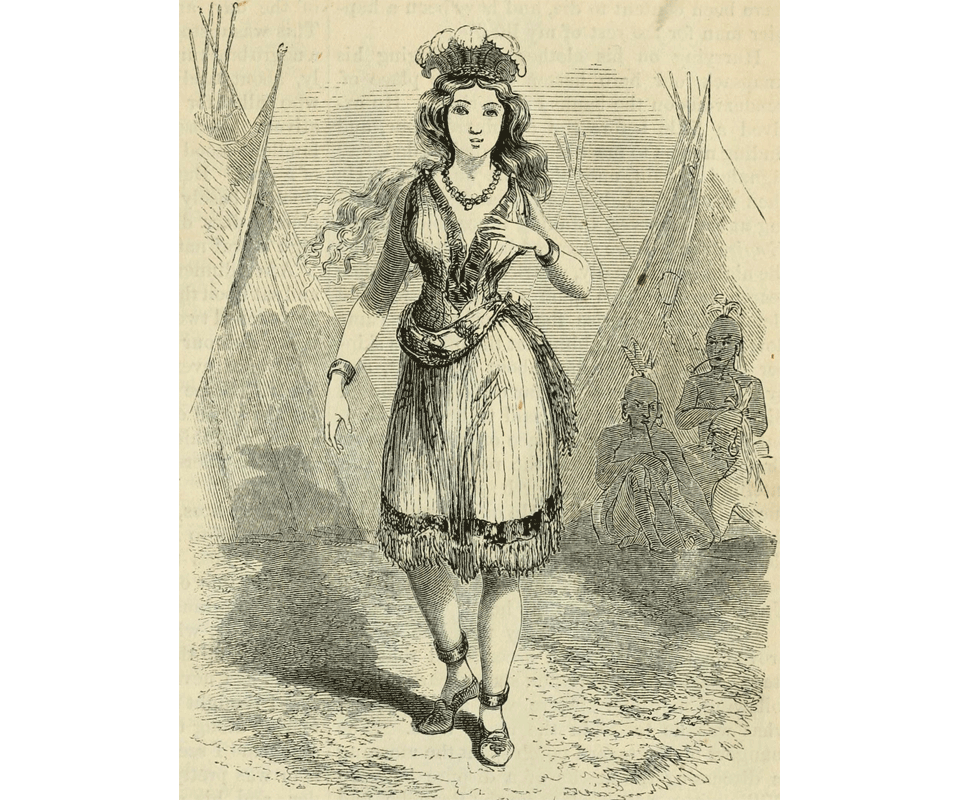
Virginia Dare on This Day in History


This Day In History: Virginia Dare was born on this day in 1587. She was the first English child born in the New World. She was also part of the first American unsolved mystery...the Lost Colony of Roanoke, where she and the rest of the inhabitants mysteriously disappeared. 

During the past four hundred years, Virginia Dare has become a prominent figure in American myth and folklore, symbolizing different things to different groups of people. She has been featured as a main character in books, poems, songs, comic books, television programs, and films. Her name has been used to sell different types of goods, from vanilla products to soft drinks, as well as wine and spirits. Many places in North Carolina and elsewhere in the Southern United States have been named in her honor.

Snorri Thorfinnsson was the first white child born in Vinland (Greenland/Newfoundland) over 1000 years ago, Hélène Desportes was the first French child born in New France (Canada) in about 1620, and Jonathan Guy was the first child born to English parents in Canada in 1613.

Tuesday, August 2, 2022

The Great Calvin Coolidge on This Day in History

This Day in History: Vice President Calvin Coolidge becomes U.S. President upon the death of President Warren G. Harding on this day in 1923.

Meet the Only US President Born on the 4th of July

Those who underestimate him usually do not understand him.

Of America’s 46 presidents, only one shares a birthday with the country itself—and he was a mighty fine one at that. Calvin Coolidge, our 30th, was born on July 4, 1872. In the summer of 2023, we will note the centennial of his assuming the presidency but it’s never too soon or too late to celebrate this remarkable man.

Earlier this year, the Intercollegiate Studies Institute published a beautiful new edition of The Autobiography of Calvin Coolidge, providing present-day readers an opportunity to get reacquainted with him. The book is accompanied with a timeline of Coolidge’s life and accomplishments, commentaries by two relatives of the president and a former Vermont governor, several of Coolidge’s speeches, and an Introduction by editors Amity Shlaes and Matthew Denhart. All these components blend to reveal a man of more sophistication in his thinking than he is usually credited with.

Today’s advocates of the spendthrift nanny state dismiss this practitioner of small government as a simple man of even simpler times. His wisdom, however, demonstrates the crucial difference between simple and simplistic.

In their Introduction, Shlaes and Denhart suggest that those who underestimate Coolidge usually do not understand him, nor do they appreciate the depth and breadth of what he had to say:

Coolidge’s restraint did not come out of weakness. The restraint reflected discipline, which is why those who like Coolidge call him the Great Refrainer. Today Americans expect presidents to charge ahead, waving multipoint plans to address the issues confronting their people. Coolidge knew what the Framers knew: that there exist many problems the government cannot solve, and there is much an executive should not attempt. The principles Coolidge recognized as key—civility, bipartisanship, federalism, government thrift, and respect for enterprise and religious faith—are ones many Americans long to see revived. These principles come straight from the Founders and served as the basis for our civilization long before that.

Do not count me among those who “expect presidents to charge ahead” as if they possess the knowledge to plan an economy or as if the rest of us could afford it anyway. Presidents put their pants on one leg at a time. As a rule, if they think of themselves as “great,” they are far from it. Coolidge was smart and humble enough to never fall for such delusions. In his words,

It is a great advantage to a President, and a major source of safety to the country, for him to know that he is not a great man. When a man begins to feel that he is the only one who can lead in this republic, he is guilty of treason to the spirit of our institutions.

It is simple to appreciate one’s limitations and the limitations of government. It is simplistic to think they can be tossed to the wind if you are in charge because you’re somehow special.

Coolidge was not dumb enough to believe that passing laws, and piling them sky-high on top of previous ones, was a magic formula for national success. “It is much more important to kill bad bills than to pass good ones,” he once wrote.

Scrutinizing proposed laws for their flaws and stopping stupid or destructive ones is simple if your principles are solid. Repealing nothing, and passing almost anything that expands government, is simplistic; in fact, it is what political simpletons do.

Going a step further, Coolidge demonstrated that he understood what good law really is. It is not a purely man-made concoction to keep one group happy at the expense of others. Good law, he believed, should follow from timeless truths of justice, sound economics, and honest dealing.

As he put it himself in a message to the Massachusetts senate,

Men do not make laws. They do but discover them. Laws must be justified by something more than the will of the majority. They must rest on the eternal foundation of righteousness.

The notion that law should be more than whim or deceit is a simple but profound concept when you are grounded, as Coolidge was, in a commitment to truth. But if you think the good of the country is synonymous with partisan advantage, lying to get your way, or bankrupting future generations, you are simplistic at best.

On fiscal matters, Coolidge embraced a simple truth: It’s not the government’s money, it’s the people’s, and the government should treat the people’s money with utmost respect. “I am for economy,” he once said, and then added for reinforcement, “After that I am for more economy.” In his March 1925 Inaugural Address, he elaborated:

I favor the policy of economy, not because I wish to save money, but because I wish to save people. The men and women of this country who toil are the ones who bear the cost of the Government. Every dollar that we carelessly waste means that their life will be so much the more meager. Every dollar that we prudently save means that their life will be so much the more abundant. Economy is idealism in its most practical form.

During his tenure in the White House (1923-1929), Coolidge’s policies cut tax rates by two-thirds and reduced the national debt by one-third. The budget was balanced every year. Federal spending was lower when he left office than when he entered it. That is the last time that has ever happened. If you are tempted to dismiss him as simple, I’d like to see you try to accomplish that same feat today.

In 1920, the year he was elected Vice-President on the Republican ticket with Warren Harding, Coolidge expressed a view that would characterize his policies later as President:

Our government belongs to the people. Our property belongs to the people…They own it. The taxes are paid by the people. They bear the burden. The benefits of government must accrue to the people. Not to one class, but to all classes, to all the people. The functions, the power, the sovereignty of the government, must be kept where they have been placed by the Constitution and laws of the people.

The most simplistic policies are those that treat other people’s money as if it were trash, throwing it thoughtlessly by the trillions at problems (as well as non-problems) that look more like pet partisan projects than money well-spent.

Years before economist F. A. Hayek would famously write, “The curious task of economics is to demonstrate to men how little they know about what they imagine they can design,” Coolidge already knew it. He did not rise to office with grandiose plans to “fundamentally transform” other people’s lives. His plan was simple—to do his job as prescribed by the Constitution. He made no simplistic pretense to anything more.

Some might charge, “But didn’t the Great Depression start soon after Coolidge left office?” as if association is causation. To blame Coolidge for the Depression is worse than simplistic (see recommended readings below); it’s precisely wrong. The calamity of the 1930s was prompted by the “wise” and “sophisticated” money managers at the Federal Reserve, and then worsened by the interventions of the Hoover and Roosevelt administrations. It was a calamity of simplistic elitists.

When faced with a choice between simple and simplistic, you will usually benefit from the former and regret the latter. Give me a simple Coolidge over a pretentious, free-spending, snake-oil salesman any day of the week.

Happy birthday, Calvin Coolidge (and America too)! As icing on the birthday cake, I close with a few additional remarks from our 30th President:

Self-government means self-support. Man is born into the universe with a personality that is his own. He has a right that is founded upon the constitution of the universe to have property that is his own. Ultimately, property rights and personal rights are the same thing. The one cannot be preserved if the other be violated. Each man is entitled to his rights and the rewards of his service be they never so large or never so small.

_____

The attempt to regulate, control and prescribe all manner of conduct and social relations is very old. It was always the practice of primitive peoples. Such governments assumed jurisdiction over the action, property, life, and even religious convictions of their citizens down to the minutest detail. A large part of the history of free institutions is the history of the people struggling to emancipate themselves from all this bondage.

_____

There is no magic in government not possessed by the public at large by which these things can be done. The people cannot divest themselves of their really great burdens by undertaking to provide that they shall hereafter be borne by the government.

_____

It is characteristic of the unlearned that they are forever proposing something which is old, and because it has recently come to their own attention, supposing it to be new.

_____

About the Declaration there is a finality that is exceedingly restful. It is often asserted that the world has made a great deal of progress since 1776, that we have had new thoughts and new experiences which have given us a great advance over the people of that day, and that we may therefore very well discard their conclusions for something more modern. But that reasoning cannot be applied to this great charter. If all men are created equal, that is final. If they are endowed with inalienable rights, that is final. If governments derive their just powers from the consent of the governed, that is final.  No advance, no progress can be made beyond these propositions. If anyone wishes to deny their truth or their soundness, the only direction in which he can proceed historically is not forward, but backward toward a time when there was no equality, no rights of the individual, no rule of the people. Those who wish to proceed in that direction cannot lay claim to progress. They are reactionary. Their ideas are not more "modern," but more ancient than those of our Revolutionary ancestors.

Calvin Coolidge’s Inaugural Address Warned of the Dangers of Legalized Larceny by Lawrence W. Reed

Cal and the Big Cal-Amity  by Lawrence W. Reed

Sometimes, Contested Conventions Get It Right by Lawrence W. Reed

Clinton Vs. Cleveland and Coolidge on Taxes by Lawrence W. Reed

He Was a President Who Understood Principle by Jake Yonally.

Two Presidents, Two Philosophies, and Two Different Outcomes by Burton W. Folsom

Great Myths of the Great Depression by Lawrence W. Reed

Media are Still Peddling One of the Great Myths of the Great Depression by Lawrence W. Reed

Foundations of the Republic—a Speech by Calvin Coolidge

Lawrence W. Reed
Lawrence W. Reed

Lawrence W. Reed is FEE's President Emeritus, Humphreys Family Senior Fellow, and Ron Manners Global Ambassador for Liberty, having served for nearly 11 years as FEE’s president (2008-2019). He is author of the 2020 book, Was Jesus a Socialist? as well as Real Heroes: Incredible True Stories of Courage, Character, and Conviction and Excuse Me, Professor: Challenging the Myths of ProgressivismFollow on LinkedIn and Like his public figure page on Facebook. His website is www.lawrencewreed.com.

This article was originally published on FEE.org. Read the original article.

Sunday, July 24, 2022

Martin Van Buren on This Day in History


This day in history: President Martin Van Buren died on this day in 1862. According to the book "Recarving Rushmore: Ranking the Presidents on Peace, Prosperity and Liberty" Martin Van Buren ranks as the third best president (the top 5 presidents according to this book are John Tyler, Grover Cleveland, Martin Van Buren, Rutherford B. Hayes and Chester A. Arthur). The reason these presidents you never heard of were better is that they mainly left people alone. 

"Martin Van Buren was the least bad president in American history. Although other chief executives had some libertarian accomplishments, he was by far the most consistent. Domestically, Van Buren kept government spending and taxes low, and also brought to culmination the Jacksonian program for the 'divorce of bank and state,' despite the country being engulfed in a severe depression. But Van Buren’s most stunning achievements were in foreign policy. Mainstream historians usually rate presidents according to their forceful leadership, which biases them toward presidents who drag the country into wars, permitting displays of decisiveness and energy. But if we instead applaud maintaining peace, Van Buren has the unique distinction of keeping the country out of two possible wars. By blocking annexation of Texas, he forestalled a war with Mexico that unfortunately came about a decade later. He also calmed two major disputes with Canada, either of which could have instigated full-fledged conflict with Britain. One involved border incidents resulting from a revolt in Canada, and the other a clash over the Maine boundary. The unpopularity of these libertarian and diplomatic measures, even within Van Buren’s own party, contributed to his failure to win reelection in 1840 and renomination in 1844." ~Jeffrey Rogers Hummel

Van Buren became the first President who was born after the American Revolution, making him, in a newer sense, the first "American" born president.

See also American History & Mysteries, Over 200 PDF Books on DVDrom
https://thebookshelf2015.blogspot.com/2015/09/american-history-mysteries-over-200-pdf.html

Saturday, April 16, 2022

Alexis de Tocqueville on This Day in History


This Day in History: Alexis de Tocqueville died on this day (April 16) in 1859.

From Jim Powell:

Alexis de Tocqueville was a gentleman-scholar who emerged as one of the world’s great prophets. More than a century and a half ago, when most people were ruled by kings, he declared that the future belonged to democracy. He explained what was needed for democracy to work and how it could help protect human liberty. At the same time, he warned that a welfare state could seduce people into servitude. He saw why socialism must lead to slavery.

Tocqueville staked his life on liberty. “I have a passionate love for liberty, law, and respect for rights,” he wrote. “I am neither of the revolutionary party nor of the conservative. . . . Liberty is my foremost passion.”

Reflecting on Tocqueville’s famous book Democracy in America, historian Daniel J. Boorstin observed: “The most interesting question for the newcomer to Tocqueville is why this book, of all the myriad travel accounts of the United States, should have become a classic—the standard source for generalizing about America. From Tocqueville’s era, two best-selling books on the United States—Mrs. Trollope’s Domestic Manners of the Americans (1832) and Charles Dickens’ American Notes (1842)—by more clever stylists and more acute observers than Tocqueville, survive only as scholarly footnotes. They tell us about those curious earlier Americans, but Tocqueville tells us about ourselves. He speaks to us every day.”

Tocqueville was a good listener with a keen memory. He had a remarkable mind capable of discerning trends which almost all his contemporaries missed. He drew shrewd lessons from experience. He envisioned the insidious long-term consequences of government intervention.

To be sure, as a member of the landed gentry who earned most of his income from tenant farmers, Tocqueville shared the usual aristocratic prejudices against business enterprise. He hardly uttered a word about the industrial revolution that enabled millions to avoid starvation.

He worked long hours completing important books despite health problems that plagued him most of his life. He suffered migraine headaches, neuralgia, and stomach cramps lasting a week at a time. Undoubtedly these afflictions were a major reason why he was often irritable.

In his books, Tocqueville seems like a realist, yet his letters suggest he was a romantic who dreamed of great adventures and endured bouts of depression. At 19, he wrote a friend that he wished “to roam about for the rest of time.” When he was nearly 30, after Democracy in America became a hit, he lamented: “Oh! How I wish that Providence would present me with an opportunity to use, in order to accomplish good and grand things . . . this internal flame I feel within me that does not know where to find what feeds it.” At 41: “Perhaps a moment will come in which the action we will undertake can be glorious.”

Tocqueville, according to Yale University historian George Wilson Pierson, was “almost diminutive in stature; a dignified, reserved, shy little gentleman, delicate of feature and restrained in gesture. Proud, dark, troubled eyes arrested the glance and fitfully illuminated his pale and serious face. A sensitive mouth and lightly cleft chin, below a strong aquiline nose, betrayed his breeding and bespoke a more than ordinary determination. The finely shaped head was darkly framed in his long black hair, which he wore falling in locks to his shoulders, in the proud fashion of the day. When receiving, or conversing, he waved his narrow hands with grace and distinction. And, when he spoke, a resonant and moving voice, surprising in so small and frail a body, made his listeners forget all but the intense conviction and innate sincerity of the man.”

Early Influence

Alexis-Charles-Henri Clérel de Tocqueville was born the youngest of three boys July 29, 1805, in Paris. His father Hervé-Louis-Francois-Jean-Bonaventure Clérel was a 33-year-old landed aristocrat descended from Norman nobles. His mother was Louise-Madeleine Le Peletier Rosanbo, also 33. They were imprisoned during the French Revolution, maintained their royalist ties throughout the Napoleonic era, and after the restoration of the Bourbon dynasty in 1815 Hervé served as a regional government administrator. Alexis was tutored by Abbé Lesueur, a priest who taught devotion to the Catholic Church and the French monarchy.

At 16, Alexis began exploring his father’s library, which included such provocative French Enlightenment authors as Montesquieu and Voltaire. “When I was prey to an insatiable curiosity whose only available satisfaction was a large library of books,” he recalled, “I heaped pell-mell into my mind all sorts of notions and ideas which belong more properly to a more mature age. Until that time, my life had passed enveloped in a faith that hadn’t even allowed doubt to penetrate into my soul. Then doubt entered, or rather hurtled in with an incredible violence, not only doubt about one thing or another in particular, but an all-embracing doubt. All of a sudden I experienced the sensation people talk about who have been through an earthquake.”

Rather than become an officer in the French army like his two brothers, Alexis preferred the intellectual career for aristocrats—law. He studied law from 1823 to 1826, then traveled in Italy with his brother Edouard. Alexis’s most memorable experience was seeing how war and despotism had ravaged the land, and he wrote over 350 pages of notes on the subject. He pondered how once-mighty civilizations could perish.

In 1827, his father had him appointed as a judge at Versailles, serving the Bourbon monarchy. He seemed the very proper French aristocrat, but he was aboil. “I had spent the best years of my youth,” he wrote later, “in a society that seemed to be regaining prosperity and grandeur as it regained freedom; I had conceived the idea of a regulated and orderly freedom, controlled by religious belief, mores and laws; I was touched by the joys of such a freedom, and it had become my whole life’s passion. . . .”

On July 25, 1830, people arose and drove the Bourbon King Charles X into exile. The new king was Louis Philippe from the House of Orleans. Tocqueville figured this was better than chaos, so he took a new loyalty oath like many other judges, outraging his friends and relatives. But the king didn’t trust holdovers. Tocqueville was demoted to a post without pay.

His warm and easy-going friend Gustave de Beaumont, a fellow judge at Versailles, was in a similar fix. Since the Chamber of Deputies talked about reforming the criminal code, Tocqueville and Beaumont got official permission to see America and study the prison system there. Their families would pay expenses. The two men canvassed friends and relatives about possible contacts in America. They studied American literature. They read some of the travel books which Europeans had written about America. Tocqueville spent 40 francs on a leather trunk to carry two pairs of boots, a silk hat, hose, and other fashionable apparel, plus note paper and a copy of Cours d’économique politique by French laissez-faire economist Jean-Baptise Say.

Travels in America

On April 2, 1831, Tocqueville and Beaumont boarded the American ship Le Havre. It had an 18-man crew, 163 passengers, and a cargo of silk from Lyons. After four days of seasickness, Tocqueville and Beaumont adopted a daily schedule which they continued in the United States: up around 5:30 a.m., work till breakfast at 9, then work from 11 to 3 p.m., then dinner and work until bedtime—they didn’t join other passengers for supper. After 38 days, they reached New York.

During the next nine months, they toured cities—New York, Albany, Boston, Philadelphia, Washington, Montreal, and Quebec. They passed through towns like Buffalo, Cincinnati, Detroit, Knoxville, Louisville, Mobile, Montgomery, Nashville, Memphis, New Orleans, and Pittsburgh. They ventured into the hinterlands as far west as Lake Michigan. They visited Niagara Falls. They traveled along the Hudson River Valley. They saw the Mohawk River Valley, the setting for James Fenimore Cooper’s bestselling novel The Last of the Mohicans. They took a boat trip down the Mississippi River. They inspected many prisons.

They met many notable Americans including Unitarian leader William Ellery Channing, historian Jared Sparks, Senator Daniel Webster, former President John Quincy Adams, and Texas adventurer Sam Houston. They talked with Cincinnati lawyer Salmon Chase, who was to become Chief Justice of the Supreme Court, and with Charles Carroll, last surviving signer of the Declaration of Independence.

Return to France

Soon after they left America on February 20, 1832, they began to write the promised book on America’s penal system. Beaumont did most of it. The book was published in January 1833 as Du systeme pénitentiaire aux tats-Unis, et de son application en France. They believed many prisoners could be reformed through isolation and work, but they insisted the primary purpose of imprisonment must be to punish wrongdoers. The work was a critical success, and the Académie Francaise awarded them the prestigious Montyon Prize.

Although they had talked about collaborating on a book about America, their interests diverged. Beaumont, most concerned about slavery, wrote a novel called Marie, ou l’esclavage aux tats-Unis. Tocqueville was fascinated with American social and political life because of the difficulties his own country had developing institutions favorable to liberty.

Tocqueville attributed the upheavals his family lived through to centralized government: “Most of those people in France who speak against centralization do not really wish to see it abolished; some because they hold power, others because they expect to hold it. It is with them as it was with the pretorians, who voluntarily suffered the tyranny of the emperor because each of them might one day become emperor. . . . Decentralization, like liberty, is a thing which leaders promise their people, but which they never give them. To get and to keep it the people might count on their own sole efforts: if they do not care to do so the evil is beyond remedy.”

He observed that liberty makes for a peaceful social order. “Picture to yourself,” Tocqueville wrote a friend, “a society which comprises all the nations of the world—English, French, German: people differing from one another in language, in beliefs, in opinions; in a word a society possessing no roots, no memories, no prejudices, no routine, no common ideas, no national character, yet with a happiness a hundred times greater than our own. . . . How are they welded into one people? By community of interests. That is the secret!”

Tocqueville decided that before he could write about liberty and democracy, he had to better understand England, which pioneered limited government. He visited the country for five weeks in 1833. “England,” he noted, “is the land of decentralization. We have a central government, but not a central administration. Each county, each borough, each district looks after its own interests. Industry is left to itself. . . . It is not in the nature of things that a central government should be able to supervise all the wants of a great nation. Decentralization is the chief cause of England’s material progress.”

Democracy in America

He spent almost a year writing the first two volumes of De la Démocratie en Amérique. He worked in an attic room of his parents’ Paris house, 49 rue de Verneuil, Paris. In mid-September 1833, he wrote Beaumont: “Upon arriving here, I threw myself on America in a sort of frenzy. The frenzy is still going on, though now and then it seems to die down. I think my work will benefit more than my health, which suffers a little from the extreme exertion of my mind; for I hardly think of anything else as I fire away. . . . From morning until dinner time my life is altogether a life of the mind and in the evening I go to see Mary.”

He was referring to Mary Mottley, an English commoner he had met while a judge at Versailles. They got married October 26, 1835. She had a calming influence, but unfortunately, she couldn’t keep up with his interests. “In our hearts we understand each other,” he told a friend, “but we cannot in our minds. Our natures are too different. Her slow and gradual way of experiencing things is completely foreign to me.” They didn’t seem to have much fun.

Meanwhile, the first two volumes came out on January 23, 1835. Tocqueville was 29. The publisher, Gosselin, reportedly hadn’t read the manuscript and agreed to issue only 500 copies. But Tocqueville publicized the book via newspaper advertisements, and an ideological adversary unintentionally drew attention to the book by attacking it in a newspaper article. An immediate hit, the book won another Montyon Prize which brought a 12,000-franc award, and it was reprinted eight times before the last two volumes appeared in April 1840. They were less successful commercially than the first two, but critics considered them more important, and they helped buoy Tocqueville’s reputation.

“Essential Doctrines”

Henry Reeve, a 22-year-old editor of the influential Edinburgh Review, began translating the book into English, and a revised version remains the most popular translation. In the October 1835 London and Westminster Review, English thinker John Stuart Mill called Democracy in America “among the most remarkable productions of our time.” Mill gave the last two volumes an even bigger boost in the October 1840 Edinburgh Review: “the first philosophical book ever written on Democracy, as it manifests itself in modern society; a book, the essential doctrines of which it is not likely that any future speculations will subvert, to whatever degree thay may modify them. . . .” Mill asked Tocqueville to write an article for the London and Westminster Review, giving him further exposure in the English-speaking world. The book was also translated into Danish, German, Italian, Russian, Serbian, and Spanish.

A Broad Vision

His book had a lasting impact because he offered a broad vision rather than a journalistic chronicle which would become dated. He was interested in the workings of democracy and illustrated general principles with his observations about America, the largest country to try democracy. He wrote from the standpoint of an outsider, concerned about what America meant for liberty in France and elsewhere.

Tocqueville was the man who discovered American individualism—he described it somewhat negatively as “a mature and calm feeling which disposes each member of the community to sever himself from the mass of his fellow-creatures, and to draw apart with his family and friends.” Yet he talked approvingly about self-help, a hallmark of American individualism. For example: “The citizen of the United States is taught from infancy to rely upon his own exertions in order to resist the evils and the difficulties of life; he looks upon the social authority with an eye of mistrust and anxiety, and he claims its assistance only when he is unable to do without it.”

Tocqueville explained what people everywhere came to recognize as the American dream: “There is no man who cannot reasonably expect to attain the amenities of life, for each knows that, given love of work, his future is certain. . . . No one is fully contented with his present fortune, all are perpetually striving, in a thousand ways, to improve it. Consider one of them at any period of his life and he will be found engaged with some new project for the purpose of increasing what he has.”

Tocqueville commended the peaceful influence of free enterprise. “I know of nothing more opposite to revolutionary attitudes than commercial ones. Commerce is naturally adverse to all the violent passions; it loves to temporize, takes delight in compromise, and studiously avoids irritation. It is patient, insinuating, flexible, and never has recourse to extreme measures until obliged by the most absolute necessity. Commerce renders men independent of one another, gives them a lofty notion of their personal importance, leads them to seek to conduct their own affairs, and teaches how to conduct them well; it therefore prepares men for freedom, but preserves them from revolutions.”

Tocqueville observed how liberty and the need for social cooperation give people incentives to be virtuous. “I have often seen Americans make great and real sacrifices to the public welfare; and I have noticed a hundred instances in which they hardly ever failed to lend faithful support to one another. The free institutions which the inhabitants of the United States possess, and the political rights of which they make so much use, remind every citizen, and in a thousand ways, that he lives in society. They every instant impress upon his mind the notion that it is the duty as well as the interest of men to make themselves useful to their fellow creatures; and as he sees no particular ground of animosity to them, since he is never either their master or their slave, his heart readily leans to the side of kindness.”

Tocqueville denounced American slavery, saying “the laws of humanity have been totally perverted.” He anticipated civil war. He predicted blacks and whites would have a tough time getting along after the abolition of slavery, but he expressed confidence that blacks could do fine if truly liberated: “As long as the Negro remains a slave, he may be kept in a condition not far removed from that of the brutes; but with his liberty he cannot but acquire a degree of instruction that will enable him to appreciate his misfortunes and to discern a remedy for them.”

Tocqueville warned against war and violent revolution: “it is chiefly in war that nations desire, and frequently need, to increase the powers of the central government. All men of military genius are fond of centralization, which increases their strength; and all men of centralizing genius are fond of war. . . . A people is never so disposed to increase the functions of central government as at the close of a long and bloody revolution. . . . The love of public tranquillity becomes at such times an indiscriminate passion, and the members of the community are apt to conceive a most inordinate devotion to order.”

The Welfare State

With phenomenal foresight, Tocqueville predicted that the welfare state would become a curse. For example: “Above this race of men stands an immense and tutelary power, which takes upon itself alone to secure their gratifications and to watch over their fate. That power is absolute, minute, regular, provident, and mild. It would be like the authority of a parent if, like that authority, its object was to prepare men for manhood; but it seeks, on the contrary, to keep them in perpetual childhood; it is well content that the people should rejoice, provided they think of nothing but rejoicing. For their happiness such a government willingly labors, but it chooses to be the sole agent and the only arbiter of that happiness; it provides for their security, foresees and supplies their necessities, facilitates their pleasures, manages their principal concerns, directs their industry, regulates the descent of property, and subdivides their inheritances; what remains, but to spare them all the care of thinking and all the trouble of living?”

“Our contemporaries,” he continued, “combine the principle of centralization and that of popular sovereignty; this gives them a respite: they console themselves for being in tutelage by the reflection that they have chosen their own guardians.”

Like some other nineteenth-century gentleman-scholars such as Thomas Macaulay, Tocqueville hoped to shape public policies. He spent a dozen frustrating years as an elected representative in the Chamber of Deputies and Constituent Assembly where he focused on such controversies as abolishing slavery in French colonies. For five months, he served as Finance Minister. But he had little influence on Francois Guizot (pro-business) or Louis Adolph Thiers (moderate opposition) who utterly dominated French politics during this era.

During the Revolution of 1848, which toppled King Louis-Philippe, socialism reared its ugly head. Tocqueville was far ahead of his time in seeing why it must mean slavery, as he told fellow representatives: “Democracy extends the sphere of individual freedom, socialism restricts it. Democracy attaches all possible value to each man; socialism makes each man a mere agent, a mere number. Democracy and socialism have nothing in common but one word: equality. But notice the difference: while democracy seeks equality in liberty, socialism seeks equality in restraint and servitude.”

Since Tocqueville believed individuals should be judged on their own merits, he rejected the racist theories of Arthur de Gobineau who wrote The Inequality of Human Races (1855). For example, Tocqueville told Beaumont that Gobineau “has just sent me a thick book, full of research and talent, in which he endeavors to prove that everything that takes place in the world may be explained by differences of race. I do not believe a word of it. . . .” To Gobineau, he wrote, “What purpose does it serve to persuade lesser peoples living in abject conditions of barbarism or slavery that, such being their racial nature, they can do nothing to better themselves, to change their habits, or to ameliorate their status?”

Interpreting the French Revolution

In Tocqueville’s last great work, L’Ancien Régime et la Révolution (1856), he interpreted the French Revolution, which ignited war throughout Europe. Once again, he confronted the demon of centralized government: “the object of the French Revolution was not only to change an ancient form of government, but also to abolish an ancient state of society . . . clear away the ruins, and you behold an immense central power, which has attracted and absorbed into unity all the fractions of authority and influence which had formerly been dispersed amongst a host of secondary powers, orders, classes, professions, families and individuals, and which were disseminated throughout the whole fabric of society.”

Tocqueville’s health had always been delicate, but it took a turn for the worse in March 1850 when he spat blood—tuberculosis. It went into remission for several years, then became more serious. He could talk only in a low voice. Advised to spend time in a sunny climate, he and Mary went to Cannes in January of 1859. Lord Broughham, an English friend who lived there, made available his luxurious library so Tocqueville could relieve the boredom of illness.

He suffered agonizing pain in his stomach and bladder. On March 4, 1859, he wrote Beaumont: “I know nothing that has ever grieved me so much as what I am going to say to you . . . COME. COME, as fast as you can. You alone can put us back on the field. Your cheerfulness, your courage, your liveliness, the complete knowledge you have of us and our affairs, will make easy for you what would be impracticable for someone else. Come. . . . Let me treat you like a brother; have you not been a thousand times more in a thousand situations! . . . Come . . . I embrace you from the depth of my soul.” Beaumont hurried to be by Tocqueville’s side.

Tocqueville lost consciousness and died around 7 p.m., April 16th. He was returned to Paris and buried in Tocqueville, Normandy, his family’s birthplace. The following year Beaumont, steadfast for more than 30 years, published his friend’s works and correspondence.

Tocqueville fell out of fashion during the late nineteenth century, perhaps because Germany, not America, seemed to have caught the wave of the future. German Chancellor Otto von Bismarck embraced socialism and established the first modern welfare state, and people everywhere looked to Germany for leadership.

But socialism triggered communism, fascism, Nazism, and other brutal tyrannies that slaughtered tens of millions during the twentieth century. The welfare state shackled hundreds of millions more with taxes and regulations. Then after World War II, America emerged as the world’s brightest hope. Tocqueville predicted it all.

Now he’s hailed as a prophet. Recent decades have brought the most comprehensive biography of him (1988) and new editions of his complete works—the latest beginning in 1991. Today everyone can see for themselves the wonder of this troubled man who peered into the mists of time, warned against the horrors of collectivism and boldly proclaimed redemption through liberty.

Jim Powell
Jim Powell

Jim Powell, senior fellow at the Cato Institute, is an expert in the history of liberty. He has lectured in England, Germany, Japan, Argentina and Brazil as well as at Harvard, Stanford and other universities across the United States. He has written for the New York Times, Wall Street Journal, Esquire, Audacity/American Heritage and other publications, and is author of six books. 

This article was originally published on FEE.org. Read the original article.


Democracy in America by Alexis de Tocqueville (in a nutshell)