Sunday, January 8, 2023

The War on Poverty on This Day in History


This day in history: On this day in 1964, LBJ (Lyndon B. Johnson) declared a "War on Poverty." 22 trillion dollars have been spent on this "war" and more people are now dependent on Government and less self-sufficient than before. 

Poverty researcher Michael D. Tanner remarked on the War on Poverty and its programmatic legacies:

"Throwing money at the problem has neither reduced poverty nor made the poor self-sufficient. Instead, government programs have torn at the social fabric of the country and been a significant factor in increasing out-of-wedlock births with all of their attendant problems. They have weakened the work ethic and contributed to rising crime rates. Most tragically of all, the pathologies they engender have been passed on from parent to child, from generation to generation."

The WSJ shared the same sentiment:

"The stated goal of the War on Poverty is not just to raise living standards but also to make America’s poor more self-sufficient and to bring them into the mainstream of the economy. In that effort the war has been an abject failure, increasing dependency and largely severing the bottom fifth of earners from the rewards and responsibilities of work…The expanding availability of antipoverty transfers has devastated the work effort of poor and lower-middle income families. By 1975 the lowest-earning fifth of families had 24.8% more families with a prime-work age head and no one working than did their middle-income peers. By 2015 this differential had risen to 37.1%…The War on Poverty has increased dependency and failed in its primary effort to bring poor people into the mainstream of America’s economy and communal life. Government programs replaced deprivation with idleness, stifling human flourishing."

FDR, who I rarely agree with once wisely stated:
 
“The lessons of history, confirmed by evidence immediately before me, show conclusively that continued dependence upon relief induces a spiritual and moral disintegration to the national fiber. To dole out relief . . . is to administer a narcotic, a subtle destroyer of the human spirit.”

Friday, January 6, 2023

A Hockey Death on This Day in History

This Day in History: Benjamin Edward "Teddy" Balkind, age 16, was a high school student from Connecticut who died after suffering an injury to his neck during a junior varsity ice hockey game on this day in 2022. A hockey player for St. Luke's School, Balkind died after he fell during a game and was accidentally hit by another player, who was unable to stop in time. The other player's skate blade cut Balkind's neck, and he died following an emergency operation.

A Swedish hockey player, Bengt Akerblom was killed in 1995 during an exhibition game when he had his carotid arteries cut by a skate. A requirement for all ice hockey players to wear a neck guard was introduced in Sweden after that.

In 2016, a 16 year old Russian hockey player named Alexander Orekhov passed away after being hit in the neck with a puck. "The shot that hit Orekhov struck him with enough force that it damaged the carotid artery and broke several bones. Orekhov collapsed on the ice and suffered cardiac arrest. He was resuscitated and taken to a local hospital, at which point he was put into a medically induced coma. After nearly three weeks in a coma, however, Orekhov passed away." Source

Thursday, January 5, 2023

Killed by Too Much Coffee on This Day in History


Thomas Anthony Mansfield, a 29-year-old personal trainer from Colwyn Bay, Wales, died after consuming a drink with too much caffeine powder on this day in 2022. 

Mansfield bought a 100g (3.5 oz) bag of caffeine powder from Blackburn Distributions, a British sports supplements company, according to BBC News.

Mansfield's scale, which he was using to measure the powder, could only weigh between 2,000 milligrams (2.0 g) and 5,000 milligrams (5.0 g), causing him to miscalculate and ingest an equivalent of two hundred cups of coffee. Shortly after consuming the drink, he reportedly complained that his heart was beating too fast and began foaming at the mouth minutes later. 

Paramedics could not save him.

"According to North Wales Live, the coroner said that had Mansfield been provided with a scoop, he would likely still be alive today. Gittins said he had been 'massively reassured' that Blackburn Distributions now provides a scoop with this brand of caffeine powder, the media outlet said." Source

Wednesday, January 4, 2023

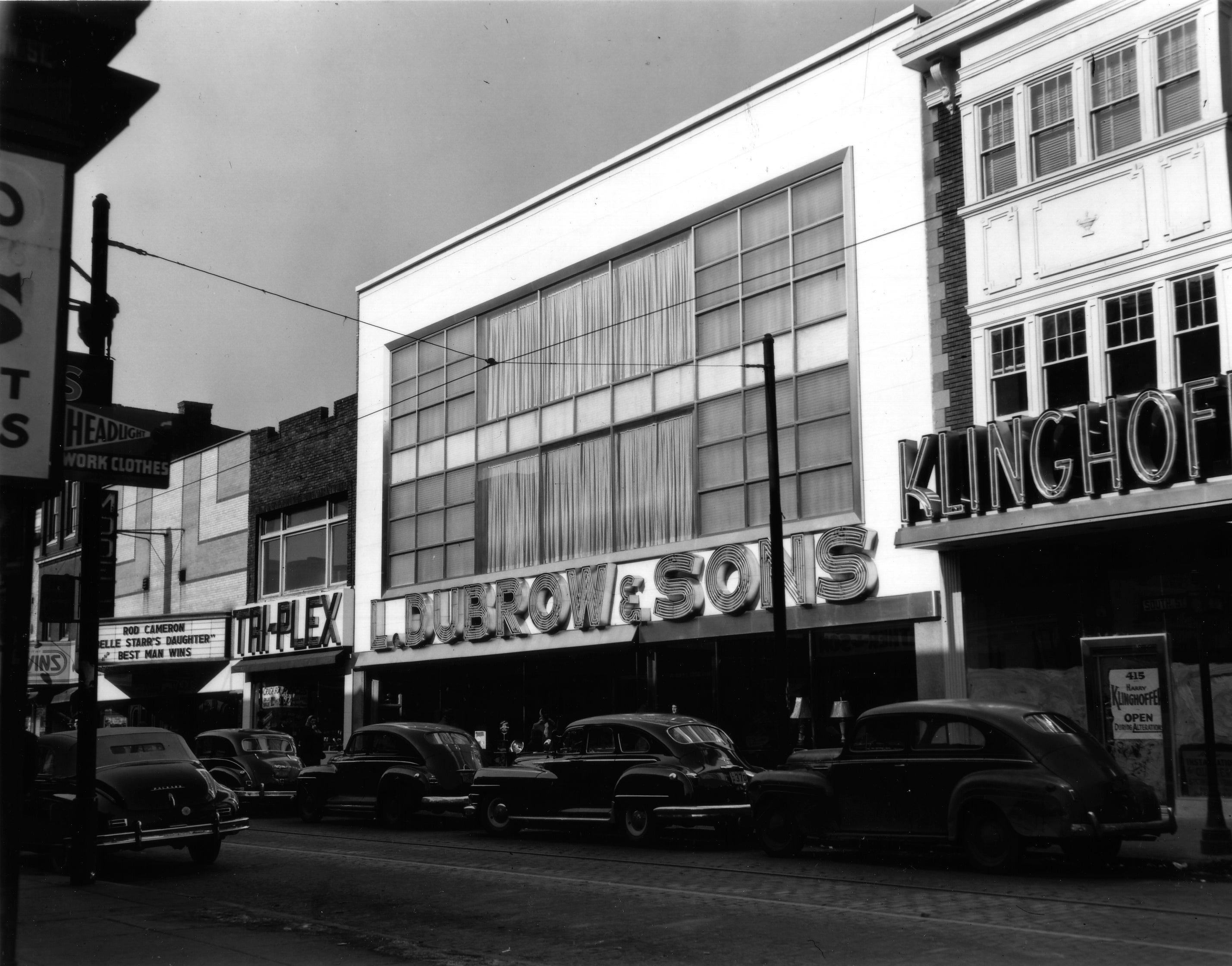
The Sadistic Dubrow Furniture Store Robbery on This Day in History


This Day in History: Philadelphia’s "Black Mafia" gang committed the brutal robbery of the Dubrow Furniture store on this day in 1971. 

The Black Mafia, also known as the Philadelphia Black Mafia (PBM), Black Muslim Mafia and Muslim Mob, was a Philadelphia-based African-American organized crime syndicate. The organization began as a small criminal collective, known for holding up neighborhood crap games and dealing in the illegal drug business, but at its height of operation in the early 70s until about the early 1980s, it managed to consolidate power and control a large portion of criminal activity in various African-American neighborhoods throughout Philadelphia, the Delaware Valley, and South Jersey, including Atlantic City and Camden. In addition to drug trafficking, burglary, and armed robbery, the Black Mafia was also engaged in traditional organized crime activities such as extortion, racketeering, prostitution, loansharking, number running and other illegal gambling rackets.

On January 4, 1971, eight Black Mafia members robbed DuBrow's on South Street in Philadelphia. They entered the store one by one posing as customers. Once all were inside, they pulled guns on the twenty employees present and forced them to lie on the floor in the back of the store where they bound them with tape and electrical cord. Thirteen employees were beaten while two others were shot. A janitor who walked in on the robbery while doing his job was shot and killed. One employee was doused with gasoline and set on fire. After their vicious treatment of the employees, they looted the offices in the store and set more fires to destroy evidence of the robbery. The eight criminals fled the scene as soon as the fire alarm went off, purposefully trampling on one of the victim's bodies as they left. This crime was so notable that W.E.B. Griffin wrote a novel based on it, The Witness, and Philadelphia Police Commissioner Frank Rizzo was quoted as saying that the DuBrow crime was "the most vicious crime I have ever come across."

Tuesday, January 3, 2023

Golden Corral on This Day in History


This Day in History: The first Golden Corral Family Steak House opened on this day (January 3) in 1973, in Fayetteville, North Carolina. Golden Corral is an American restaurant chain which offers an all-you-can-eat buffet and grill. It is a privately held company headquartered in the U.S. city of Raleigh, North Carolina, with locations in 43 U.S. states and Puerto Rico.

The company has expanded to nearly 500 locations across the United States; about 100 of them are company-owned. The others are franchised stores. As of 2007, gross sales were over $1.53 billion.

During the COVID-19 pandemic in early 2020, the chain had to temporarily close down most of its locations just like other restaurants in response to the directives for the prevention of COVID-19 that spread across the globe. In order for the chain to sustain its business and to ensure the safety of its guests, some of the chain's locations were reopened offering cafeteria-style dining and family-style service. Others were permanently closed.

In October 2020, one of its largest franchise operators filed for Chapter 11 bankruptcy protection and had plans to cancel at least six out of 33 leases.

Monday, January 2, 2023

Socialist Richard Nixon on This Day in History


This Day In History: President Richard Nixon signed a bill lowering the maximum U.S. speed limit to 55 MPH in order to conserve gasoline on this day in 1973. The law would be repealed in 1995.

According to Milton Friedman, Nixon, despite being a Republican (the party of small government) "was the most socialist of the presidents of the United States in the 20th century." He adds "his ideas were not socialist, quite the opposite, but if you look at what happened during his administration, first of all, the number of pages in the Federal Register, which is full of regulations about business, doubled during his regime. During his regime the EPA, the Environmental Protection Agency, was established and the OSHA, the Occupational Safety and Health Administration, the OECA [the Office of Enforcement and Compliance Assurance of the EPA] -- about a dozen, a half-dozen alphabetic agencies were established so that you had the biggest increase in government regulation and control of industry during the Nixon administration that you had in the whole postwar period."

Nixon, our most anti-communist president also instituted wage and price controls, took us off the gold standard, and famously repeated Milton Friedman's line "we're all Keynesians now."

Sunday, January 1, 2023

Charles the Bad's Horrific Death on This Day in History


This Day in History: Charles the Bad (Charles II of Navarre) died on this day in 1387. "The ultimate opportunist, Charles earned the nickname 'The Bad' for his dealings during the Hundred Years' War. He also goes down as a great example of karmic justice. Charles gained a reputation for playing the English and French against each other during the Hundred Years' War. Several times he escaped imprisonment and execution. He was one of the most cunning rulers of his time." Source

His horrific death became famous all over Europe, and was often cited by moralists, and sometimes illustrated in illuminated manuscript chronicles. There are several versions of the story, varying in the details. This is Francis Blagdon's English account, of 1803:

Charles the Bad, having fallen into such a state of decay that he could not make use of his limbs, consulted his physician, who ordered him to be wrapped up from head to foot, in a linen cloth impregnated with brandy, so that he might be inclosed [sic] in it to the very neck as in a sack. It was night when this remedy was administered. One of the female attendants of the palace, charged to sew up the cloth that contained the patient, having come to the neck, the fixed point where she was to finish her seam, made a knot according to custom; but as there was still remaining an end of thread, instead of cutting it as usual with scissors, she had recourse to the candle, which immediately set fire to the whole cloth. Being terrified, she ran away, and abandoned the king, who was thus burnt alive in his own palace.

John Cassell's moralistic version states:

He was now sixty years of age, and a mass of disease, from the viciousness of his habits. To maintain his warmth his physician ordered him to be swathed in linen steeped in spirits of wine, and his bed to be warmed by a pan of hot coals. He had enjoyed the benefit of this singular prescription some time in safety, but now, as he was perpetrating his barbarities on the representatives of his kingdom, "by the pleasure of God, or of the devil," says Froissart, "the fire caught to his sheets, and from that to his person, swathed as it was in matter highly inflammable." He was fearfully burnt, but lingered nearly a fortnight, in the most terrible agonies.