Showing posts with label slavery. Show all posts

Friday, August 11, 2023

ROOTS Author Alex Haley on This Day in History


This day in history: American writer Alex Haley was born on this day in 1921. He is best known for his 1976 book Roots: The Saga of an American Family. ABC adapted the book as a television miniseries of the same name and aired it in 1977 to a record-breaking audience of 130 million viewers. 

The book was often sold as non-fiction in bookstores, and Haley himself claimed that the main character, Kunta Kinte was his great-great-great-great grandfather who arrived in Annapolis, Maryland on the slave ship, the Lord Ligonier, in September of 1767.  

However, black commentator Stanley Crouch insists that Haley was a “ruthless hustler” and “one of the biggest damn liars this country has ever seen.” Crouch declares the story a “hoax” that beautifully illustrates “how history and tragic fact can be pillaged by an individual willing to exploit whatever the naïve might consider sacred.” 

"Black thinker Thomas Sowell, who has written prolifically on race and slavery, makes the same point as Crouch—even if not quite as bluntly.  Regarding the Trans-Atlantic slave trade, Sowell remarks that Roots “presented some crucially false pictures of what had actually happened—false pictures that continue to dominate thinking today.”

For instance, 'Roots has a white man leading a slave raid in West Africa, where the hero, Kunta Kinte [supposedly, Haley’s ancestor] was captured, looking bewildered at the chains put on him as he was led away in bondage.'  Moreover, even 'the village elders' likewise appeared perplexed by the sight of these 'white men' who were 'carrying their people away.' In glaring contrast to this depiction, Sowell correctly asserts, the location from which Kunta Kinte was taken—West Africa—had been 'a center of slave trading before the first white man arrived there—and slavery continues in parts of it to this very moment.'  He adds: 'Africans sold vast numbers of other Africans to Europeans.  But they hardly let Europeans go running around in their territory, catching people willy-nilly'. 

According to Sowell, Roots did more harm than good in fueling 'the gross misconception that slavery was about white people enslaving black people.' In reality, 'the tragedy of slavery was of a far greater magnitude than that.'  Slavery knew no racial boundaries. 'People of every race and color were both slaves and enslavers, for thousands of years, all around the world.' Sowell likens slavery to cancer in that it transcends time and place. He concludes: 'If reparations were to be paid for slavery, everybody on this planet would owe everybody else.'" Source

Haley was also accused of plagiarism. "In the late 1960’s, Harry Courlander—a white man—composed The African, a fictional work about a young African boy who is captured, made to endure the horrors of the mid-Atlantic passage, and eventually sold into slavery in America. In 1978 he sued Haley for plagiarism. Upon expressing regret that at least 81 passages were lifted virtually verbatim from Courlander’s novel and recast in Roots, and upon the Judge’s unambiguous finding that Haley was guilty of plagiarism, Haley agreed to an out of court settlement whereby he would pay Courlander $650,000 (roughly 2 million dollars in today’s terms)." Source

See also: See also: They Were White and They Were Slaves: The Untold History of the Enslavement of Whites in Early America on Amazon

See also: When Blacks Owned Slaves, by Calvin Dill Wilson 1905
https://thebookshelf2015.blogspot.com/2017/02/when-blacks-owned-slaves-by-calvin-dill.html

See also: A History of White Slavery by Charles Sumner 1853 and When the Irish were Slaves, article in The Month 1890

See also Bible Defense of Slavery and other Southern books on CDrom - Join my Facebook Group - For a list of all of my digital books and books on disk click here

The Forgotten History of Britain's White Slaves in America

The History and Mystery of Alchemy is now available on Amazon...and it is only 99 cents.


Tuesday, August 1, 2023

White Slave Cargo on This Day in History


This Day In History: The ship "Speedwell" started its journey from Europe to transport pilgrims to America on this day in 1620, along with the Mayflower. The New York Times' 1619 Project has a certain narrative about slavery, but few know that these ships were carrying white slaves.

Hundreds of thousands of White people in colonial America were owned outright by their masters and died as slaves. They had no control over their own lives and were auctioned on the block and examined like livestock exactly like Black slaves. White slaves “found themselves powerless as individuals, without honor or respect and driven into commodity production not by any inner sense of moral duty but by the outer stimulus of the whip.” (Hilary Beckles, White Servitude, p. 5).

At the time, White slaves were cheaper than Black slaves and therefore were often mistreated to a greater extent. Having paid a bigger price for Black slaves, “the planters treated the black better than they did their ‘Christian’ white servant. Even the [Blacks] recognized this and did not hesitate to show their con-tempt for those white men who, they could see, were worse off than themselves...” (Carl Bridenbaugh)

Critics often point out that the Whites were servants, not slaves, but even Daniel Defoe in his classic book, Moll Flanders, points out in one section, “'They were of two sorts, first such as were brought over by masters of ships to be sold as servants. Such as we call them my dear,’ says she, ‘but they are more properly called slaves.'”

“...white indentured servants were employed and treated, incidentally, exactly like slaves... “(Morley Ayearst, The British West Indies, p. 19).

“In the North American colonies in the 17th and 18th centuries and subsequently in the United States, servant was the usual designation for a slave” (Compact Edition of the Oxford English Dictionary, p. 2,739)

See also: See also: They Were White and They Were Slaves: The Untold History of the Enslavement of Whites in Early America on Amazon

See also: When Blacks Owned Slaves, by Calvin Dill Wilson 1905
https://thebookshelf2015.blogspot.com/2017/02/when-blacks-owned-slaves-by-calvin-dill.html

See also: A History of White Slavery by Charles Sumner 1853 and When the Irish were Slaves, article in The Month 1890

See also Bible Defense of Slavery and other Southern books on CDrom - Join my Facebook Group - For a list of all of my digital books and books on disk click here

The Forgotten History of Britain's White Slaves in America

The History and Mystery of Alchemy is now available on Amazon...and it is only 99 cents.

Sunday, June 25, 2023

The Mann Act on This Day in History


This day in history: The US Congress passed the Mann Act on this day in 1910. In its original form the act made it a felony to engage in interstate or foreign commerce transport of "any woman or girl for the purpose of prostitution or debauchery, or for any other immoral purpose". Its primary stated intent was to address prostitution, immorality, and human trafficking, particularly where trafficking was for the purposes of prostitution. It was one of several acts of protective legislation aimed at moral reform during the Progressive Era. In practice, its ambiguous language about "immorality" resulted in it being used to criminalize even consensual sexual behavior between adults. It was amended by Congress in 1978 and again in 1986 to limit its application to transport for the purpose of prostitution or other illegal sexual acts.

Some notable people who have been charged with the Mann Act was Charlie Chaplin, Frank Lloyd Wright, Chuck Berry, Charles Manson, R. Kelly and Ghislaine Maxwell.


Sunday, June 11, 2023

The Broad Street Riot on This Day in History


This day in history: The Broad Street Riot occurred on this day in 1837. The Broad Street Riot was a massive brawl that occurred in Boston, Massachusetts, on June 11, 1837, between Irish Americans and Yankee firefighters. An estimated 800 people were involved in the actual fighting, with at least 10,000 spectators egging them on. Nearby homes were sacked and vandalized, and the occupants beaten. Many on both sides were seriously injured, but no immediate deaths resulted from the violence. After raging for hours, the riot was quelled when Mayor Samuel Eliot called in the state militia.

In the wake of the riot, Boston's police and fire departments were established.

The Irish had a rough go at it for quite some time in the past. Anti-Irish sentiments in Victorian Britain and 19th century United States stereotyped the Irish as violent and alcoholic. Magazines such as Punch portrayed the Irish as having "bestial, ape-like or demonic features and the Irishman, (especially the political radical) was invariably given a long or prognathous jaw, the stigmata to the phrenologists of a lower evolutionary order, degeneracy, or criminality." 

Protestants of the nineteenth century would use crime statistics to allege that Irish Catholics were over-represented in crime. There were theories that the over-representation was due to a lack of morality stemming from Catholic religious belief, and other theories that Catholics were racially inferior to Anglo-Saxons.

The Irish were often used as slaves, and were even deemed to be of less worth than a black slave.

This book, "The Impersonality of the Holy Spirit by John Marsom" is available on Amazon for only 99 cents. See a local listing for it here; Buy The Absurdity of the Trinity on Amazon for only 99 cents by clicking here - see a local listing for this here


Sunday, April 30, 2023

Modern Slavery on This Day in History


This day in history: The Supplementary Convention on the Abolition of Slavery entered into force on this day in 1957. The Supplementary Convention on the Abolition of Slavery, is a United Nations treaty which builds upon the 1926 Slavery Convention, which is still operative and which proposed to secure the abolition of slavery and of the slave trade, and the Forced Labor Convention of 1930, which banned forced or compulsory labor, by banning debt bondage, serfdom, child marriage, servile marriage, and child servitude.

Despite all this, slavery still continues. "Mauritania, the last nation to publicly condone slavery, officially outlawed it finally in 2007. However, the truth is that slavery in Mauritania is alive and well, with as much as 10–20 percent of the population (340,000 to 680,000) in bondage. Algeria (106,000), Sudan (35,000 or more), Libya (48,000), and certain other nations still practice slavery.

Famous black Muslim leader Louis Farrakhan excoriates America for our history of slavery, but despite repeated calls to take action against Muslim nations that continue to enslave both black and white, Farrakhan has remained totally silent, as have Jesse Jackson and Al Sharpton — despite Sharpton witnessing slavery in Sudan firsthand." Source


Wednesday, April 12, 2023

The Civil War on This Day in History


This day in history: The American Civil War began on this day (April 12) in 1961 when Confederate troops fired on Fort Sumter in South Carolina's Charleston Harbor.

There is a debate as to whether the Civil War was about slavery, or the rights of the states to secede. I lean toward the latter because of the attitudes of the soldiers in the North. You see, the average white Northerner had about the same attitude toward blacks as did the average white Southerner. Alexis de Tocqueville actually believed that racism was actually worse in the Northern states than it was in the South.  

When Lincoln introduced the Emancipation Proclamation in 1863, soldiers in the North felt that they were duped. Civil War author James McPherson wrote that “They professed to feel betrayed. They were willing to risk their lives for the Union, they said, but not for black freedom.”

McPherson writes of a “backlash of anti-emancipation sentiment” in the Federal army and quotes various officers as saying things like, “If emancipation is to be the policy of this war...I do not care how quick the country goes to pot.” A Massachusetts sergeant wrote in a letter that “if anyone thinks that this army is fighting to free the [black man]...they are terribly mistaken.” Another officer declared that “I don't want to fire another shot for the [black man] and I wish that all the abolitionists were in hell...I do not fight or want to fight for Lincoln's...proclamation one day longer.”

With these negative feelings towards blacks at the time in the Northern states, I find it hard to believe that the people there were willing to give up their lives to emancipate them.

220 Books on the American Civil War to Download

The Dark Side of Abraham Lincoln - Over 50 Books to Download


Thursday, July 9, 2020

Slavery in Canada on This Day in History


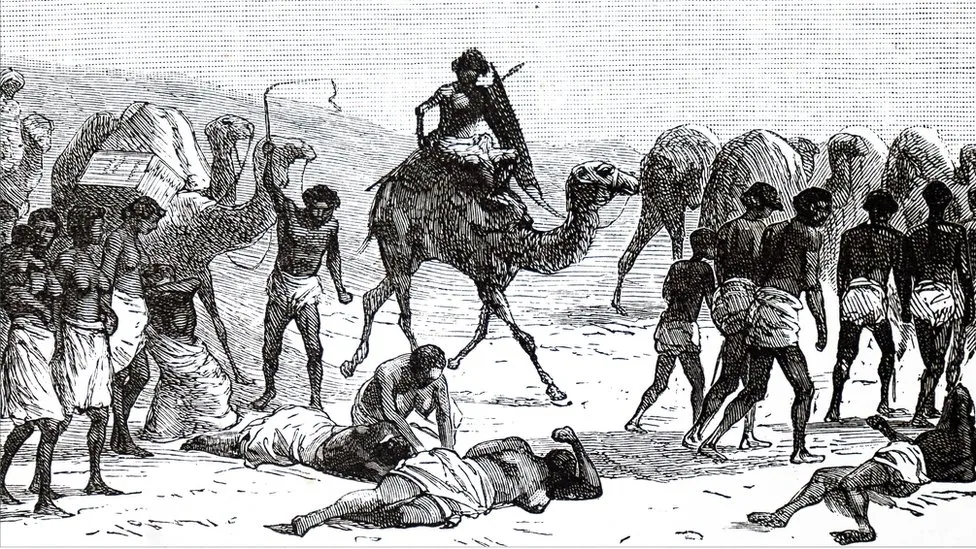
This Day in History: The "Act Against Slavery" in Upper Canada banned the importation of slaves on this day in 1793. It was one of many moves that Western Countries took to end slavery. Britain freed their slaves by paying off their slave owners, a debt that was not paid off until 2015. While the West went to great pains to end slavery, to this day, millions are still slaves in Africa.

"Thousands Of Black People Are Still Slaves. So Why Haven’t You Heard About Them? Every day across Africa, black men, women, and children are captured, bought, and sold into slavery with the Western world paying scant attention."

See also: The Real History of Slavery: Wake up students, says Thomas Sowell.
https://www.lewrockwell.com/2014/10/thomas-sowell/the-real-history-of-slavery/

See also: Juneteenth & the Hidden Side of Slavery
https://thebookshelf2015.blogspot.com/2020/06/juneteenth-hidden-side-of-slavery.html

White Cargo on This Day in History


Friday, June 19, 2020

Juneteenth & the Hidden Side of Slavery


This Day In History: Today is Juneteenth, an unofficial American holiday that commemorates the freedom of slaves in the South. While African slavery was tragic, there is a lot of misinformation about slavery. The other day Senator Tim Kaine said that the United States created Slavery. Clearly he's never cracked open a Bible or a history book. Slavery has been around for thousands of years, and we are all descendants of slaves. All sorts of people owned slaves. Most of the slaves brought here from Africa were purchased from black slave owners in Africa. One of the very first slave owners in America was Anthony Johnson, a black man from Angola. Thousands of blacks owned slaves in America. Even native Americans owned black slaves. The first slaves in America were white, and the word "Slave" comes from "Slav"...Slavs were white Europeans heavily targeted by Slavers. The white slaves in early America are often labelled "indentured servants" to give them some sense of privilege, but their limited contracts meant they were worked harder, often to the point of death.

"Who wants to be reminded that half—perhaps as many as thirds—of the original American colonists came here, not of their own free will, but kidnapped, shanghaied, impressed, duped, beguiled, and yes, in chains?... we tend to gloss over it... we’d prefer to forget the whole sorry chapter...“(Elaine Kendall, Los Angeles Times, Sept. 1, 1985).


When Blacks Owned Slaves, by Calvin Dill Wilson 1905
https://thebookshelf2015.blogspot.com/2017/02/when-blacks-owned-slaves-by-calvin-dill.html

See also: A History of White Slavery by Charles Sumner 1853 and When the Irish were Slaves, article in The Month 1890

See also Bible Defense of Slavery and other Southern books on CDrom - For a list of all of my digital books and books on disk click here

The Forgotten History of Britain's White Slaves in America

Monday, July 27, 2015

220 Books on the American Civil War to Download (1861-1865)


Only $6.99 - You can pay using the Cash App by sending money to $HeinzSchmitz and send me an email at theoldcdbookshop@gmail.com with your information. You can also pay using Facebook Pay in Messenger

Books Scanned from the Originals into PDF format

Join my Facebook Group

Contact theoldcdbookshop@gmail.com for questions

Books are in the public domain.

Contents:

The Confiscation of Property during the Civil War by JG Randall 1913

The Horrors of Andersonville Rebel Prison by NP Chipman 1891

Battles and Leaders of the Civil War, Volume 1 by Robert Underwood Johnson 1887

Battles and Leaders of the Civil War, Volume 2 by Robert Underwood Johnson 1887

Battles and Leaders of the Civil War, Volume 3 by Robert Underwood Johnson 1887

Battles and Leaders of the Civil War, Volume 4 by Robert Underwood Johnson 1887

Washington and Lincoln - a Comparison, a Contrast and a Consequence by Cyrus T Brady 1904

The Woman in Battle - a narrative of the exploits, adventures, and travels of Madame Loreta Janeta Velazquez, otherwise known as Lieutenant Harry J. Buford, Confederate States Army 1876

The Battles of the War for the Union by Precott Holmes 1897

The Life of Robert E. Lee for Boys and Girls by Joseph Hamilton 1917 ("As has been seen, Lee freed all the slaves he owned before the war began, and it is not unlikely that it was his influence that caused Mr. Custis to provide for the freeing of his own. Lee's feeling toward slavery is best shown in a letter written in 1856 in which he said 'In this enlightened age there are few, I believe, but will acknowledge that slavery as an institution is a moral and political evil.'")

The Union Army - a History of Military Affairs in the Loyal States, 1861-65 Cyclopedia of battles, Volume 1 1908

The Union Army - a History of Military Affairs in the Loyal States, 1861-65 Cyclopedia of battles, Volume 2 1908

The Union Army - a History of Military Affairs in the Loyal States, 1861-65 Cyclopedia of battles, Volume 3 1908

The Union Army - a History of Military Affairs in the Loyal States, 1861-65 Cyclopedia of battles, Volume 4 1908

The Union Army - a History of Military Affairs in the Loyal States, 1861-65 Cyclopedia of battles, Volume 5 1908

The Union Army - a History of Military Affairs in the Loyal States, 1861-65 Cyclopedia of battles, Volume 6 1908

The Union Army - a History of Military Affairs in the Loyal States, 1861-65 Cyclopedia of battles, Volume 8 1908

Battles for the Union, comprising descriptions of many of the most stubbornly contested battles in the war of the great rebellion by Willard W Glazier 1875

The Twelve Decisive Battles of the War by William Swinton 1871

Campaigns of the American Civil War by Gustave J Fiebeger 1914

The Outbreak of Rebellion by John G Nicolay 1881

Fort Henry to Corinth by MF Force 1881

The Army Under Pope by John C Ropes 1882

A History of the Negro Troops in the War of the Rebellion by George W Williams 1888

Statistical Record of the Armies of the United States by Frederick Phisterer 1883

Campaigns of 1862 and 1863 by Emil Schalk 1863

Grant's Campaign in Virginia, 1864 by Captain Vaughan-Sawyer 1908

A Critical History of the Late American War by Asa Mahan 1877

Lincoln's Suspension of Habeas Corpus as viewed by Congress by George Sellery 1907

My Days and Nights on the Battle-field by Charles C Coffin 1887

A Bird's-eye view of our civil war by Theodore A Dodge 1897

Following the Flag, 1861-1862 by Charles Coffin

American Catholics in the War by Michael Williams 1921

The Civil War by Campaigns by Eli G Foster 1899


A Narrative of the Campaign in the Valley of the Shenadoah in 1861 by Robert Patterson 1865

The Chancellorsville Campaign - Fredericksburg to Salem Church by Charles Richardson 1907

Lincoln as Commander-in-Chief by FV Greene 1909

General Sherman's official account of his great march through Georgia and the Carolinas 1865

Military Despotism! - Suspension of the Habeas Corpus! 1863

The Strategy of Robert E. Lee by John J Bowen 1914

Robert E. Lee, the Southerner by Thomas Nelson Page 1908

Address on the life and character of Gen. Robert E. Lee by Wade Hampton 1871

The Battle of Atlanta and other Campaigns by Grenville Dodge 1910

The Battle of Gettysburg by Franklin A Haskell 1910

The Antietam and Fredericksburg by Francis W Palfrey 1882

A True Vindication of the South by Thomas Norwood 1917 

The Stars and Stripes and other American Flags, including their Origin and History by Peleg Dennis Harrison 1914 (p.335)

Under the Stars and Bars by Mon Myrtle 1883

Under the Stars and Bars - a History of the Surry Light Artillery by BW Jones 1909

Under the Stars and Bars by Walter A Clark 1900

Four Years in the Stonewall Brigade by John O Casler 1906

Songs and Ballads of the Southern People by Frank Moore 1886

A List of the Union Soldiers buried at Andersonville by D Atwater 1890

Southern History of the Great Civil War by Edward F Pollard 1863

Union, a Story of the Great Rebellion by John R Musick 1894

The Lutheran Church and the Civil War by Charles William Heathcote 1919

Slavery and Four Years of War, Volume 1 by Joseph Keifer 1900

Slavery and Four Years of War, Volume 2 by Joseph Keifer 1900

Frauds and falsehoods of the Republican party by A Buck 1892

The Iron Furnace - Slavery and secession by John H Aughey 1863

The War Powers of the President by William Whiting 1862


The Boy's Book of Famous Warships by William Oliver Stevens 1916 (has a chapter on The Hunley, the first submarine, used during the Civil War)

The South vindicated from the charge of treason and rebellion by William Boggs 1881

Historic Papers on the Causes of the Civil War by Eugenia Potts 1909

Great Debates in American History: The Civil War by Marion M Miller 1913

The Church and the Rebellion by Robert L Stanton 1864

Adventures of an escaped Union prisoner from Andersonville by Thomas Howe 1886

The Annals of the War written by leading participants north and south 1879

Field, Fort and Fleet, being a series of brilliant and authentic sketches of the most notable battles of the late Civil War by M 1885

Military Miscellanies by James B Fry 1889

The Habeas Corpus and Martial Law by Robert Breck 1862

Sherman and his Campaigns - a Military Biography by Samuel M Bowman 1865

Grant and his Campaigns - a Military Biography by Henry Coppe 1866

The Soldier in our Civil War - a pictorial history of the conflict by Frank Leslie, Volume 1 1893

The Soldier in our Civil War - a pictorial history of the conflict by Frank Leslie, Volume 2 1893*

The Life, campaigns and battles of General Ulysses S. Grant 1868

A Short History of the War of Secession, 1861-1865 by Rossiter Johnson 1888

Northern Rebellion and Southern Secession by E.W.R. Ewing 1904

Secession, Coercion, and Civil War by JB Jones 

Coercion of the North 1860

The Tariff in Our Times by Ida Tarbell 1911

The Income Tax, a Study of the History, Theory and Practice of Income Taxation at home and abroad 1911 (taxes and tariffs played a huge part in the build up to the Civil War, and during it. )

The Causes of the American Civil War, Volume 1 by John L Motley 1861

The Causes of the American Civil War, Volume 2 by John L Motley 1861

The Sectional Struggle, an account of the troubles between the North and the South, from the earliest times to the close of the Civil War 1902 by Cicero W Harris (Tarrifs and Nullification)

Abraham Lincoln Protectionist by George B Curtiss 1916

The Pictorial Field Book of the Civil War, Volume 1 by Benson J Lossing 1874

The Pictorial Field Book of the Civil War, Volume 2 by Benson J Lossing 1874

The Pictorial Field Book of the Civil War, Volume 3 by Benson J Lossing 1874

Alphabetical List of Battles, 1754-1900 by NA Strait 1902

Suspension of the Writ of Habeas Corpus 1861

The Horrors of Southern Prisons During the War of the Rebellion by William H Lightcap 1902

The Mississippi valley in the Civil War by John Fiske 1900

Muskets and Medicine by Charles B Johnson 1917


The Sword of Honor, a Story of the Civil War Volume 1 by, Hannibal Augustus Johnson 1906

The Sword of Honor, a Story of the Civil War Volume 2 by, Hannibal Augustus Johnson 1906

American Tariff Controversies in the Nineteenth Century, Volume 1 by Edward Stanwood 1903

American Tariff Controversies in the Nineteenth Century, Volume 2 by Edward Stanwood 1903 (my personal feeling as an Ebay seller is that, while it is nice to assign moral excuses for wars, be it slavery or freedom, in the end, it really comes down to money)

The Photographic History of the Civil War, Volume 1 by Francil Miller 1911

The Photographic History of the Civil War, Volume 2 by Francil Miller 1911

The Photographic History of the Civil War, Volume 3 by Francil Miller 1911

The Photographic History of the Civil War, Volume 4 by Francil Miller 1911

The Photographic History of the Civil War, Volume 5 by Francil Miller 1911

The Photographic History of the Civil War, Volume 6 by Francil Miller 1911

The Photographic History of the Civil War, Volume 7 by Francil Miller 1911

The Photographic History of the Civil War, Volume 8 by Francil Miller 1911

The Photographic History of the Civil War, Volume 9 by Francil Miller 1911

The Photographic History of the Civil War, Volume 10 by Francil Miller 1911

The Copperhead by Harold Frederic 1893

Incidents and Anecdotes of the Civil War by David Porter 1885

Incidents of the Civil War in America by Frank Leslie 1862

The Kidnapping of President Lincoln and other war detective stories by Joel Harris 1909

THE GREAT TREASON PLOT of THE NORTH DURING THE WAR - Most Dangerous, Perfidious, Extensive and Startling Plot ever Devised - IMMINENT HIDDEN PERILS OF THE REPUBLIC - Astounding Developments Never Before Published by Winslow Ayer 1895

American Caricatures pertaining to the Civil War 1918

History of the Plots and Crimes of the Great Conspiracy to overthrow liberty in America by John Smith Dye 1866

Chronological and alphabetical record of the engagements of the great Civil War with the casualties on both sides and full and exhaustive statistics and tables of the army and navy, military prisons, national cemeteries by Charles Cooper 1904

Lincoln and Episodes of the Civil War by William Doster 1915

Facts and Falsehoods Concerning the War of the South by George Edmonds

The present attempt to dissolve the American union, a British aristocratic plot by S Morse 1862

Truth of the war conspiracy of 1861 Volume 1 by HW Johnstone 1921

Truth of the war conspiracy of 1861 Volume 2 by HW Johnstone 1921

History made Visible - United States history with synchronic charts, maps and statistical diagrams by Richard Croscup 1911

Crimes of the Civil War, and curse of the funding system by HC Dean 1868

The Murder of Abraham Lincoln planned and executed by Jesuit priests 1893

The Indians in the civil war by Annie Abel 1910

The Union Indian Brigade in the Civil War by W Britton 1922

First blows of the Civil War by James Pike 1879

Red Badge of Courage - an episode of the American Civil War by Stephen Crane 1896

The Little Regiment, and other stories of the American Civil War by Stephen Crane 1896

Pictures of War by Stephen Crane 1916

The Copperhead: or, The Secret Political History of our Civil War unveiled by F Hall 1902*
("Showing the falsity of New England; partisan history, how Abraham Lincoln came to be President, the secret working and conspiring of those in power; motive and purpose of prolonging the war for four years"}

Battles of the Civil War BY Thomas Vineyard 1914

Who goes there? The story of a spy in the civil war by BK Benson 1900

Soldier's Pocket Bible 1861

Political fallacies: an examination of the false assumptions, and refutation of the sophistical reasonings, which have brought on this Civil War by George Junkin 1863

The Real Lincoln by Charles Minor 1903

History of the American Civil War Volume 1 by John Draper 1868

History of the American Civil War Volume 2 by John Draper 1868

History of the American Civil War Volume 3 by John Draper 1868

Life of General Grant by Nelson Cross 1872

About Grant by John Swift 1880

Ulysses S. Grant by Louis Coolidge 1917

Scouts, spies, and heroes of the great Civil War by Capt Hazelton 1892

Our Rifles: Firearms in American History by Charles Sawyer 1920

Calendar of the civil war by RL Bridgman 1890

Southern Generals, who they are, and what they have done by William Snowv 1865

The Confederate Secession by William Lothian 1864

No Treason in Civil War Volume 1 by G Smith 1865

No Treason in Civil War Volume 2 by G Smith 1865

The Fighting Quakers - a true story of the war for our Union by AJH Duganne 1866

Stonewall Jackson and the American Civil War Volume 1, 1909, by GFR Henderson

Stonewall Jackson and the American Civil War Volume 2, 1909, by GFR Henderson

Lee and his Cause - The why and the how of the War between the States by John Deering 1907

The Life of Robert E Lee by Henry Shepherd 1906


Leading American soldiers by RM Johnston 1907

Heroines of the Rebellion, or Woman's Work in the Civil War - a record of heroism, patriotism and patience by LP Brockett 1867

The Story of a Confederate boy in the Civil War by David Johnston 1914

Killed and died of wounds in the Union army during the Civil War by Jesse Hardesty 1915

Political history of secession to the beginning of the American Civil War dy Daniel Howe 1914

Famous Adventures and Prison Escapes of the Civil War by GW Cable 1898

The True History of the Civil War by Guy C Lee 1903

The Boy Spy by Joseph Kerbey 1889

Camp Fires of the Confederacy - A Volume of Humorous Anecdotes, Reminiscences, Deeds of Heroism by Benjamin La Bree 1898

The Civil War from a Southern Standpoint by Ann Snyder 1890

A Chinese soldier in the Civil War BY William Worner

The Naval History of the Civil War by David Porter 1886

Hungarians in the American civil war by Eugene Pivany 1913

The Southern War Poetry of the Civil War by Esther Ellinger 1918

The Irish In The Revolution And The Civil War by Dr JC O'Connell 1903

Letters from a Surgeon of the Civil War by John Perry 1906

The Confiscation of property during the Civil War JG Randall 1913

The Civil War and the Constitution Volume 1 by JW Burgess 1901

The Civil War and the Constitution Volume 2 by JW Burgess 1901

Mohawk Peter - Legends of the Adirondacks and Civil War memories by Henry Dorr 1921

The Right and the Wrong in our Civil War by Homer Sprague 1903

Progressive Taxation in theory and practice by Edwin Seligman 1908 (Congress enacted the nation's first income tax law during the Civil War)

Charleston during the civil war by TD Jervey 1915

The Southerners, a story of the Civil War by Cyrus Brady 1903

The Claybornes; a romance of the civil war by William Sage 1902

A Broken Sword - a tale of the Civil War by General Charles King 1905

Chasing an Iron Horse - A boy's adventures in the Civil War by Edward Robins 1902

Life and reminiscences of Jefferson Davis by John Daniel 1890

Studies of Assassination by Wirt Sikes 1891

Men and things I saw in Civil War days by James Rusling 1899

Essays on the Civil War and reconstruction and related topics by William Dunning 1898

Civil war and reconstruction in Alabama by Walter Fleming 1905

The Civil War and reconstruction in Florida by William Davis 1913

Destruction and Reconstruction - Personal experiences of the late war by Richard Taylor 1879

The Aftermath of the Civil War in Arkansas by Clayton Powell 1915

The Secret Service in the Late War - comprising the author's introduction to the leading men at Washington, with the origin and organization of the detective police, and a graphic history of his rich experiences, North and South by La Fayette Baker 1874

On the Wing of Occasions - being the authorized version of certain curious episodes of the late Civil War, including the hitherto suppressed narrative of the kidnapping of President Lincoln by Joel Chandler Harris 1900

The True Story of the Barons of the South or, The Rationale of the American conflict by EW Reynolds 1862

The Rejected Stone - Insurrection vs. Resurrection in America by MD Conway 1862

True stories of the War for the Union by LS Griswold 1893

In Defense of the Flag - a True War Story by David Stafford 1904

Jay Cooke, financier of the Civil War, Volume 1 by Ellis Oberholtzer 1907

Jay Cooke, financier of the Civil War, Volume 2 by Ellis Oberholtzer 1907

Social forces in American history by AM Simons 1912

Is Davis a traitor; or, Was secession a constitutional right previous to the war of 1861? by Albert Bledsoe 1866

The economic and political essays of the ante-bellum South by UB Phillips 1909

History of Socialism in the United States by By Morris Hillquit 1903

Reminiscences of Forts Sumter and Moultrie by Abner Doubleday 1876

Within Fort Sumter by A Fletcher 1861

Major Robert Anderson and Fort Sumter by Eba Lawton 1911

The War for the Union from Fort Sumter to Atlanta by William Swinton 1864

The Flag Replaced on Sumter by William Arnold Spicer 1885

The Battle of Fort Sumter and first victory of the Southern troops 1861

The Political Conspiracies preceding the Rebellion - The true stories of Sumter and Pickens by Thomas M Anderson 1882

The Genesis of the Civil War (the Story of Sumter, 1860-1861) by Samuel W Crawford 1887

A Youth's History of the Rebellion by William Makepeace Thayer 1866

The Siege of Charleston by Samuel Jones 1911