This day in history: American gun designer John Browning died on this day in 1926.
Browning developed many varieties of military and civilian firearms, cartridges, and gun mechanisms – many of which are still in use around the world. He made his first firearm at age 13 in his father's gun shop and was awarded the first of his 128 firearm patents on October 7, 1879, at the age of 24. He is regarded as one of the most successful firearms designers of the 19th and 20th centuries and pioneered the development of modern repeating, semi-automatic, and automatic firearms.
Browning influenced nearly all categories of firearms design, especially the autoloading of ammunition. He invented, or made significant improvements to, single-shot, lever-action, and pump-action rifles and shotguns. He developed the first reliable and compact autoloading pistols by inventing the telescoping bolt, then integrating the bolt and barrel shroud into what is known as the pistol slide. Browning's telescoping bolt design is now found on nearly every modern semi-automatic pistol, as well as several modern fully automatic weapons. He also developed the first gas-operated firearm, the Colt–Browning Model 1895 machine gun – a system that surpassed mechanical recoil operation to become the standard for most high-power self-loading firearm designs worldwide. He also made significant contributions to automatic cannon development.
Browning's most successful designs include the M1911 pistol, the water-cooled M1917, the air-cooled M1919, and heavy M2 machine guns, the M1918 Browning Automatic Rifle, and the Browning Auto-5 – the first semi-automatic shotgun. Some of these arms are still manufactured, often with only minor changes in detail and cosmetics to those assembled by Browning or his licensees. The Browning-designed M1911 and Hi-Power are some of the most copied firearms in the world.
This day in history: On this day in 2007, the Jokela school shooting in Jokela, Tuusula, Finland, took place, resulting in the death of nine people.
It is often said that America has the worst rate of gun murder and gun crime of any of the civilized countries of the world. According to the New York Times’s editorial page, “the American murder rate is roughly 15 times that of other wealthy countries, which have much tougher laws controlling private ownership of guns.”
However, this is not true.
From Dana Loesch: "The combined murder and suicide rate in the United States is lower than in Belgium, Switzerland, France, Bulgaria, Austria, Croatia, Denmark, Finland, Slovenia, Ukraine, Hungary, Belarus, Lithuania, Latvia, Estonia, and Russia. In many of those cases, our rate is far, far smaller than the rate in European countries. For example, our suicide rate is 43 percent of Finland’s, and our murder rate is 25 percent of Russia’s.
Other continents have even worse crime. The murder rate in the United States is lower than the murder rate in 'most of Southeast Asia, the Caribbean, Africa, all but one South American nation, and all of Central America and Mexico.' Additionally, among the world’s nations, there’s no correlation between fewer guns and less crime. To the contrary, among developed countries, the countries that have the fewest guns (like Turkey, Chile, and Estonia) often have the most crime. On the other hand, Switzerland, which has more guns per capita than all but two other countries in the world, has a far lower murder rate than countries that heavily restrict guns, like Canada, Great Britain, and Australia. Even the Washington Post—in a rare moment of lucidity—has had to admit that 'countries with the most guns don’t necessarily have the most gun-related homicides.'"
"Although 192 countries report total homicides, only 116 of them report firearm homicides. Among countries that don't release firearm homicide data, their combined homicide rate is 11.1 per 100,000. This is far above both the US rate and the global average. If these high-homicide countries were to report their firearm homicide rates, they would almost surely outrank the US." Gun Control Myths by John R. Lott Jr.
This Day in History: The Luby's shooting, also known as the Luby's massacre, took place on this day in 1991, at a Luby's Cafeteria in Killeen, Texas. The killer, George Hennard, drove his pickup truck through the front window of the restaurant. He quickly shot and killed 23 people, and wounded 27 others. He had a brief shootout with police, refused their orders to surrender, and fatally shot himself. At the time, the shooting was the deadliest mass shooting by a lone gunman in U.S. history.
Suzanna Hupp was in that restaurant that day with her parents. She reached in her purse for her gun, but then realized her gun was 100 yards away in her vehicle because Texas law at the time demanded it. (She had feared that if she was caught carrying it she might lose her chiropractor's license.) Hupp testified across the country in support of concealed handgun laws, and was elected to the Texas House of Representatives in 1996.
About a dozen years or so I remember watching her testimony in congress, and it was one of the most powerful statements in defense of gun rights. Watching her speak changed my mind on guns. (You also get to see a young Chuck Schumer).
This day in history: In Denmark, small-time criminal Palle Sørensen shot and killed four policemen who were pursuing him on this day in 1965; he was apprehended the next day.
Palle Sørensen's crime eventually led to the arming of Danish police officers.
There are still nineteen countries or territories where the police do not carry firearms unless the situation is expected to merit it. some of those include Bhutan, Botswana, China, Cook Islands, Fiji, Iceland, Ireland, Kiribati, Malawi, Marshall Islands, Nauru, New Zealand, Niue, Norway, Samoa, Solomon Islands, Tonga, Tuvalu, and the United Kingdom.
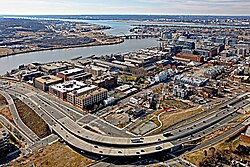
This day in history: The Washington Navy Yard shooting occurred on this day in 2013, when 34-year-old Aaron Alexis fatally shot 12 people and injured three others in a mass shooting at the headquarters of the Naval Sea Systems Command (NAVSEA) inside the Washington Navy Yard in southeast Washington, D.C. The attack took place in the Navy Yard's Building 197; it began around 8:16 a.m. EDT and ended when police killed Alexis around 9:25 a.m. It is the deadliest mass shooting in Washington, D.C. history, as well as the second deadliest mass murder on a U.S. military base, behind the 2009 Fort Hood shooting.
Tennessee Democrat Kate Craig posted on X in response this to a meme that guns save lives: "When I lived in DC, the Washington Navy Yard (where I worked) had a mass shooting. 13 died, 8 were injured. This is a military base where soldiers are armed...Don’t tell me more guns solves this deadly problem."
However, this was not the case. Personnel on the base "were not permitted to carry weapons on the base, thanks to former President Bill Clinton.
In 1993 the president issued orders that barred members of the military and their civilian contractors from carrying personal firearms on base. Even officers were disarmed under the law.
Almost as soon as Clinton assumed office, in March 1993 the Army imposed regulations forbidding military personnel from carrying their personal firearms and making it almost impossible for commanders to issue firearms to soldiers in the U.S. for personal protection.
That ban extends to virtually all U.S military bases and related installations.
Under the ruling enacted by the Clinton administration, there must be 'a credible and specific threat against personnel' before military personnel 'may be authorized to carry firearms for personal protection.'
This was the reason that the Fort Hood shooter Maj. Nidal Malik Hasan was able to go on a rampage for a full 10 minutes in 2009 without being stopped." Investors Business Daily
The shooting also highlights the failure of government institutions. The shooter, Aaron Alexis, had a history of erratic behavior, which if properly reported, would have stripped him of his clearance, barring him access to the facility.
The Charleston shooter was able to pass a background check even though he was a prohibited possessor. Former FBI director James Comey said they made a mistake, it was a paperwork error. The Sutherland Springs shooter was able to get a gun because the Air Force did not report his conviction.”
This Day in History: American inventor and firearms designer Daniel B. Wesson was born on this day in 1825. He helped develop several influential firearm designs over the course of his life; he and Horace Smith were the co-founders of two companies named "Smith & Wesson", the first of which was eventually reorganized into the Winchester Repeating Arms Company and the latter of which became the modern Smith & Wesson.
Smith & Wesson still makes popular handguns. "The M&P Shield by Smith & Wesson was released in 2012 and still holds many top spots today. When it was first introduced, the company claimed is was the best-selling on the market for personal protection and that’s what millions of people use it for today. There are three options of the .45, .40, and 9mm, so you can choose an M&P Shield to suit." Source
One of the most popular S&W guns was the S&W Model 29 .44 Magnum famously called "the most powerful handgun in the world" by Clint Eastwood in Dirty Harry.
This day in history: Oliver Winchester formed the New Haven Arms Company on this day [April 25] in 1857. The New Haven Arms Company would later be reorganized as the Winchester Repeating Arms Company.
"In early 1857, businessman Oliver Winchester bought a controlling interest in a struggling Connecticut firearms company from two inventors by the name of Horace Smith and Daniel Wesson (who would soon move to Massachusetts to found a second and successful eponymous firearms venture of their own). With access to machine tools, raw materials, and a number of valuable patents — including rights to Henry repeating rifle, the world’s first practical repeating rifle — Winchester reorganized his assets to form the New Haven Arms Company on April 25, 1857. Repeating rifles marked a huge advance in 19th century firearms technology. The Henry repeating rifle could fire several rounds following a single ammunition reload — a huge improvement over single-shot muzzle-loading and breech-loading rifles which required reloading after every shot taken." Source
Oliver Winchester's son William Wirt Winchester became the treasurer of the Winchester Repeating Arms Company, a position he held until his death in 1881. His widow, Sarah Winchester, built what came to be the Winchester Mystery House, a mansion in San Jose CA. The Queen Anne Style Victorian mansion is renowned for its size, its architectural curiosities, and its lack of any master building plan.
Many claim the house to be haunted by the victims of the Winchester rifle.
This day in history: American gun inventor Samuel Colt died on this day (January 10) in 1862. The old saying goes like this: God created men equal. Colonel Colt made them equal.
Samuel Colt's gun did not take off at first, as the public perceived pistols as unreliable, preferring the Bowie knife instead. As a result, he initially went bankrupt. This all changed with the Mexican American War and the Civil War and the 15 million dollar fortune that followed.
For the greater part of the history of guns, the flintlock had been the dominant ignition system for firearms. However with the colt pistol, the soldier or gunsman now had six shots before reloading rather than only one.
Colt championed the concept of modernism before the word was invented, he pioneered the use of celebrity endorsements to promote his products, he introduced the phrase "new and improved" to advertising and demonstrated the commercial value of trade-name recognition as a word for "revolver" in French is le colt. Barbara M. Tucker, professor of history and director of the Center for Connecticut Studies at Eastern Connecticut State University, wrote that Colt's marketing techniques transformed the firearm from a utilitarian object into a symbol of American identity. Tucker added that Colt associated his revolvers with American patriotism, freedom and individualism while asserting America's technological supremacy over Europe's.
In 2021, the Colt Python was the second best selling revolver, and the Colt Anaconda was number 8, according to GunGenius.
Back in 2013, Jesse James' Colt .45 revolver went up for auction and was expected to sell for more than $1.6 million.
Colt's Manufacturing Company is now a subsidiary of Czech holding company Ceská zbrojovka Group.
The Wounded Knee Massacre happened on this day in 1890.
"The Battle at Wounded Knee is a significant battle in American history, as it put an end to the Indian Wars and is marked as the last official defeat of the Native Americans. But what’s not taught in history lessons is that Wounded Knee was one of the first federally backed gun confiscations in the history of the United States, and it ended in the massacre of nearly 300 unarmed people.
During the late 19th century, American Indians were allowed to purchase and carry firearms, just as white men were. The colonial gun laws did not bar Native Americans from possessing firearms, yet that natural right was violated by government forces at Wounded Knee. And once the guns were confiscated, the battle ensued.
When we look at the issues surrounding gun confiscation, Wounded Knee gives us an example of the devastation that an unarmed people can experience at the hands of their own government. This battle serves as a reminder to fight against gun confiscation and the gun control legislation that can lead to it.
Leading Up to Wounded Knee
At the beginning of the 19th century, it’s estimated that 600,000 American Indians lived on the land that is now the United States. By the end of the century, the people diminished to less than 150,000.
Throughout the 1800s, these nomadic tribes were pushed from the open plains and forests into 'Indian Territories,' places determined by the U.S. government. It started during the Creek Indian War (1813-1815), when American soldiers, led by Andrew Jackson, won nearly 20 million acres of land from the defeated Creek Indians.
Unlike George Washington, who believed in 'civilizing' the Native Americans, Jackson favored an 'Indian Removal,' and when president in 1830, he signed the Indian Removal Act, which was the first of many U.S. legislations that did not grant the Native Americans the same rights as colonial European-Americans. Davy Crockett was the only delegate from Tennessee to vote against the act.
The Plains Indians, who lived in the plains between the Mississippi River and the Rocky Mountains, weren’t as impacted by the U.S. government until later in the century, as U.S. expansion pushed into the “Wild West.” As people moved passed the Mississippi and into the Frontier, conflicts again arose between the Indians and Americans.
In an attempt at peace in 1851, the first Fort Laramie Treaty was signed, which granted the Plain Indians about 150 million acres of land for their own use as the Great Sioux Reservation. Then, 13 years later, the size was greatly reduced to about 60 million acres in the Fort Laramie Treaty of 1868, which recreated the Great Sioux Reservation boundaries and proclaimed all of South Dakota west of the Missouri river, including the Black Hills, solely for the Sioux Nation.
As part of the treaty, no unauthorized non-Indian was to come into the reservation and the Sioux were allowed to hunt in unceded Indian territory beyond the reservation that stretched into North Dakota, Montana, Wyoming, Nebraska, and Colorado. If any non-Indian wanted to settle on this unceded land, they could only do it with the permission of the Sioux.
That was until 1874, when gold was discovered in South Dakota’s Black Hills. The treaties that were signed between the Native Americans and the U.S. government were ignored as gold rushers invaded Indian Territory and issues arose, such as the Battle of the Little Bighorn.
As time went on, the American Indians continued to be pushed into smaller territories and their lives began to diminish. In 1889, the U.S. government issued the Dawes Act, which took the Black Hills from the Indians, broke up the Great Sioux Reservation into five separate reservations, and took nine million acres and opened it up for public purchase by non-Indians for homesteading and settlements.
The Native Americans were squeezed into these smaller territories and didn’t have enough game to support them. The bison that had been a staple to their way of life were gone. Their ancestral lands that sustained them were no longer theirs. The resistance was over. They were no longer free people, living amongst themselves, but 'Redskins' confined by the 'white man' in reservations they had been forced to, many against their will.
With all of the Sioux Nation inhabiting less than nine million acres, divided up throughout South Dakota, the Indians were encouraged by the U.S. government to develop small farms. But they were faced with poor, arid soil and a bad growing season, which led to a severely limited food supply in the year following the Dawes Act. A miscalculation in the census complicated matters even more when the population on the reservation was undercounted, leading to less supplies sent from the U.S. government.
The situation was beyond bleak and the Sioux people were starving. That winter, an influenza epidemic broke out and caused a disproportionate number of Sioux children to die. And then in the summer of 1890, a drought hit, destroying yet another season of crops and the people of Lakota Pine Ridge Indian Reservation were in dire condition.
The Ghost Dance
Perhaps it was these desolate circumstances that led to the spread of what is known as the Ghost Dance. Based on a vision experienced by a Sioux religious leader, the Ghost Dance was a spiritual ritual that was supposed to call the coming messiah, who would be an American Indian. This messiah would force the white man off of Indian lands, return the bison to the plains, and resurrect both their deceased and the life the Native Americans had once enjoyed.
Although this was not a war dance, it was feared by those who believed the Indians were savages. One such man was Daniel Royer, who arrived as the new agent on the Pine Ridge Reservation in October of 1890. He believed it to be a war dance and requested troops from President Benjamin Harrison on November 15th of that same year. His telegram read: 'Indians are dancing in the snow and are wild and crazy. We need protection and we need it now.'
Harrison granted the request and part of the 7th Cavalry arrived on November 20th, with orders to arrest several Sioux leaders. Commander James Forsyth led the troops.
On December 15th, the 7th Cavalry attempted to arrest Sitting Bull, the Sioux chief who annihilated Commander George Custer in the Battle of the Little Bighorn (he also toured with Buffalo Bill’s Wild West Show and was a dear friend to Annie Oakley), because he didn’t attempt to stop the Ghost Dance amongst his people. During the incident, Sitting Bull was shot and killed.
The Lakota at Pine Ridge began to get nervous and the tribe’s leader, Big Foot, practiced the Ghost Dance and had caught the attention of the federal agents. After hearing of Sitting Bull’s death, he and his tribe fled to the Badlands.
They were pursued by the 7th Cavalry for five days. But Big Foot had come down with pneumonia and they were peacefully intercepted at Wounded Knee Creek on December 28th.
December 29, 1890: The Wounded Knee Massacre
The next morning, Col. Forsyth demanded that the tribe surrender their firearms. Rifles were being turned over without issue until some of the Sioux men started a Ghost Dance and began throwing dirt into the air, as was customary to the dance.
Tensions among the soldiers increased.
A few moments later, a Sioux man named Black Coyote refused to give up his rifle. It’s been reported that the Indian was deaf, had recently purchased the rifle, and was most likely unaware of why the soldier was demanding it. Regardless, the two began to skuffle and the gun discharged.
The 7th Cavalry, who was the reconstructed regiment of Custer, opened fire on the Lakota. Along with their own weapons, they used four Hotchkiss guns, a revolving barrel machine gun that could fire 68 rounds per minute, devastating the entire tribe, which had just peacefully handed over their weapons.
The Sioux men, women, and children scattered, and the Cavalry pursued them. Dead bodies were later found three miles from camp.
Once the firing ended, some two hours later, an estimated 300 Native Americans lay dead in the snow, at least half of them women and children. Those that didn’t die immediately froze to death during the oncoming blizzard.
Nearly a week later, on January 3, 1891, the Cavalry escorted a burial party to the banks of the Wounded Knee River and they buried 146 Lakota Indians in a single mass grave. Other bodies were found in the surrounding areas, and the estimated body count is between 250 and 300 Sioux.
The 7th Cavalry lost 25 men.
After the Massacre
The Massacre at Wounded Knee brought an end to the Indian Wars. There was no more resistance. The Ghost Dancing stopped.
The Native Americans had been beaten. But the Cavalry’s attack was recognized as butchery, with Forsyth’s commanding officer, General Nelson Miles, calling it a 'criminal military blunder and a horrible massacre of women and children.'
However, President Harrison had an election around the corner and wasn’t in a position to look bad. Miles’ report was dismissed. Instead, the Cavalry men were made out as heroes against the Indian 'savages.' And in the Spring of 1891, the president awarded the first of 20 Medals of Honor to the soldiers who disarmed then slaughtered the Sioux at Wounded Knee.
It’s been speculated that the 7th Cavalry, which again was regrouped after it was destroyed by Sitting Bull at Little Bighorn, was looking for a fight and deliberately sought revenge on the Native Americans.
Black Elk, one of the few Lakota survivors of the Wounded Knee Massacre, recalled in 1931: 'I can still see the butchered women and children lying heaped and scattered all along the crooked gulch as plain as when I saw with eyes still young. And I can see that something else died there in the bloody mud, and was buried in the blizzard. A people’s dream died there.'"