Showing posts with label jefferson. Show all posts

Saturday, April 29, 2023

The Largest White House State Dinner on This Day in History


This day in history: In one of the largest White House state dinners in modern times, the President and Mrs. Kennedy hosted 173 scientists, educators and writers, including 49 Nobel Prize laureates from the Western Hemisphere on this day in 1962. President Kennedy made the famous remark, "I think this is the most extraordinary collection of talent, of human knowledge ever gathered at the White House, with the possible exception of when Thomas Jefferson dined alone." Dr. Linus Pauling, winner of the 1954 prize in chemistry, picketed outside of the White House in an anti-nuclear demonstration earlier in the day, then went inside to join the President for dinner. On greeting Dr. Pauling, Kennedy said, "I'm glad you decided to come inside."


Thursday, December 15, 2022

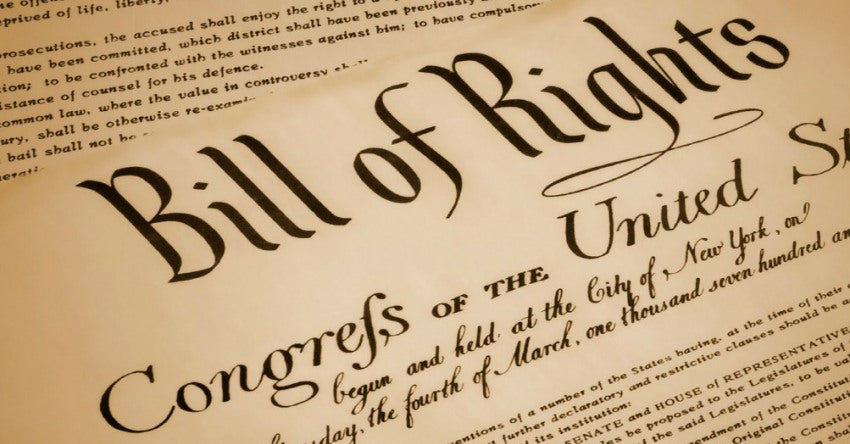
The Bill of Rights on This Day in History


This Day in History: The United States Bill of Rights becomes law when ratified by the Virginia General Assembly on this day in 1791.

From Lawrence Reed:

Americans over the age of 60 will likely remember the hilarious TV game show that ran for 25 years (1965-1980) called Hollywood Squares. On the show, host Peter Marshall (still living at age 95) once directed this question to comedian Paul Lynde: “Pride, anger, covetousness, lust, gluttony, envy and sloth are collectively known as what?”

Sustained laughter ensued when Lynde replied, “The Bill of Rights.” (The correct answer, of course, is the Seven Deadly Sins.)

It was on this very day in 1791—December 15—that a young United States of America formally adopted the first ten amendments to its Constitution that we call the Bill of Rights. Those amendments were fundamental and foundational, as bedrock as it gets, without which adoption of the Constitution itself might not have occurred. In fewer than 500 words, many of our most cherished liberties are expressed as rights to be protected. It’s a roster of instructions to government to keep out of where it doesn’t belong.

Not long ago, the late and famous trial attorney F. Lee Bailey (1933-2021) posed a poignant question to which he provided a disturbing answer: “Can any of you seriously say the Bill of Rights could get through Congress today? It wouldn’t even get out of committee!”

Bailey was likely right, which makes it even more urgent that Americans renew a learned passion for the Bill of Rights. Toward that end, I offer here a sample of thoughts in its defense:

_____

  1. The concept that the Bill of Rights and other constitutional protections against arbitrary government are inoperative when they become inconvenient or when expediency dictates otherwise is a very dangerous doctrine and if allowed to flourish would destroy the benefit of a written Constitution and undermine the basis of our government. - Supreme Court Justice Hugo Black
  2. Show me that age and country where the rights and liberties of the people were placed on the sole chance of their rulers being good men, without a consequent loss of liberty? - Patrick Henry
  3. The Bill of Rights wasn’t enacted to give us any rights. It was enacted so the Government could not take away from us any rights that we already had. - Kenneth G. Eade, author
  4. The very purpose of a Bill of Rights was to withdraw certain subjects from the vicissitudes of political controversy, to place them beyond the reach of majorities, and to establish them as legal principles to be applied by the courts. One’s right to life, liberty, and property, to free speech, a free press, freedom of worship and assembly, and other fundamental rights may not be submitted to vote; they depend on the outcome of no elections. - Robert H. Jackson, Supreme Court Justice
  5. Education on the value of free speech and the other freedoms reserved by the Bill of Rights, about what happens when you don't have them, and about how to exercise and protect them, should be an essential prerequisite for being an American citizen — or indeed a citizen of any nation, the more so to the degree that such rights remain unprotected. If we can't think for ourselves, if we're unwilling to question authority, then we're just putty in the hands of those in power. But if the citizens are educated and form their own opinions, then those in power work for us…In the demon-haunted world that we inhabit by virtue of being human, this may be all that stands between us and the enveloping darkness." - Carl Sagan, astronomer
  6.  "There are two ways to choke off free expression. We've already discussed one of them: clamp down on free speech and declare some topics off-limits. That strategy is straightforward enough. The other, more insidious way to limit free expression is to try to change the very language people use" - Dennis Prager, author
  7. "Before a standing army can rule, the people must be disarmed; as they are in almost every kingdom of Europe. The supreme power in America cannot enforce unjust laws by the sword; because the whole body of the people are armed and constitute a force superior to any bands of regular troops that can be, on any pretense, raised in the United States." - Noah Webster
  8. "The constitutions of most of our States assert, that all power is inherent in the people; that they may exercise it by themselves, … or they may act by representatives, freely and equally chosen; that it is their right and duty to be at all times armed; that they are entitled to freedom of person, freedom of religion, freedom of property, and freedom of the press." - Thomas Jefferson
  9. "In 1942, there were 110,000 Japanese American citizens in good standing, law-abiding people who were thrown into internment camps simply because their parents were born in the wrong country. That's all they did wrong. They had no right to a lawyer, no right to a fair trial, no right to a jury of their peers no right to due process of any kind. The only right they had: "Right this way" into the internment camps! Just when these American citizens needed their rights the most, their government took them away! And rights aren’t rights if someone can take them away. They’re just privileges." - George Carlin
  10. "The first article of the Bill of Rights provides that Congress shall make no law respecting freedom of worship or abridging freedom of opinion. There are some among us who seem to feel that this provision goes too far, even for the purpose of preventing tyranny over the mind of man. Of course, there are dangers in religious freedom and freedom of opinion. But to deny these rights is worse than dangerous, it is absolutely fatal to liberty. The external threat to liberty should not drive us into suppressing liberty at home. Those who want the Government to regulate matters of the mind and spirit are like men who are so afraid of being murdered that they commit suicide to avoid assassination." - Harry Truman
  11. "In respect to political rights, we hold woman to be justly entitled to all we claim for man. We go farther and express our conviction that all political rights which it is expedient for man to exercise, it is equally so for women. All that distinguishes man as an intelligent and accountable being, is equally true of woman; and if that government is only just which governs by the free consent of the governed, there can be no reason in the world for denying to woman the exercise of the elective franchise, or a hand in making and administering the laws of the land. Our doctrine is, that “Right is of no sex." - Frederick Douglass
  12. "The Bill of Rights is the United States. The United States is the Bill of Rights. Compromise the Bill of Rights and you dissolve the very foundation upon which the Union stands… Nowhere in the Bill of Rights are the words ‘unless inconvenient’ to be found." - A. E. Samaan, historian

Rights and Non-Rights: Distinguishing the Two by Lawrence W. Reed

Historic Figures Who Recognized that Speech is Freedom’s First Line of Defense by Lawrence W. Reed

The Holiday That Isn’t by Lawrence W. Reed

George Mason: Father of the Bill of Rights by Raymond Polin

The Bill of Rights is America’s Bulwark Against Government Overreach by Gary Galles

Mercy Otis Warren: Conscience of Great Causes by Lawrence W. Reed

Lawrence W. Reed
Lawrence W. Reed

Lawrence W. Reed is FEE's President Emeritus, Humphreys Family Senior Fellow, and Ron Manners Global Ambassador for Liberty, having served for nearly 11 years as FEE’s president (2008-2019). He is author of the 2020 book, Was Jesus a Socialist? as well as Real Heroes: Incredible True Stories of Courage, Character, and Conviction and Excuse Me, Professor: Challenging the Myths of ProgressivismFollow on LinkedIn and Like his public figure page on Facebook. His website is www.lawrencewreed.com.

This article was originally published on FEE.org. Read the original article.

Monday, June 6, 2022

The Wintery Summer of 1816 on This Day in History


This Day in History: There was 10 inches of snowfall in New England on this day in 1816 in what came to be called the "year without a summer." At the Church Family of Shakers near New Lebanon, New York, Nicholas Bennet wrote in May 1816, "all was froze" and the hills were "barren like winter". Temperatures went below freezing almost every day in May. The ground froze on June 9. On June 12, the Shakers had to replant crops destroyed by the cold. On July 7, it was so cold, everything had stopped growing. The Berkshire Hills had frost again on August 23, as did much of the upper northeast.

In July and August, lakes and rivers froze over ice as far south as Pennsylvania with frost reported as far south as Virginia in late August. Dramatic temperature swings were common, with temperatures sometimes reverting from normal or above-normal summer temperatures as high as 95 °F (35 °C) to near-freezing within hours.

Ex-president Thomas Jefferson also experienced crop failure which sent him further into debt.

"In Ireland, the summer of 1816 was much rainier than normal, and the potato crop failed. In other European countries, wheat crops were dismal, leading to bread shortages. In Switzerland, the damp and dismal summer of 1816 led to the creation of a significant literary work. A group of writers, including Lord Byron, Percy Bysshe Shelley, and his future wife Mary Wollstonecraft Godwin, challenged each other to write dark tales inspired by the gloomy and chilly weather. During the miserable weather, Mary Shelley wrote her classic novel, Frankenstein." Source

It is believed that this phenomenon was caused by the massive 1815 eruption of Mount Tambora in April in the Dutch East Indies (which is now Indonesia).

Wednesday, April 13, 2022

The Mistrusted Two Dollar Bill on This Day in History

This Day in History: The United States Treasury Department reintroduced the two-dollar bill on this day (April 13) in 1976 as a Federal Reserve Note on Thomas Jefferson's 233rd birthday as part of the United States Bicentennial celebration.

Two dollar bills never caught on as many people think they are fake. They also don't circulate well because people horde them as collectibles.

The two dollar bill was nicknamed the “Tom” because they feature Thomas Jefferson’s portrait on the face. The "Tom" also has an interesting history:

"An urban legend claims that at one time, election rigging was common and the reward for a favorable vote was $2. There was a belief that politicians would purchase votes for $2 therefore, having a $2 bill could be seen as evidence that you had sold your vote. While most likely an urban legend, the myth still gave the bill a sinister reputation.
In the early 1920s, Prostitution was $2.00 a trick, leading some to refer to the bill as a 'whore note.'
The gambling tracks have a $2.00 window, and if you won, many times you were paid in $2.00 bills. If you were caught with $2’s in your wallet it could lead people to assume you were a gambler.
The $2 bill was often thought to be bad luck, as 'deuce' was a name for the devil. Recipients would tear off one corner, believing it would negate the bad luck of the bill. This caused many of the bills to be taken out of circulation as mutilated currency." Source

The relative scarcity of the $2 bill in everyday circulation has led to confusion at points of sale, as well as overreaction by merchants and even attempted prosecution of the individual trying to tender the bill.

In 2005, a man in Baltimore, Maryland, was jailed for attempting to use $2 bills that the store and local police incorrectly thought were counterfeit because of smeared ink on some of the bills.

In 2016, a 13-year-old girl in Texas was detained by police for attempting to use a $2 bill to pay for lunch in her school's cafeteria.

The two dollar bill is also popular among 2nd Amendment advocates.

Buy Two Dollar Bills on Ebay at Cost
 

Friday, May 17, 2019

For the Love of Books - Quotes on the Printed Word


"Books are friends whose society is extremely agreeable to me."—Petrarch.

"In the highest civilization the book is still the highest delight. "—Ralph Waldo Emerson.

"How am I to sing your praise,
Happy chimney-corner days,
Sitting safe in nursery nooks
Reading picture story-books?"
Robert L. Stevenson.

"The chief glory of every people arises from its authors." —Dr. Samuel Johnson.

"The enterprise of certain enlightened publishers has taught them to work for the million and that is a very important fact." —Wm. E. Gladstone.

"In a government like ours, we must look to the intelligence of the masses for the safety and permanence of our free institutions. "—George Washington.

"I pity the man who is too poor and mean to buy books for his children. You might as well refuse them bread and meat." —John Calhoun.

"A wise mother and good books enabled me to suoceed in life. She was poor, but never too poor to buy books. It is a mean sort of poverty that starves the mind to feed the body."—Henry Clay.

"Schools teach as the rudiments of language, but books teach us how to think. Therefore, no one can be truly educated unless he is a reader of books. "—Benjamin Franklin.

"I cannot think the glorious world of mind
  Embalmed in books, which I can only see
In patches, though I read my moments blind
  Is to be lost to me.
I have a thought that, as we live eleswhere,
  So will those dear creations of the brain;
That what I lose unread, I'll find, and there
  Take up my joy again.
O then the bliss of blisses, to be freed
  From all wants by which the world is driven;
With liberty and endless time to read
The libraries of Heaven!"
Robert Leighton.

"I favor a general system of public education, also a proper encouragment of the circulation of books among the people, for no one can be truly educated unless he reads and thinks."-Thomas Jefferson.

"Good books are to the young mind what the warming sun and refreshing rain of spring are to the seeds which have lain dormant during the frosts of winter."—Horace Mann.

"In a polite age, almost every person becomes a reader, and receives more instruction from the press than from the pulpit." Oliver Goldsmith.

"Educate! Educate! Educate! Send books throughout the land; educate the people, and we can bid defiance to the schemes of tyrants."—Patriok Henry.

"My opportunities in youth for obtaining an education were limited but I had the great good fortune of being well supplied with useful books. These gave me my success in life."—Daniel Webster.

"The love of books is a love which requires neither justification, apology or defence. It is a good thing in itself; a possession to be thankful for, to rejoice over, to be proud of, and to sing praises for. With this love in his heart no man is ever poor; ever without friends, or the means of making his life lovely, beautiful, and happy."—J. A. Langford.

"To me, indeed, the light of the sun, the day, and light itself, would be joyless and bitter, if I had not something to read; if I lacked the works of the most illustrious men; for, in comparison with their preciousness and delight, wealth and pleasure, and all the things that men prize, are mean and trifling." —Leo Allatius.

"A taste for books is the pleasure and glory of my life. I would not exchange it for the glory of the Indies."—Gibbon.

"Love of reading enables a man to exchange the weary hours, which come to every one, for hours of delight."—Baron Monteequien.

"The first time I read an excellent book, it is to me just as if I had gained a new friend; when I read over a book I have perused before, it resembles the meeting with an old one."--Oliver Goldsmith.

"Good books, like good friends, are few and chosen; the more select the more enjoyable."—A. Bronson Alcott.

"Books are a guide in youth, and an entertainment for age. They support us under solitude, and keep us from being a burthen to ourselves. They help us to forget the crossness of men and things; compose our cares, and our passions; and lay our disappointments asleep."—Jeremy Collier.

"Books are the depository of everything that is most honorable to man. Literature, taken in all its bearings, forms the grand line of demarcation between the human and the animal kingdoms. He that loves reading has everything within his reach."—William Godwin.

"This habit of reading, I make bold to tell you, is your pats to the greatest, the purest, and the most perfect pleasures that God has prepared for his creatures. Other pleasures may be more ecstatic; but the habit of reading is the only enjoyment I know, in which there is no alloy. It lasts when all other pleasures fade."—Anthony Trollope.

"Except a living man, there is nothing more wonderful than a book!—a message to us from the dead—from human soul, whom we never saw, who lived, perhaps thousands of miles away, and yet these, on those little sheets of paper, speak to us, amuse us, vivify us, teach us, comfort us, offer their hearts to us as brothers."—Charles Kingsley.

"What joy is there in a good book, writ by some great master of thought, who breaks into beauty, as in summer the meadow into grass and dandelions and violets, with geraniums and manifold sweetness." —Theodore Parker

"Books, dear books, ever been, and are my comforts, morn and night, adversity, prosperity, at home, abroad, health, sickness—good or ill report, the same firm friends; the same refreshments rich, and source of consolation."—William Dodd.

"In books we find the dead as it were living; in books we forsee things to come. These are the masters who instruct us without rods and ferules, without hard words and anger. If you approach them, they are not asleep, if investigating you interrogate them, they conceal nothing; if you mistake them, they never grumble, if you are ignorant, they cannot laugh at you." —Richard De Bury.

"If a book is worth reading, it is worth buying. No book is worth anything which is not worth much; nor is it servicable until it has been read, and re-read, and loved, and loved again; and marked, so than you can refer to the passages you want in it, as a soldier can seize the weapon he needs in an armory, or a housewife bring the spice she needs for her store. We call ourselves a rich nation, and we are filthy and foolish enough to thumb each other's books out of circulating libraries!"—John Buskin.

"Books make up no small part of human happiness."—Frederick the Great.