Showing posts with label freedom. Show all posts

Tuesday, April 25, 2023

The First Automobile License Plates on This Day in History


This day in history: New York becomes the first U.S. state to require automobile license plates on this day in 1901. My first reaction when reading this was "of course they were." New York has been the least free state in the country for a long time. Economic freedom is New York's greatest weakness, but the state has not kept up with the rest of the country on personal freedoms either. New York is also the worst state on regulatory policy, land-use freedom is very low, primarily because of the economically devastating rent control law in New York City. New York’s local tax burden is double that of the average state, and NY also suffers from a lack of “school choice.” Exorbitant prices on tobacco leads to selling cigarettes as singles, and forget about getting a gun there. More people leave New York than any other State.

"New York has been the least free state in the country for a long time. In fact, the Empire State has been the worst state for freedom in every year since our data set began in 2000. Economic freedom is the most significant weakness, but the state has not kept up with the rest of the country on personal freedom either. It belies the “blue” state stereotype in that it is No. 50 on economic freedom and personal freedom." Source


Thursday, December 15, 2022

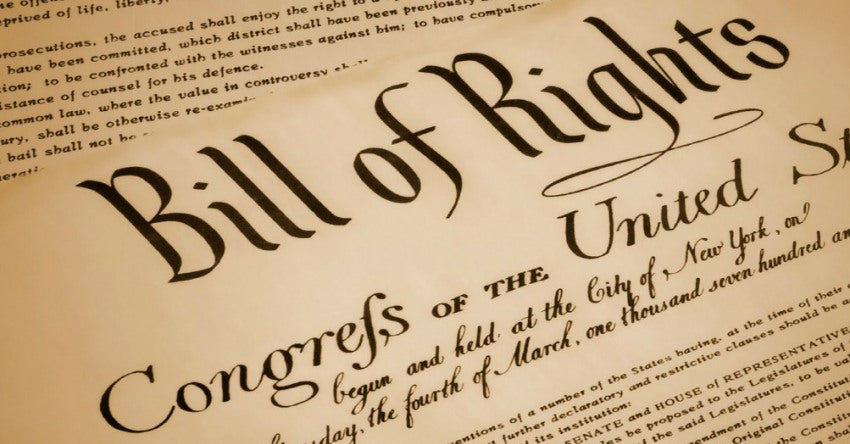
The Bill of Rights on This Day in History


This Day in History: The United States Bill of Rights becomes law when ratified by the Virginia General Assembly on this day in 1791.

From Lawrence Reed:

Americans over the age of 60 will likely remember the hilarious TV game show that ran for 25 years (1965-1980) called Hollywood Squares. On the show, host Peter Marshall (still living at age 95) once directed this question to comedian Paul Lynde: “Pride, anger, covetousness, lust, gluttony, envy and sloth are collectively known as what?”

Sustained laughter ensued when Lynde replied, “The Bill of Rights.” (The correct answer, of course, is the Seven Deadly Sins.)

It was on this very day in 1791—December 15—that a young United States of America formally adopted the first ten amendments to its Constitution that we call the Bill of Rights. Those amendments were fundamental and foundational, as bedrock as it gets, without which adoption of the Constitution itself might not have occurred. In fewer than 500 words, many of our most cherished liberties are expressed as rights to be protected. It’s a roster of instructions to government to keep out of where it doesn’t belong.

Not long ago, the late and famous trial attorney F. Lee Bailey (1933-2021) posed a poignant question to which he provided a disturbing answer: “Can any of you seriously say the Bill of Rights could get through Congress today? It wouldn’t even get out of committee!”

Bailey was likely right, which makes it even more urgent that Americans renew a learned passion for the Bill of Rights. Toward that end, I offer here a sample of thoughts in its defense:

_____

  1. The concept that the Bill of Rights and other constitutional protections against arbitrary government are inoperative when they become inconvenient or when expediency dictates otherwise is a very dangerous doctrine and if allowed to flourish would destroy the benefit of a written Constitution and undermine the basis of our government. - Supreme Court Justice Hugo Black
  2. Show me that age and country where the rights and liberties of the people were placed on the sole chance of their rulers being good men, without a consequent loss of liberty? - Patrick Henry
  3. The Bill of Rights wasn’t enacted to give us any rights. It was enacted so the Government could not take away from us any rights that we already had. - Kenneth G. Eade, author
  4. The very purpose of a Bill of Rights was to withdraw certain subjects from the vicissitudes of political controversy, to place them beyond the reach of majorities, and to establish them as legal principles to be applied by the courts. One’s right to life, liberty, and property, to free speech, a free press, freedom of worship and assembly, and other fundamental rights may not be submitted to vote; they depend on the outcome of no elections. - Robert H. Jackson, Supreme Court Justice
  5. Education on the value of free speech and the other freedoms reserved by the Bill of Rights, about what happens when you don't have them, and about how to exercise and protect them, should be an essential prerequisite for being an American citizen — or indeed a citizen of any nation, the more so to the degree that such rights remain unprotected. If we can't think for ourselves, if we're unwilling to question authority, then we're just putty in the hands of those in power. But if the citizens are educated and form their own opinions, then those in power work for us…In the demon-haunted world that we inhabit by virtue of being human, this may be all that stands between us and the enveloping darkness." - Carl Sagan, astronomer
  6.  "There are two ways to choke off free expression. We've already discussed one of them: clamp down on free speech and declare some topics off-limits. That strategy is straightforward enough. The other, more insidious way to limit free expression is to try to change the very language people use" - Dennis Prager, author
  7. "Before a standing army can rule, the people must be disarmed; as they are in almost every kingdom of Europe. The supreme power in America cannot enforce unjust laws by the sword; because the whole body of the people are armed and constitute a force superior to any bands of regular troops that can be, on any pretense, raised in the United States." - Noah Webster
  8. "The constitutions of most of our States assert, that all power is inherent in the people; that they may exercise it by themselves, … or they may act by representatives, freely and equally chosen; that it is their right and duty to be at all times armed; that they are entitled to freedom of person, freedom of religion, freedom of property, and freedom of the press." - Thomas Jefferson
  9. "In 1942, there were 110,000 Japanese American citizens in good standing, law-abiding people who were thrown into internment camps simply because their parents were born in the wrong country. That's all they did wrong. They had no right to a lawyer, no right to a fair trial, no right to a jury of their peers no right to due process of any kind. The only right they had: "Right this way" into the internment camps! Just when these American citizens needed their rights the most, their government took them away! And rights aren’t rights if someone can take them away. They’re just privileges." - George Carlin
  10. "The first article of the Bill of Rights provides that Congress shall make no law respecting freedom of worship or abridging freedom of opinion. There are some among us who seem to feel that this provision goes too far, even for the purpose of preventing tyranny over the mind of man. Of course, there are dangers in religious freedom and freedom of opinion. But to deny these rights is worse than dangerous, it is absolutely fatal to liberty. The external threat to liberty should not drive us into suppressing liberty at home. Those who want the Government to regulate matters of the mind and spirit are like men who are so afraid of being murdered that they commit suicide to avoid assassination." - Harry Truman
  11. "In respect to political rights, we hold woman to be justly entitled to all we claim for man. We go farther and express our conviction that all political rights which it is expedient for man to exercise, it is equally so for women. All that distinguishes man as an intelligent and accountable being, is equally true of woman; and if that government is only just which governs by the free consent of the governed, there can be no reason in the world for denying to woman the exercise of the elective franchise, or a hand in making and administering the laws of the land. Our doctrine is, that “Right is of no sex." - Frederick Douglass
  12. "The Bill of Rights is the United States. The United States is the Bill of Rights. Compromise the Bill of Rights and you dissolve the very foundation upon which the Union stands… Nowhere in the Bill of Rights are the words ‘unless inconvenient’ to be found." - A. E. Samaan, historian

Rights and Non-Rights: Distinguishing the Two by Lawrence W. Reed

Historic Figures Who Recognized that Speech is Freedom’s First Line of Defense by Lawrence W. Reed

The Holiday That Isn’t by Lawrence W. Reed

George Mason: Father of the Bill of Rights by Raymond Polin

The Bill of Rights is America’s Bulwark Against Government Overreach by Gary Galles

Mercy Otis Warren: Conscience of Great Causes by Lawrence W. Reed

Lawrence W. Reed
Lawrence W. Reed

Lawrence W. Reed is FEE's President Emeritus, Humphreys Family Senior Fellow, and Ron Manners Global Ambassador for Liberty, having served for nearly 11 years as FEE’s president (2008-2019). He is author of the 2020 book, Was Jesus a Socialist? as well as Real Heroes: Incredible True Stories of Courage, Character, and Conviction and Excuse Me, Professor: Challenging the Myths of Progressivism. Follow on LinkedIn and Like his public figure page on Facebook. His website is www.lawrencewreed.com.

This article was originally published on FEE.org. Read the original article.

Wednesday, November 23, 2022

Milton's Free Speech Manifesto on This Day in History


This day in history: John Milton published his Areopagitica on this day in 1644. The Areopagitica is perhaps the earliest and one of the greatest manifestos in defense of free speech ever introduced. He wrote: “Give me the liberty to know, to utter, and to argue freely according to conscience, above all liberties.”

The US Supreme Court cited it as an authority on the inherent value of false statements in the landmark case New York Times v. Sullivan:

"Even a false statement may be deemed to make a valuable contribution to public debate, since it brings about 'the clearer perception and livelier impression of truth, produced by its collision with error.'” Mill, On Liberty (Oxford: Blackwell, 1947), p. 15; see also Milton, Areopagitica, in Prose Works (New Haven, CT: Yale, 1959), vol. 2, p. 561.

"The great poet John Milton wrote perhaps the first great defense of free speech when the English republican Parliament reintroduced censorship via the Licensing Order of 1643 (censorship had effectively been abolished in 1640 along with the Star Chamber, which tried Lilburne)."~Iain Murray

Here is the text of the Areopagitica:

It has been said of "Areopagitica, a Speech of Mr. John Milton for the Liberty of Unlicensed Printing to the Parliament of England," that it is "the piece that lies more surely than any other at the very heart of our prose literature." In 1637 the Star Chamber issued a decree regulating the printing, circulation, and importation of books, and on June 14, 1643, the Long Parliament published an order in the same spirit. Milton felt that what had been done in the days of repression and tyranny was being continued under the reign of liberty, and that the time for protest had arrived. Liberty was the central principle of Milton's faith. He regarded it as the most potent, beneficent, and sacred factor in human progress; and he applied it all round—to literature, religion, marriage, and civic life. His "Areopagitica," published in November, 1644, was an application of the principle to literature that has remained unanswered. The word "Areopagitica" is derived from Areopagus, the celebrated open-air court in Athens, whose decision in matters of public importance was regarded as final.

1: The Right of Appeal

It is not a liberty which we can hope, that no grievance ever should arise in the Commonwealth—that let no man in this world expect; but when complaints are freely heard, deeply considered, and speedily reformed, then is the utmost bound of civil liberty attained that wise men look for. To which we are already in good part arrived; and this will be attributed first to the strong assistance of God our Deliverer, next to your faithful guidance and undaunted wisdom, Lords and Commons of England.

If I should thus far presume upon the meek demeanour of your civil and gentle greatness, Lords and Commons, as to gainsay what your published Order hath directly said, I might defend myself with ease out of those ages to whose polite wisdom and letters we owe that we are not yet Goths and Jutlanders. Such honour was done in those days to men who professed the study of wisdom and eloquence that cities and signiories heard them gladly, and with great respect, if they had aught in public to admonish the state.

When your prudent spirit acknowledges and obeys the voice of reason from what quarter soever it be heard speaking, I know not what should withhold me from presenting ye with a fit instance wherein to show, both that love of truth which ye eminently profess, and that uprightness of your judgment which is not wont to be partial to yourselves, by judging over again that Order which ye have ordained to regulate printing: that no book, pamphlet, or paper shall be henceforth printed unless the same be first approved and licensed by such, or at least one of such, as shall be thereto appointed.

I shall lay before ye, first, that the inventors of licensing books be those whom ye will be loth to own; next, what is to be thought in general of reading, whatever sort the books be; last, that it will be primely to the discouragement of all learning and the stop of truth. I deny not that it is of greatest concernment in the Church and commonwealth to have a vigilant eye how books demean themselves, as well as men. For books are not absolutely dead things, but do contain a potency of life in them to be as active as that soul was whose progeny they are.

Nay, they do preserve as in a vial the purest efficacy and extraction of that living intellect that bred them. I know they are as lively and as vigorously productive as those fabulous dragon's teeth; and, being sown up and down, may chance to spring up armed men. And yet, on the other hand, unless wariness be used, as good almost kill a man as kill a good book. Many a man lives a burden to the earth; but a good book is the precious life-blood of a master spirit, embalmed and treasured up on purpose to life beyond life. 'Tis true, no age can restore a life, whereof perhaps there is no great loss; and revolutions of ages do not oft recover the loss of a rejected truth, for the want of which whole nations fare the worse.

We should be wary, therefore, how we spill that seasoned life of man, preserved and stored up in books, since we see a kind of homicide may be thus committed, that strikes at that ethereal essence, the breath of reason itself, and slays an immortality rather than a life.

2: The History of Repression

In Athens, where books and wits were ever busier than in any other part of Greece, I find but only two sorts of writings which the magistrate cared to take notice of—those either blasphemous and atheistical, or libellous. The Romans, for many ages trained up only to a military roughness, knew of learning little. There libellous authors were quickly cast into prison, and the like severity was used if aught were impiously written. Except in these two points, how the world went in books the magistrate kept no reckoning.

By the time the emperors were become Christians, the books of those whom they took to be grand heretics were examined, refuted, and condemned in the general councils, and not till then were prohibited.

As for the writings of heathen authors, unless they were plain invectives against Christianity, they met with no interdict that can be cited till about the year 400. The primitive councils and bishops were wont only to declare what books were not commendable, passing no further till after the year 800, after which time the popes of Rome extended their dominion over men's eyes, as they had before over their judgments, burning and prohibiting to be read what they fancied not, till Martin V. by his Bull not only prohibited, but was the first that excommunicated the reading of heretical books; for about that time Wickliffe and Huss, growing terrible, drove the papal court to a stricter policy of prohibiting. To fill up the measure of encroachment, their last invention was to ordain that no book, pamphlet, or paper should be printed (as if St. Peter had bequeathed them the keys of the press also out of Paradise), unless it were approved and licensed under the hands of two or three glutton friars.

Not from any ancient state or polity or church, nor by any statute left us by our ancestors, but from the most tyrannous Inquisition have ye this book-licensing. Till then books were as freely admitted into the world as any other birth. No envious Juno sat cross-legged over the nativity of any man's intellectual offspring. That ye like not now these most certain authors of this licensing Order, all men who know the integrity of your actions will clear ye readily.

3: The Futility of Prohibition

But some will say, "What though the inventors were bad, the thing, for all that, may be good?" It may be so, yet I am of those who believe it will be a harder alchemy than Lullius ever knew to sublimate any good use out of such an invention.

Good and evil in the field of this world grow up together almost inseparably. As the state of man now is, what wisdom can there be to choose, what continence to forbear, without the knowledge of evil? I cannot praise a fugitive and cloistered virtue, unexercised and unbreathed, that never sallies out and sees her adversary, but slinks out of the race, where that immortal garland is to be run for, not without dust and heat. That which purifies us is trial, and trial is by what is contrary. And how can we more safely, and with less danger scout into the regions of sin and falsity than by reading all manner of tractates and hearing all manner of reason? And this is the benefit which may be had of books promiscuously read.

'Tis next alleged we must not expose ourselves to temptations without necessity, and next to that, not employ our time in vain things. To both these objections one answer will serve—that to all men such books are not temptations, nor vanities, but useful drugs and materials wherewith to temper and compose effective and strong medicines. The rest, as children and childish men, who have not the art to qualify and prepare these working minerals, well may be exhorted to forbear, but hindered forcibly they cannot be by all the licensing that sainted Inquisition could ever yet contrive.

This Order of licensing conduces nothing to the end for which it was framed. If we think to regulate printing, thereby to rectify manners, we must regulate all recreations and pastimes, all that is delightful to man. No music must be heard, no song be set or sung, but what is grave and Doric. There must be licensing dancers, that no gesture, motion, or deportment be taught our youth but what by their allowance shall be thought honest. Our garments, also, should be referred to the licensing of some more sober workmasters to see them cut into a less wanton garb. Who shall regulate all the mixed conversation of our youth? Who shall still appoint what shall be discoursed, what presumed, and no further? Lastly, who shall forbid and separate all idle resort, all evil company? If every action which is good or evil in man at ripe years were to be under pittance and prescription and compulsion, what were virtue but a name?

When God gave Adam reason, he gave him reason to choose, for reason is but choosing. Wherefore did he create passions within us, pleasures round about us, but that these rightly tempered are the very ingredients of virtue?

Why should we then affect a rigour contrary to the manner of God and of nature, by abridging or scanting those means which books freely permitted are both to the trial of virtue and the exercise of truth?

4: An Indignity to Learning

I lastly proceed from the no good it can do to the manifest hurt it causes in being, first, the greatest discouragement and affront that can be offered to learning and to learned men. If ye be loth to dishearten utterly and discontent the free and ingenuous sort of such as were born to study, and love learning for itself, not for lucre or any other end but the service of God and of truth, and perhaps that lasting fame and perpetuity of praise which God and good men have consented shall be the reward of those whose published labours advance the good of mankind, then know that so far to distrust the judgment and the honesty of one who hath but a common repute in learning, and never yet offended, as not to count him fit to print his mind without a tutor and examiner, is the greatest displeasure and indignity to a free and knowing spirit that can be put upon him.

When a man writes to the world he summons up all his reason and deliberation to assist him; he searches, meditates, is industrious, and likely consults and confers with his judicious friends. If in this, the most consummate act of his fidelity and ripeness, no years, no industry, no former proof of his abilities can bring him to that state of maturity as not to be still mistrusted and suspected, unless he carry all his considerate diligence to the hasty view of an unleisured licenser, perhaps much his younger, perhaps far his inferior in judgment, perhaps one who never knew the labour of book-writing, and if he be not repulsed or slighted, must appear in print with his censor's hand on the back of his title, to be his bail and surety that he is no idiot or seducer, it cannot be but a dishonour and derogation to the author, to the book, to the privilege and dignity of learning.

And, further, to me it seems an undervaluing and vilifying of the whole nation. I cannot set so light by all the invention, the art, the wit, the grave and solid judgment which is in England, as that it can be comprehended in any twenty capacities how good soever, much less that it should not pass except their superintendence be over it, except it be sifted and strained with their strainers, that it should be uncurrent without their manual stamp. Truth and understanding are not such wares as to be monopolised and traded in by tickets and statutes and standards.

Lords and Commons of England, consider what nation it is whereof ye are, and whereof ye are the governors—a nation not slow and dull, but of a quick, ingenious and piercing spirit, acute to invent, subtle and sinewy to discourse, not beneath the reach of any point the highest that human capacity can soar to. Is it for nothing that the grave and frugal Transylvanian sends out yearly from as far as the mountainous borders of Russia, and beyond the Hercynian wilderness, not their youth, but their staid men, to learn our language and our theologic arts? By all concurrence of signs, and by the general instinct of holy and devout men, God is decreeing to begin some new and great period in His Church, even to the reforming of Reformation itself. What does He, then, but reveal Himself to His servants, and as His manner is, first to His Englishmen?

Behold now this vast city—a city of refuge, the mansion house of liberty, encompassed and surrounded with His protection. The shop of war hath not there more anvils and hammers waking to fashion out the plates and instruments of armed justice in defence of beleaguered truth than there be pens and heads there, sitting by their studious lamps, musing, searching, revolving new notions and ideas wherewith to present, as with their homage and their fealty, the approaching Reformation; others as fast reading, trying all things, assenting to the force of reason and convincement. What could a man require more from a nation so pliant and so prone to seek after knowledge? Where there is much desire to learn, there, of necessity, will be much arguing, much writing, many opinions; for opinion in good men is but knowledge in the making. A little generous prudence, a little forbearance of one another, and some grain of charity might win all these diligencies to join and unite in one general search after truth, could we but forego this prelatical tradition of crowding free consciences and Christian liberties into canons and precepts of men.

Methinks I see in my mind a noble and puissant nation rousing herself like a strong man after sleep, and shaking her invincible locks. Methinks I see her as an eagle mewing her mighty youth, and kindling her undazzled eyes at the full midday beam; purging and unsealing her long-abused sight at the fountain itself of heavenly radiance; while the whole noise of timorous and flocking birds, with those also that love the twilight, flutter about, amazed at what she means, and in their envious gabble would prognosticate a year of sects and schisms.

What should ye do then? Should ye suppress all this flowery crop of knowledge and new light? Should ye set an oligarchy of twenty engrossers over it, to bring a famine upon our minds again, when we shall know nothing but what is measured to us by their bushel? Believe it, Lords and Commons, they who counsel ye to such a suppressing do as good as bid ye suppress yourselves. If it be desired to know the immediate cause of all this free writing and free speaking, there cannot be assigned a truer than your own mild, and free, and humane government. It is the liberty, Lords and Commons, which our own valorous and happy counsels have purchased us, liberty, which is the nurse of all great wits. Give me the liberty to know, to utter, and to argue freely according to conscience above all liberties. And though all the winds of doctrine were let loose to play upon the earth, so Truth be in the field, we do injuriously, by licensing and prohibiting, to misdoubt her strength. Let her and Falsehood grapple. Whoever knew Truth put to the worse in a free and open encounter? For who knows not that Truth is strong, next to the Almighty? She needs no policies, nor stratagems, nor licensing to make her victorious. Those are the shifts and defences that error uses against her power. Give her but room, and do not bind her when she sleeps.

See also: Free Speech Leads to Tolerance and Prosperity
https://thebookshelf2015.blogspot.com/2017/12/free-speech-leads-to-tolerance-and.html

Free Speech IS the Speech You Hate - Quotations on Freedom of Expression
https://thebookshelf2015.blogspot.com/2017/04/free-speech-is-speech-you-hate.html

Your Free Speech Is More Important Than My Feelings
https://thebookshelf2015.blogspot.com/2018/04/your-free-speech-is-more-important-than.html

Read the Areopagitica
http://files.libertyfund.org/files/103/1224_Bk.pdf
http://www.gutenberg.org/ebooks/608

Listen to the Areopagitica
https://www.youtube.com/watch?v=dgTiHr-bXhI

Sunday, October 30, 2022

Libertarian Pioneer Rose Wilder Lane on This Day in History


This Day in History: American journalist and author Rose Wilder Lane, died on this day in 1968. Rose’s mother was Laura Ingalls Wilder, author of the beloved series of Little House on the Prairie books. We now know that Rose had much more to do with the success of those books than has previously been thought. After World War I she traveled the world only to be met by starvation everywhere, so she was initially attracted to Communism. In short time she realized that this ideology only made things worse. She embraced individualism as she found that people who were left alone and freed from government restraints fared better. 

"Rose’s opposition to government intervention strengthened as the years rolled by. She became a strenuous opponent of Franklin Roosevelt’s New Deal. Before Pearl Harbor she opposed our entry into the war. During the war, she refused to apply for a ration card, relying on honey for sweetening and canning her own garden fruits and vegetables. She even refused to accept a Social Security number. When a radio commentator asked his listeners for their views on Social Security, she scribbled on a postcard: 'If [American] school teachers say to German [Nazi] children, ‘We believe in Social Security,’ the children will ask, ‘Then why did you fight Germany?’ All these ‘Social Security’ laws are German, instituted by Bismarck and expanded by Hitler. Americans believe in freedom, in not being taxed for their own good and bossed by bureaucrats.'” The local postmaster, reading the message, considered it subversive and notified the FBI which sent a state trooper to investigate. Rose’s response was a newspaper article: 'What Is This—the Gestapo?'" ~Bettina Bien Greaves

Her philosophy on life was detailed in her 1943 book The Discovery Of Freedom which you can download here. 1943 also saw the publication of Isabel Paterson's The God of the Machine and Ayn Rand's novel The Fountainhead. Because of these writings, the three women have been referred to as the founding mothers of the American libertarian movement.


Monday, July 25, 2022

The Longshoreman Philosopher Eric Hoffer on This Day in History

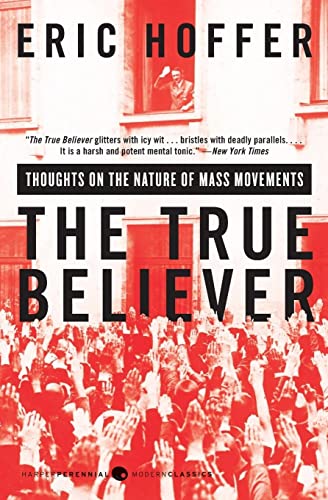
July 25 marks the 1902 birth of Eric Hoffer, known as the “longshoreman philosopher” for the manual labor he performed for most of his life. In 11 books, beginning with The True Believer, the Presidential Medal of Freedom winner focused on the allure of a seemingly ennobling collective cause and the coercive power it puts in the hands of leaders and their discontented followers. He contrasted this with freedom, which is the only milieu in which creative individuals can flourish and find fulfillment. Given the vastly increasing popularity of proposals for further imposing collectivist government policies into Americans’ already-adulterated freedoms we see around us today, his insights into freedom merit renewed attention:

"The aspiration toward freedom is the most essentially human of all human manifestations."

"Freedom means freedom from forces and circumstances which would turn man into a thing, which would impose on man the passivity and predictability of matter."

"The basic test of freedom is perhaps less in what we are free to do than in what we are free not to do."

"People unfit for freedom—who cannot do much with it—are hungry for power. The desire for freedom…says: leave me alone and I shall grow, learn, and realize my capacities."

"We clamor for equality chiefly in matters in which we ourselves cannot hope to attain excellence."

"There is no alienation that a little power will not cure."

"A man is likely to mind his own business when it is worth minding. When it is not, he takes his mind off his own meaningless affairs by minding other people’s business."

"Nothing so offends the doctrinaire individual as our ability to achieve the momentous in a matter-of-fact way, unblessed by words."

"The intellectual…derives his sense of usefulness mainly from directing, instructing, and planning—from minding other people’s business…A free society is…a threat to the intellectual’s sense of worth…Any social order that can function with a minimum of leadership will be anathema to the intellectual."

"The ability to get along without an exceptional leader is the mark of social vigor."

"The real 'haves' are they who can acquire freedom, self-confidence, and even riches without depriving others of them…by developing and applying their potentialities. On the other hand, the real 'have nots' are they who cannot have aught except by depriving others of it. They can feel free only by diminishing the freedom of others, self-confident by spreading fear and dependence among others, and rich by making others poor."

"Men of power…their main purpose is the elimination or neutralization of the independent individual…every device they employ aims at turning men into a manipulable 'animated instrument,' which is Aristotle’s definition of a slave."

"The taint inherent in absolute power is not its inhumanity but its anti-humanity."

"Absolute power is the manifestation most inimical to human uniqueness."

"All leaders strive to turn their followers into children."

"Absolute power corrupts even when exercised for humane purposes. The benevolent despot who sees himself as a shepherd of the people still demands from others the submissiveness of sheep."

"We all have private ails. The troublemakers are they who need public cures for their private ails."

"To the frustrated, freedom from responsibility is more attractive than freedom from restraint."

"The danger inherent in reform is that the cure may be worse than the disease… reformers are not on guard against unpredictable side effects which may divert the course of reform toward unwanted results. Moreover, quite often the social doctors become part of the disease."

"No matter how noble the objectives of a government, if it blurs decency and kindness, cheapens human life, and breeds ill will and suspicion—it is an evil government."

The collectivist mindset that Eric Hoffer so cogently analyzed, primarily in terms of external threats, is increasingly being echoed in America today, presenting an increasing internal threat to freedom. But no amount of power to coerce others, in either instance, can make a life meaningful or good. As Hoffer realized, only freedom can provide that opportunity. It does not guarantee a meaningful life; only the possibility. But to create or preserve that possibility, we need to bolster freedom. As he recognized,

Every device employed to bolster individual freedom must have as its chief purpose the impairment of the absoluteness of power…[or] the defeated individual, however strong and resourceful, can have no refuge and no recourse.

Gary M. Galles
Gary M. Galles

Gary M. Galles is a Professor of Economics at Pepperdine University and a member of the Foundation for Economic Education faculty network.

In addition to his new book, Pathways to Policy Failures (2020), his books include Lines of Liberty (2016), Faulty Premises, Faulty Policies (2014), and Apostle of Peace (2013). 

This article was originally published on FEE.org. Read the original article.

Tuesday, April 25, 2017

Free Speech IS the Speech You Hate - Quotations on Freedom of Expression


Join my Facebook Group

See also Over 200 Banned, Controversial and Forbidden Books on DVDrom and Forbidden and Condemned by the Catholic Church - 150 Books on DVDrom - For a list of all of my digital books, click here

As a book blogger and a lover of literature I am repulsed that anyone in this day and age would try to limit free speech. Even the speech you consider "Hate Speech." I have learned much by reading the books I was not supposed to. Listening to what some might consider "Hate Speech" has informed my upbringing. In fact, the speech and text that some feel needs to be censored has drawn an audience where there otherwise might not be one. Why do you think the "Satanic Verses" sold 766,000 copies?

I have collected here some of the best quotes on free speech from some of the greatest luminaries of the past. We need to learn from the past as we now have the first generation that I can think of that actually wants to limit Free Speech:

"Everyone should open themselves up to offence. You should feel shaken to your core at least once a day. It's good for you. Don't stamp out things that offend you; cherish them, embrace them." Brendan O'Neill

"The speech we love needs no protection. The speech we hate does. The government has no authority to evaluate speech. As the framers understood, all persons have a natural right to think as we wish and to say and publish whatever we think. Even hateful, hurtful and harmful speech is protected speech."~Andrew P. Napolitano

"Your free speech is more important than my feelings. Your right to say whatever you want is more important than my right to feel safe. Your right to be awful is more important than my right to feel accepted. Your right to condemn my choices is as sacred as my right to make those choices." ~Tricia Beck-Peter

"The only valid censorship of ideas is the right of people not to listen." - Power Stewart

"However unwillingly a person who has a strong opinion may admit the possibility that his opinion may be false, he ought to be moved by the consideration that however true it may be, if it is not fully, frequently, and fearlessly discussed, it will be held as a dead dogma, not a living truth."John Stuart Mill

“What is freedom of expression? Without the freedom to offend, [freedom] ceases to exist."― Salman Rushdie.

"Free speech is not just being able to say what you want to say, it also means having to hear things you might not want to hear." ~Charlie Kirk

“Does it ever occur to people on the left that their reliance on lies and censorship may indicate a problem with their belief system?”~Tony Heller

"We don't have the freedom of speech to talk about the weather. We have the first amendment so we can say some very controversial things." ~ Ron Paul

"Censorship reflects a society's lack of confidence in itself. It is a hallmark of an authoritarian regime." ~Justice Potter Stewart

"It is amazing how many people act as if the right to free speech includes the right to be free of criticism for what you say — which means that other people should not have the same right to free speech that they claim for themselves." ~Thomas Sowell

"I disapprove of what you say, but I will defend to the death your right to say it." ~ Voltaire

"A major threat to liberty is the assault on the right to discuss political issues, seek out alternative information sources, and promote dissenting ideas and causes such as non-interventionism in foreign and domestic affairs. If this ongoing assault on free speech succeeds, then all of our liberties are endangered." ~ Ron Paul

"Language makes thought possible...When they prevent you from saying the obvious over time it becomes impossible to see the obvious. And that's exactly, of course, why they do it. Those who control your words, control your mind." Tucker Carlson

"Some people’s idea of free speech is that they are free to say what they like, but if anyone says anything back, that is an outrage." ~ Winston Churchill

“If liberty means anything at all, it means the right to tell people what they do not want to hear.” ~ George Orwell

"To determine the true rulers of any society, all you must do is ask yourself this question: Who is it that I am not permitted to criticize?" ~ Kevin Alfred Strom

"Political Correctness is Fascism pretending to be Manners." George Carlin

"Censorship reflects a society's lack of confidence in itself." ~ Potter Stewart

"Censorship is the tool of those who have the need to hide actualities from themselves and from others." ~Charles Bukowski

"When you tear out a man's tongue, you are not proving him a liar, you're only telling the world that you fear what he might say."

"Restriction of free thought and free speech is the most dangerous of all subversions. It is the one un-American act that could most easily defeat us all." ~ Justice William O. Douglas

"The freedom of speech and the freedom of the press have not been granted to the people in order that they may say things which please, and which are based upon accepted thought, but the right to say the things which displease, the right to say the things which convey the new and yet unexpected thoughts, the right to say things, even though they do a wrong." ~ Samuel Gompers (1850-1924), Seventy Years of Life and Labor, 1925

Rowan Atkinson on Free speech

"I cannot assent to the view, if it be meant that the legislature may impair or abridge the rights of a free press and of free speech whenever it thinks that the public welfare requires that it be done. The public welfare cannot override constitutional privilege." ~ John Marshall Harlan (1833-1911), U.S. Supreme Court Justice, Patterson v. Chicago

"Free speech is meaningless unless it tolerates the speech that we hate." ~ Henry J. Hyde, U.S. Congressman, Speech, 5/3/91

“If freedom of speech is taken away, then dumb and silent we may be led, like sheep to the slaughter.” ~ George Washington

“Whoever would overthrow the liberty of a nation must begin by subduing the freeness of speech.” ~ Benjamin Franklin

“The fact is that censorship always defeats its own purpose, for it creates, in the end, the kind of society that is incapable of exercising real discretion. In the long run it will create a generation incapable of appreciating the difference between independence of thought and subservience.”
~ Henry Steele Commager

“This is slavery, not to speak one's thought.” ~ Euripides

“Until every soul is freely permitted to investigate every book, and creed, and dogma for itself, the world cannot be free." Robert Green Ingersoll

“Those who make conversations impossible, make escalation inevitable.” ~ Stefan Molyneux

“Freedom is an absolute state, there is no such thing as being half-free.” ~ Daniel Delgado F

"If you accept – and I do – that freedom of speech is important, then you are going to have to defend the indefensible. That means you are going to be defending the right of people to read, or to write, or to say, what you don’t say or like or want said." ~ Neil Gaiman

"Trying to erase, hide, discredit, degrade, and suppress a writer's work, merit, voice, and influence is unconstitutional. Censorship only exists to protect corruption." ~ Suzy Kassem

"The moment you say that any idea system is sacred, whether it’s a religious belief system or a secular ideology, the moment you declare a set of ideas to be immune from criticism, satire, derision, or contempt, freedom of thought becomes impossible."[Defend the right to be offended (openDemocracy, 7 February 2005)] ~ Salman Rushdie

“Actually, I am a coward. I say only what is safe to say, and I criticise only what is permissable to criticise.” ~ Murong Xuecun

“If you can’t write freely and if you can’t speak freely in your country, you can be sure that you are living in a very primitive country!” ~ Mehmet Murat ildan

“If we do not believe in freedom of expression for people we despise, we do not believe in it at all.” ~ Noam Chomsky

"Your need to silence me says more about you than it does about me." ~Heinz Schmitz

“One of the problems with defending free speech is you often have to defend people that you find to be outrageous and unpleasant and disgusting.” ~ Salman Rushdie

Punishing students for their speech robs our public debate of needed voices, and it teaches our children—who, of course, one day become adults—that censorship, even broad and sometimes arbitrary censorship, is acceptable. ~Sonja West

"Free speech is so robust intellectually that arguments to try to suspend it are inconsistent w/one another & the rest of the corpus." ~Nassim Nicholas Taleb

"This was an ominous development for free speech -- and not because there is anything at all valuable about The Daily Stormer's message. It's an evil site. Its message is vile. Instead, The Daily Stormer's demise is a reminder that a few major corporations now have far more power than the government to regulate and restrict free speech, and they're hardly neutral or unbiased actors. They have a point of view, and they're under immense pressure to use that point of view to influence public debate." ~David French

When you censor someone, then you are conceding defeat of your ideas.

"Censorship is a very dangerous thing & absolutely impossible to police. If you are weeding out Fake News, there is nothing so Fake as CNN & MSNBC, & yet I do not ask that their sick behavior be removed. I get used to it and watch with a grain of salt, or don’t watch at all." ~ Donald Trump

"Social media monopolies are the new book-burners." ~Joy Villa

"Make no laws whatever concerning speech, and speech will be free; so soon as you make a declaration on paper that speech shall be free, you will have a hundred lawyers proving that "freedom does not mean abuse, nor liberty license;" and they will define and define freedom out of existence. Let the guarantee of free speech be in every man's determination to use it, and we shall have no need of paper declarations. On the other hand, so long as the people do not care to exercise their freedom, those who wish to tyrannize will do so; for tyrants are active and ardent, and will devote themselves in the name of any number of gods, religious and otherwise, to put shackles upon sleeping men."—Voltairine De Cleyre.

“Coyness is nice and coyness can stop you
From saying all the things in life you'd like to
So if there's something you'd like to try
If there's something you'd like to try
Ask me, I won't say no, how could I?”
-The Smiths, Ask

"Censorship is the child of fear and the father of ignorance." - Laurie Halse Anderson

"Stopping leaks is a new form of censorship." - Julian Assange


For a list of all of my digital books, click here

Friday, November 6, 2015

300 Books to Download for Libertarians, Objectivists and Voluntaryists

Only $3.00 (I only ship to the United States) - You can pay using the Cash App by sending money to $HeinzSchmitz and send me an email at theoldcdbookshop@gmail.com with your information. You can also pay using Facebook Pay in Messenger

Books mostly Scanned from the Originals into PDF format for Libertarians, Objectivists, Anarcho-Capitalists, Voluntaryists and Individualists

Books Scanned from the Originals into PDF format - Join my Facebook Group - Contact theoldcdbookshop@gmail.com for questions

Books are in the public domain. I will take checks or money orders as well.

For a list of all of my digital books and disks click here

Contents:

Resist not evil by Clarence Darrow 1903 (The Nature of the State - "Endless volumes have been written, and countless lives been sacrificed in an effort to prove that one form of government is better than another; but few seem seriously to have considered the proposition that all government rests on violence and force, is sustained by soldiers, policemen and courts, and is contrary to the ideal peace and order which make for the happiness and progress of the human race.)

The World's Legal Philosophies by Fritz Berolzheimer 1912

The Tyranny of Socialism by Yves Guyot 1894

Liberty and the Great Libertarians by Charles Sprading 1913

Essays on political economy - Bastiat
"Socialism, like the old policy from which it emanates, confounds Government and society. And every time we object to a thing being done by Government, it concludes that we object to its being done at all. We disapprove of education by the State — then we are against education altogether. We object to a State religion — then we would have no religion at all. We object to an equality which is brought about by the State — then we are against equality etc., etc. They might as well accuse us of wishing men not to eat, because we object to the cultivation of corn by the State."

Principles of Social Economy by Yves Guyot 1892

Economic prejudices by Yves Guyot 1910

Where and why Public Ownership has Failed by Yves Guyot 1914

The Inherent Evils of all State Governments Demonstrated by Edmund Burker 1858

Pictures of the Socialistic Future by Eugene Richter 1912

A Study in Socialism by Benedict Elder 1915

The Voluntaryist Creed by Herbert Spencer and Auberon Herbert 1908

The Principles of Voluntaryism and Free Life by Auberon Herbert 1897

A Plea for Liberty, an Argument against Socialism and Socialistic legislation by Thomas Mackay 1891

Why I am Opposed to Socialism by Edward Silvin 1913

Popular Fallacies Regarding Trade by Frederic Bastiat 1882

The Federal Reserve Monster by Jim Jam Jems 1922

A Disquisition on Government by John C Calhoun 1851

Both Sides of the Tariff Question by the world's leading men 1890

Protectionism, the -ism which teaches that waste makes wealth by William Graham Sumner 1885

The Society of Tomorrow: a forecast of its political and economic organisation by Gustav Molinari 1904 (Molinari is considered by some to be the first anarcho-capitalist)

The Production of Security Gustav Molinari 1849

No Treason, Volume 1 by Lysander Spooner 1867 (individualist anarchist)

No Treason, Volume 2 by Lysander Spooner 1867 (Spooner argued that the Constitution was a contract of government which could not logically apply to anyone other than the individuals who signed it, and was thus void)

No Treason, Volume 3 by Lysander Spooner 1867

Vices Are Not Crimes by Lysander Spooner 1875

History of Economic Thought by Lewis Haney 1922

The Evolution of Modern Capitalism by JA Hobson 1907
"All the productive economies tend as before to pass into the hands of the consumer in reduced prices of commodities."

The Decline of Self-Onwership by Frank C Woodward, Litt. D 1904

THE DEFECTS OF THE SHERMAN ANTITRUST LAW by Charles Gates Dawes 1907

State Socialism and Anarchism: HOW FAR THEY AGREE, AND WHEREIN THEY DIFFER 1888, by Benjamin R. Tucker

The Law of Private Right By George Hugh Smith 1890

Man or the state?  A group of essays by Famous Writers 1919

Shakespeare and the Founders of Liberty in America by Charles Gayley 1917

History of the Origin, Formation, and Adoption of the Constitution of the United States Volume 1 by G. Curtis 1861

History of the Origin, Formation, and Adoption of the Constitution of the United States Volume 2 by G. Curtis 1861

The Men who Found America by FH Hutchison 1909

Industrial Combination by David Hutchison MacGregor 1906

The New Democracy by Walter Weyl 1920, with a chapter on THE INDIVIDUALISTIC SPIRIT OF AMERICA

The American Credo by HL Mencken 1922


The State; its History and Development Viewed Sociologically by Franz Oppenheimer 1922

The Jeffersonian Cyclopedia 1900 "With all the defects of our constitutions, whether general or particular, the comparison of our governments with those of Europe, is like a comparison of heaven and hell."

Positive Theory of Capital by Eugen von Bohm-Bawerk

Principles and Problems of Government by Bertha Haines 1921

The Greatest Failure in all History, a Critical Examination of the Actual Workings of Bolshevism in Russia by John Spargo 1920

My Dear Wells: being a Series of Letters addressed by Henry Arthur Jones to Mr. H.G. Wells, upon Bolshevism, Collectivism, Internationalism and the Distribution of Wealth by Henry Arthur Jones 1921

LIBERTY AND TAXATION by Benjamin Tucker

Plus You Get:

The Man Versus the State by Herbert Spencer 1902
Spencer stressed individuality and self-interest. In his view, government should get out of the way, or at most serve as a "night-watchman", and allow human beings freedom to compete. In this competition, the weak would die and the strong survive, to the eventual improvement of the human race.

The divine drama of history and civilisation by James E Smith 1854
Although an early Owenite socialist, he eventually rejected its collective idea of property, and found in individualism a "universalism" that allowed for the development of the "original genius."

Men versus the Man; a Correspondence between Robert Rives La Monte, Socialist, and H.L. Mencken, Individualist 1910

The Slavery of Our Times by Leo Tolstoy
THE slavery of our times results from three sets of laws-those about land, taxes, and property. And, therefore, all the attempts of those who wish to improve the position of the workers are inevitably, though unconsciously, directed against those three legislations.

Economic sophisms by Frederick Bastiat 1873

Essays on Political Economy by Frederick Bastiat

Harmonies of political economy by Frederick Bastiat 1860

What is free trade by Frederick Bastiat 1867 (searchable pdf)

Bastiat was the author of many works on economics and political economy, generally characterized by their clear organization, forceful argumentation, and acerbic wit. Among his better known works is Economic Sophisms, which contains many strongly-worded attacks on statist policies. Contained within Economic Sophisms is the famous satirical parable known as the "Candlemakers' petition" which presents itself as a demand from the candlemakers' guild to the French government, asking the government to block out the Sun to prevent its unfair competition with their products. He also facetiously "advocated" the cutting off of everyone's right hand, based on the assumptions that more difficulty means more work and more work means more wealth.

A Modest Proposal: For Preventing the Children of Poor People in Ireland from Being a Burden to Their Parents or Country, and for Making Them Beneficial to the Publick, commonly referred to as A Modest Proposal, is a satirical essay by Jonathan Swift in 1729. Swift appears to suggest in his essay that the impoverished Irish might ease their economic troubles by selling children as food for rich gentlemen and ladies. By doing this he mocks the authority of the British officials. This is when Britain had taken over Ireland and put heavy restrictions on their trade, stifling their economy. The essay has been noted by historians as being the first documented satirical essay.

On the Principles of Political Economy by David Ricardo 1821
Ricardo was an early free market economist

The Sphere and Duties of Government (The Limits of State Action) by William von Humboldt 1854

On the Duty of Civil Disobedience by Henry David Thoreau 1849, original title: Resistance to Civil Goverment

Life without Principle by Henry David Thoreau

The Gospel of Superman: The Philosophy of Friedrich Nietzsche by Henri Lichtenberger 1912

On Liberty by John Stuart Mill 1878

Elements of Individualism by William Maccall 1847

The State; its History and Development Viewed Sociologically by Franz Oppenheimer 1922

Beyond Good and Evil by Friedrich Nietzsche

The Case for Capitalism by Hartley Withers 1920

The Big List of Libertarian Quotes

THE WORLD'S BEST ORATIONS Volume 10
"a wise and frugal government, which shall restrain men from injuring one another, shall leave them otherwise free to regulate their own pursuits of industry and improvement, and shall not take from the mouth of labor the bread it has earned This is the sum of good government."

Woman, Church and State by Matilda Joslyn Gage 1893

Two Treatises of Government by John Locke 1821
John Locke argued that legitimate authority depended on the consent of the governed.

The Theory of Moral Sentiments by Adam Smith 1759 (searchable text)

Select Chapters and Passages from the Wealth of Nations of Adam Smith, 1776 by Adam Smith - 1894

The Wealth of Nations by Adam Smith

The Genealogy of Morals by Friedrich Nietzsche, 1887

Seligman/Nearing Debate - Capitalism has more to Offer the workers of the USA than has Socialism

Socialism, the Creed of Despair" Joint Debate 1909

The Autobiography of an Individualist by James Octavius Fagan 1912

Individualism vs Socialism by William Jennings Bryan in the Century Magazine 1906

The Constitution of the USA and the Decaration of Independence in German, French and English in Parallel Columns 1888

Les Miserables by Victor Hugo


The Man Who Laughs by Victor Hugo

Ninety-three by Victor Hugo 1874
[Victor Hugo] is a Romanticist who presents life "as it might be and ought to be." He is the worshipper and the superlative portrayer of man's greatness. - Ayn Rand

Calumet K
This 1901 book is the story of one man's ingenuity, perseverance and struggle in the construction of a grain elevator and of his exhilarating triumph.
Ayn Rand considered this her favorite novel, and wrote that "it has one element that I have never found in any other novel: the portrait of an efficacious man."

Rights of Man by Thomas Paine

The Right to Ignore the State by Herbert Spencer 1851

Political Economy For Beginners by MG Fawcett 1900

On the Law of Identity..............

Elements of Deductive Logic by Noah Knowles Davis 1893

The Metaphysics of Aristotle 1896
"Therefore, in sooth, the investigation why this thing is the thing which it is, is no investigation at all; for it is
necessary that the wherefore, and the existence of a thing, should inhere as manifest entities. Now, I say, for instance,
the moon undergoes an eclipse: and of the inquiry why a thing is that thing which it is, there is one principle and one cause in the case of all things, as on what account a man is a man, or a musician a musician, except some one say that each
thing is indivisible in regard to itself; but this would be to constitute unity: but this is both common in the case of
all things, and is a thing that is concise."

Principles of logic by George Hayward Joyce 1908
"Among mediaeval authors the Spanish Scotist Antonius Andreae argues that the first place should belong to the principle Every Being is a Being. But the authority both of St. Thomas and of Scotus (Quaest. sup. Met. IV., Q. 3) was against him:
and he is expressly refuted by Suarez. Leibniz however makes the principle of Identity, which he gives
as Everything is what it is, the first of the primitive truths of reason which are affirmative..."

The Monadology and Other Philosophical Writings by Gottfried Wilhelm Leibniz 1898
"A is A (every real thing is identical with itself) at all times, in all circumstances, throughout all changes, in every variety of relations. Strictly speaking, then, A can never become B. A is always A, B is always B; each is for ever exclusive of the other.

Institutes of Logic by John Veitch 1885

An Essay Concerning Human Understanding by John Locke Volume 1

An Essay Concerning Human Understanding by John Locke Volume 2

An Essay Concerning Human Understanding by John Locke Volume 3 1801
"whatsoever is, is"

An examination of Sir William Hamilton's philosophy by John Stuart Mill 1845
"Whatever is true in one form of words, is true in every other form of words, which conveys the same meaning"

On the Non-Aggression Principle

Epicureanism By William Wallace 1880
Natural justice is a contract of expediency, so as to prevent one man doing harm to another. Those animals which were incapable of forming an agreement to the end that they neither might injure nor be injured are without either justice or injustice. Similarly, those tribes which could not or would not form a covenant to the same end are in a like predicament. There is no such thing as an intrinsic or abstract justice.

Mary Wollstonecraft, A Vindication of the Rights of Men 1790
"The birthright of man ... is such a degree of liberty, civil and religious, as is compatible with the liberty of every other individual with whom he is united in a social compact, and the continued existence of that compact."

On the Duty of Man and Citizen by Samuel von Pufendorf 1682

The Principles of Ethics by Herbert Spencer 1898

The Principles of Ethics by Herbert Spencer 1898 Volume 2
Every man is free to do that  which he wills, provided he infringes not the equal freedom of any other man.

PLUS YOU GET:

An Exposure of Socialism by Max Hirsch

A Critical Examination of Socialism by WH Mallock 1906

Why I am Opposed to Socialism - original papers by leading men and women (1913)

Fallacies of Socialism Exposed by Samuel Smith 1885

Socialism - Its Fallacies and Dangers by F Millar 1906

Socialism - Its Nature, Its Dangers and its Remedies Considered by M Kaufmann 1874

Socialism - the Creed of Despair, Debate between George Hugo and James Carey 1909

Socialism Exposed and Refuted by Victor Cathrein 1892

The Inhumanity of Socialism by Edward F Adams 1913

Where Socialism Failed  - An Actual Experiment by S Grahame 1913

The Case against Socialism by Arthur James Balfour 1908

Eugenics and Other Evils by GK Chesterton 1922 (deals also with Socialism)

The Social Interpretation of History- a Refutation of the Marxian Economic interpretation of history by Maurice William 1921

The Superstition Called Socialism by GW de Tunzelmann 1911

Socialism on Trial by Morris Hillquit 1920

A Challenge to Socialism, article in the Fortnightly Review 1908

Socialism and its perils by William Cooper 1908
("It is a matter for astonishment to every person outside the ranks of Socialism why it is that Socialist reform should seem to depend upon a disbelief in the existence of an Almighty Being, the destruction of religious faith, and the repudiation of
Christianity.")

A Plain Examination of Socialism by G Simonson 1900 ("under socialism, everybody would have to suffer not only from his own mistakes, but from the mistakes of everybody else.")

Notes on fallacies by FRANCIS LIEBER (Communism, however, annihilates individualism, and is against our very nature. Protection is veiled communism, as far as it goes.) 1869

The Balance Sheet of Sovietism by Boris Brasol 1922 (Marxism, fallacious as it is in theory, when applied to practice produces dismal conditions. Chaos, Misery and Death are the three monsters — the three symbols of Bolshevism.)

The Fallacy of Marx's Theory of Surplus-Value By Henry Seymour 1897

The Danger of the Republic from Atheism, Communism and Socialism, article in the Reformed quarterly review

Socialism and the American Spirit by NP Gilman 1893

New Fallacies of Midas by Cyril Robinson 1919
"Marx's forecast has been demonstrably untrue to fact; even if the rich have become richer the poor have certainly not become poorer."

The Return of Christendom 1922 (has a chapter on The failure of Marxism)

The Socialist Illusion; being a Critical Review of the Principles of State Socialism - Reginald Tayler

Review of Karl Marx's 'Capital' in The Eclectic Magazine 1888

Socialism: a Critical Analysis by Oskar Skelton 1911

Socialistic Fallacies by Yves Guyot 1910

Was Marx Wrong? by Issac Max Rubinow 1914

Is the Death of Marxism at Hand? Article in the American review of reviews 1911

A History of Socialism by Thomas Kirkup 1892

A Short Study of State Socialism by RJ Bryce 1903

A Study in Socialism by Benedict Elder 1915 ("On its negative side, Socialism is profoundly atheistic. Throughout the breadth and intricacy of its sea of literature, which would school mankind to a new life in art, science, and government, there is scarce a page but in one way or another implies, if it does not teach, unbelief in God.")

False Hopes or, Fallacies Socialistic and semi-socialistic by Goldwin Smith (This is the main source of that' extreme sort of Communism which may be called Satanism, as it seeks, not to reconstruct, but to destroy and to destroy not only existing institutions, but established morality—social, domestic, and personal—putting evil in place of good.)

Twentieth Century Socialism; what it is not; what it is; how it may come by Edmon Kelly 1910

Socialism - It's Harm and its Apology, article in the American Catholic Quarterly Review 1893


Harmonies of political economy by Frederick Bastiat 1860 (The Economists observe man, the laws of his organization, and
the social relations which result from those laws. The Socialists conjure up an imaginary society, and then create a human heart to suit that society.)

Sophisms of protection by Frederick Bastiat 1874 (If I am mistaken in this, Socialism is a vain dream. I add, it is a dream, in which the people are tearing themselves to pieces. Will it, therefore, be a cause for surprise, if, when they awake, they find themselves mangled and bleeding?)

Karl Marx and Modern Socialism by FR Salter 1921

Socialism, Atheism and Christianity by Chapman Cohen - 1908

Karl Marx and the Close of his System by Eugen von Böhm-Bawerk (first 217 pages only)

Selected Readings in Economics (articles by Frederic Bastiat) 1907

The Austrian Economists and their View of Value, article in The quarterly journal of economics 1889

The Austrian Economists, article in The Annals of the American Academy of Political and Social Science 1890

The Forgotten Man by William Graham Sumner 1918 (government has a lot of grandiose plans, but the forgotten man is the one who has to pay for it all)

Facts and fallacies of Compulsory Health Insurance by Frederick Ludwig Hoffman 1920

More Facts and Fallacies of Compulsory health insurance by Frederick Ludwig Hoffman 1920

Equality a Socialist-radical Fallacy by Henry Strickland Constable 1897

The Distribution of Wealth by John R Commons 1893

Our Irrational Distribution of Wealth by BC Matthews 1908

Individualism, a system of Politics by W Donisthorpe 1889

Dangers of Socialism, article in the Gateway 1918

Outlines of Economics by Richard Theodore Ely 1893

The Gold Standard by Gold standard defence association 1898

The Gold Standard: its causes, its effects, and its future by Wilhelm von Kardorff-Wabnitz 1880

Economic Moralism - an essay in Constructive Economics by James Haldane Smith 1917 (The Errors and Dangers of Socialism)

Facts and figures, the basis of economic science by E Atkinson 1904

The Case against Protection by E Cooke 1909

Historic failures in applied Socialism By Daniel Joseph Ryan 1920

The Menace of Socialism by WL Wilson 1909

The "Scientific" Tariff - an Examination and Exposure by the Cobden Club 1909

Free Trade Tracts - a Series of Essays by the Cobden Club 1882

The Effect of Tariffs on Unemployment by the Cobden Club 1910

Fair trade unmasked by the Cobden Club 1887

Free trade versus Fair trade by Thomas Farrer 1904

The Fundamental Fallacy of Socialism by Arthur Preuss 1908

Fallacies of Socialism Exposed by Samuel Smith 1885

Three Socialist Fallacies, article in The Month 1898 (Catholic Magazine)

The Economics of Socialism, article in The Accountant 1908 ("It is the creed of Socialism that all wealth is produced by labour and that consequently to labour all wealth belongs. Many of those who profess this creed have some other ingenious tenets, but one illustration of the hare-brained fallacies of this blatant policy will suffice. Mr. Blatchford, the editor of the Clarion, says: "Just as no man can have a "right to land because no man makes the land, so no man "has a right to his self because he did not make that self."")

The Red Conspiracy by Joseph Mereto 1920

Lectures on the History of Protection in the United States by William Graham Sumner 1877

A List of Books for the Study of the Social Question (Catholic central union of America Central bureau) 1915

Jean Jacques Rousseau, a new criticism, Volume 1, by Frederika Richardson Macdonald 1906

Jean Jacques Rousseau, a new criticism, Volume 2, by Frederika Richardson Macdonald 1906

Four Phases of Morals - Socrates, Aristotle, Christianity, Utilitarianism by John Stuart Blackie 1874

Progressivism and After by William English Walling 1914

Recent Literature on Interest by Eugen von Bohm Bawerk 1903 (early Austrian Economist)

Value and Distribution - an historical, critical, and constructive study in Economic Theory by CW Macfarlane 1900

An Exposition of Socialism and Collectivism 1902

Collectivism a study of some of the leading social questions of the day by Paul Leroy-Beaulieu 1908

Collectivism and industrial evolution by E Vandervelde 1907

Government or Human evolution, Volume 1 by E Kelly 1900

Government or Human evolution, Volume 2 by E Kelly 1900

Guild socialism by Niles Carpenter 1922

Socialism and Collectivism 1902

The Collectivist State in the Making by Emil Davies 1914

The conflict between individualism and collectivism in a democracy by Charles Eliot 1910


Plus you get: Sixty Books that Ayn Rand read, with a few she might have, books mostly scanned from the originals into pdf format.
Contents of CDROM, these books are here because she has mentioned them in her writings:

Aristotle Works Volume 8 1910 (When doesn't she mention Aristotle, her favorite philosopher?)

Aristotle Works Volume 9 1910

Aristotle Works Volume 10 1910

On the Sensations of Tone as a Physiological Basis for the Theory of Music by Hermann Helmholtz 1875

Architecture and democracy by Claude Bragdon 1918

The Man Versus the State by Herbert Spencer 1902

The School and Society, being Three Lectures, supplemented by a statement of the University Elementary School by John Dewey 1907

Thinking as a Science by Henry Hazlitt 1916

The Egoist, A Comedy in Narrative by George Meredith 1897

History of Ancient Philosophy by Wilhelm Windelband 1910

Immanuel Kant's Critique of Pure Reason Volume 1
(She read Kant, but she certainly didn't like him)

Immanuel Kant's Critique of Pure Reason Volume 2

Kant's Critique of Practical Reason and Other Works on the Theory of Ethics 1898

System of Positive Polity by August Comte 1875 (she despised Mr. Altruism even more)

Ninety-three by Victor Hugo 1874

The Metaphysics of Ethics by Kant 1898

The Idiot by Fyodor Dostoyevsky

The Brothers Karamazov by Fyodor Dostoyevsky

Crime and Punishment by Fyodor Dostoyevsky

The Case for Capitalism by Hartley Withers 1920
This is a book I can imagine her reading, I don't know if she ever did. The same goes for the next book:

Socialism: The Creed of Despair by George Hugo and James Carey 1909

The Count of Monte Cristo by Alexander Dumas

Les Miserables by Victor Hugo

The Man Who Laughs by Victor Hugo

Immanuel Kant, his Life and Doctrine 1902 by Freidrich Paulsen

Plato's Republic

The Scarlett Letter by Nathaniel Hawthorne

On liberty by John Stuart Mill 1878 (She didn't like this one either)

The Myth of a Guilty Nation by Albert Jay Nock 1922

The Tragic Sense of Life in Men and in Peoples 1921

Alice's Adventures in Wonderland and Through the Looking-glass by Lewis Carroll 1898

The Ego and its Own by Max Stirner 1913

The Elements of Politics by Henry Sidgwick 1897

Don Quixote by Miguel de Cervantes

Thus Spake Zarathustra: A Book for All and None
by Friedrich Wilhelm Nietzsche - 1896

The Case of Wagner: The Twilight of the Idols; Nietsche Contra Wagner
by Friedrich Wilhelm Nietzsche, Thomas Common - 1896 - 341 pages

The Will to Freedom: Or, The Gospel of Nietzsche and the Gospel of Christ
by John Neville Figgis - 1917 - 310 pages

The Radical - An Autobiography of John Galt 1832
plus Autobiography of John Galt (Volume 1) 1833
I am not sure if Rand even knew of this John Galt, but it is interesting to me that there was such a person and had some renown.

The Gospel of Superman: The Philosophy of Friedrich Nietzsche
by Henri Lichtenberger, John McFarland Kennedy - 1912

On the Future of Our Educational Institutions: Homer and Classical Philology
by Friedrich Wilhelm Nietzsche, John McFarland Kennedy - Education - 1909 - 160 pages
 
Nietzsche and Other Exponents of Individualism
by Paul Carus 1914 - 161 pages

Egoists, a Book of Supermen: Stendahl, Baudelaire, Flaubert, Anatole France
by James Gibbon Huneker, Friedrich Wilhelm Nietzsche, Henrik Ibsen- 1909 - 362 pages
Partly republished from various periodicals.

The birth of tragedy, or Hellenism and pessimism (1923) Nietzsche

On Truth and Lies in a Nonmoral Sense (text format)

The Great Instauration by Francis Bacon 1620

The Advancement of Learning by Francis Bacon

Preparative toward a Natural and Experimental History by Francis Bacon

The New Organon by Francis Bacon

The New Atlantis by Francis Bacon

Hamlett by Shakespeare (19th Century Publication)

Othello by Shakespeare (19th Century Publication)

Macbeth by Shakespeare (19th Century Publication)

The Works of Shakespeare (Julius Caeser) (19th Century Publication)

GULLIVER'S TRAVELS by Johnathan Swift

Strange Case of Dr. Jekyll and Mr. Hyde 1886

Frankenstein by Mary Shelley

Altruism, Its nature and varieties 1919 by George Palmer
(I don't know is she read this, but it would have been something she might have liked to.)

The Importance of Being Earnest by Oscar Wilde

The War of the Worlds by H. G. Wells 1898

Twenty Thousand Leagues Under the Seas by Jules Verne

Anna Karenina by Leo Tolstoy

War and Peace by Leo Tolstoy

The Constitution of the USA and the Decaration of Independence in German, French and English in Parallel Columns 1888


Plus you get: Communism in America by Henry Ammon James 1879

Capitalism and Communism by Rev. John Learned 1887

The Socialist Review 1905

Socialism and Communism in Their Practical Application by Moritz Kaufmann 1883
[Features "Communism and Early Christianity"]

Communism and Socialism in Their History and Theory by Theodore Dwight Woolsey 1880

The Jews and Modern Capitalism by Werner Sombart 1913

Debate Between Tom Mann and Arthur M. Lewis at the Garrick Theatre, Chicago - That Economic Organization is Sufficient and Political Action Unnecessary to the Emancipation of the Working Class (1914)

The Case for Capitalism by Hartley Withers 1920

Socialism, the Creed of Despair" Joint Debate 1909

The Collapse of Capitalism by Herman Cahn 1918

Capital and Interest: A Critical History of Economical Theory by Eugen von Böhm-Bawerk 1922

Socialism, Utopian and Scientific by Friedrich Engels - 1907

Socialism: An Examination of Its Nature, Its Strength and Its Weakness by Richard Theodore Ely 1894

Socialism: Promise Or Menace? by Morris Hillquit, John Augustine Ryan 1914

The Protestant ethic and the spirit of capitalism by Max Weber

An exposure of socialism, three addresses on socialism and a Debate on socialism between Mr. Max Hirsch and Mr. H. Scott Bennett (1904)

State Socialism: is it just and reasonable? 1893 Debate

Current economic problems; a series of readings in the control of industrial development (1915) by Walton Hale Hamilton

The Evolution Of Modern Capitalism by John Hobson 1906

Socialism: Critical and Constructive by James Ramsay MacDonald 1921

Socialism and Christianity by Percy Stickney Grant 1910

Articles on banking and currency from "The Economist" newspaper by Thomas Joplin 1838
In nineteenth century Britain, laissez-faire capitalism found a small but strong following by such Manchester Liberals as Richard Cobden and Richard Wright. In 1867, this resulted in a free trade treaty being signed between Britain and France, after which several of these treaties were signed among other European countries. The newspaper The Economist was founded, partly in opposition to the Corn Laws, in 1843, and free trade was discussed in such places as The Cobden Club, founded a year after the death of Richard Cobden, in 1866.

Cobden's work and opinions by Reginal Welby 1904

Reminiscences of Richard Cobden by Julie Salis 1895

Why No Good Catholic Can Become a Socialist by Kenelm Digby Best 1909

The Real Wealth of Nations by John S. Hecht 1921

Americanized Socialism: A Yankee View of Capitalism by James MacKaye 1918

The Economics of Communism: With Special Reference to Russia's Experiment by Leo Pasvolsky 1920

Select Chapters and Passages from the Wealth of Nations of Adam Smith, 1776 by Adam Smith - 1894

The Wealth of Nations by Adam Smith

Seligman/Nearing Debate - Capitalism has more to Offer the workers of the USA than has Socialism

The Evolution of Man by Wilhelm Boelsche
Featured in an ad in the Socialist Review 1907, with this caption: "Modern Socialism is closely allied to the modern scientific theory of evolution, and it is impossible to understand it without knowledge of the theory. Now evolution is accepted as a working basis in every university in Europe and America, and no one with a scientific basis wastes time in questioning it. Nevertheless, there has been until now been no popular explanation of the evolution of man in simple form at a low price. There is very good reason for this. If laborers understand science, they become socialists, and the capitalists who control most publishing houses naturally do not want them to understand it."
 
Principles of political economy and taxation by David Ricardo 1919

Between eras from Capitalism to Democracy 1913 by Albion Small
 
The Laborer and the Capitalist by Freeman Otis Willey 1897

Catechism of Karl Marx's "Capital" by Lewis Cass Fry 1905

Principles of Economics by Alfred Marshall 1890

History of Economic Thought by Lewis Henry Haney 1920
Political Ideals by Bertrand Russell 1917

The Theory of Moral Sentiments by Adam Smith 1759 (searchable text)

Capitalism and Communism by John Calvin Learned 1887

Liberalism by L.T. Hobhouse 1919

Anglican Liberalism by I. H. Handley 1908

Liberalism and the Social Problem by Winston Churchill (searchable PDF)

ESSAYS IN LIBERALISM - Being the Lectures and Papers which were delivered at the Liberal Summer School at Oxford, 1922 (searchable PDF)

Clement of Alexandria - A Study in Christian Liberalism Volume 1 by R.B. Tollinton B.D.

Clement of Alexandria - A Study in Christian Liberalism Volume 2 by R.B. Tollinton B.D.

The Crisis of Liberalism: new issues of democracy by J. A. Hobson

Liberalism, modernism and tradition, Bishop Paddock lectures 1922

Liberal Christianity: its origin, nature and mission (1903) by Jean Réville

The God of the Liberal Christian by Daniel Robinson

Modernism in religion by James Sterett 1922

Conversations on Liberalism and the Church by Augustus Brownson Orestes 1904

Some Modern ISM's by Thos. Cary Johnson 1919