Showing posts with label protestantism. Show all posts

Saturday, July 9, 2022

The Martyrs of Gorkum on This Day in History


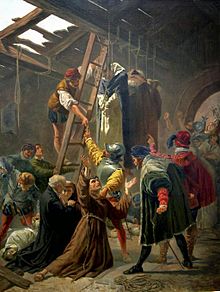
This day in history: 19 Dutch Catholic clerics were hanged on this day (9 July) in 1572 in the town of Brielle by militant Dutch Calvinists during the 16th-century religious wars—specifically, the Dutch Revolt against Spanish rule, which developed into the Eighty Years' War.

It is easy to reflect on the bad things that Catholics have done throughout the ages, but when the tables were turned, the Protestants were often just as blood-thirsty. "During their imprisonment, the priests were tortured, subjected to countless indignities, and offered their freedom if they would deny the Real Presence of Christ in the Eucharist and the primacy of the pope. Despite a letter from Prince William of Orange ordering their release and protests from the magistrates of Gorkum, the men were thrown half-naked into the hold of a ship on July 6, and taken to Briel to be killed in the presence of a Protestant nobleman, Admiral Lumey, who was noted for his hatred of Catholicism. Their bodies, mutilated both before and after death, were callously thrown into a ditch." Source

Sabine Baring-Gould remarked on this in his Lives of the Saints: "The execution was done so carelessly that they were long in expiring. The cord supported one only by the chin, another had it in his mouth, and bit it like a bridle. Nicasius did not die till after the suu had risen. Before they were cold, the soldiers hacked the bodies and mutilated them in the most horrible manner. They fixed their noses, ears, and hands on their casques, or hung them over their pikes, and threw the bleeding morsels in the faces of the people who came to see the sight. The soldiers made the curious pay to enter the grange and feast their eyes on the horrible objects within. As the fat of those who have been hung was superstitiously believed to be useful in various diseases, the butchers cut up Jerome, who was fat, and extracted all the lard they could from his body, and sold it to quacks for the fabrication of unguents. On the roth, two ditches were dug, the bodies cast into them. There they remained till 1615, when they were exhumed and translated to Brussels. Portions of the relics have been given to many churches in Belgium."

Tuesday, May 17, 2022

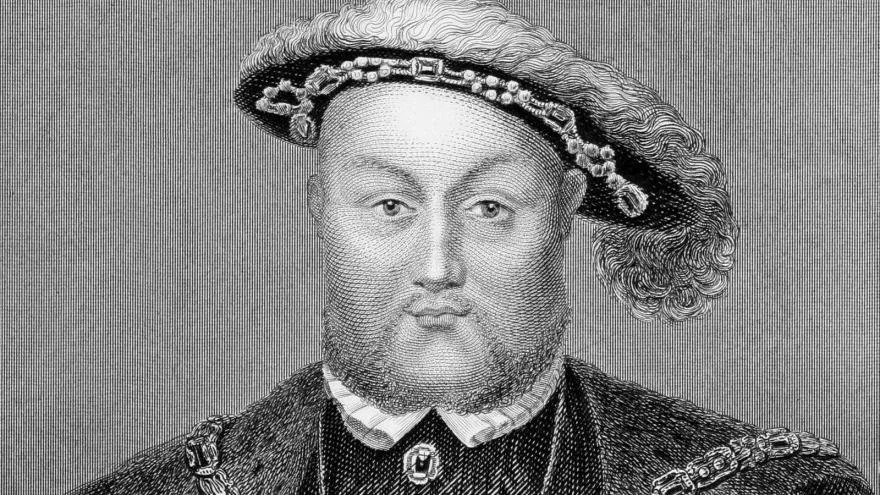
Henry VIII's Annulment on This Day in History


This Day in History: Henry VIII and Anne Boleyn's marriage is annulled on this day in 1536. Why is this important? Henry VIII was previously married to Catherine of Aragon, but she was unable to bare him a child. Hank then wanted a second wife because he needed an heir, but the Pope refused his request for a divorce/annulment. Henry then said "screw you" to the Pope, and declared himself the Supreme Head of the Church of England (thereby rejecting the Pope's authority). 

Thus, Protestantism and the Reformation was officially started and sanctioned in England, and Catholicism started to lose control over the Western world.

Was Henry VIII a Protestant? "No way! He killed Protestants who threatened the Roman Catholic air he breathed. Up until the very end of his life he resisted the Reformation’s central idea of justification by grace through faith alone, and with the help of Cardinal Wolsey and others, ordered the burning of Martin Luther’s writings, and imprisoned and killed his followers. Historian Alec Ryrie must have been right when he wrote that Henry’s reforms look more like 'Catholicism without the pope' than 'Lutheranism without justification by faith...Henry’s middle ground was in many ways a political Reformation of convenience, and he clearly did not intend his heirs to embrace Protestantism. Nevertheless, his actions helped make a way for this outcome. '” Source

Oh, and Henry VIII didn't behead all of his 6 wives, only 2. He divorced the other 2 and one died of blood poisoning. To help you remember, there's a little poem that explains what happened to his wives in chronological order:
"Divorced, beheaded, died.
  Divorced, beheaded, survived..."

Friday, January 28, 2022

The Diet of Worms on This Day in History


Buy on Ebay

This day in history: The Diet of Worms began on this day in 1521. The Diet [pronounced Dee-it] of Worms of 1521 was an imperial diet (a formal deliberative assembly) of the Holy Roman Empire called by Emperor Charles V and conducted in the Imperial Free City of Worms. Martin Luther was summoned to the Diet in order to renounce or reaffirm his views in response to a Papal bull of Pope Leo X. In answer to questioning, he defended these views and refused to recant them. 

In June of the previous year, 1520, Pope Leo X issued the Papal bull Exsurge Domine ("Arise, O Lord"), outlining forty-one purported errors found in Martin Luther's Ninety-five Theses and other writings related to or written by him. Luther was summoned by the emperor. Prince Frederick III, Elector of Saxony obtained an agreement that if Luther appeared he would be promised safe passage to and from the meeting. This guarantee was essential after the treatment of Jan Hus, who was tried and executed at the Council of Constance in 1415 despite a promise of safe conduct.

"A great Diet of the empire was convened at Worms, and thither Luther was summoned by the temporal power. He had a safe-conduct, which even so powerful a prince as Charles V. durst not violate. In April, 1521, the reformer appeared before the collected dignitaries of the German empire, both spiritual and temporal, and was called upon to recant his opinions as heretical in the eyes of the church, and dangerous to the peace of the empire. Before the most august assembly in the world, without a trace of embarrassment, he made his defence, and refused to recant. 'Unless,' said he, 'my errors can be demonstrated by texts from Scripture, I will not and cannot recant; for it is not safe for a man to go against his conscience. Here I am. I can do no otherwise. God help me! Amen.'

This declaration satisfied his friends, though it did not satisfy the members of the diet. Luther was permitted to retire. He had gained the confidence of the nation. From that time, he was its idol, and the acknowledged leader of the greatest insurrection of human intelligence which modern times have seen. The great principles of the reformation were declared. The great hero of the Beformution had planted his cause upon a rock. And yet his labors had but just commenced. Henceforth, his life was toil and vexation. New difficulties continually arose.

New questions had to be continually settled. Luther, by his letters, was every where. He commenced the translation of the Scriptures; he wrote endless controversial tracts; his correspondence was unparalleled; his efforts as a preacher were prodigious. But he was equal to it all; was wonderfully adapted to his age and circumstances."~John Lord

"Having received a twenty-one-day safe-conduct Luther set out for Wittenberg on April 26. The diet closed officially on May 25, and the next day, following a rump session of prejudiced nobles, the emperor signed the Edict of Worms. According to it, Luther was the devil himself in a monk’s habit. He was to be seized on sight and turned over to the emperor—an outlaw of the church and the state."~Carl Koppenhaver

At the end of the Diet, the Emperor issued the Edict of Worms, a decree which condemned Luther as "a notorious heretic" and banned citizens of the Empire from propagating his ideas.

The Edict decreed:

"For this reason we forbid anyone from this time forward to dare, either by words or by deeds, to receive, defend, sustain, or favor the said Martin Luther. On the contrary, we want him to be apprehended and punished as a notorious heretic, as he deserves, to be brought personally before us, or to be securely guarded until those who have captured him inform us, whereupon we will order the appropriate manner of proceeding against the said Luther. Those who will help in his capture will be rewarded generously for their good work."

The 1522 and 1524 Diets of Nuremberg attempted to execute the judgement of the Edict of Worms against Luther, but they failed.