Showing posts with label serial killer. Show all posts

Friday, May 26, 2023

Serial Killer Anthony Joyner on This Day in History


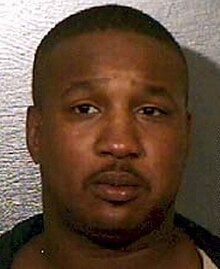
This Day in History: Anthony Joyner was born on this day in 1962. Anthony Joyner is an American serial killer and rapist who raped and murdered at least six elderly women at a nursing home in Philadelphia, Pennsylvania from January to July 1983, but is suspected in 18 total deaths that occurred there. Tried and convicted only for his confirmed murders, he was sentenced to life imprisonment.

When pressed for a motive, Joyner gave contradictory information: he insisted that due to certain reasons and circumstances he had no sex life, leaving him sexually frustrated. And as he was unable to be intimate with girls his age, he was left in a state of anger that led to him raping and strangling the patients at the nursing home - he claimed to kill them only because they knew him well and could get him imprisoned. Joyner's ex-girlfriend, who briefly had an intimate relationship with him, told police that he began to suffer from an inferiority complex after breaking up with her, growing increasingly worried about being labelled as gay, which prompted him to demonstrate his masculine behavior in every way possible. According to her testimony, Joyner wanted attention, as she claimed that a few days before his arrest, he had contacted her, claiming that he would soon become famous and be written about in the media.


Sunday, May 7, 2023

America's First Serial Killer on This Day in History


This day in history: H.H. Holmes was executed on this day in 1896. Perhaps one of America's first serial killers, Holmes (Herman Webster Mudgett) confessed to 27 murders. He is said to have killed as many as 200. During the 1890's world fair in Chicago, he built what came to be known as a murder castle, a building that had rooms with hinged walls, false partitions, secret passageways, and even airtight rooms that were connected to pipelines filled with gas which Holmes used as gas chambers. Chutes were used to deliver bodies to the basement where they were dissected. His story is featured in the excellent book by Erik Larson "The Devil in the White City".

On May 7, 1896, Holmes was hanged at Moyamensing Prison, also known as the Philadelphia County Prison, for the murder of Pitezel. Until the moment of his death, Holmes remained calm and amiable, showing very few signs of fear, anxiety, or depression. Despite this, he asked for his coffin to be contained in cement and buried 10 feet deep, because he was concerned grave robbers would steal his body and use it for dissection. Holmes's neck did not break; he instead strangled to death slowly, twitching for over 15 minutes before being pronounced dead 20 minutes after the trap had been sprung.

In 2017, amid allegations Holmes had in fact escaped execution, Holmes's body was exhumed for testing led by Janet Monge of the University of Pennsylvania Museum of Archaeology and Anthropology. Due to his coffin being contained in cement, his body was found not to have decomposed normally. His clothes were almost perfectly preserved and his mustache was found to be intact. The body was positively identified by his teeth as being that of Holmes. Holmes was then reburied.

Download "The Devil in the White City" here

Read The Master of the Murder Castle: A classic of Chicago crime
https://harpers.org/archive/1943/12/the-master-of-the-murder-castle/

Watch Holmes' great great grandson Jeff Mudgett talk about Holmes being Jack the Ripper


See also Paranormal History with Jeff Mudgett
https://www.youtube.com/watch?v=OcOxmctjd54
https://www.youtube.com/watch?v=-VBtAztfTWA


Sunday, February 5, 2023

The Machete Killer on This Day in history


This Day in History: In Fairfield, California, a trial judge sentenced serial killer Juan Corona (the Machete Killer) to 25 life sentences, one for each of the 25 men whom he had been convicted of murdering on this day in 1973. Superior Judge Richard Patton added that the life sentences would "be served consecutively and not concurrently." Corona had been convicted of the crimes on January 18. Despite the sentence, California Adult Authority ruled the next day that Corona would be eligible for parole after only seven years rather than 175 years (7 years for each of the 25 life sentences) and that the consecutive sentences would be merged to run concurrently. An official commented, "Corona can serve only one life." Corona would spend the rest of his life in prison, dying at age 85 in 2019.

This book, "The Impersonality of the Holy Spirit by John Marsom" is available on Amazon for only 99 cents. See a local listing for it here; Buy The Absurdity of the Trinity on Amazon for only 99 cents by clicking here - see a local listing for this here

Saturday, January 21, 2023

The Baton Rouge Serial Killer on This Day in History


This Day in History: Derrick Todd Lee, also known as the Baton Rouge Serial Killer, died of heart disease while awaiting execution, on this day (January 21) in 2016. Between 1992 and 2003, Lee murdered seven women in the Baton Rouge area.

Lee may have evaded capture sooner because an FBI profile believed the killer to be white. Interestingly, during psychiatric evaluations, he scored an average of 65 on various standardized IQ tests; a score below 69 is considered to be the threshold for mental retardation. Lee was, however, deemed fit to stand trial despite his low IQ. He was described as a smooth talker, a man talked his way in and out of everything his whole life. Lee laughed while in court, he simply didn't take the situation seriously. 

In early 2003, an urban legend began to circulate that Lee was using the taped sounds of a crying baby to lure victims to the door. The Baton Rouge Police were quick to deny that the information was coming from their office. The Criminal Minds tv series featured the "crying baby" motif in two episodes.

Monday, November 28, 2022

Jeffrey Dahmer on This Day in History


This Day In History: Jeffrey Dahmer was killed in prison on this day in 1994. Known as the Milwaukee Cannibal or the Milwaukee Monster, Dahmer was a serial killer and sex offender who committed the rape, murder, and dismemberment of 17 men and boys. When interviewed, he said something very interesting. He wanted to set the record straight that he was "not a racist." We live in interesting times when being called a RACIST carries greater stigma than being called a cannibal serial killer.

The media and entertainment love to focus on serial killers like Dahmer, Bundy, Gacy etc., because it furthers their anti-white narrative. In reality though, Whites have never been over-represented among serial killers. For instance, America had the largest number of serial killers in the decade of the 1980s. Whites were 83 percent of the population, yet were only 53 percent of mass murderers. Another demographic was just 11 percent of the population, but they were nearly 37 percent of serial killers. In fact, the most prolific serial killer in America was Samuel Little (not a white man). You've never heard of him for the same reason you've never heard of Billy Chemirmir, Wayne Williams or Carl Eugene Watts...these men don't fit the narrative.

It is evident that serial killers of certain other races are under-reported and under-represented in studies. Furthermore, the media has a tendency to focus on white serial killers and white victims of serial killers. There is a well noted media bias towards treating calamity involving white people as more newsworthy. This helps contribute to the notion that serial killers are overwhelmingly white, whether or not the statistics confirm it.

Saturday, November 26, 2022

Russian Serial Killer Viktor Sotnikov on This Day in History


This Day in History: Russian serial killer Viktor Sotnikov was born on this day in 1961. Sotnikov was convicted for the killing of 8 people in Lipetsk Oblast and Tambov Oblast between 2000 and 2011. Viktor Viktorovich Sotnikov was born in 1961, in Gryazi, Lipetsk Oblast, Soviet Union. Sotnikov grew up in an unstable household, and during his childhood he began to torture animals, even hanging the family dog. In his early adulthood he started abusing his parents and sisters, and sold illegal moonshine. Sotnikov was accused of raping two women, but paid the women to drop their accusations.

On 30 September 2000, Sotnikov committed his first murder when he killed a 19-year-old girl, who he offered to give a ride. According to Sotnikov, she voluntarily agreed to go to his house and have a drink, where a quarrel started between them, where she ended up being beaten to death. Later the mother of the victim denied this version of events, stating that she believed Sotnikov dragged her daughter into the house by force.

Sotnikov is not known to have committed another murder until 2002, when together with a partner, Alexander Lenshin, they spotted a 25-year-old woman walking alongside the road they were driving along. The woman was offered a ride which she accepted, but after rejecting advances by Sotnikov he attacked her, beating her to death. Lenshin then stabbed the woman in the chest to make sure she was dead. The two attempted to dump the body in the Matyra River, however they could not stop the body floating in the water, instead hiding the body in rubble at an abandoned limestone crushing plant.

On the day of New Year 2003, Sotnikov and Lenshin kidnapped a 31-year-old woman who was drunk because of New Years celebrations, loading her into the car and taking her to a deserted area, where the two dumped her. The drunken woman died when she could not reach shelter over that winter night, and subsequently froze to death. In March 2003, in the Petrovsky District of Tambov Oblast, Sotnikov and Lenshin killed a 46-year-old man who had asked them to take him to Tambov. The body was thrown on the side of the road and covered with snow. A few days later the two killed a 66-year-old pensioner, who had asked for a ride to the Dobrinsky District of Lipetsk Oblast.

In December 2005, Sotnikov drank alcohol with a 32-year-old woman who he had promised to take to Lipetsk. On the way to the city he instead drove to Matyrskomu reservoir, where he abandoned the drunken woman in the snow and left, where she died from hypothermia. Sotnikov did not commit another known murder until April 2010, when he then put the girl and his wife in the car and took them to the Matyra River, where he killed the girl and burned the body. His last known murder was committed in November 2011, when Sotnikov asked to help a homeless man gather firewood, and then invited him to go with him to the village. Sotnikov killed the man in the forest and abandoned the body there. After the discovery of the body, witnesses came forward saying they had seen Sotnikov with the homeless man offering to help cut firewood.

Sotnikov was arrested after being identified by the witnesses during the investigation of the homeless man's murder. He attempted to claim he was insane, but he was proven to be sane during the killings. On 22 October 2013, Sotnikov was found guilty of 8 murders in Lipetsk Oblast and Tambov Oblast, and was sentenced to life imprisonment. In his final statement, he apologized to the victims, his wife and said that he repents committing the crimes. His accomplice, Alexander Lenshin, was sentenced to 19-years imprisonment for his involvement in some of the murders.

Russia has produced an astounding number of serial killers, especially during the Communist era, many of whom accrued a large body count. Many got away with their crimes for so long because it was a Communist article of faith that serial murder was an uniquely capitalist phenomenon that simply didn’t occur in the “socialist states.”  

Saturday, October 15, 2022

Soviet Serial Killer Andrei Chikatilo on This Day in History


This Day In History: Russian serial killer Andrei Chikatilo (the Rostov Ripper) was convicted of 52 murders on this day in 1992. According to one website, Chikatilo has a lot of labels: "Andrei Romanovich Chikatilo, a.k.a. The Rostov Ripper, was a prolific Russian 'vampirist'-type cannibalistic, pedophilic, ephebophilic, necrophilic, and hebephilic serial killer, brief spree killer, and enucleator responsible for at least 52 murders that occurred between 1978 to 1990." Source

There's a lot to unpack there. Ephebophilia is the primary sexual interest in mid-to-late adolescents, generally ages 15 to 19. Hebephilia is a mental disorder characterized by a strong sexual interest in children who have not yet reached puberty. People with hebephilia are typically attracted to children aged 11 to 14. Enucleation is the medical term used to refer to the surgical removal of the eyes. 

Chikatilo's trial was the first major media event of post-Soviet Russia and the Russian press regularly published sensationalistic headlines about the murders, referring to Chikatilo being a "cannibal" or a "maniac" and to his physically resembling a shaven-skulled, demonic individual.

He was executed by a single shot to the back of his head. While this method of capital punishment may seem out-dated, the state of Utah still allows for the firing squad. Saudi Arabia still practices beheading with a sword.

Sunday, January 2, 2022

Peter Sutcliffe, the Yorkshire Ripper, on This Day in History


Today in History: English serial killer Peter Sutcliffe, aka Yorkshire Ripper, was arrested on this day in 1981. He was responsible for 13 confirmed deaths and a few other injuries. His was one of the largest and most expensive manhunts in British history and the West Yorkshire Police were criticized for their failure to catch Sutcliffe despite having interviewed him nine times in the course of their five-year investigation. 

It is often used as an excuse that the police couldn't catch Sutcliffe quicker because they lacked the technology that law enforcement now has. However, even today, a staggering number of violent crimes go unsolved. "According to the most recent FBI 'Crime in the United States' report, only 45 percent of violent crimes lead to arrest and prosecution. That is, less than half of violent crimes result in what is known as a 'clearance' of the crime. Property crime clearances are much worse. Only 17 percent of burglaries, arsons, and car thefts are 'cleared.'" Source

Perhaps the low clearance rates in violent crime is due the fact that other crimes are more lucrative, especially where asset forfeiture is involved.


There have been quite a few bad men dubbed "Ripper" since the original Jack the Ripper in 1888. There's the Russian Rostov Ripper who killed 52 people between 1978 and 1990. Joel the Ripper (Joel Rifkin) killed 17 people. Then there's the Blackout Ripper who killed 4 women in 1942. Between 2001 and 2008 we had the Hollywood Ripper in Southern California. Greece had the Athens Ripper between 1992 and 1995. Michigan had the Ypsilanti Ripper (Co-ed Killer) between 1967 and 1969. Texas had the Dallas Ripper in the early 90's. Long Island, NY had the Craigslist Ripper recently who may have killed up to 17 women. The Atlanta Ripper terrorized Atlanta in the early 1900's and was never caught. 


Sunday, December 19, 2021

The Butcher of Hanover on This Day in History


Today in History: German serial killer Fritz Haarmann was sentenced to death for a series of murders on this day in 1924. He committed sexual assault, murder, mutilation and dismemberment of at least 24 boys and young men between 1918 and 1924 in Hanover, Germany. Haarmann became known as the Butcher of Hanover due to the extensive mutilation and dismemberment committed upon his victims' bodies and by such titles as the Vampire of Hanover and the Wolf Man because of his preferred murder method of biting into or through his victims' throats.

Haarmann actually sold the clothes and meat of his victims to unsuspecting buyers. He was odd but likable, and the police even used him as an informant who frequently gave up other criminals to investigators. It had never occurred to police that the serial killer they were looking for was well-known to them and right under their nose, even though some of the victims were last seen in his company. 

At 6 o'clock on the morning of 15 April 1925, Fritz Haarmann was beheaded by guillotine in the grounds of Hanover prison. In accordance with German tradition, Haarmann was not informed of his execution date until the prior evening.

Between 1933 and 1945 Germany used the guillotine to execute 16,500 prisoners, a figure which accounts for 10,000 executions between 1944 and 1945 alone. The guillotine was last used in West Germany in 1949 and was last used in East Germany in 1966. The Stasi used the guillotine in East Germany between 1950 and 1966 for secret executions.


In 1923 alone, almost 600 teenage boys and young men had been reported missing in Hanover.