Showing posts with label wright. Show all posts

Sunday, December 17, 2023

The Wright Brothers First Flight on This Day in History


This day in history: The Wright brothers make the first controlled powered, heavier-than-air flight in the Wright Flyer at Kitty Hawk, North Carolina on this day in 1903.

From Lawrence W. Reed (writing back in 2003):

The date is December 17, 2003—the 100th anniversary of the first manned flight at Kitty Hawk, North Carolina, a feat engineered by two brothers named Wright. In one century the airplane went from a dream to a multibillion-dollar industry that transports hundreds of millions of people around the globe every year with speed and convenience that would surely astonish Wilbur and Orville today.

Though most Americans know something of that fateful day in 1903, far fewer are aware of the rivalry between the Wright brothers and another inventor/entrepreneur—one Samuel Pierpont Langley. It’s a story that deserves retelling, and there’s no better time to tell it than right now. A hundred summers ago, that rivalry was at a fever pitch, and it wasn’t at all clear at first that the two bicycle mechanics from Dayton, Ohio, would eventually best the distinguished and better-financed Langley.

By the close of the nineteenth century the possibility of a man-carrying “flying machine” had captivated visionaries in many countries, though the general public regarded the idea as bunk. Nobody knew enough about aerodynamics to build a craft that could generate its own power, get up in the air with a man on board and stay there, and be flown safely and with precision.

In 1878 a simple gift from a father to his two sons—aged 7 and 11—planted the seed that would change history forever. It was a toy helicopter made of cork, bamboo, and paper, and powered by a rubber band. Wilbur and Orville Wright were mesmerized. They built their own copies and versions of it, fostering a lifelong fascination with flight. Twenty-one years later, in 1899, they took time out from their modest bicycle shop to begin the work that would lead to the world’s first successful airplane.

Langley, meantime, was already way ahead of the Wrights. Born in 1834, he earned an international reputation for his work in physics and astronomy and by publishing a book on aerodynamics. He was secretary of the respected Smithsonian Institution in Washington, D.C. As early as 1896, he had even built and flown an unmanned “aerodrome”—a tandem-wing aircraft that used a lightweight steam engine for propulsion. He was sure he would be the man to invent the airplane, and probably deemed it unthinkable that young whippersnappers from small-town America could come out of nowhere with little money and beat him to it.

Both Langley and the Wright brothers had Smithsonian connections but with a huge and perhaps decisive difference. For Langley the Smithsonian was the conduit for a $50,000 federal grant, matched by the Institution, to finance his experiments (equivalent to about a million dollars in today’s purchasing power). As for the Wrights, in 1899 Wilbur wrote a letter to the Smithsonian asking for nothing more than a reading list on flight. He and Orville would finance their dream not with government money, but with the nickels and dimes they could scrape from the profits in their private business.

During the summer and fall of 1903 Langley worked feverishly at his Washington home base. Because he felt it safest to fly over water, he spent half his money building a houseboat with a catapult to launch his newest craft with a man, Charles Manly, aboard. A catapult launch meant that the plane would have to go from a dead stop to a flying speed of 60 mph in just 70 feet, a feat that would prove beyond the reach of his craft’s capabilities.

Meanwhile back in Dayton, Wilbur and Orville Wright worked on propeller design, a lightweight engine, and wings that mimicked the way pigeons flew, as the brothers observed them. What they put together solved the problem of controlling flight, which Langley’s craft would never have achieved even if it had taken to the air.

On October 7, 1903, Langley’s plane, with Manly aboard, was ready to go. At least that’s what Langley and Manly thought. But the stress of the catapult launch badly damaged the front wing, and the plane tumbled over and disappeared in 16 feet of water. A reporter present wrote that it flew “like a handful of mortar.” The hapless “pilot” was unharmed.

A second launch set for December 8 proved even more disastrous. The rear wing and tail collapsed at the moment of launch, and the plane dove right into the icy Potomac River. This time poor Manly nearly drowned. Financially, for both Langley and American taxpayers, it was a total loss.

Flying Money

Critics went wild. James Tobin, author of To Conquer the Air: The Wright Brothers and the Great Race for Flight (2003), quotes one congressman as saying at the time, “You tell Langley for me that the only thing he ever made fly was Government money.” The War Department concluded that “we are still far from the ultimate goal, and it would seem as if years of constant work and study by experts, together with the expenditure of thousands of dollars, would still be necessary before we can hope to produce an apparatus of practical utility along these lines.”

But just nine days after Langley’s second spectacular flight to the bottom of the Potomac, Wilbur and Orville Wright took turns flying their carefully designed plane for as long as 59 seconds over the Outer Banks of North Carolina. The craft cost them about $1,000. It cost American taxpayers nothing. Within a year, they were making flights of five miles at a time; within two years, they were flying distances of 20 to 25 miles.

In November 1904 the Wrights offered to sell planes to the War Department. They weren’t seeking a subsidy; they wanted to sell planes for military reconnaissance and communication. But they received the same form-letter refusal that the War Department routinely sent to “flying machine” cranks.

Now what on earth could be the lesson in this remarkable story? Could it be that government, as some argue, is more farsighted than the private sector and therefore subsidies are needed to spur new inventions? Or that government quickly sees the error of its ways and corrects its mistakes? Or that the pursuit of profit just adds another layer of cost and makes new inventions more expensive than necessary?

If you think any of those “lessons” apply, then the textbooks you’ve been reading belong right where Samuel Pierpont Langley’s plane landed.

Lawrence W. Reed
Lawrence W. Reed

Lawrence W. Reed is FEE's Interim President, having previously served for nearly 11 years as FEE’s president (2008-2019).

This article was originally published on FEE.org. Read the original article.

Friday, December 1, 2023

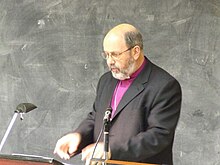
New Testament Scholar N.T. Wright on This Day in History


This day in history: Nicholas Thomas Wright FRSE was born on this day in 1948. N. T. Wright (or Tom Wright) is an English New Testament scholar, Pauline theologian and Anglican bishop. He was the bishop of Durham from 2003 to 2010. He then became research professor of New Testament and Early Christianity at St Mary's College in the University of St Andrews in Scotland until 2019, when he became a senior research fellow at Wycliffe Hall at the University of Oxford.

If you're a Bible collector like myself, then you know N.T. Wright for his criticism of the New International Version Bible. He wrote:

"In this context, I must register one strong protest against one particular translation. When the New International Version was published in 1980, I was one of those who hailed it with delight. I believed its own claim about itself, that it was determined to translate exactly what was there, and inject no extra paraphrasing or interpretative glosses. This contrasted so strongly with the then popular New English Bible, and promised such an advance over the then rather dated Revised Standard Version, that I recommended it to students and members of the congregation I was then serving. Disillusionment set in over the next two years, as I lectured verse by verse through several of Paul's letters, not least Galatians and Romans. Again and again, with the Greek text in front of me and the NIV beside it, I discovered that the translators had another principle, considerably higher than the stated one: to make sure that Paul should say what the broadly Protestant and evangelical tradition said he said. I do not know what version of scripture they use at Dr Piper's church. But I do know that if a church only, or mainly, relies on the NIV it will, quite simply, never understand what Paul was talking about." Wright, N. T. (2009). Justification : God's Plan and Paul's Vision. Downers Grove, Illinois: IVP Academic. pp. 51–52. ISBN 978-0-8308-3863-9.

This criticism is echoed by many others.

James Barr, in Modern English Bible Versions as a Problem for the Church_ Quarterly  Review/Fall 1994 writes:

"But this was not the end of the story. If on the one hand the conservative acceptance of the RSV as usable betokened a certain willingness to work along with the main currents of Christendom, there still existed the impulse to evangelical separatism, the unwillingness to do anything or accept anything that was not totally and purely "evangelical." The most important manifestation of this latter tendency is the so-called NIV, or New International Version, (New Testament, 1973; whole Bible, 1978).
The preface to this version begins with one of the most whopping falsehoods ever to be written into a Bible version by a group of 'Bible believers' such as the promoters of the version were, for it says that the people who worked on the version came from many denominations and this 'helped to safeguard the translation from sectarian bias.' The contrary is the case; the NIV was a sectarian project from the beginning. It was, as it itself says, planned by committees of the Christian Reformed Church and the National  Association of Evangelicals. The name International, as is well known to anyone experienced in the literature, is a code word meaning 'acceptable for conservatives and fundamentalists.' The reason for the existence of the NIV is not, and never was, that it was in any way better, or had better principles of translation, or better scholarship behind it, or that it had solved the problem of style as between archaic 'biblical' style and conversational "modern" style. Its reason for existence was purely and simply that it was produced by and for evangelicals and for them only."

One website, Poor and Misleading Translation in the New International Version (NIV) documents each error. It starts off by saying: "The...NIV translators, in many of the passages that challenged their doctrines and belief in inerrancy,...change(d) the Bible itself — altering the offending words and phrases to say what they think it ought to have said. In most cases of mistranslated NIV passages, there is a clear 'problem' with the original text related either to doctrine or to biblical inerrancy."


Tuesday, December 14, 2021

The Wright Brothers at Kitty Hawk on This Day in History


The Wright brothers made their first attempt to fly the Wright Flyer at Kitty Hawk, North Carolina on this day (December 14) in 1903.

The Wright Flyer was a plane they built in the back room of Wright Cycle Company, the Dayton bicycle shop where they sold/repaired bicycles. 

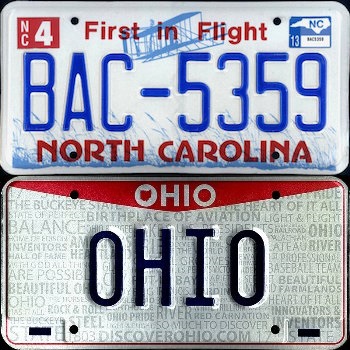
The News Wheel wrote an article entitled "Why North Carolina Needs to Take “First in Flight” Off Its License Plates" arguing that "Aviation history runs deep throughout the city of Dayton, Ohio. The local Air Force base — Wright Patterson — got half its name from the familial duo. The city is also home to the Wright brothers’ original cycling company..."

However, Dayton Ohio now plans to demolish the Wright brothers first bicycle shop claiming it is a nuisance, instead of preserving it as a historical artifact. Honestly, what else is Dayton Ohio known for?

Did you know: The Wright brothers were both high school dropouts, and neither of them ever married. Wilbur told reporters that he didn’t have time for both a wife AND an airplane.

Neil Armstrong carried a piece of the Wright Flyer with him to the moon. 

It was a toy from their father that started their obsession with aviation. "When the brothers were youngsters in 1878, their father returned home one evening with a gift that he tossed into the air. 'Instead of falling to the floor, as we expected,' the brothers recalled in a 1908 magazine article, 'it flew across the room till it struck the ceiling, where it fluttered awhile, and finally sank to the floor.' The model helicopter made of cork, bamboo and paper and powered by a rubber band mesmerized the boys and sparked their passion for aviation." Source