Monday, April 10, 2023

Lee Harvey Oswald & Edwin Walker on This Day in History


This day in history: An unknown gunman narrowly missed killing former U.S. Army General Edwin A. Walker on this day (April 10) in 1963, who had been working on his taxes at his home in Dallas, Texas. The would-be killer would later be identified as Lee Harvey Oswald.

In February 1963, Walker joined Billy Hargis on an anticommunist tour named "Operation Midnight Ride." In a March 5 speech, Walker called on the American military to "liquidate the [communist] scourge that has descended upon the island of Cuba." Seven days later, Lee Harvey Oswald ordered a Carcano rifle by mail using the alias A. Hidell.

While initially skeptical about the photographic evidence provided by the FBI, the Warren Commission reported that Oswald photographed Walker's Dallas home on the weekend of March 9–10, 1963. Oswald's friend, 51-year-old Russian émigré and petroleum geologist George de Mohrenschildt, would later tell the Warren Commission that he "knew that Oswald disliked General Walker."

On April 10, 1963, as Walker was sitting at a desk in his dining room, a bullet struck the wooden frame of his dining-room window. Walker was injured in the forearm by fragments. Marina Oswald later testified that her husband had told her that he traveled by bus to General Walker's house and shot at Walker with his rifle. Marina said that Oswald considered Walker to be the leader of a "fascist organization."

Police detective D. E. McElroy commented, "Whoever shot at the general was playing for keeps. The sniper wasn't trying to scare him. He was shooting to kill." The bullet was too badly damaged to provide conclusive ballistics tests, but neutron activation analysis tests later determined that it was "extremely likely" that the bullet was manufactured by the Western Cartridge Company and was the same type of ammunition as was used in the Kennedy assassination.


Sunday, April 9, 2023

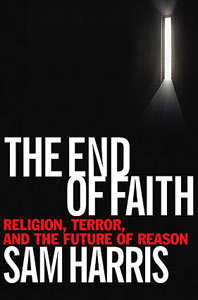
Atheist Philosopher Sam Harris on This Day in History


American philosopher, neuroscientist, author, and podcast host Sam Harris was born on this day in 1967. Harris came to prominence for his criticism of religion and is known as one of the "Four Horsemen" of New Atheism, along with Richard Dawkins, Christopher Hitchens, and Daniel Dennett.

Harris was always an interesting thinker to me, but he lost a lot of respect with me when he developed Trump Derangement Syndrome, and then became a Covidiot. (Sam Harris CAN’T ADMIT He Was Dead Wrong About COVID)

Harris "is completely, thoroughly, through-and-through ruined by the hatred of Donald Trump, and so biased that his reasoning cannot be relied upon for anything. It doesn’t matter that he’s a neuroscientist, New York Times best-selling author, a genuine philosopher, and credentialed public intellectual. He’s useless. He’s a fraud. Trustworthy people simply don’t hold such opinions—not only hold them, but eagerly broadcast them." Source

In his book The End of Faith, Harris wrote: “Some beliefs are so dangerous that it may be ethical to kill people for believing them”. Harris was criticized by Christian apologist Victor Reppert and others for his promotion of the idea that killing people for thought crimes is morally acceptable.

In 2022, Sam Harris said, "Hunter Biden could have had the corpses of children in his basement - I would not have cared." In response, Theodore Beale wrote: "Atheists have no moral anchor. There’s literally nothing there. Their much-vaunted, self-constructed value systems revolve around nothing more than whatever happens to trigger their emotions at any given moment. They are simple creatures of pure appetite and rhetoric. Remember, Sam Harris is supposed to be among the finest, smartest, most highly-refined philosophers that the atheist community has on offer."

The comedian and social commentator Jimmy Dore, who indicates that Sam Harris is an immoral, narcissist, says that he helped cause Harris to angrily quit Twitter in a fit of rage. Since Harris' anti free speech comments and his immoral, political tribalism, a lot of people have lost respect for Harris and called him out on his ill-behavior. Harris blocked them on Twitter before quitting the platform.

Dore also indicated that Harris recently lost a number of debates and now refuses to debate various people.


Saturday, April 8, 2023

The First Person Diagnosed with Alzheimer's Disease on This Day in History


This Day in History: Auguste Deter died on this day in 1906. Deter was a German woman notable for being the first person to be diagnosed with Alzheimer's disease. She was only 55.

During the late 1890s, Auguste exhibited a rapid escalation in memory loss and started showing symptoms of dementia, such as loss of memory, delusions, and even temporary vegetative states. In March 1901, Auguste's behavior started to become out of control. She began to accuse Carl of being adulterous and soon became jealous. Auguste started to become inattentive with housework, purposely hid objects and lost her capacity to cook. She also developed insomnia, which caused her to drag sheets outside the house and scream for hours in the middle of the night. She became paranoid over neighbors and strangers as she believed someone was out to kill her.

As a railway worker, Carl was unable to provide adequate care for his wife and was given recommendations by a local doctor to admit her into a mental hospital. She later was admitted to a mental institution, the Institution for the Mentally Ill and for Epileptics [de] (Irrenschloss) in Frankfurt on 25 November 1901. There, she was examined by Dr. Alois Alzheimer.

Alzheimer concluded that she had no sense of time or place. She could barely remember details of her life and frequently gave answers that had nothing to do with the question and were incoherent. Her moods changed rapidly between anxiety, mistrust, withdrawal and 'whininess.' They could not let her wander around the wards because she would accost other patients who would then assault her. It was not the first time that Dr. Alzheimer had seen a complete degeneration of the psyche in patients, but previously the patients had been in their seventies. Ms. Deter piqued his curiosity because she was much younger. In the weeks following, he continued to question her and record her responses. She frequently responded, "Oh, God!" and, "I have lost myself, so to say." She seemed to be consciously aware of her helplessness. Alzheimer called it the "Disease of Forgetfulness".


Friday, April 7, 2023

The Birth of the Internet on This Day in History


This day in history: April 7 1969 is recognized as the birth date of the internet.

"The first Request for Comment document is drafted by an engineer on the Pentagon's ARPAnet project, a precursor to the modern Internet. Tony Long of Wired argues this represents the 'symbolic birth date of the net because the RFC memoranda contain research, proposals and methodologies applicable to internet technology.'" Source 

"If this is your first time hearing about the RFC, you’re not alone. It’s a foreign concept, but it was important to the development of the Internet. An RFC is a publication that contains research, proposals, and methodologies applicable to many aspects of Internet technology. Engineers review the RFCs to develop new concepts.
Each document of the RFC issues a unique serial number, avoiding the possibility of two papers being overwritten or duplicated. If an engineer wishes to update or make a correction to the existing document, they must submit a separate RFC. This could be a complex process, but this is how we have a historical record of the evolution of Internet standards." Source 

"When it comes to the birth of the net, Jan. 1, 1983, also has its supporters. On that date, the National Science Foundation’s university network backbone, a precursor to the World Wide Web, became operational." Source 


Thursday, April 6, 2023

Communist Prime Minister Pierre Trudeau on This Day in History


This day in history: Pierre Elliott Trudeau won the Liberal Party leadership election on this day in 1968, and became the Prime Minister of Canada soon afterward.

What is little known about the elder Trudeau was his radicalism. In 1947, Trudeau was a student at the London School of Economics, founded by the Fabian Socialists to train Marxists and spread Marxism. Professor Harold Laski, then head of the Fabian Society, was publicly advocating violent revolution at the time.

A biography of former Prime Minister Pierre Trudeau entitled, Young Trudeau, revealed that he was "a fascist, anti-Semite, separatist" and communist. 

"Bob Plamondon, author of a 2013 biography of Pierre Trudeau recounts how Trudeau the Elder visited the Soviet Union in 1952 to discuss economics, this accompanied by four Canadian communists. 'It was there that he remarked to the wife of U.S. chargé d’affaires that he was a communist and a Catholic and was in Moscow to criticize the U.S. and praise the Soviet Union.'" Source

This was at a time when Russia was still under Stalin's brutal rule.

"When the U.S.S.R. crumbled under the weight of its own oppression and economic decline, Trudeau was thunderstruck and criticized Western countries for facilitating the Soviet break-up by 'playing footsy with the independentists … recognizing every Tom, Dick, and Harry Republic that decided to proclaim its independence.' Trudeau did not see the deterioration of the U.S.S.R. as progress. He did not celebrate the innate desire of humanity for freedom and democracy, but called it 'chaos (and) something which I think we will eventually regret.'" Source 

In 1960, Trudeau visited China, during Mao's Great Leap Forward project that ended up killing up to 42 million people. Trudeau believed that centralized planned economies like China's were the most efficient. 

After this we have Trudeau's famous fascination with Fidel Castro, the Communist dictator of Cuba. This disturbing obsession with tyrants should have disqualified him from leadership of any kind. 

Like other Communists/Socialists, Trudeau also grossly mismanaged his country's finances. By the time Pierre Trudeau retired in 1984, Canada’s national debt had grown by 700%. 

Wednesday, April 5, 2023

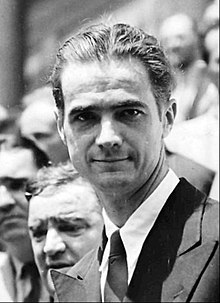
The Eccentric Howard Hughes on This Day in History


This day in history: Howard Hughes died on this day in 1976. Howard Robard Hughes Jr., was an American business magnate, record-setting pilot, engineer, film producer, and philanthropist, known during his lifetime as one of the most influential and richest people in the world. He first became prominent as a film producer, and then as an important figure in the aviation industry. Later in life, he became known for his eccentric behavior and reclusive lifestyle—oddities that were caused in part by his worsening obsessive-compulsive disorder (OCD), chronic pain from a near-fatal plane crash, and increasing deafness.

Hughes was nothing if not eccentric. During Thanksgiving in 1966, Howard Hughes rented out the top two floors of the Desert Inn Hotel in Las Vegas. He enjoyed his time there so much, that he ended up staying through to the holidays. The hotel wasn’t happy about this and they demanded that he leave because they needed room for their high rollers to stay. Hughes bought the place to shut them up. 

While at the Desert Inn, Hughes bought the Sands Inn next so that he could remove their bright neon sign that bothered him.

He also bought "the Silver Slipper casino because the rotating structure in the shape of its namesake on top of the building faced his hotel room, and he was convinced a photographer was hiding inside of it, taking pictures of him. After paying $5.4 million, Hughes not only closed the casino, he ordered it completely sealed up." Source 

Howard Hughes paid no income taxes, and his tax planning was quite legal. "With a deep-seated hatred of taxes, Hughes went through elaborate plans in order not to pay any. He lived for great stretches of time in hotels in order not to have to claim an official residence, and he would jump around from location to location in avoidance. As he had no will and no children, he left the incredible wealth of his Hughes Aircraft stocks to a tax-exempt charity of his own creation called the Howard Hughes Medical Institute." Source 

Even after death, Hughes was interesting. Following his death, Hughes was subject to several widely rebuked conspiracy theories that he had faked his own death. A notable allegation came from retired Major General Mark Musick, Assistant Secretary of the Air Force, who claimed Hughes went on to live under an assumed identity, dying on November 15, 2001, in Troy, Alabama.

Approximately three weeks after Hughes's death, a handwritten will was found on the desk of an official of the Church of Jesus Christ of Latter-day Saints in Salt Lake City, Utah. The so-called "Mormon Will" gave $1.56 billion to various charitable organizations (including $625 million to the Howard Hughes Medical Institute), nearly $470 million to the upper management in Hughes's companies and to his aides, $156 million to first cousin William Lummis, and $156 million split equally between his two ex-wives Ella Rice and Jean Peters.

A further $156 million was endowed to a gas station owner, Melvin Dummar, who told reporters that in 1967, he found a disheveled and dirty man lying along U.S. Route 95, just 150 miles (240 km) north of Las Vegas. The man asked for a ride to Vegas. Dropping him off at the Sands Hotel, Dummar said the man told him that he was Hughes. Dummar later claimed that days after Hughes's death a "mysterious man" appeared at his gas station, leaving an envelope containing the will on his desk. Unsure if the will was genuine and unsure of what to do, Dummar left the will at the LDS Church office. In 1978, a Nevada court ruled the Mormon Will a forgery and officially declared that Hughes had died intestate (without a valid will). Dummar's story was later adapted into Jonathan Demme's film Melvin and Howard in 1980.


Tuesday, April 4, 2023

The "Good Guys!" Hostage Crisis on This Day in History


This day in History: Forty-one people are taken hostage inside a Good Guys! Electronics store on this day in 1991 in Sacramento, California. Three of the hostage takers and three hostages are killed.

Forty-one people were taken hostage inside a Good Guys! Electronics store by four gunmen.

The four gunmen were all Vietnamese immigrants: brothers Loi Khac Nguyen, 21; Pham Khac Nguyen, 19; and Long Khac Nguyen, 17; and their friend, Cuong Tran, 17. The Nguyens had fled Vietnam as a family of eight in 1979 at the start of the second wave of Vietnamese refugees.

On the day of the hostage crisis, Pham Nguyen briefly came to school and asked to be excused with a toothache. The Nguyen brothers told their parents they were going fishing at the Sacramento River.

At approximately 1:00 p.m., on April 4, 1991, the four young gunmen drove into the parking lot of the Good Guys! electronics store, in the South Area of Sacramento County. The group left their vehicle, a 1982 Toyota Corolla, and entered the store armed with three pistols and a shotgun.

They herded customers and staff into a group, including a shoplifter attempting to leave the store, and began shooting at the ceiling of the store. One employee escaped after being ordered to lock the doors. Although initial reports indicated they had taken the hostages after a failed robbery attempt, subsequent statements to hostages and negotiators instead proved "they were attempting to gain notoriety," according to Sacramento County Sheriff Glen Craig. They were frustrated with their lives in the United States since it was difficult to find good jobs and expressed a desire to travel to Thailand and fight the Viet Cong, according to two of the hostages.

The lone survivor of the suspects, Loi Nguyen, was arraigned from his hospital bed shortly after the crisis ended and charged with 54 felonies, including murder. At the sentencing hearing in Sacramento, Judge W.J. Harpham said, "It's hard to find the adjectives for the terror the defendant put these hostages through." He sentenced Loi Khac Nguyen to 49 life terms in prison, 41 to be served consecutively without the chance of parole. Information that surfaced at Nguyen's trial revealed the men's motivation for committing the crime was that they were frustrated by their inability to learn English and find jobs.

To this day, the hostage crisis remains the largest hostage rescue operation in US history, with over 40 hostages having been held at gunpoint.

Footage of the event was featured in World's Scariest Police Shootouts in 1997.

In 2019 a movie called A Clear Shot, based on the incident, was released. It starred Hao Do as Loi, Kevin Bach as Pham, Tony Dew as Long, and Dang Tran as Cuong.