Showing posts with label london. Show all posts

Tuesday, October 17, 2023

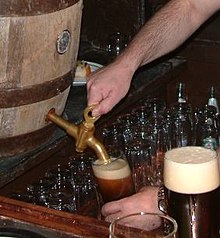
The London Beer Flood on This Day in History


This day in history: The London Beer Flood occurred on this day in 1814. The London Beer Flood was an accident at Meux & Co's Horse Shoe Brewery, London. It took place when one of the 22-foot-tall wooden vats of fermenting porter burst. The escaping liquid dislodged the valve of another vessel and destroyed several large barrels: between 128,000 and 323,000 imperial gallons of beer were released in total.

The resulting wave of porter destroyed the back wall of the brewery and swept into an area of slum dwellings known as the St Giles rookery. Eight people were killed, five of them mourners at the wake being held by an Irish family for a two-year-old boy. The coroner's inquest returned a verdict that the eight had lost their lives "casually, accidentally and by misfortune". The brewery was nearly bankrupted by the event; it avoided collapse after a rebate from HM Excise on the lost beer. The brewing industry gradually stopped using large wooden vats after the accident. The brewery moved in 1921, and the Dominion Theatre is now where the brewery used to stand. Meux & Co went into liquidation in 1961.



Friday, September 29, 2023

The First Dating Agency on This Day in History


This day in history: Henry Robinson opened the first dating agency in the world on this day in 1650. "Robinson’s Citizens Advice Bureau was the first of its kind, and not only did it match servants to those who needed them like an employment agency, but it also matchmade those who couldn’t find love. Although matchmakers had been around for many years, this was the first business considered as a dating agency based in London." Source

Afterward, marriage agencies run by clergymen were introduced to England and Wales in the late 18th century, prompting considerable amusement from the social commentators of the day. In 1799 a "provincial publication says that a MATRIMONIAL PLAN is proposed to be established throughout every county, city, or town, in England or Wales. (...) The system of this curious, and it should seem actually serious, plan — as far as we can learn — is as follows: — Every person, of either sex, who desires to enter into a treaty of marriage, is first to subscribe a certain sum. All ladies and gentlemen to describe themselves, by real or fictitious names, as they may choose".

Men and women would classify themselves into three classes, and would generally state how much money they earned, or would be given as a dowry. A typical entry would read:

Second Class, No.2. — A gentleman, 40 years of age, a little corpulent, rather of a dark brown complexion, wears a wig, has a place in the Customs, and a small estate in Suffolk, with 750l. in the funds; reasonably well-tempered, and at times very lively; religion — of his fathers.

By 1825 an agency in Bishopsgate, London, opened three days a week for members of the public looking for a partner to describe themselves and subscribe to the appropriate list. However, by then both ladies and gentlemen had to classify themselves in 5 different classes.

The History and Mystery of Alchemy is now available on Amazon...and it is only 99 cents.

Forbidden and Condemned by the Catholic Church - 150 Books to Download

Saturday, September 2, 2023

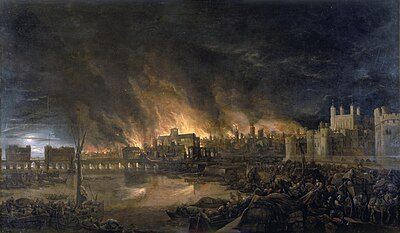
The Great Fire of London on This Day in History


This day in history: The Great Fire of London began on this day in 1666 in Pudding Lane and 80% of London was destroyed.

In 1667 strict new fire regulations were imposed in London to reduce the risk of future fire and allow any fire that did occur to be more easily extinguished. The fire resulted in the emergence of the first insurance companies, starting with Nicholas Barbon's Fire Office. These companies hired private firemen and offered incentives for clients who took measures to prevent fires—for example, a cheaper rate for brick versus wooden buildings. Confusion between parish and private firefighting efforts led the insurance companies in 1832 to form a combined firefighting unit which would eventually become the London Fire Brigade. The fire led to a focus in building codes on restricting the spread of fire between units.

The Great Plague epidemic of 1665 is believed to have killed a sixth of London's inhabitants, or 80,000 people, and it is sometimes suggested that the fire saved lives in the long run by burning down so much unsanitary housing with their rats and their fleas which transmitted the plague, as plague epidemics did not recur in London after the fire. During the Bombay plague epidemic two centuries later, this belief led to the burning of tenements as an antiplague measure. The suggestion that the fire prevented further outbreaks is disputed; the Museum of London identifies this as a common myth about the fire.


Friday, June 9, 2023

Charles Dickens on This Day in History


This day in history: On this day (June 9) in 1870, after a full day's work on The Mystery of Edwin Drood, Charles Dickens complained that he was feeling ill and then fell over dead of a stroke. 

"Bizarrely, exactly five years before, on June 9, 1865, the train he'd been riding in with his mistress and his mistress's mother had derailed, killing ten people and injuring dozens. Dickens had never fully psychologically recovered from the incident, and his typically frantic writing pace dwindled immensely; Drood was the only major project Dickens started in the five years between the accident and his death. The novel's unfinished state, coupled with Dickens's odd post-crash personality shifts, have long made Drood a source of interest for curious and investigative readers. The London of Edwin Drood's first chapter is, in many ways, a darker place—and perhaps more representative of reality—than the London of Dickens's other works." Source