Showing posts with label suicide. Show all posts

Saturday, January 4, 2025

Absurdist Thinker Albert Camus on This Day in History


This Day in History: Author and philosopher Albert Camus died in a car crash on this day in 1960, on a straight country road with an unused train ticket in his pocket. How absurd. 

Camus wrote that there "is but one truly serious philosophical problem, and that is suicide. Judging whether life is or is not worth living amounts to answering the fundamental question of philosophy." He told a sad & poignant story of a building manager who had killed himself because he had lost his daughter five years before, which greatly changed him and that the experience had “undermined” him. According to Camus "A more exact word cannot be imagined. Beginning to think is beginning to be undermined."

Though he once was a Communist, he dropped that ideology in favor of freedom.

"Because he was not a partisan in the Cold War between the U.S./NATO and the U.S.S.R, Albert Camus was an oddball.  As a result, he was criticized by the right, left, and center.  His allegiance was to truth, not ideologies.  He opposed state murder, terrorism, and warfare from all quarters.  An artistic anarchist with a passionate spiritual hunger, an austere and moral Don Juan, this sensual man of conscience and honor earned his reputation by a lifelong literary meditation on death in all its guises: disease (he was constantly threatened by tuberculosis), murder, suicide, capital punishment, war, etc.; deaths both 'happy' and absurd, sudden and slow.  His enemy was always injustice and those powerful ones who thought they had the right to make others suffer and die for their perverted purposes.  An artist compelled by history to enter the political arena, he spoke out in defense of the poor, oppressed, and powerless.  Among his enemies were liberal imperialism and Soviet Marxism, abstract ideologies used to enslave and murder people around the world." Edward Curtin

Some quotes from Camus:

"The real passion of the twentieth century is servitude."

"It is a kind of spiritual snobbery that makes people think they can be happy without money." 

"The only way to deal with an unfree world is to become so absolutely free that your very existence is an act of rebellion."

"Political utopias justified in advance any enterprises whatever."

"The welfare of the people…has always been the alibi of tyrants…giving the servants of tyranny a good conscience."

"The tyrannies of today…no longer admit of silence or neutrality…I am against."

"The only conception of freedom I can have is that of the prisoner or the individual in the midst of the state. The only one I know is freedom of thought and action."

"Absolute domination by the law does not represent liberty, but without law there is no freedom."

"Freedom is not a gift received from the State."

"Freedom is not a reward or a decoration…It’s a long distance race, quite solitary and very exhausting."

"Freedom is nothing else but a chance to get better, whereas enslavement is a certainty of the worse."

"Liberty ultimately seems to me, for societies and for individuals…the supreme good that governs all others."

"Is it possible…to reject injustice without ceasing to acclaim the nature of man and the beauty of the world? Our answer is yes."

"We have to live and let live in order to create what we are."

"The aim of art, the aim of a life can only be to increase the sum of freedom and responsibility to be found in every man and in the world. It cannot, under any circumstances, be to reduce or suppress that freedom."

"Without giving up anything on the plane of justice, yield nothing on the plane of freedom."

"More and more, when faced with the world of men, the only reaction is one of individualism. Man alone is an end unto himself."

Thursday, December 28, 2023

The Suicide of a Silent Film Star on This Day in History


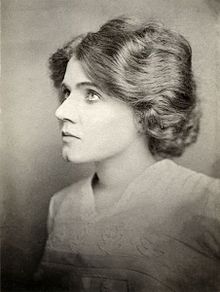
This day in history: Canadian-American film actress Florence Lawrence killed herself on this day in 1938. 

 Florence Lawrence was often referred to as the "first movie star", and was long thought to be the first film actor to be named publicly until evidence published in 2019 indicated that the first named film star was French actor Max Linder. At the height of her fame in the 1910s, she was known as the "Biograph Girl" for work as one of the leading ladies in silent films from the Biograph Company. She appeared in almost 300 films for various motion picture companies throughout her career. 

Lawrence is also "credited with creating the first mechanical turn signals and brake signals. For the turn system, she rigged up a simple device that allowed drivers to press a button that rose a flag on the back bumper of their car to indicate an upcoming turn.
She followed this up with a 'stop' signal that would rise when the driver compressed the brake pedal. Unfortunately she failed to patent either of these inventions, or the electric windshield wipers she came up with a few years later." Source

She did not patent these inventions, however, and as a result she received no credit for, nor profit from, either one.

By the late 1920s, Lawrence's popularity had declined and she suffered several personal losses. She was devastated when her mother, to whom she was close, died suddenly in August 1929. Four months later, she separated from her second husband, Charles Woodring. While Lawrence earned a small fortune during her film career, she made many poor business decisions. She lost much of her fortune after the stock market crash in October 1929 and ensuing Great Depression. The cosmetics store that she and her second husband opened in Los Angeles also lost business because of the Depression, and the couple was forced to close its doors in 1931. 

She later developed a painful bone marrow disease which, among her other financial woes, pushed her to suicide by taking poison.


Suicide and Philosophy - 50 Books to Download

Thursday, August 10, 2023

Stealing an Airplane on This Day in History


This day in history: Richard Russell, 29, stole a Bombardier Q400 airplane on this day in 2018. The perpetrator was a Horizon Air ground service agent with no piloting experience. After Russell performed an unauthorized takeoff, two McDonnell Douglas F-15 Eagle fighters were scrambled to intercept the aircraft. Sea–Tac air traffic control made radio contact with Russell, the sole occupant, who described himself as a "broken guy, got a few screws loose, I guess." About 1 hour and 15 minutes after takeoff, Russell died by intentionally crashing the aircraft on lightly populated Ketron Island in Puget Sound.

There are quite a few incidents of this sort in the past, including one that happened in Australia on January 5 1977, where a disgruntled former employee of Connellan Airways (also known as Connair), flew a Beechcraft Baron into the Connair complex at the airport. The attack killed the pilot and four other people and injured four more, two of them seriously.


Saturday, July 29, 2023

Two Cases of Familicide on This Day in History


This day in history: On this day in 1937, 30-year-old farm wife Elsie Nollen of Dennison, Iowa, backed the family car up to a window and piped deadly monoxide gas into a room, killing her six children and herself.

The children raged in age from two years to 11 years. The husband, Albert Nollen, and two friends, found the bodies.

Nollen left a suicide letter starting: "I'm doing this because I see the family is not going to be raised up right." Nollen was overwhelmed with jealousy and marital unhappiness.

Albert Nollen found the bodies when he returned to his home Sunday morning after a quarrel with his wife and an all-night "spree". He found her letter in the mailbox.

Also on this day in 1919 in Kimberly, Ohio, Mary Stravisar killed her seven children and herself. "The family was living in destitute circumstances and her husband Tony had left them in May that year to search for work, but hadn't been heard of since. Stravisar and her children, who were aged 6 weeks to 10 years, were aided by the local authorities, which eventually decided to take the children to the Athens County Home. The 35-year-old was greatly worried about this and on the day the children were to be removed she tied them to their beds, sprinkled the room with coal oil and set it on fire, burning or asphyxiating all of them." Source

A familicide is a type of murder or murder-suicide in which an individual, usually a man, kills multiple close family members in quick succession, most often children, spouses, siblings, or parents. In half the cases, the killer lastly kills themselves in a murder-suicide. If only the parents are killed, the case may also be referred to as a parricide. Where all members of a family are killed, the crime may be referred to as family annihilation.


Thursday, July 27, 2023

Bobbie Gentry on this Day in History


This day in history: American singer-songwriter Bobbie Gentry was born on this day in 1942. Gentry rose to international fame in 1967 with her Southern Gothic narrative "Ode to Billie Joe". The track spent four weeks at No. 1 on the Billboard Hot 100 chart and was third in the Billboard year-end chart of 1967, earning Gentry Grammy awards for Best New Artist and Best Female Pop Vocal Performance in 1968.

If you have not heard the song, then you are missing out. 

For one thing, the song is a mystery story:

"Part of the song's enduring power is that the song asks more questions than it answers. There's a suicide in the first verse, and it just gets weirder after that. Why did Billie Joe jump off the bridge? Is the girl who's singing the same girl spotted with Billie Joe on the bridge? What did they throw off the bridge?" Source

The song was also social commentary:

"In this song, a family finds out about the death of Billie Joe and shares gossip about him at the dinner table along with their other mundane concerns. Bobbie Gentry explained: 'The message of the song revolves around the nonchalant way the family talks about the suicide. The song is a study in unconscious cruelty.'" Source

There is actually an 8 minute long, original, uncut, 11-verse recording of the song that has never surfaced. 


Sunday, July 2, 2023

Ernest Hemingway's Suicide on This Day in History


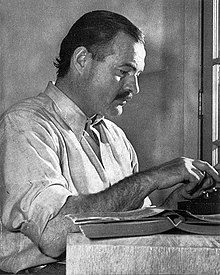
This day in history: Ernest Hemingway committed suicide on this day in 1961.

As posted on Social Media: Early in the morning of 1961, while his wife Maria was still asleep in the upstairs bedroom, Ernest Hemingway walked into the lobby of his Idaho home, selected his favorite shotgun from the hunting rifle rack and committed suicide.

While he was still alive, he complained constantly to friends and family about being followed by agents of the FBI. He was repeatedly sent to psychiatric clinics, from where he also called and complained about bugs and wiretaps. As treatment, Hemingway was prescribed electroshock, which at the time was used to treat all mental disorders.

Decades later, the FBI confessed that it had been following him since the 1940s. The regime was suspicious of his activities on the Caribbean, so agents hid bugs in the writer's house, car and hospital room, tapped his phone conversations, opened his mail and checked his bank accounts.


Monday, October 17, 2022

The Singing Nun on This Day in History


This Day In History: The Singing Nun (Jeanne-Paule Marie Deckers) was born on this day in 1933. She had a big hit in 1963 with "Dominique" which sold millions of copies. The Singing Nun was screwed over for the money and in time committed suicide. 

In 1973, another nun, Sister Janet Mead, released a rock version of The Lord's Prayer which also sold millions of copies. She also had a bad experience with the recording industry so she withdrew from the public eye. Mead died of cancer this past January.

The entertainment industry is cruel and unforgiving and filled with broken and ugly souls. This is why so many in the industry cling to causes as if they were indulgences, in order to absolve themselves of the callous business practices they engage in.


Monday, September 12, 2022

Philosopher Albert Camus on This Day in History


This Day in History: Author and philosopher Albert Camus was awarded the Nobel Prize in Literature on this day in 1957. Camus wrote that there "is but one truly serious philosophical problem, and that is suicide. Judging whether life is or is not worth living amounts to answering the fundamental question of philosophy." He told a sad & poignant story of a building manager who had killed himself because he had lost his daughter five years before, which greatly changed him and that the experience had “undermined” him. According to Camus "A more exact word cannot be imagined. Beginning to think is beginning to be undermined."

Though he once was a Communist, he dropped that ideology in favor of freedom:

"The real passion of the twentieth century is servitude."

"The only way to deal with an unfree world is to become so absolutely free that your very existence is an act of rebellion."

"Political utopias justified in advance any enterprises whatever."

"The welfare of the people…has always been the alibi of tyrants…giving the servants of tyranny a good conscience."

"The tyrannies of today…no longer admit of silence or neutrality…I am against."

"The only conception of freedom I can have is that of the prisoner or the individual in the midst of the state. The only one I know is freedom of thought and action."

"Absolute domination by the law does not represent liberty, but without law there is no freedom."

"Freedom is not a gift received from the State."

"Freedom is not a reward or a decoration…It’s a long distance race, quite solitary and very exhausting."

"Freedom is nothing else but a chance to get better, whereas enslavement is a certainty of the worse."

"Liberty ultimately seems to me, for societies and for individuals…the supreme good that governs all others."

"Is it possible…to reject injustice without ceasing to acclaim the nature of man and the beauty of the world? Our answer is yes."

"We have to live and let live in order to create what we are."

"The aim of art, the aim of a life can only be to increase the sum of freedom and responsibility to be found in every man and in the world. It cannot, under any circumstances, be to reduce or suppress that freedom."

"Without giving up anything on the plane of justice, yield nothing on the plane of freedom."

"More and more, when faced with the world of men, the only reaction is one of individualism. Man alone is an end unto himself."

Tuesday, June 21, 2022

Greenland on This Day in History


This Day In History: Greenland assumed self-rule on this day in 2009. Greenland is an island country part of the Kingdom of Denmark. It is located between the Arctic and Atlantic oceans, east of the Canadian Arctic Archipelago. Greenland is the world's largest island, and though physiographically a part of the continent of North America, Greenland has been politically and culturally associated with Europe (specifically Norway and Denmark, the colonial powers) for more than a millennium, beginning in 986. The majority of its residents are Inuit, whose ancestors migrated from Alaska through Northern Canada, gradually settling across the island by the 13th century.

The lowest temperature ever recorded in the Northern Hemisphere was recorded in Greenland, near the topographic summit of the Greenland Ice Sheet, on 22 December 1991, when the temperature reached -69.6 °C (-93.3 °F)

The rate of suicide in Greenland is very high. According to a 2010 census, Greenland holds the highest suicide rate in the world. Another significant social issue faced by Greenland is a high rate of alcoholism.

Greenland also has a high infant mortality rate and high rates of death due to unnatural causes, especially suicides and accidents.


Saturday, February 5, 2022

The Suicide Death of a Spiritualist on This Day in History


This Day in History: Thomas Lynn Bradford of Detroit, Michigan was a spiritualist who committed suicide on this day in 1921 in an attempt to confirm the existence of an afterlife and communicate that information to a living accomplice, Ruth Doran.

Some weeks earlier, Bradford had sought a fellow spiritualist in a newspaper advertisement and Doran responded. The two agreed "that there was but one way to solve the mystery—two minds properly attuned, one of which must shed its earthly mantle". The New York Times ran a follow-up under the headline "Dead Spiritualist Silent".

Bradford's body was found a day later inside a small rented room in a boarding house at 2500 Howard Street in Detroit. The gas had been turned on, suffocating the life out of the forty-eight year old man. Dropped from the hand of the lifeless Bradford were several typewritten pages, the first bearing the title: "Can the Dead Communicate With the Living?"

Ruth Doran claimed that Bradford had indeed reached out to her from beyond and became a minor celebrity as a result.

"The evidence seems to suggest that Mrs. Ruth Starkweather Doran, who once distanced herself from Bradford and denied belief in the occult, gradually embraced her newfound fame and publicity and used it to her financial advantage. In subsequent interviews, Doran often contradicted herself, sometimes claiming that she first met Bradford at his apartment, and other times claiming that he had first visited Doran at her home. Sometimes she claimed to have only met him once, other times she claimed to have met him several times. Sometimes she claimed to have been a skeptic in the occult, other times she claimed to have been a devout and lifelong student of the metaphysical. Sometimes she described Bradford and being pompous and arrogant, and other times she spoke of him as a dear friend. These inaccuracies, along with a national decline in the spirituality trend, eventually resulted in Doran's fading into obscurity." Source

Thomas Bradford died because he was was totally committed to his belief. 

An ancient Greek lawyer named Charondas committed suicide because of a law that he issued that he was totally faithful to. 

Charondas announced a law that anyone who brought weapons into the Assembly must be put to death. One day, he arrived at the Assembly seeking help to defeat some brigands in the countryside but with a knife still attached to his belt. In order to uphold his own law, he committed suicide.


Sunday, November 28, 2021

Grand Canyon Deaths on This Day in History


This Day in History: Greg Austin Gingrich fell to his death in the Grand Canyon on this day in 1992. 38-year-old Gingrich was vacationing at the Grand Canyon in Coconino County, Arizona, with his teenage daughter, when he began to play-act losing his balance to frighten her. Gingrich leaped atop a guard wall and began wind-milling his arms in an exaggerated manner, then "comically" fell from the wall on the canyon side onto a short slope where he assumed he would land safely. His daughter, unimpressed with his antics, walked on. Gingrich, however, missed his footing and fell approximately 400 feet into the canyon to his death.

"The Grand Canyon averages 12 deaths each year; Colburn’s death is the park’s 18th so far in 2021. The most common causes of death are from airplane crashes, falls, and dangerous environmental conditions such as overheating or drowning. In total, around 275 people have died from airplane crashes over the Canyon, but 128 of those deaths come from a single tragedy in 1956. Two planes collided midair, which became the deadliest aerial crash in the United States at that time." Source

People often die falling in the Grand Canyon while taking selfies or horsing around or while urinating into the canyon or simply being drunk. Some people fall due to dizziness. 

There have been about 91 suicides in the Grand Canyon. Most of these are people jumping off the ledge, but 13 of these suicides happen when someone drives their vehicle off the ledge. "Three of these occurred in one year, 1993. This came on the heels of the film Thelma & Louis...In the movie’s final scene, the two protagonists drive their vehicle off the ledge of the canyon. We know that at least one of the women who died watched that movie over 50 times and was determined to recreate the event. Her name was Patricia Astolfo, and she drove her suburban off the ledge. However, it got high centered on a rock, preventing her from falling into the canyon. So she got out of her vehicle, walked to the ledge, and jumped. Only she landed on another ledge 15 feet below. Injured, she crawled to another ledge and jumped. Only she landed on another ledge 25 feet below. Still determined, she crawled to another ledge and fell, this time falling a fatal 75 feet." Source 

One man actually leaped out of a helicopter while on an aerial tour of the canyon. He fell 4000 feet to his death.


Wednesday, November 3, 2021

The Hungarian Suicide Song on This Day in History


This day in history: Hungarian pianist and composer Rezso Seress (aka Rudolf "Rudi" Spitzer) was born on this day in 1899. Rezso is mainly known for one song: Gloomy Sunday. "Gloomy Sunday", also known as the "Hungarian Suicide Song" was first recorded in 1935. 

The song has a melancholy sound to it with suicidal lyrics of a loved one lost to death. A sample of it goes:

Sunday is gloomy,
My hours are slumberless
Dearest the shadows
I live with are numberless
Little white flowers
Will never awaken you
Not where the black coach of
Sorrow has taken you
Angels have no thought
Of ever returning you,
Would they be angry
If I thought of joining you?

It was reported in the 1930s that the song was associated with at least 100 suicides, both in Hungary and the United States, though many doubt the veracity of this claim. However, Gloomy Sunday was in the news again when Ozzy Osbourne was taken to court by the parents of a teen who shot himself while listening to the Ozzy's song “Suicide Solution.” It's not uncommon for certain works of art to lead to an increased in suicides. In fact, it's actually been named as 'The Werther Effect'. 'The Sorrows of Young Werther' is a novel by Goethe in which a young man commits suicide after being jilted. Following the publication of the book, there were a number of young men killing themselves in similar situations, in the same manner, and even dressed in the same clothes.

Because of the lyrics, Gloomy Sunday was banned in England in the 1940's. Only instrumental versions could be played on the radio because the song was "too upsetting."

Interestingly, Rezso Seress, in an example of life imitating art, would go on to commit suicide himself in 1968.


Saturday, May 1, 2021

The Mass Suicide of the Town of Demmin on This Day in History


This Day in History: On this day (May 1) in 1945, hundreds of people (if not a thousand) killed themselves in the town of Demmin, Germany. The suicides occurred during a mass panic that was provoked by atrocities committed by soldiers of the Soviet Red Army, who had sacked the town the day before, and the feared return of the Russian soldiers was too much to bear. This was the largest mass suicide ever recorded in Germany. The suicide was part of a mass suicide wave amongst the population of Germany where, at the end of the Second World War, 10,000 people killed themselves.


The hatred between Germany and Russia was intense. One Russian intellectual, Ilya Ehrenburg, wrote that, “If you have not killed at least one German a day, you have wasted that day...If you leave a German alive, the German will hang a Russian and rape a Russian woman. If you kill one German, kill another — there is nothing more amusing for us than a heap of German corpses.”


Wednesday, February 5, 2020

Peg Entwistle on This Day in History


This Day in History: Actress Peg Entwistle was born on this day in 1908. She is not known for any roles she played, as she gained notoriety after she jumped to her death from atop the "H" on the Hollywood sign on September 1932, at the age of 24. She came to Hollywood from Wales to strike it big as an actress only to be disappointed. In desperation she committed suicide, and it was in
death that she finally became famous as her fall became widely publicized. To this day people say the Hollywood Sign is haunted by her ghost.

Oh, and you can eat at the Pig'n Whistle in Hollywood, a restaurant dedicated to her name.

See also: https://www.vanityfair.com/hollywood/2014/10/hollywood-sign-haunted


Friday, October 2, 2015

Suicide and Philosophy - 50 Books to Download


Only $3.00 -  You can pay using the Cash App by sending money to $HeinzSchmitz and send me an email at theoldcdbookshop@gmail.com with your email for the download. You can also pay using Facebook Pay in Messenger


Books Scanned from the Originals into PDF format


Books are in the public domain. I will take checks or money orders as well.

Contents(created on a Windows computer):

On Suicide by David Hume 1854 (Hume claims that suicide can be compared to retiring from society and becoming a total recluse, which is not normally considered to be immoral)

Essays of Schopenhauer 1897 (As far as I can see, it is only the followers of monotheistic, that is of Jewish, religions that regard suicide as a crime. This is the more striking as there is no forbiddance of it, or even positive disapproval of it, to be found either in the New Testament or the Old; so that teachers of religion have to base their disapprobation of suicide on their own philosophical grounds)

The Morals of Suicide by James Gunrhill 1900

Is Life Worth Living by William James 1896

Suicide not evidence of Insanity by Olive Palmer 1878

Is Suicide a Sin? by Robert Green Ingersoll, Prefaced by a Startling Chapter, Great Suicides of History! 1894

Is Suicide Murder? by William Mikell 1903

The Philosophy of Death by John Reid 1841

Suicide - Studies on its Philosophy, Causes and Prevention by James J O'Dea MD 1882

The Anatomy of Suicide by Forbes Winslow 1840

Elements of moral philosophy by Jaspar Adams 1837 (Duty of Preserving Life and Death)

Paley's Moral and Political Philosophy 1845 (has a section on Suicide)

Suicide: an essay on comparative moral statistics by Enrico Morselli 1882

The Problems of Suicide by George Kennan 1908

Is life worth living? by WJ Mallock 1890

Eight Historical Dissertations in Suicide, in Reference to Philosophy, Theology and Legislation by H.G. Migault 1856 (over 1000 pages)

The Value of Life - a reply to Mr. Mallock's essay "Is life worth living"? 1879


Psychotherapy including the history of the use of mental influence by James Joseph Walsh (has a section on Suicide)

The Sorrows of Young Werther by Johann Wolfgang von Goethe 1902 (this is an epistolary novel, and when it was first released in the late 18th century led to a rash of copycat suicides. As a matter of interest, a Hungarian suicide song released in the 1930's called Gloomy Sunday had a similar effect. You can find that song on youtube, I especially like the Sarah Mclachlan version.)

Orthodoxy by GK Chesterton 1915 (Not only is suicide a sin, it is the sin. It Is the ultimate and absolute evil, the refusal to take an interest in existence; the refusal to take the oath of loyalty to life. The man who kills a man, kills a man. The man who kills himself, kills all men; as far as he is concerned he wipes out the world.)

Fundamental Principles of the Metaphysics of Ethics by Immanuel Kant 1895 (from wikipedia: Immanuel Kant argues against suicide in Fundamental Principles of The Metaphysic of Morals. In accordance with the second formulation of his categorical imperative, Kant argues that, "He who contemplates suicide should ask himself whether his action can be consistent with the idea of humanity as an end in itself." Kant's theory looks at the act only, and not at its outcomes and consequences, and claims that one is ethically required to consider whether one would be willing to universalise the act: to claim everyone should behave that way. Kant argues that choosing to commit suicide entails considering oneself as a means to an end, which he rejects: a person, he says, must not be used "...merely as means, but must in all actions always be considered as an end in himself." Therefore, it is unethical to commit suicide to satisfy oneself.)

Suicide and Insanity - a physiological and sociological study by S.A.K. Strahan 1893 (poor quality scan, but a lot of interesting information)

Reflections on suicide by Madame de Stael 1813

Esquirol and Falret on Suicide, article in The Medico-Chirurgical Review and Journal of Medical Science 1824

The Origin and Development of the Moral Ideas, Volume 1 by Edward Westermarck 1912

The Origin and Development of the Moral Ideas, Volume 2 by Edward Westermarck 1912

The psychology of the emotions by Th Ribot 1898 ("The act of suicide results from two very different mental states, that of reflection and that of impulsion.")

Suicide by GA Shurtleff 1877 (Let me say, then, that sane persons do commit suicide, and that an act of self-destruction is not, in itself, conclusive evidence of mental unsoundness.)

Neurotic books and newspapers as factors in the mortality of suicide and crime by Edward Phelps 1911

The mind of Shakspeare as exhibited in his works by Aaron A Morgan 1860
(It is interesting to note that Shakespeare's most famous bit has to do with Suicide: "To be, or not to be; that is the question:
Whether't is nobler in the mind, to suffer The stings and arrows of outrageous fortune; Or to take arms against a sea of troubles,
And, by opposing, end them?")


Thoughts on suicide 1819

The Gallows of Judas Iscariot by Archer Taylor 1921

The Mediaeval Legend of Judas Iscariot by Paull Baum 1916

Did Judas Really Commit Suicide? J Rendell Harris 1900

Suicide and its relation to climatic and other factors (often difficult to read) by John Rice Miner 1922

Life - Is it Worth Living? by John Marshall Lang 1883

Is life worth living without immortality by MM Mangasarian 1911

Is Life Worth Living? A Debate between Frederick Starr and Clarence Darrow 1915

Happiness - Essays on the meaning of life by Karl Hilty 1903

The Meaning of Life by WL Courntey 1914

The Meaning of Life by A Edwin Keigwin 1922

The Meaning and value of Life by Rudolk Eucken 1913

Philosophy of the Practical by B Croce 1913

Philosophy, What is it? FB Jevons 1950

The Wisdom of Life by Arthur Schopenhauer 1890

Tolstoy on God, and the Meaning of Life 1904

Has Life Any Meaning, a Debate, by Frank Harris, Percy Ward 1920

Benthamiana - Select extracts from the works of Jeremy Bentham 1843 (greatest happiness principle)

Suicide: History of the penal laws relating to it in their legal, social, moral, and religious aspects, in ancient and modern times by RS Guernsey 1883

Tuesday, June 30, 2015

The Mysteries of Death - 250 Books to Download

Only $3.00. You can pay using the Cash App by sending money to $HeinzSchmitz and feel free to send me an email at theoldcdbookshop@gmail.com with your information. You can also pay using Facebook Pay in Messenger

Books Scanned from the Originals into PDF format


Books are in the public domain. I will take checks or money orders as well. 

For a list of all of my disks, with links click here

Contents (created on a Windows computer)

Researches on the Natural History of Death by Bennet Dowler 1850

A Study of Death by Henry Mills Alden 1895

Spirit, Soul, and Flesh - The Usage of Pneuma, Psyche and Sarx in Greek Writings by Ernest De Witt Burton 1918

The Undertaker's Garland by John P Bishop 1922

Death and Sudden Death by Paul Brouardel 1902

The Conquest of Death by Helen Wilmans 1902

Does Death End All? by Madison C Peters 1907

The Great Adventure by Louise Pond Jewell 1911

The Discovered Country by Carlyle Petersilea 1889

The Problem of Final Destiny, Studied in the Light of revised theological statement by William B Brown 1900

The Intermediate World by LT Townsend 1878

Death, by Maurice Maeterlinck 1912

The Grail of Life - an Anthology on Heroic Death and Immortal Life by John H Holmes 1919

The Adventure of Death by Robert W Mackenna 1917

Preparation for Death by Alphonso Ligouri 1854

Reflections on Death by William Dodd 1806

Curious Epitaphs by William Andrews 1899

Epitaphs: Quaint, Curious, and Elegant by Henry J Loring 1873

Gleanings in Graveyards - a Collection of Curious Epitaphs by Horatio Edward Norfolk 1861 ("Here lies the body of Thomas Proctor, Who lived and died without a doctor.")

A Practical Discourse Concerning Death by William Sherlock 1814

The Book of the Craft of Dying and other early English tracts concerning Death by William Caxton 1917*

Between Two Worlds by John H Willey 1919

The Fear of Death by Edward L Keyes 1910

The Last Enemy by George Burgess 1850

The Assembly of Gods - The Accord of Reason and Sensuality in the Fear of Death by John Lydgate 1895

The Blessed Peace of Death by Augustine Wibbelt 1915

The Encyclopaedia of Death and Life in the Spirit World by JR Francis, Volume 1 1895

Looking Forward - Poems for the Bereaved 1885

Thoughts on love and Death 1918

A Book Written by the Spirits of the so-called Dead by Mrs Lizzie Green 1893

A Word for Help from the Wider World by William Comstock 1920

After Death and Other Mysteries by Samuel Schieffelin 1898

After her Death 1897


The Secret of Life, Death and Immortality by Henry Fleetwood 1909

The Psychology of Sleep by Bolton Hall 1917

Life's Last Hours 1850

The Place of Death in Evolution by Newman Smyth 1897

Key to Ghostism: Science and art unlock its Mysteries by Thomas Mitchell 1880

Leaves from Heaven by HB Townsend 1921

Light on the Hidden Way by James Freeman Clark 1886

Penclings from Immortality by Laura Sunderlin 1876

People from the Other World by Henry S Olcott 1875

Spiritual Communications by Henry Kiddle 1879

Wisdom of the Ages by George A Fuller 1916

Aspects of Death and their Effects on the Living by F Parkes Weber 1910

The Biology Of Death by Raymond Pearl 1922

How the Ancients Represented Death by GA Lessing by 1914

The Book of Sorrow by Andrew MacPhail 1916

The Babylonian Conception of Heaven and Hell by Alfred Jeremias 1902

The doctrine of the human soul by C Vandusen 1878


An Inquiry Into the Scriptural Import of the Words Sheol, Hades, Tartarus
by Walter Balfour, Otis Ainsworth Skinner

After Death, and Other Mysteries by Samuel Bradhurst Schieffelin 1898

Mysteries of Life, Death, and Futurity by John Timbs 1861

Death and Its Mystery by Camille Flammarion 1922

Studies in Eschatology - Existence after Death by Ulysses S Bartz 1900

The Gospel of the Hereafter by J Paterson-Smyth 1910

Human Destinies as taught in the Bible by Joseph Cooper 1902

Death and Beyond by T Selby Henrey 1910

Voices of the Night by John Cumming 1854

The Life Beyond - The Best Thoughts of over 300 of the World's Leading Authors and Scholars by James Henry Potts 1899

A Critical History of the Doctrine of a Future Life in Israel, in Judaism, and in Christianity - Hebrew, Jewish, and Christian eschatology from pre-prophetic times till the close of the New Testament canon by RH Charles 1913

This Life and the Next - impressions and thoughts of notable men and women from Plato to Ruskin by Estelle D Adams 1902

Beyond the Shadow - The Resurrection of Life by James Morris Whiton 1884

Immortality and the Unseen World - a study in Old Testament Religion by W.O.E  Oesterley 1921

The Four Last Things - Death, Judgment, Hell, Heaven by Martin von Cochem 1899

Eternal Life - a Study of its Implications and Applications by Friedrich von Hugel 1913

The World Beyond by John Doughty 1883

The World to Come and Final Destiny by Joseph Leckie 1922

The Eternal Life by Hugo Munsterberg 1905

Is the Life of Man Eternal? by Franklin Blades 1911

Thoughts on Eternal Life by William R Hart 1888

The Struggle for Eternal Life by E Petavel 1875

The Day after Death - Our Future Life According to Science by Louis Figuier 1874

God, the Soul and the Future State by Thomas Cooper 1873

The Philosophy of a Future State by Thomas Dick 1869

Do the Dead Still Live, by David Heagle 1920

Four Great Questions Regarding a Future Life by John Balcom Shaw 1897

Hereafter or the Future Life According to Science and Faith by J.M. Leleu 1904

Life After Death by Emanuel Swedenborg

The Assurance of Immortality by Harry Emerson Fosdick 1913

The Future State by FC Gayford 1903

There is no Death by Florence Marryat 1919

There is no Death by Basil Wilberforce 1916

Quiet talks about Life after Death by S.D. Gordon 1920

Death and Beyond - a Study of Hebrew and Christian Conceptions of the Life to come by C.T. Wood 1920


The After Life - a help to a reasonable belief in the Probation Life to Come by Henry Buckle 1907

Life beyond Death - being a review of the World's Beliefs on the Subject, a consideration of present conditions of thought and feeling, leading to the question as to whether it can be Demonstrated as a Fact by Minot J Savage 1899

The Doctrine of Eternal Misery reconcilable with the infinite benevolence of God and a truth plainly asserted in the Christian Scriptures by Nathan Strong 1796

Bible Theology and the Word Hell

Hell by Robert Green Ingersoll

Should Kolasin be Translated cutting-off or punishment?

The Occurences of Sheol in the Old Testament

The Hereafter - Sheol, Hades, and Hell by J. Fyfe 1890

The Destiny of the Soul: A Critical History of the Doctrine of a Future Life by William Alger and Ezra Abbot 1880

Questions of the Soul by Isaac Hecker 1855

On Life After Death by Gustav Fechner 1882
Man lives on earth not once, but three times: the first stage of his life is continual sleep;  the second, sleeping and walking by turns; the third, waking for ever.

The Redeemed Life after Death by CC Hall 1905

Death and After by Annie Wood Besant (Theosophy) 1914

The Little Book of Life after Death by Gustav Fechner 1904

Quiet Talks about Life after Death by SD Gordon 1920

Life after Death and how Theosophy unveils it by CW Leadbeater 1918

IS THERE LIFE AFTER DEATH? by Marshall J. Gauvin

Why we may believe in Life after Death by Charles Jefferson 1911

The Proofs of Life After Death by Robert John Thompson 1902

The Spirits in Prison, and other Studies on the Life after Death by Edward Hayes Plumptre 1884

Life After Death, Problems of the Future Life and Its Nature by James Hyslop 1918

Realms of the Living Dead: A Brief Description of Life After Death by Henrietta Curtiss 1919

Our Life after Death or, The teaching of the Bible concerning the Unseen World by Arthur Chambers

Life after Death or Reason and Relaxation on the Immortality of the Soul by John Vaughan 1908

The Hopes of the Human Race, Hereafter and Here, Essays on the Life after Death by F.P. Cobbe 1880

The Evolution of the Soul by Thomas J Hudson

Human Destiny by John Kost 1903

Man and His Destiny by Joel Tiffany 1881

Man's Life and Destiny: Four Sermons by George A Macdonnell 1861

The Destiny of Man Viewed in the Light of his Origin by J. Fiske 1895

The State of the Dead and the Destiny of the WickeD by Uriah Smith 1873

The Philosophy of a Future State by Thomas Dick 1831

Meditations on Death and Eternity by Heinrich Zschokke 1863

A Study of Death by Henry Mills Alden 1895

On Suicide by David Hume 1854 (Hume claims that suicide can be compared to retiring from society and becoming a total recluse, which is not normally considered to be immoral)

Essays of Schopenhauer 1897 (As far as I can see, it is only the followers of monotheistic, that is of Jewish, religions that regard suicide as a crime. This is the more striking as there is no forbiddance of it, or even positive disapproval of it, to be found either in the New Testament or the Old; so that teachers of religion have to base their disapprobation of suicide on their own philosophical grounds)

The Morals of Suicide by James Gunrhill 1900

Is Life Worth Living by William James 1896

Suicide not evidence of Insanity by Olive Palmer 1878


Is Suicide a Sin? by Robert Green Ingersoll, Prefaced by a Startling Chapter, Great Suicides of History! 1894

Is Suicide Murder? by William Mikell 1903

The Philosophy of Death by John Reid 1841

Suicide - Studies on its Philosophy, Causes and Prevention by James J O'Dea MD 1882

The Anatomy of Suicide by Forbes Winslow 1840

Elements of moral philosophy by Jaspar Adams 1837 (Duty of Preserving Life and Death)

Paley's Moral and Political Philosophy 1845 (has a section on Suicide)

Suicide: an essay on comparative moral statistics by Enrico Morselli 1882

The Problems of Suicide by George Kennan 1908

Is life worth living? by WJ Mallock 1890

Eight Historical Dissertations in Suicide, in Reference to Philosophy, Theology and Legislation by H.G. Migault 1856 (over 1000 pages)

The Value of Life - a reply to Mr. Mallock's essay "Is life worth living"? 1879

Psychotherapy including the history of the use of mental influence by James Joseph Walsh (has a section on Suicide)

The Sorrows of Young Werther by Johann Wolfgang von Goethe 1902 (this is an epistolary novel, and when it was first released in the late 18th century led to a rash of copycat suicides. As a matter of interest, a Hungarian suicide song released in the 1930's called Gloomy Sunday had a similar effect. You can find that song on youtube, I especially like the Sarah Mclachlan version.)

Orthodoxy by GK Chesterton 1915 (Not only is suicide a sin, it is the sin. It Is the ultimate and absolute evil, the refusal to take an interest in existence; the refusal to take the oath of loyalty to life. The man who kills a man, kills a man. The man who kills himself, kills all men; as far as he is concerned he wipes out the world.)

Fundamental Principles of the Metaphysics of Ethics by Immanuel Kant 1895 (from wikipedia: Immanuel Kant argues against suicide in Fundamental Principles of The Metaphysic of Morals. In accordance with the second formulation of his categorical imperative, Kant argues that, "He who contemplates suicide should ask himself whether his action can be consistent with the idea of humanity as an end in itself." Kant's theory looks at the act only, and not at its outcomes and consequences, and claims that one is ethically required to consider whether one would be willing to universalise the act: to claim everyone should behave that way. Kant argues that choosing to commit suicide entails considering oneself as a means to an end, which he rejects: a person, he says, must not be used "...merely as means, but must in all actions always be considered as an end in himself." Therefore, it is unethical to commit suicide to satisfy oneself.)

Suicide and Insanity - a physiological and sociological study by S.A.K. Strahan 1893 (poor quality scan, but a lot of interesting information)

Reflections on suicide by Madame de Stael 1813

Esquirol and Falret on Suicide, article in The Medico-Chirurgical Review and Journal of Medical Science 1824

The Origin and Development of the Moral Ideas, Volume 1 by Edward Westermarck 1912

The Origin and Development of the Moral Ideas, Volume 2 by Edward Westermarck 1912

The psychology of the emotions by Th Ribot 1898 ("The act of suicide results from two very different mental states, that of reflection and that of impulsion.")

Suicide by GA Shurtleff 1877 (Let me say, then, that sane persons do commit suicide, and that an act of self-destruction is not, in itself, conclusive evidence of mental unsoundness.)

Neurotic books and newspapers as factors in the mortality of suicide and crime by Edward Phelps 1911

The mind of Shakspeare as exhibited in his works by Aaron A Morgan 1860
(It is interesting to note that Shakespeare's most famous bit has to do with Suicide: "To be, or not to be; that is the question:
Whether't is nobler in the mind, to suffer The stings and arrows of outrageous fortune; Or to take arms against a sea of troubles,
And, by opposing, end them?")

Thoughts on suicide 1819

The Gallows of Judas Iscariot by Archer Taylor 1921

The Mediaeval Legend of Judas Iscariot by Paull Baum 1916

Did Judas Really Commit Suicide? J Rendell Harris 1900

Suicide and its relation to climatic and other factors (often difficult to read) by John Rice Miner 1922

Life - Is it Worth Living? by John Marshall Lang 1883

Is life worth living without immortality by MM Mangasarian 1911

Is Life Worth Living? A Debate between Frederick Starr and Clarence Darrow 1915

Happiness - Essays on the meaning of life by Karl Hilty 1903

The Meaning of Life by WL Courntey 1914

The Meaning of Life by A Edwin Keigwin 1922

The Meaning and value of Life by Rudolk Eucken 1913

Philosophy of the Practical by B Croce 1913

Philosophy, What is it? FB Jevons 1950

The Wisdom of Life by Arthur Schopenhauer 1890

Tolstoy on God, and the Meaning of Life 1904


Has Life Any Meaning, a Debate, by Frank Harris, Percy Ward 1920

Benthamiana - Select extracts from the works of Jeremy Bentham 1843 (greatest happiness principle)

Suicide: History of the penal laws relating to it in their legal, social, moral, and religious aspects, in ancient and modern times by RS Guernsey 1883

DEATH AND ITS MYSTERY AT THE MOMENT OF DEATH - Manifestations and Apparitions of the Dying; "Doubles;" Phenomena
of Occultism by Camille Flammarion 1922 (first 368 pages only)

The Eminent Dead: Or, The Triumphs of Faith in the Dying Hour by Bradford Kinney Peirce 1851

Religion and the Future Life - the Development of the belief in life after death by Elias Sneath 1922

The Soul Here and Hereafter: A Biblical Study
by Charles Marsh Mead, Congregational Publishing Society - 1879 - 455 pages

Hades; or, The intermediate state of man
by Henry Constable - 1873


How to speak with the Dead by Sciens 1918

Talks with the Dead: Luminous Rays from the Unseen World by John Lobb - 1907

I Heard a Voice, by a Kings Counsel 1918

The Spirit World by Clarence Larkin 1921

My Tussle with the Devil by Spirit O Henry 1918

Golden gleams from the heavenly light by Spirit Samuel Bowles 1898

The Twentieth Plane - a Psychic Revelation by Louis Benjamin 1919

The Next World Interviewed by SG Horn 1896

Historical Revelations of the relation existing between Christianity and paganism since the disintegration of the Roman Empire by the Spirit of Emperor Julian, called The Apostate, 1886

Fragments of spiritual knowledge pertaining to the spiritual world by BF Woodcox 1922

Spirit Teachings by William S Moses 1898

Poems and Essays from many Authors of this and earlier centuries given by them through the Organism of a Modern Psychic by Ira C Fuller 1897 (Shakespeare, Walt Whitman, Joan of Arc, Hypatia etc)

Voices from Spirit-land through Nathan Francis White, Medium 1854

After-death communications by Bazett, L. Margery 1920

Strange Visitors by Washington Irving (Spirit) 1869

Do the Dead Depart? by EK Bates 1908

Angel Voices from the Spirit World by James Lawrence 1874

Spirit Messages with an introductory Essay on Spiritual Vitality by Hiram Corson 1911

The Wayside of Life, being a collection of poems, essays and paragraphs by Laura Ellsworth 1907
"The Wayside of Life is the result of what has been written supposedly by disembodied spirits through the instrumentality of a medium")

The Two Worlds of Attraction by Anne Abbott 1921

Spirit Communion a Record of Communications through H.B. Champion 1888

A Study in Spirit Wisdom - Automatic Writing by Paul W Trewhitt 1921

Photographic Copies of written messages from the Spirit World by William H Burr 1918 (messages from Lincoln, Garfield, Ingersoll etc)

A Wanderer in the Spirit Lands by Franchezzo (Spirit) 1896

Life and labor in the spirit world by Mary T Longley 1885

On the Threshold of the Unseen by Sir William Barrett 1918

Neither Dead nor Sleeping by May Wright Sewall 1920

Automatic or Spirit Writing by Sara Underwood 1896

Teachings and Illustrations as they Emanate from the Spirit World by Mary T Longley 1908

The Angels' Diary and Celestion Study of Man by Effie Shirey 1920

Post-mortem Confessions by Allen Putnam 1886

Flashes of light from the spirit-land by Allen Putnam 1872

Rending the Vail by WW Aber 1899

Beyond the Vail, a sequel to "Rending the Vail" by WW Aber 1901

The Seven Purposes, an Experience in Psychic Phenomena by Margaret Cameron 1918

Spirit World and Spirit Life, descriptions received through Automatic Writing by Charlotte E Dresser 1922

Voltaire in the Spirit World by Elizabeth Sweet

Letters from the Spirit World by Franz Petersilea (spirit) 1905

Echoes from the Spirit World by Alice L Kane 1899

How I know that the Dead are Alive by Fannie R Paget 1917

Broken Beams from the Summer-land by Helen N Connor 1905

Backward Glimpses by John Bunyan 1873

Body and Soul by J Clegg White 1902

Direct Writing by Supernormal Means by William Stainton Moses 1882

Psychography, a Treatise on one of the objective forms of Psychic or Spiritual Phenomena by William Stainton Moses 1882

Spirit-Identity William Stainton Moses (MA Oxon) 1902

Messages from the Superior State by SC Hewitt 1853


The Hill of Vision - A Forecast of the Great War by FB Bond 1919

War Letters from the Living Dead Man by Elsa Barker 1915 (THERE was one demon who seemed to be a leader of demons. He was unlike many of the others more personal, more egocentric. As we stood opposite each other I entered into conversation with him, partly to satisfy my curiosity, partly to throw him off his guard.)

Further Communications from the World of Spirits, on subjects highly important to the human family by the spirit of Joshua (of the Bible) 1862

Are the Dead Alive? by Fremont Rider 1909

Beyond the Grave
by Hermann Cremer - 1885 - 150 pages

The State of the Impenitent Dead
by Alvah Hovey 1859 - 160 pages

Spiritism and the Cult of the Dead in Antiquity
by Lewis Bayles Paton - 1921 - 320 pages
 
Is Hell Eternal: Or, Will God's Plan Fail?
by Charles Hamilton Pridgeon 1920

The Bible Hell: The Words Rendered Hell in the Bible : Sheol, Hadees
by John Wesley Hanson 1878 - 69 pages
It has exactly the same meaning as Sheol, literally the grave, or death, and
figuratively destruction, downfall, calamity, or punishment in this world, .

A Handbook of Scientific and Literary Bible Difficulties
by Robert Tuck 1891 - 566 pages

Proof-texts of Endless Punishment: Examined and Explained
by Daniel Parker Livermore - 1864 - 384 pages

Concerning Heaven and Its Wonders, and Concerning Hell: From Things Heard
by Emanuel Swedenborg- 1837 - 420 pages

The Doctrine of Endless Punishment
by William Greenough Thayer Shedd 1886

A Discussion of the Conjoint Question: Is the Doctrine of Endless Punishment taught in the Bible
by Ezra Stiles Ely, Abel Charles Thomas - 1893 - 286 pages

Modern Universalism Exposed: In an Examination of the Writings of Rev Walter Balfour
by Parsons Cooke 1834 - 240 pages

The Origin and History of the Doctrine of Endless Punishment
by Thomas Baldwin Thayer - 1856 - 240 pages
 
Is "eternal" Punishment Endless?: Answered by a Restatement of the Original by James Morris Whiton 1878 - 109 pages

The Revealed Doctrine of Rewards and Punishments
by Richard Winter Hamilton - 1847 - 545 pages

The Doom of the Majority of Mankind
by Samuel June Barrows - 1883 - 147 pages

A Discussion on Universal Salvation and Future Punishment
by Erasmus Manford, John Steele Sweeney - 1870 - 400 pages

That Unknown Country: Or, what Living Men Believe Concerning Punishment - 1888 - 940 pages

Inferences from Haunted Houses and Haunted Men
by John William Harris - 1901
 
The Doctrine of Eternal Hell Torments Overthrown: In Three Parts
by Thomas Whittemore, Samuel Richardson, Marie Huber, David Hartley - 1833 Edited by Thomas Whittemore.

Experimental Investigation of the Spirit Manifestations: Demonstrating the Existence of Spirits and their Communion with Mortals
by Robert Hare - 1855

Death Not Life: Or, The Theological Hell and Endless Misery Disproved
by Jacob Blain 1853 - 110 pages

True Ghost Stories
by Hereward Carrington- 1915
The reverse of this is also true. Ghosts of animals have been seen—spectral dogs,
cats, horses as well as human beings. These apparitions are very ...

Haunted Houses: Tales of the Supernatural, with Some Account of Hereditary Curses and Family Legends
by Charles George Harper - 1907 - 183 pages

The Great Amherst Mystery: A True Narrative of the Supernatural
by Walter Hubbell - 1915 - 211 pages

The Book of Dreams and Ghosts
by Andrew Lang - 1899 - 300 pages

Fallacy of Ghosts, Dreams, and Omens by Charles Ollier - 1848 - 245 pages
SINNERS IN THE HANDS OF AN ANGRY GOD by Jonathan Edwards

Twenty Years' Experience as a Ghost Hunter
by Elliott O'Donnell - 1917 - 223 pages

A Review of Rev. Charles Beecher's Report Concerning the Spiritual Manifestations
by Samuel Byron Brittan - 1853 - 70 pages