Thursday, February 15, 2024
Libertarian Thinker Frank Chodorov on This Day in History
Sunday, September 3, 2023
Frank Capra on This Day in History
This day in history: Frank Capra died on this day in 1991. Capra was an Italian-born American film director, producer, and screenwriter who became the creative force behind some of the major award-winning films of the 1930s and 1940s. Born in Italy and raised in Los Angeles from the age of five, his rags-to-riches story has led film historians such as Ian Freer to consider him the "American Dream personified".
Capra often brought out America’s healthy skepticism of big government in his movies.
Consider the exchange Mr. Vanderhoff has with an IRS agent in the movie "You Can’t Take It With You" starring Lionel Barrymore:
IRS AGENT: “Our records show that you have never paid an income tax.”
VANDERHOFF: “That’s right.”
IRS AGENT: “Why not?”
VANDERHOFF; “I don’t believe in it.”
VANDERHOFF: “What do I get for my money? . . . I wouldn’t mind paying for something sensible.”
IRS AGENT: “Something sensible. What about Congress and the Supreme Court and the President? We gotta pay them, don’t we?”
VANDERHOFF: “Not with my money.”
Saturday, June 17, 2023
The Smoot–Hawley Tariff Act on This Day in History
This Day in History: U.S. President Herbert Hoover signed the Smoot–Hawley Tariff Act into law on this day in 1930.
From Selwyn Parker:
In the year 1929, as America slides into recession, a Republican senator, avowed patriot, Mormon “prophet” and businessman named Reed Smoot decides that he wants to do something about saving the country’s jobs.
They are being lost, insists Senator Smoot, because too many countries are selling too many goods into the United States and undermining the lives of honest, hard-working, ordinary folk.
It would take decades for some of these policies to be unwound.
Fortunately, the senator has a solution. Higher tariffs and duties, he promises, will protect those jobs. And as chairman of the Senate Finance Committee, he’s in a position to do something about it.Working with Congressman Willis C Hawley, chairman of the House Ways and Means Committee, he devises the Tariff Act, which becomes law, after months of horse-trading, in June 1930.
Hailed by its co-sponsor Hawley as the precursor to “a renewed era of prosperity”, the Act hikes tariffs on the more than 20,000 dutiable goods to an average of 59.1 per cent. Duties on some individual items are quadrupled.
Given Donald Trump’s campaign speeches, I’m guessing he has little knowledge of Smoot-Hawley. Yet his campaign promises – and his actions since he became President-elect – position him very much as Senator Smoot’s heir.
Even before he’s got his feet under the desk in the Oval Office, he has killed off the Trans-Pacific Partnership (“a terrible deal”) that had just been agreed by 12 Pacific Rim countries, and has for good measure condemned the 22-year-old North American Free Trade Agreement with Canada, US and Mexico, on the grounds that it’s costing American jobs.
In short, the 45th president sounds very much like a protectionist – an impression underlined a few days ago when he warned that if any US firms moved production abroad then tried to sell those products back home, he’d slap on a 35 per cent tariff. (Never mind, as many an expert has pointed out, that this could run into all kinds of problems under international law, not to mention America’s own constitution.)
But what exactly was Smoot-Hawley? Its stated purpose sounds eerily similar to the goals that Trump has espoused. It was, said its title, “an Act to provide revenue, to regulate commerce with foreign countries, to encourage the industries of the United States, to protect American labor, and for other purposes…”
Senator Smoot, however, had his own motives.
The Life of Smoot
Few who knew anything about the subject were enthusiastic about Smoot’s ideas.
A xenophobe who lived in the United States all his life, apart from 10 months spent in Liverpool as a Mormon missionary, Smoot had a self-imposed mission to keep his nation clean of insidious foreign influences – such as Lady Chatterley’s Lover.An astute businessman with interests in banking, mining, construction and agricultural goods (particularly sugar and wool, which were important industries in Utah), he was preoccupied with putting his name on an enduring piece of legislation.
And he was also an amateur economist who firmly believed that the recession that was then under way – generally agreed to have been triggered and by the 1929 Wall Street Crash – was the result of the volume of goods for sale exceeding the capacity of Americans to buy them. Hence prices were falling.
At the time, this doctrine was known variously as “overproduction” or “underconsumption”. The solution, Smoot said, was to reduce the volume of goods on the market and get things back in balance – and for him, that meant pricing foreign products out of the American market.
There was also a part of the Utah senator that seemed to see tariff barriers as a form of retribution for the bloodshed of the First World War. “The world,” he wrote, “is paying for its ruthless destruction of life and property and for its failure to adjust purchasing power to productive capacity during the industrial revolution of the decade following the war.”
Apart from Republican politicians, who spotted votes in protectionism, few who knew anything about the subject were enthusiastic about Smoot’s ideas.
Please Don't
In fact, more than 1,000 American economists wrote to President Herbert Hoover, pleading with him not to sign the bill into existence. Despite this, and despite his own misgivings – he’d once damned the bill as “vicious, extortionate and obnoxious” – Hoover did.
The results were almost immediate. As global trade dried up, much of the world’s shipping fleet was mothballed and orders for new ships cancelled. Other major industries were affected – steel production, fishing, farming and manufacturing of all kinds.
And predictably, America’s trading partners reacted in kind.
An outraged Canada slammed tariffs on goods that accounted for 30 per cent of American exports. France, Germany and the British Empire followed suit, either turning to alternative markets or developing substitute manufacturing that would replace goods previously acquired from America – or elsewhere, since many other countries were erecting wall-of-death tariffs.
It would take decades for some of these policies to be unwound.
Although historical economists still differ about the extent of the damage caused by Smoot-Hawley, nobody doubts that it dealt a serious blow to the global economy at a vulnerable time – or that it deepened and lengthened the Depression, both inside and outside the United States.
The incoming president, Franklin Delano Roosevelt, said Smoot-Hawley “compelled the world to build tariff fences so high that world trade is decreasing to vanishing point”.
Between 1929 and 1933, US imports collapsed by 66 per cent. Exports plummeted by 61 per cent. Total global trade fell by a similar amount.
As the Depression worsened, the deflating US economy was hit ever harder by the Smoot-Hawley tariffs. Because the tariffs were fixed, the dutiable percentage of products grew as their value collapsed. The less trade there was, the more difficult it became.
Rather than the promised new era of prosperity, Smoot-Hawley had helped bring about an era of misery. Between 1929 and 1933, America’s wealth nearly halved – and the unemployment rate more than tripled from eight per cent to 25 per cent.
The tragedy was that the Act was a solution to a problem that didn’t exist. America had actually been in surplus on its trade account, right across the board. Although food exports had been falling and were in deficit, manufactured exports more than compensated for the decline.
And while it was true that imports of foreign manufactures were indeed rising before Smoot-Hawley, economist Jakob B Madsen pointed out in a 2002 study that exports were rising even faster.
Rather like Donald Trump, Reed Smoot wasn’t a man to admit he might be wrong. As one biographer wrote: “There is no evidence that any apparent fact, any argument, any introspection even faintly disturbed him.”
“The Great Protectionist”, as author James B Allen once described him, lost office in 1932. Till his dying day, the only problem he would admit to with his tariffs was that they might not have been set quite high enough.
This piece ran on Cap-X
Selwyn Parker
Selwyn Parker is a journalist and author of 'The Great Crash' (Piatkus, 2008), a chronicle of the global ramifications of the Wall Street stock market collapse of 1929.
This article was originally published on FEE.org. Read the original article.
Wednesday, June 7, 2023
JFK's Tax Cuts on This Day in History
Saturday, June 3, 2023
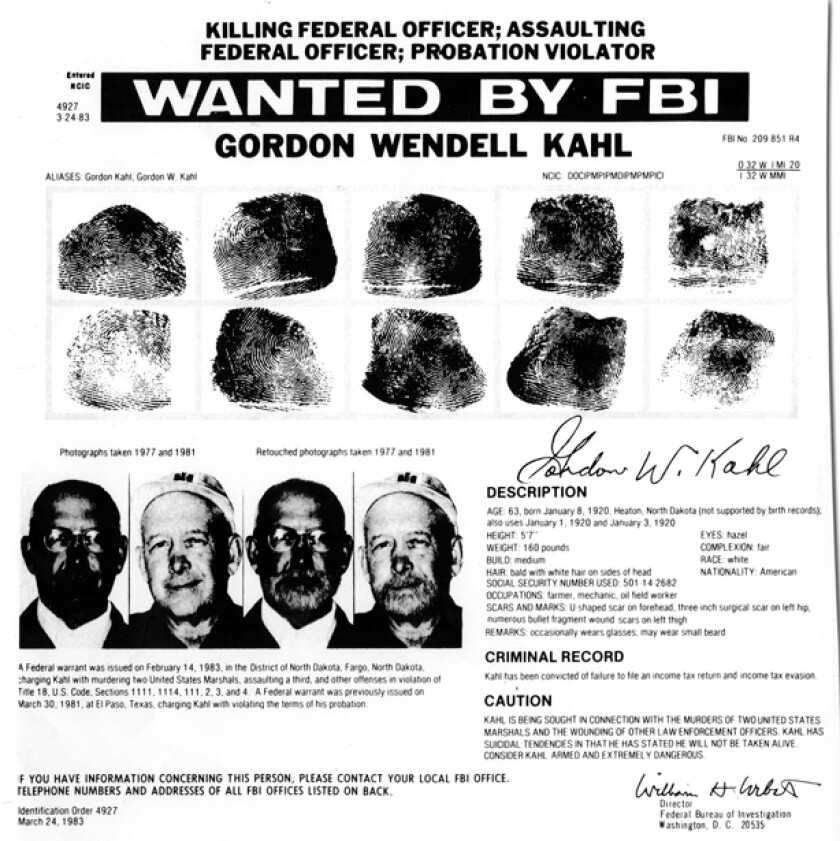
Tax Protester Gordon Kahl on This Day in History
Monday, May 8, 2023
Violent Tax Resistance on This Day in History
This Day in History: Antoine Lavoisier, who was amongst many other things, a tax collector, was tried, convicted and guillotined all in one day in Paris, on May 8 in 1794.
Violent tax resistance has played a significant role in the collapse of several empires, including the Egyptian, Roman, Spanish, and Aztec empires. However, the French have had quite the unique history of tax resistance.
In 1615, the residents of one commune refused to pay the wine tithe and threatened to throw the collector into the RhĂ´ne.
In Poitiers, France, in 1624 and again on multiple occasions in 1663, mobs attacked inns where French tax farmers were staying, threatening to torch the building and kill those inside.
The success of anti-tax rebellions in Saintonge and Angoumois led to other rebellions in France, including some in which excise officers were lynched. The most notorious incident was the massacre of tax officers responsible for collecting the gabelle at Agen in June 1635.
A second "Croquants′ Revolt" in 1636–37 (with some outbreaks as early as 1628) concerned the taxes being raised to support France′s entry into the Thirty Years' War. The revolt included the lynching of tax officials, a tax strike, and a major battle at which over 2,000 people were killed. The major rebellion was defeated, but outbreaks of mass tax resistance continued as late as 1658.
From 1638 to 1645, the residents of Pardiac refused to pay their taxes, rose up to free the officials who had been imprisoned for failure to remit the tax money, repulsed government troops sent to enforce the tax laws, and massacred a tax official and his bodyguard.
In 1639–43, the revolt of the va-nu-pieds in Normandy included a tax strike and attacks on the homes of tax farmers. In 1643 there were attacks on tax collectors in multiple regions of France. The Fronde of 1646–53 was also marked by anti-tax riots.
The revolt of the papier timbré in 1675 was centered on a new stamp tax, and included destruction of tax offices and attacks on tax- and tithe-collectors.
In 1682, a village curate led a tax revolt in which the villagers stoned the monks and the tithe agent who had come to collect a grain tithe.
See also: Dickens Knew Taxes Started the French Revolution
The History & Mystery of Money & Economics-250 Books to Download
Tuesday, April 25, 2023
The First Automobile License Plates on This Day in History
Saturday, December 3, 2022
The Dying State of Illinois on This Day in History
Wednesday, November 16, 2022
Economist Milton Friedman on This Day in History
This Day in History: American economist Milton Friedman died on this day in 2006. Often called "Mr. Libertarian" Friedman was a great communicator in the field of Free Market economics, and upon his death, The Economist described him as "the most influential economist of the second half of the 20th century ... possibly of all of it". The fact however that he was liked by the establishment should make you suspicious of him.
For instance: "One of Friedman’s most disastrous deeds was the important role he proudly played, during World War II in the Treasury Department, in foisting upon the suffering American public the system of the withholding tax. Before World War II, when income tax rates were far lower than now, there was no withholding system; everyone paid his annual bill in one lump sum, on March 15. It is obvious that under this system, the Internal Revenue Service could never hope to extract the entire annual sum, at current confiscatory rates, from the mass of the working population. The whole ghastly system would have happily broken down long before this. Only the Friedmanite withholding tax has permitted the government to use every employer as an unpaid tax collector, extracting the tax quietly and silently from each paycheck. In many ways, we have Milton Friedman to thank for the present monster Leviathan State in America." Source
Murray Rothbard wrote that Milton Friedman "has functioned not as an opponent of statism and advocate of the free market, but as a technician advising the State on how to be more efficient in going about its evil work. (From the viewpoint of a genuine libertarian, the more inefficient the State’s operations, the better!)"
Saturday, November 5, 2022
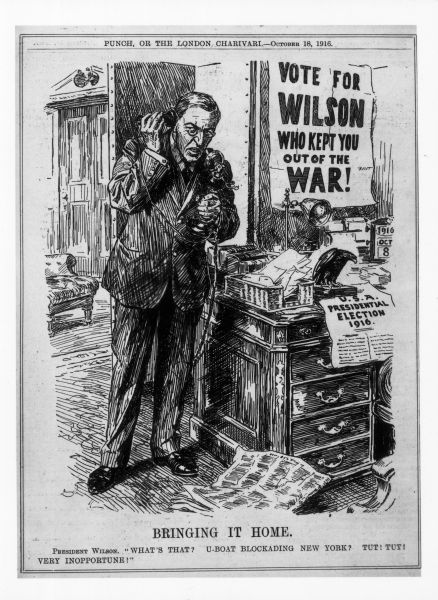
Fascist President Woodrow Wilson on This Day in History
Today in History: Woodrow Wilson was elected President of the United States on this day in 1912. Wilson is by any metric, the worst president on US history. He dragged America into World War I despite promising not to. He gave us the much-hated income tax. He gave us the Federal Reserve and alcohol prohibition happened under his watch.
"Woodrow Wilson has been elevated as one of the better presidents but I think if you go back and look at it, the war was avoidable...and of course Woodrow Wilson helped bring Hitler to power by insisting on the abdication of the Kaiser after World War I - which was totally unnecessary." Ivan Eland
"Wilson criticized the diffuseness of government power in the US in most famous book Congressional Government. In this work he confessed, 'I cannot imagine power as a thing negative and not positive.' His love and worship of power was a prime characteristic of fascism. 'If any trait bubbles up in all one reads about Wilson it is this: he loved, craved, and in a sense glorified power,' writes historian Walter McDougall. It should not surprise us that his idols were Abraham Lincoln and Otto von Bismarck.
'No doubt a lot of nonsense has been talked about the inalienable rights of the individual, and a great deal that was mere sentiment and pleasing speculation has been put forward as fundamental principle,' wrote Wilson, attacking the very individual rights that have made America great.
He rejected the principles of 'separation of powers' and 'checks and balances' that are the foundation of American government: 'Government does now whatever experience permits or the times demand….' wrote Wilson in The State.
No fan of democracy or constitutional government, he wrote the following in Constitutional Government in the United States: 'The President is at liberty, both in law and conscience, to be as big a man as he can. His capacity will set the limit….' Sounds like a devotee of the imperial presidency.
Indeed, in a disturbing 1890 essay entitled Leaders of Men, Wilson said that a 'true leader' uses the masses of people like 'tools.' He writes, “The competent leader of men cares little for the internal niceties of other people’s characters: he cares much–everything–for the external uses to which they may be put…. He supplies the power; others supply only the materials upon which that power operates…. It is the power which dictates, dominates; the materials yield. Men are as clay in the hands of the consummate leader.” So much for the dignity of each person!
'Woe be to the man or group of men that seeks to stand in our way,' said Wilson in June 1917 to counter protests to the fascist regime that he created upon entering WW I.
Wilson took over the US economy, infringed on American civil liberties especially by suppressing dissent, oppressed the “unpatriotic,” and purposefully sought to drag the US into war. This Marxist, totalitarian, jingoistic, and militaristic Democrat president was a fascist. He worshiped the power of the state, and such statolatry is exactly what fascism is." Source
Monday, October 31, 2022
Tax Evader Sean Connery on This Day in History
Friday, April 8, 2022
The Unconstitutional Income Tax on This Day in History
This Day in History: In Pollock v. Farmers' Loan & Trust Co. the Supreme Court of the United States declared unapportioned income tax to be unconstitutional on this day in 1895. Pollock v. Farmers' Loan & Trust Company was a landmark case of the Supreme Court of the United States. In a 5-to-4 decision, the Supreme Court struck down the income tax imposed by the Wilson–Gorman Tariff Act for being an unapportioned direct tax.
"Early Americans went to war over the inalienable rights described by philosopher John Locke as the natural rights of life, liberty and property. It didn’t take long, however—a hundred years, in fact—before the American government was laying claim to the citizenry’s property by levying taxes to pay for the Civil War. As the New York Times reports, 'Widespread resistance led to its repeal in 1872.' Determined to claim some of the citizenry’s wealth for its own uses, the government reinstituted the income tax in 1894. Charles Pollock challenged the tax as unconstitutional, and the U.S. Supreme Court ruled in his favor. Pollock’s victory was relatively short-lived. Members of Congress—united in their determination to tax the American people’s income—worked together to adopt a constitutional amendment to overrule the Pollock decision." Source
Under Woodrow Wilson, (arguably the worst president ever) Congress produced a permanent income tax by way of the 16th Amendment to the Constitution and the Revenue Act of 1913.
https://thebookshelf2015.blogspot.com/2017/06/dickens-knew-taxes-started-french.html
How They Viewed an Income Tax Over 100 Years Ago
https://thebookshelf2015.blogspot.com/2018/04/how-they-viewed-income-tax-over-100.html
See also The History & Mystery of Money & Economics-250 Books on DVDrom
Visit my Econ blog at http://fredericbastiat1850.blogspot.com/
For a list of all of my disks and ebooks (PDF and Amazon) click here