Saturday, January 21, 2023

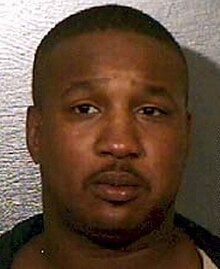
The Baton Rouge Serial Killer on This Day in History


This Day in History: Derrick Todd Lee, also known as the Baton Rouge Serial Killer, died of heart disease while awaiting execution, on this day (January 21) in 2016. Between 1992 and 2003, Lee murdered seven women in the Baton Rouge area.

Lee may have evaded capture sooner because an FBI profile believed the killer to be white. Interestingly, during psychiatric evaluations, he scored an average of 65 on various standardized IQ tests; a score below 69 is considered to be the threshold for mental retardation. Lee was, however, deemed fit to stand trial despite his low IQ. He was described as a smooth talker, a man talked his way in and out of everything his whole life. Lee laughed while in court, he simply didn't take the situation seriously. 

In early 2003, an urban legend began to circulate that Lee was using the taped sounds of a crying baby to lure victims to the door. The Baton Rouge Police were quick to deny that the information was coming from their office. The Criminal Minds tv series featured the "crying baby" motif in two episodes.

Friday, January 20, 2023

Bible Translator Myles Coverdale on This Day in History


This Kindle book is now available on Amazon by clicking here...and it is only 99 cents

This Day in History: English ecclesiastical reformer and Bible translator Myles Coverdale died on this day in 1569. In 1535, Coverdale produced the first complete printed translation of the Bible into English.

Coverdale was also involved in translating The Matthew's Bible (1537), The Great Bible (1539) and The Geneva Bible (1557).

On inspecting my copy of Coverdale's Bible at Exodus 3, I notice that Coverdale does not translate ‘ehyeh asher ehyeh’ in verse 14 as "I am that I am." He instead translates this as "I wyl be what I wyll be', and in doing so breaks the connection to John 8:58 where Jesus says "I am." (Many use the connection between these two Scriptures as proof that Jesus is Jehovah). Coverdale may have drawn on William Tyndale's translation of Exodus 3:14 where he writes, "I wilbe what I wilbe."

While your mainstream standard Bible may say "I am that I am" many of them will feature the truer reading in the margins or footnotes [American Standard Version - "I WILL BE"; NIV Study Bible - "I WILL BE"; Revised Standard Version - "I WILL BE"; New Revised Standard Version - "I WILL BE"; New English Bible - "I WILL BE"; Revised English Bible - "I WILL BE"; Living Bible - "I WILL BE"; Good News Bible - "I WILL BE."].

Many alternative Bibles do not translate Exodus 3:14 as I AM, but rather "I will be," such as The James Moffatt Translation and Smith & Goodspeed's An American Translation. The Jewish Study Bible: Jewish Publication Society Tanakh Translation By Adele Berlin, Marc Zvi Brettler says that Exodus 3:14 is "probably best translated as 'I Will Be What I Will Be'" and Robert Alter in his Hebrew Bible concludes as well that "I Will Be Who I Will Be" is the most plausible construction. Frederic Huidekoper in his "Genesis, Chapters I.-XI.: In Parallel Columns" also believes "I Will Be What I Will Be" "is the only translation." https://tinyurl.com/se9cupw . Even Walter Martin in his The Kingdom of the Occult at footnote 25 in the Eastern Mysticism and the New Age section that "the original words literally signify 'I will be what I will be.'"

"There is high probability that ehyeh is mistranslated as “I am” (as was pointed out by M. Buber in the New Bible Dictionary)." Source


Thursday, January 19, 2023

Snow in Miami on This Day in History


This Day in History: A cold wave in January produced the only known trace of snow in the greater Miami area of Florida ever reported on this day (January 19) in 1977.

"The flakes began to fall in Broward and Miami-Dade between 8 a.m. and 9:30 a.m., as an arctic cold front made its way down the coast of Florida.
Flurries were reported as far south as Homestead, though for the most part the snowfall melted when it made contact with the ground. That day, the high temperature was a chilly 47 degrees, with temps dipping into the 30s.
The farthest south snow had been previously observed in Florida was along a Fort Myers to Fort Pierce line in February 1899.
The 1977 snow caused more than $300 million in agricultural damage in South Florida." Source

Wednesday, January 18, 2023

The Unsolved Killing of Glenis Carruthers on This Day in History


This day in history: Glenis Carruthers, a student teacher, was strangled to death on Clifton Down in Bristol, England, after leaving her 21st birthday party on this day (January 18) in 1974. 

"In January 1974, 20-year old Glenis Carruthers, from Amersham in Buckinghamshire, drove with her friend Sandra Hardyman from Bedford College, where they were both third-year students, to Sandra’s hometown of Bristol, to attend a party being held in honor of Sandra’s 21st birthday. The party took place at Sandra’s family home on Worcester Crescent in the Clifton area of the city, a quiet and affluent region with a large student population. There were around 40 people of all ages in attendance, including grandparents, parents and Sandra’s friends. Around 10pm, Glenis left the party for unknown reasons without telling anyone....The reasons for Glenis leaving the party remain a mystery.

After leaving the party, Glenis took a short walk through dark streets; there was an energy crisis in the UK at the time due to Prime Minister Edward Heath’s ongoing disputes with miners, which led to rolling power cuts, with many homes and businesses being lit with emergency generators and candles. This meant around half of all streetlights were not operational at the time, and the areas around the party and nearby Bristol Zoo, not well lit at the best of times, were plunged into near total darkness. Glenis’ father would later say 'I am now convinced that but for the absence of street lighting Glenis would have been alive today.' After walking around 0.4 miles (a distance which would typically take only about 7 minutes) Glenis came upon a grassy area by the entrance to Bristol Zoo Gardens, with a nearby telephone booth. It was here that Glenis was murdered.

Around 16,000 people have been interviewed in relation to Glenis’ murder, but no suspects were ever identified. The case was reopened in 2010 by a cold case review team, but no new leads have developed." Source

The case remained unsolved.

Tuesday, January 17, 2023

The Great Brink's Robbery on This Day in History


This day in history: The Great Brink's Robbery occurred on this day (January 17) in 1950. The Great Brink's Robbery was an armed robbery of the Brink's building in the North End of Boston, Massachusetts, on January 17, 1950. The $2.775 million ($31.3 million today) theft consisted of $1,218,211.29 in cash and $1,557,183.83 in checks, money orders, and other securities. It was at the time the largest robbery in the history of the United States, and has been called "the crime of the century". The robbery remained unsolved for nearly six years, until estranged group member Joseph O'Keefe testified only days before the statute of limitations would have expired.

Of the eleven people involved in the robbery, eight would receive life sentences after a trial, with two others dying before they could be convicted. Less than $60,000 of the more than $2.7 million stolen would ever be recovered. The robbery received significant press coverage, and was eventually adapted into four movies.

The robbery was first conceived in 1947; however, in 1948, after months of planning, the group learned that Brink's had moved to a new location. While the theft was originally intended to be a burglary, rather than an armed robbery, they could not find a way around the building's burglar alarm. After observing the movements of the guards, they decided that the robbery should take place just after 7 pm, as the vault would be open and fewer guards would be on duty. Over a period of several months, the robbers removed each lock from the building and had a key made for it, before returning the lock. Two vehicles were stolen: a truck, to carry away the loot from the robbery; and a car, which would be used to block any pursuit. 

"No one was hurt in the robbery, and the thieves left virtually no clues, aside from the rope used to tie the employees and one of the chauffeur’s caps. The gang promised to stay out of trouble and not touch the money for six years in order for the statute of limitations to run out. They might have made it, but for the fact that one man, Joseph “Specs” O’Keefe, left his share with another member in order to serve a prison sentence for another burglary. While in jail, O’Keefe wrote bitterly to his cohorts demanding money and hinting he might talk. The group sent a hit man to kill O’Keefe, but he was caught before completing his task. The wounded O’Keefe made a deal with the FBI to testify against his fellow robbers." Source

Eight of the gang's members received maximum sentences of life imprisonment. All were paroled by 1971 except McGinnis, who died in prison. O'Keefe received four years and was released in 1960. Only $58,000 of the $2.7 million was recovered. O'Keefe cooperated with writer Bob Considine on The Men Who Robbed Brink's, a 1961 "as told to" book about the robbery and its aftermath.

Monday, January 16, 2023

The McCulkin Murders On This Day in History


This Day in History: The McCulkin Murders happened on this day (January 16) in 1974. The McCulkin murders were the murders of Barbara McCulkin (34) and her two daughters, Vicki (13) and Leanne (11), in Queensland, Australia.

Their bodies were never located.

The victims disappeared from their home in Highgate Hill, a suburb of Brisbane, Queensland. The daughters had been across the street attending a neighbour’s 10th birthday party, returning around 10:30 pm. Their mother had remained at home relaxing and drinking in the company of two men who had arrived in a distinctive coupe.

The McCulkins were reported missing by their estranged husband/father two days later. Investigations revealed an orange 2-door Valiant Charger had been seen in the driveway. Further, the family cats were locked inside, the beds had not been slept in, and the lights and other electrical items remained on. The overall police response was slow and ineffective and the case quickly turned cold.

On 2 April 1980, Vincent O'Dempsey, the owner of the Charger and a criminal acquaintance of the husband, and Garry Dubois, were charged with their abduction and murder. The case, however, fell apart due to insufficient evidence.

After a tipoff to Crime Stoppers, in October 2014, the pair were finally charged again based on information that the victims had been tied up, driven to bushland, raped, strangled, and buried. On 28 November 2016, Dubois (then aged 69) was found guilty of the murders. On 26 May 2017, O'Dempsey (then aged 78) was also found guilty of murder. Both were sentenced to life imprisonment on 1 June 2017.

The next day, Queensland Attorney-General Yvette D'Ath announced that the state government would re-open the coronial inquest into the March 1973 Whiskey Au Go Go fire. Another related case was the 23 February 1973 firebombing of Torino’s Nightclub, an insurance scam organised by Dubois on O’Dempsey’s orders. Justice Peter Applegarth said "it was clear Barbara McCulkin knew enough about each of the pair's roles in the nightclub bombings at the time for them to want to silence her."

Sunday, January 15, 2023

Happy Days on This Day in History


This Day in History: Happy Days, a sitcom about life in the 1950s, debuted on ABC on this day in 1974.

Happy Days is an American television sitcom that aired first-run on the ABC network from 1974 to 1984, with a total of 255 half-hour episodes spanning 11 seasons. Created by Garry Marshall, it was one of the most successful series of the 1970s. The series presented an idealized vision of life in the 1950s and early 1960s Milwaukee Wisconsin, and it starred Ron Howard as Richie Cunningham, Henry Winkler as his friend Fonzie, and Tom Bosley and Marion Ross as Richie's parents, Howard and Marion Cunningham. Although it opened to mixed reviews from critics, Happy Days became successful and popular over time.

Initially a moderate success, the series' ratings began to fall during its second season, causing Marshall to retool it. The new format emphasized broad comedy and spotlighted the previously minor character of Fonzie, a "cool" biker and high school dropout. Following these changes, Happy Days became the number-one program in television in 1976–1977, Fonzie became one of the most merchandised characters of the 1970s, and Henry Winkler became a major star. The series also spawned a number of spin-offs, including Laverne & Shirley, Mork & Mindy, Joanie Loves Chachi, Blansky's Beauties featuring Nancy Walker as Howard's cousin, and Out of the Blue.

The show had many notable guest stars over the years, including Hank Aaron, Lorne Greene, Suzi Quatro, Frankie Avalon, Tom Hanks, Morgan Fairchild, Cheryl Ladd, Dave Madden, The Amazing Randi, Robin Williams, etc.