Tuesday, February 7, 2023

Gothic Fiction Writer Ann Radcliffe on This Day in History


Read online

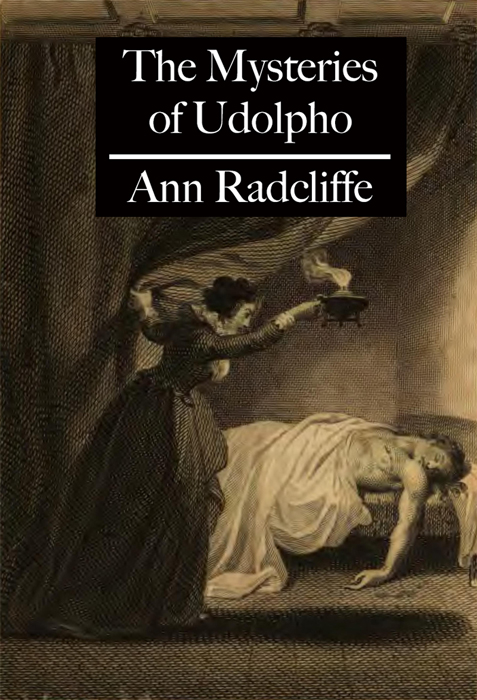
This Day in History: Writer Ann Radcliffe died on this day in 1823. Little known today, she was the highest paid author in the 1790's. She was one of the first of the Gothic writers, writing novels like The Mysteries of Udolpho and The Italian which inserted supernatural elements, though many complained that she failed to incorporate "real ghosts" into her stories. She influenced writers like Edgar Allan Poe and Sir Walter Scott and was admired by Honoré de Balzac, Victor Hugo, Alexandre Dumas, Charles Baudelaire and Fyodor Dostoyevsky.

H.P. Lovecraft gave her high praise in his book, Supernatural Horror in Literature:

"Five years later, and all existing lamps are paled by the rising of a fresh luminary of wholly superior order—Mrs. Ann Radcliffe (1764–1823), whose famous novels made terror and suspense a fashion, and who set new and higher standards in the domain of macabre and fear-inspiring atmosphere despite a provoking custom of destroying her own phantoms at the last through laboured mechanical explanations. To the familiar Gothic trappings of her predecessors Mrs. Radcliffe added a genuine sense of the unearthly in scene and incident which closely approached genius; every touch of setting and action contributing artistically to the impression of illimitable frightfulness which she wished to convey. A few sinister details like a track of blood on castle stairs, a groan from a distant vault, or a weird song in a nocturnal forest can with her conjure up the most powerful images of imminent horror; surpassing by far the extravagant and toilsome elaborations of others. Nor are these images in themselves any the less potent because they are explained away before the end of the novel. Mrs. Radcliffe’s visual imagination was very strong, and appears as much in her delightful landscape touches—always in broad, glamorously pictorial outline, and never in close detail—as in her weird phantasies. Her prime weaknesses, aside from the habit of prosaic disillusionment, are a tendency toward erroneous geography and history and a fatal predilection for bestrewing her novels with insipid little poems, attributed to one or another of the characters.

     Mrs. Radcliffe wrote six novels; The Castles of Athlin and Dunbayne (1789), A Sicilian Romance (1790), The Romance of the Forest (1791), The Mysteries of Udolpho (1794), The Italian (1797), and Gaston de Blondeville, composed in 1802 but first published posthumously in 1826. Of these Udolpho is by far the most famous, and may be taken as a type of the early Gothic tale at its best. It is the chronicle of Emily, a young Frenchwoman transplanted to an ancient and portentous castle in the Apennines through the death of her parents and the marriage of her aunt to the lord of the castle—the scheming nobleman Montoni. Mysterious sounds, opened doors, frightful legends, and a nameless horror in a niche behind a black veil all operate in quick succession to unnerve the heroine and her faithful attendant Annette; but finally, after the death of her aunt, she escapes with the aid of a fellow-prisoner whom she has discovered. On the way home she stops at a chateau filled with fresh horrors—the abandoned wing where the departed chatelaine dwelt, and the bed of death with the black pall—but is finally restored to security and happiness with her lover Valancourt, after the clearing-up of a secret which seemed for a time to involve her birth in mystery. Clearly, this is only the familiar material re-worked; but it is so well re-worked that Udolpho will always be a classic. Mrs. Radcliffe’s characters are puppets, but they are less markedly so than those of her forerunners. And in atmospheric creation she stands preëminent among those of her time."

Listen to Lovecraft's Supernatural Horror in Literature

Monday, February 6, 2023

The Oldest Man Who Ever Lived on This Day in History


This Day in History: Chief John Smith died on this day in 1922. Smith was an Ojibwe (Chippewa) Indian who lived in the area of Cass Lake, Minnesota. It is said that he was 137 years old when he died. It is estimated that he was born during the American Revolution, though the exact age at the time of his death has been the subject of controversy.

He had 8 wives throughout his lifetime, but no children.

The History and Mystery of Alchemy is now available on Amazon...and it is only 99 cents.

Sunday, February 5, 2023

The Machete Killer on This Day in history


This Day in History: In Fairfield, California, a trial judge sentenced serial killer Juan Corona (the Machete Killer) to 25 life sentences, one for each of the 25 men whom he had been convicted of murdering on this day in 1973. Superior Judge Richard Patton added that the life sentences would "be served consecutively and not concurrently." Corona had been convicted of the crimes on January 18. Despite the sentence, California Adult Authority ruled the next day that Corona would be eligible for parole after only seven years rather than 175 years (7 years for each of the 25 life sentences) and that the consecutive sentences would be merged to run concurrently. An official commented, "Corona can serve only one life." Corona would spend the rest of his life in prison, dying at age 85 in 2019.

This book, "The Impersonality of the Holy Spirit by John Marsom" is available on Amazon for only 99 cents. See a local listing for it here; Buy The Absurdity of the Trinity on Amazon for only 99 cents by clicking here - see a local listing for this here

Saturday, February 4, 2023

The McStay Family Murders on This Day in History


This Day in History: The McStay family murders occurred on this day in 2010, after the family disappeared from their home in Fallbrook, California, United States; their bodies were found in the desert near Victorville, California, on November 13, 2013. Their disappearance was widely reported by the national news media.

In 2010, Joseph McStay (age 40) and his wife Summer (age 43) lived in Fallbrook, California, with their sons Gianni (age 4) and Joseph Jr. (age 3). Joseph owned and operated Earth Inspired Products, a company that built decorative fountains, and Summer was a licensed real estate agent.

On November 5, 2014, detectives from the San Bernardino County Sheriff's Department arrested Charles "Chase" Merritt, Joseph McStay's business partner. 

According to the arrest warrant affidavits filed in the case, autopsies concluded that all four victims had been beaten to death with a blunt object. Investigators believed the murder weapon was a 3-pound sledgehammer, which was found in the grave containing the remains of Summer and her son. Investigators testified they believed the victims were tortured before they were killed.

Prosecutors allege that Merritt had a gambling problem and killed the McStay family for financial gain. They said that he wrote checks totaling more than $21,000 on Joseph's business account in the days after the family was killed and then went on a gambling spree at nearby casinos, where he lost thousands of dollars. Merritt's trial was delayed as he had repeatedly fired his attorneys or attempted to represent himself. By February 2016, he had gone through five attorneys.

On June 10, 2019, a jury found Merritt guilty of murdering the McStay family. He was sentenced to death on January 21, 2020.

The History and Mystery of Alchemy is now available on Amazon...and it is only 99 cents.

Friday, February 3, 2023

The First Mass Murder in America on This Day in History


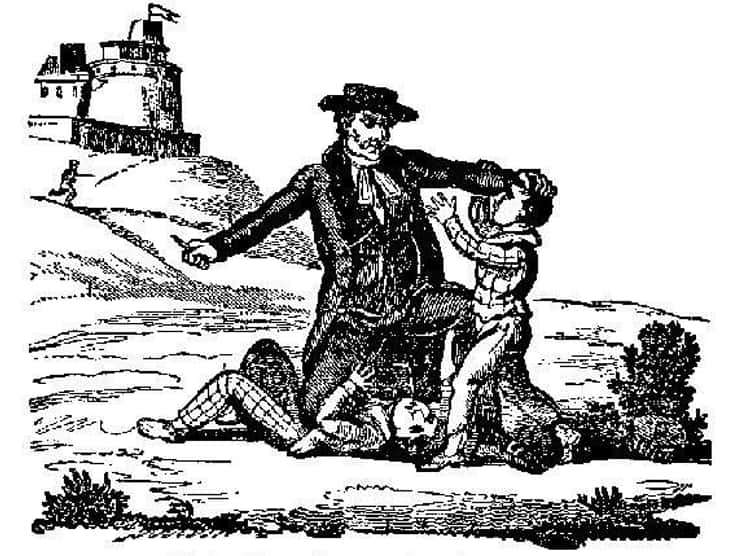
This Day in History: "One of the darkest days in Connecticut history occurred today in 1780, as 19-year-old Revolutionary War deserter Barnett Davenport brutally murdered his employer and his entire family in what many historians recognize as the first documented mass murder in American history." Source

"To a casual historian, the name Barnett Davenport may seem obscure or even innocuous. But the bearer of that name became one of the most significant killers of whom you've never heard – when he was only 19. Years before the US met its first serial killers, Davenport became the the country's first mass murderer. He ferociously beat and killed multiple members of a family who had employed him, including their young granddaughter, leaving the victims as well as the rest of the living family members to burn as he escaped. His horrific actions on one cold night in 1780 changed the way people thought about crime and criminals at that time." Source

"Barnett Davenport was found guilty of murder and arson. He was sentenced to 40 lashes and to hang at Gallow’s Lane at Litchfield, CT, on May 8, 1780...Barnett Davenport’s brutal murder of the Mallory family ushered in a new era for the American justice system and the fledgling nation’s collective psyche in general. Having never dealt with a crime like this previously, no one knew quite how to handle it.

Colonial Americans were taught, and believed, that criminals were sinners who had lost their way and needed to be guided back to the flock. But after witnessing a crime as heinous and depraved as this, they had to consider the possibility that some criminals were so evil they were beyond redemption." Source

Thursday, February 2, 2023

Ayn Rand On This Day in History


This Day in History: Russian-born American writer and philosopher Ayn Rand was born on this day in 1905. Her influence is beyond question. She sold more than 30 million books, and decades after her 1982 death, hundreds of thousands more sell each year.

Caroline Breashears recently wrote about how Ayn Rand's novella Anthem anticipated cancel culture:

Recent legislators, activists, and education reformers have promised to lead us into a new world of equity. No longer will some groups have a different lifestyle from others. No longer will some groups have a different education from others. There will be reform or else, Hawk Newsome warns, “we will burn down this system and replace it.”

For a preview of these glories, we have only to open Ayn Rand’s Anthem. In this dystopian novella, collectivists achieve their ideal by burning cities and books, then implementing central planning. Now everyone is equal: equally poor, equally housed, equally limited in what they can say and do and think.

If, as Jen Maffessanti observes, dystopian fiction helps us understand the dangers we face, then none is more relevant to this moment than Rand’s novella. What Anthem clarifies is the real significance of collectivist ideals and language, which undermine not only our rights but our ability to articulate them.

Anthem opens by foregrounding the triumph of the collective through the narrator’s struggle to express and justify his thoughts. In this world, there is no “I,” only the collective “we,” which has become synonymous with good. The novel opens,

It is a sin to write this. It is a sin to think words no others think and to put them down upon a paper no others are to see. . . . And well we know that there is no transgression blacker than to do or think alone.

Only the “Council of Vocations” can approve such writing. The narrator, Equality 7-2521, struggles to conform even as he defies such rules: “We strive to be like all our brother men, for all men must be alike.” But he is not.

At six feet, Equality 7-2521 towers over other boys. His teacher warns, “There is evil in your bones.” In school, he is unhappy because “learning was too easy. This is a great sin, to be born with a head which is too quick.” How does he know? “The teachers told us so.”

Eventually, Equality 7-2521 tries to imitate the slow learners. But the teachers know, “and we were lashed more often than all the other children.” And when he turns fifteen, the Council of Vocations places him in the Home of the Street Sweepers, where he will have no more opportunities to display his “quick” mind. Equity achieved.

Anthem anticipates F. A. Hayek’s later warnings about “our poisoned language.” In The Fatal Conceit: The Errors of Socialism Hayek observes, “so long as we speak in language based in erroneous theory, we generate and perpetuate error.”

That error is evident in the use of words to convey entire moral arguments. In Anthem, “we” and “the collective” are “good,” just as, Hayek observed, “social” now designates what is “morally right.” And “what at first seems a description imperceptibly turns into a prescription”: distributive justice.

A similar shift is now occurring in the use of “equity.” According to the Oxford English Dictionary, the earliest recorded instance was from 1315, from which point “equity” has been used to mean “the quality of being equal or fair; fairness, impartiality, even-handed dealing.”

Now “equity” means the moral imperative to ensure equal outcomes, as in the concept of “educational equity”: “Equity recognizes that some are at a larger disadvantage than others and aims at compensating for these people’s misfortunes and disabilities.”

How does “Equity” do this? It “aims to take extra measures by giving those who are in need more than others who are not. Equity aims at making sure that everyone’s lifestyle is equal even if it may come at the cost of unequal distribution of access and goods.”

In other words, to achieve “equity,” the unacknowledged officials treat people unequally.

Rand’s Anthem illustrates the results generated by such committees. The Council of Vocations achieves equal lifestyles by grouping diverse people in the Home of the Street Sweepers, where Equality 7-2521’s team consists of a talented artist and a man incapable of using his broom due to incessant convulsions. Their work is uneven, to say the least.

When Equality secretly discovers electric light and brings it to the Council of Scholars, they reject his invention because he invented it alone. Furthermore, it would destroy the Department of Candles and “wreck the Plans of the World Council,” which took fifty years to approve the candle. They insist it be destroyed, metaphorically seeking to keep their world in the dark.

For the collective, the goal is control of outcomes, not freedom or human flourishing. And to maintain that control, they make sure that no one can see the truth, much less say it. In the Home of the Street Sweepers at night, the men undress silently in the dim candlelight: “For all must agree with all, and they cannot know if their thoughts are thoughts of all, and so they fear to speak.”

Over the last few months, we have come closer to Rand’s dystopia of fear, silencing, and distorted “equity.” In a recent survey at the University of North Carolina, students across the political spectrum reported that they (like the Street Sweepers) engaged in self-censorship in classrooms, remaining silent even when their opinions related to topics in class. They are afraid.

They are not alone. Online mobs are destroying careers and lives, as John Stossel observes in “Cancel Culture is Out of Control.” He urges those of us who can speak to do so.

Yet embracing free speech and other rights becomes increasingly difficult as governments push to eliminate them. Recently the California legislature passed ACA 5, which would allow for “race- and gender-conscious remedies” to correct differences in university admissions and government contracts. This measure for equity would overturn Proposition 209, which prohibits the state from discriminating against or granting preferential treatment to any group or individual on the basis of race, sex, or ethnicity.

If California’s citizens pass it, the government will be able legally to discriminate against individuals. Yet, as Rand argues:

Individual rights are not subject to a public vote; a majority has no right to vote away the rights of a minority; the political function of rights is precisely to protect minorities from oppression by majorities (and the smallest minority on earth is the individual).

Rand urges individuals to take a stand. In her Author’s Foreword to the American edition of Anthem, Rand observes, “The greatest guilt today is that of people who accept collectivism by moral default.”

If we need models, we have only to look to Leonard Read. He discovered that Anthem had been published in England (1938) but had been rejected by American publishers. Deciding it deserved a broader audience, he issued the first American edition with Pamphleteers in 1946, the same year he founded FEE.

Our own options will vary, but as John Stossel urges, those of us who can speak up, must do so. Otherwise, we face entering the twenty-first-century version of Anthem.

Caroline Breashears
Caroline Breashears

Caroline Breashers is a Professor of English at St. Lawrence University.  Previous publications have appeared in EconLib, The Journal of Ayn Rand Studies, Modern Philology, Eighteenth-Century Fiction, Aphra Behn Online, Script & Print, The International Journal of Pluralistic Economic Education, and Philological Quarterly. Her book Eighteenth-Century Women’s Writing and the “Scandalous Memoir” was published by Palgrave Macmillan in 2017.  

This article was originally published on FEE.org. Read the original article.


Wednesday, February 1, 2023

Roman Polanski's Run from the Law on this Day in History

This Day in History: Film director Roman Polanski skipped bail and fled to France on this day in 1978, after pleading guilty to charges of engaging in sex with an underage girl.

At Jack Nicholson’s Mulholland Drive house in 1977, Polanski gave a young girl Champagne and a Quaalude and sodomized her. She was only 13. 

Polanski was arrested and charged with drugging and raping the 13-year-old girl. As a result of a plea bargain, he pleaded guilty to the lesser offence of unlawful sex with a minor. In 1978, after learning that the judge planned to reject his plea deal and impose a prison term instead of probation, he fled to Paris. A number of other women have later accused Polanski of raping them when they were teenagers. An Interpol red notice was issued for his arrest, and since then rarely leaves France.

This however did not stop Polanski from making movies, and it did not stop major Hollywood actors from working with him.